Comparing objects Extra Challenge Math Worksheets for Ages 5-8
3 filtered results
-
From - To
Unlock your child's critical thinking skills with our "Comparing Objects Extra Challenge Math Worksheets" designed for ages 5-8! These engaging worksheets provide a stimulating opportunity for young learners to practice comparing sizes, quantities, and attributes of various objects. Ideal for reinforcing basic math concepts, each worksheet features exciting visuals and diverse challenges to capture your child's attention. Whether used in the classroom or at home, these extra challenges promote mathematical understanding and encourage effective problem-solving. Watch your child develop confidence in their skills while having fun with interactive learning. Explore our collection and unleash their potential today!
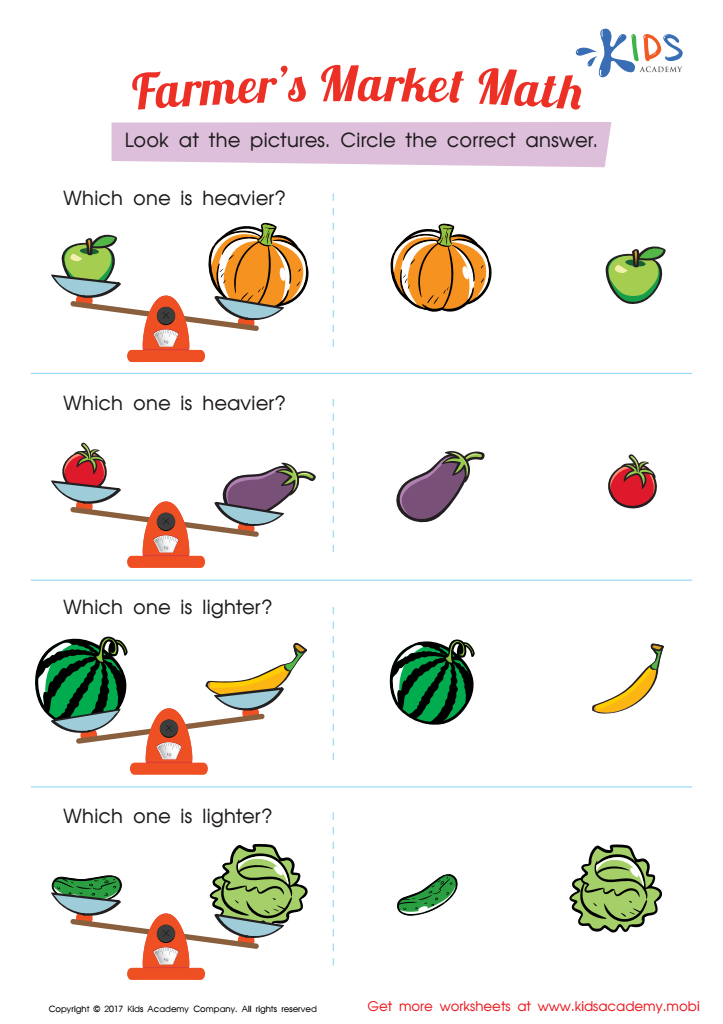
Which One Is Heavier Worksheet
 Assign to My Students
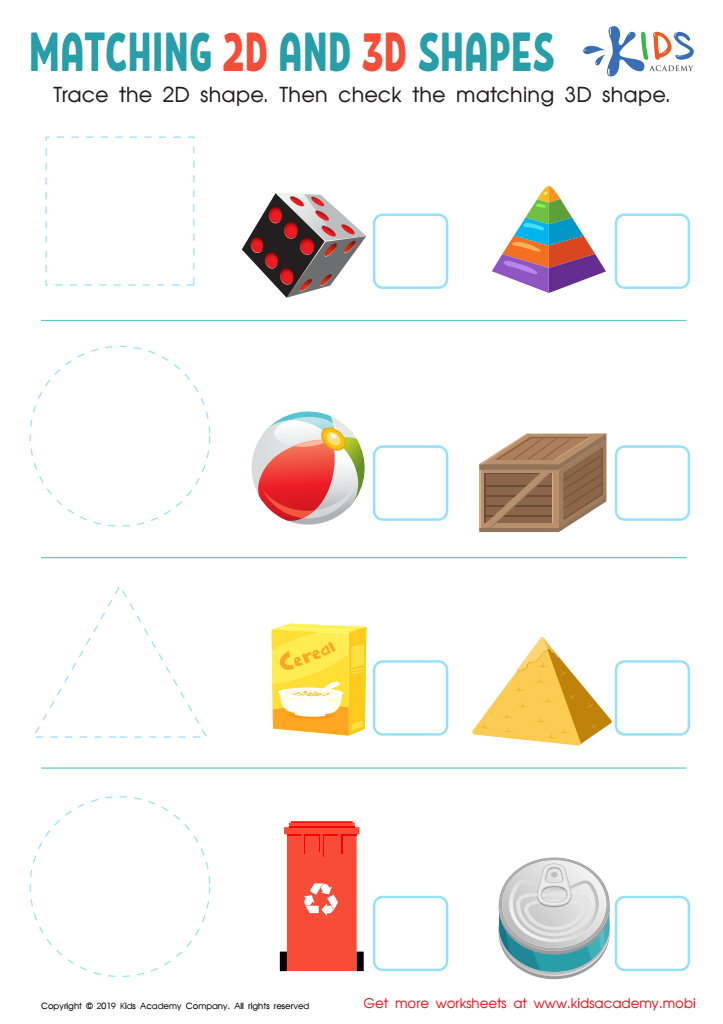
Matching 2D and 3D Shapes Worksheet
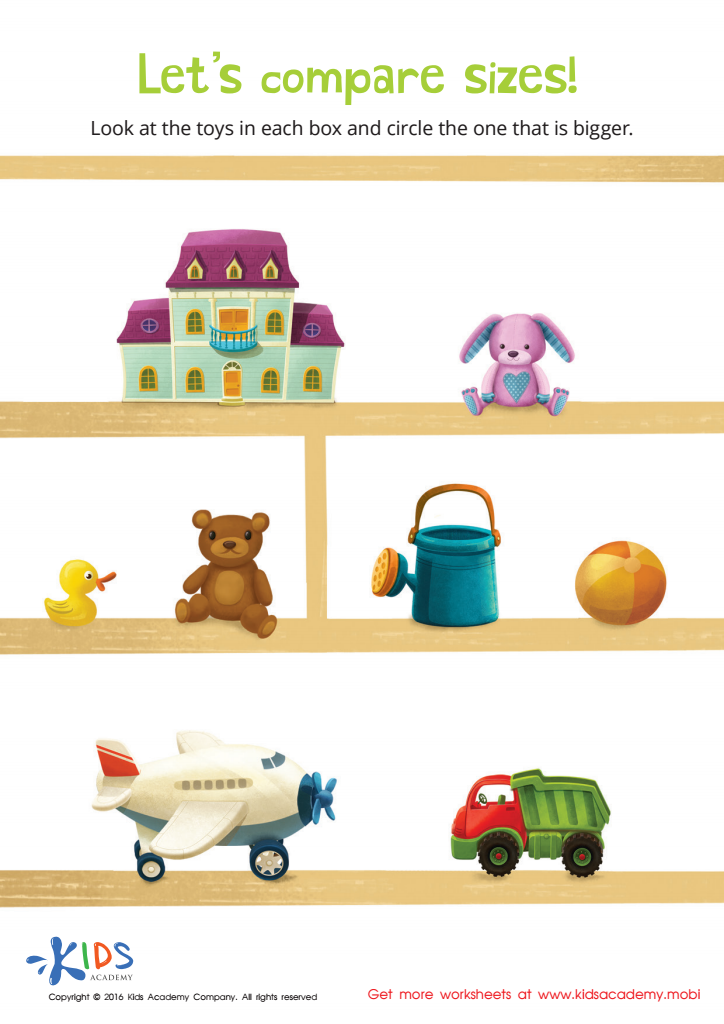
Classifying by Size Sorting Worksheet






Comparing objects is a fundamental math skill that promotes critical thinking and cognitive development in young children aged 5-8. Parents and teachers should prioritize this activity because it lays the groundwork for advanced mathematical concepts such as measurement, sorting, and pattern recognition. Engaging in comparison activities helps children learn how to observe differences and similarities, which fosters analytical reasoning.
When children compare objects based on attributes such as size, shape, color, or weight, they not only enhance their observational skills but also build vocabulary related to these concepts. This foundational knowledge is essential for future academic success across various subjects, especially in math and science.
Moreover, comparing objects encourages social interaction as children often work in pairs or small groups, enhancing their communication and collaboration skills. It provides opportunities for hands-on learning that is both enjoyable and inquiry-based, making math relatable and engaging.
Incorporating Comparing Objects Extra Challenge Math into everyday life allows parents and teachers to make learning relevant. Whether at home or school, this skill significantly supports children's overall development and instills a positive attitude towards learning, setting the stage for lifelong mathematical confidence and competency.








