Counting skills Extra Challenge Matching Worksheets for Ages 5-8
5 filtered results
-
From - To
Discover our "Counting Skills Extra Challenge Matching Worksheets" designed for children ages 5-8! These engaging worksheets enhance counting abilities while adding a fun twist with matching activities. Tailored to spark curiosity, they encourage kids to connect numbers with corresponding quantities, laid out in colorful designs that captivate young learners. Perfect for reinforcing foundational math skills, our worksheets provide an excellent mix of challenge and enjoyment. Whether at home or in the classroom, these resources will support early math development, keeping children motivated and focused. Dive into our collection today and watch your little ones master counting with confidence and excitement!
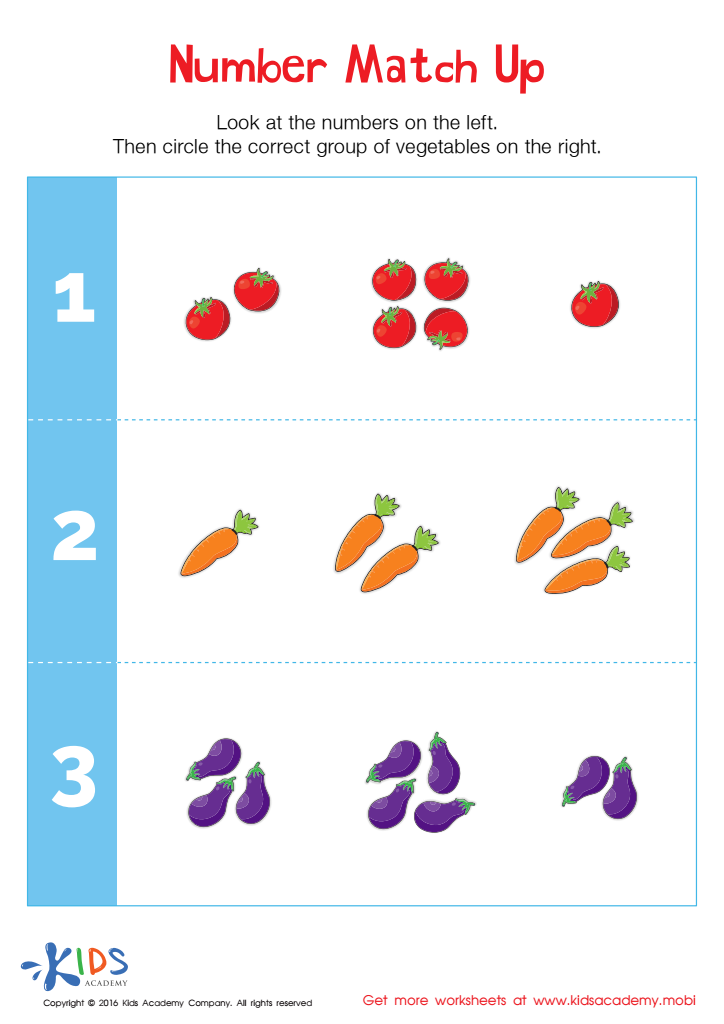
Number Match Up Worksheet
 Assign to My Students
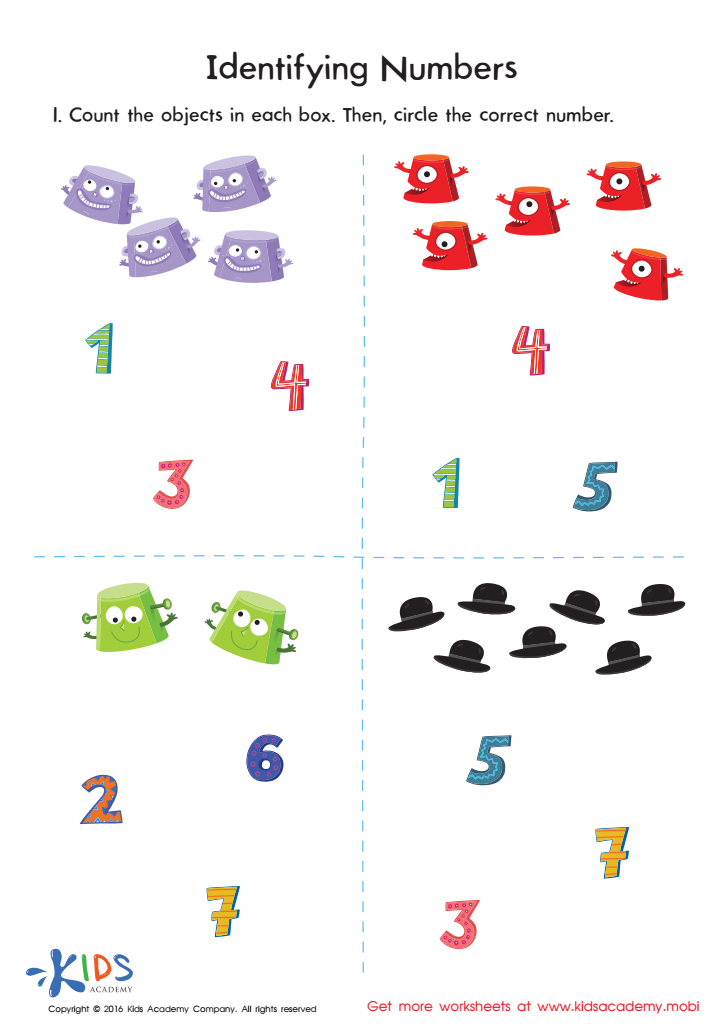

Count and Match Points 6 Math Worksheet

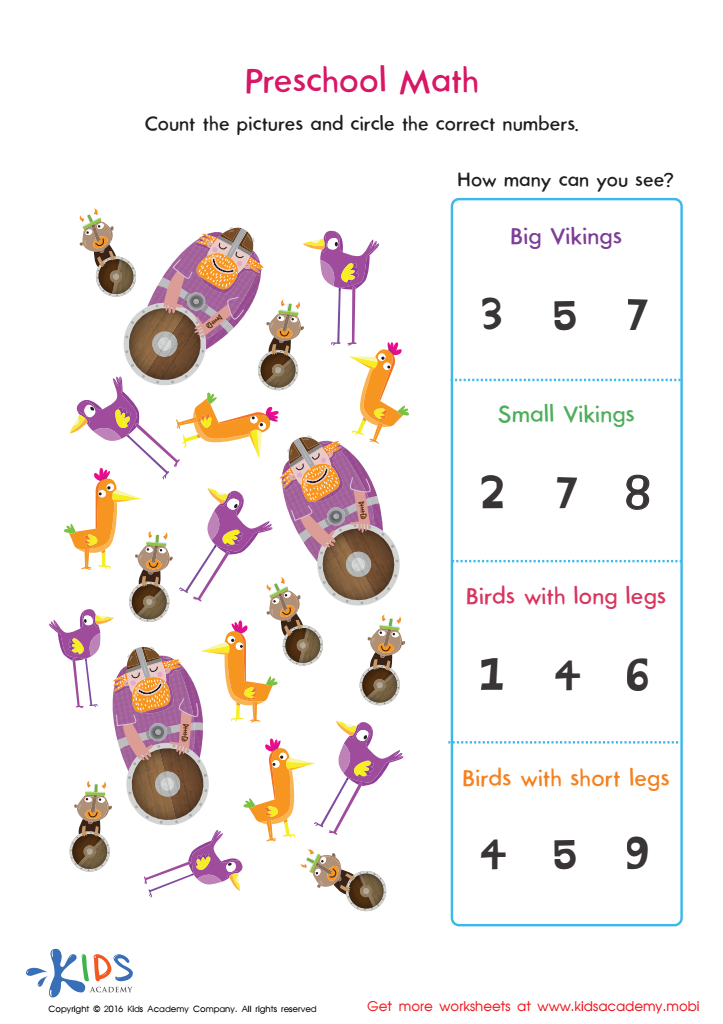
Counting Worksheet: Let's Practice Counting








Parents and teachers should prioritize counting skills, especially through engaging activities like the "Extra Challenge Matching" for ages 5-8, because these foundational skills are crucial for a child's overall cognitive development. Counting is not just about numbers; it develops a child's ability to recognize patterns, make comparisons, and understand quantities—all essential components of math reasoning.
Moreover, mastering counting can significantly boost a child’s confidence in their math abilities. Fun challenges and matching games stimulate interest and motivation, making learning interactive and enjoyable. This creative approach helps children associate numbers with tangible concepts, reinforcing their understanding in a memorable way.
At ages 5 to 8, children are particularly curious and open to exploring new concepts. Engaging in counting challenges fosters a supportive learning environment, encouraging collaboration and communication among peers, further enhancing social skills. The playful nature of these activities helps children develop persistence and problem-solving strategies, quintessential for future academic success.
Lastly, ensuring robust counting skills lays the groundwork for more complex mathematical concepts, enabling smoother transitions to higher-level math in the future. Thus, supporting children during this critical developmental stage is essential for their lifelong learning journey.