Basic Addition Skills Extra Challenge Worksheets for Ages 5-9
7 filtered results
-
From - To
Enhance your child’s math journey with our "Basic Addition Skills Extra Challenge Worksheets" designed for ages 5-9! These engaging worksheets offer fun and varied addition exercises that challenge young minds while reinforcing essential math concepts. Featuring colorful illustrations and interactive problem-solving activities, they cater to different learning styles. Perfect for supplementing schoolwork or providing extra practice at home, these worksheets encourage confidence and skill mastery in basic addition. Ideal for educators and parents alike, you can easily print and use them anytime. Help your child develop a strong foundation in mathematics with our thoughtfully crafted worksheets today!
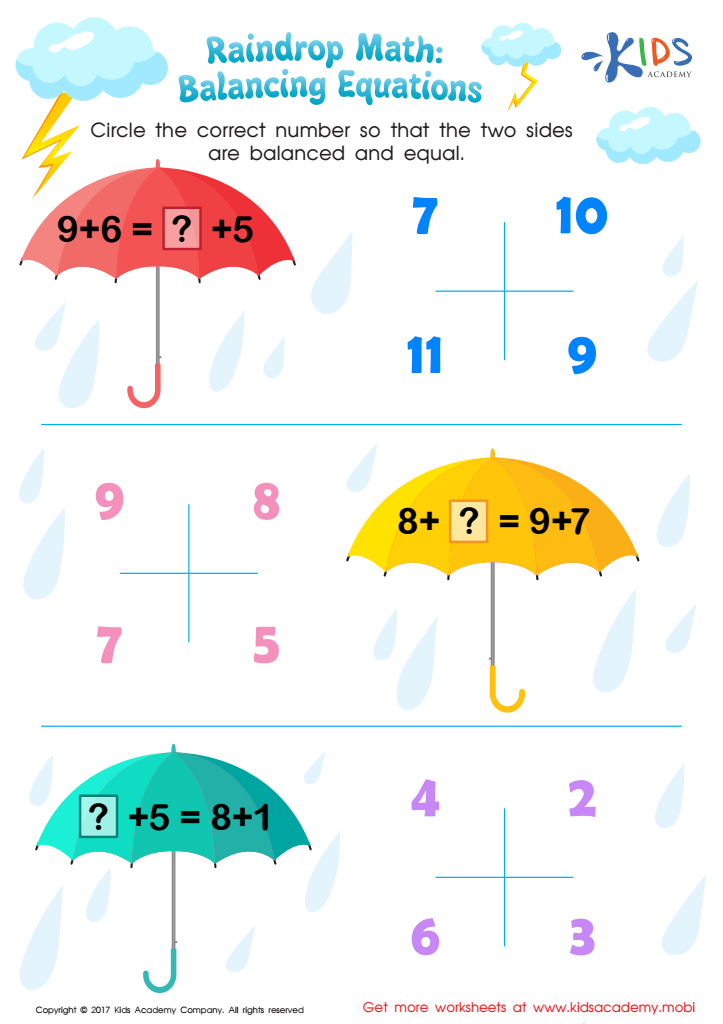
Raindrop Math Printable
 Assign to My Students
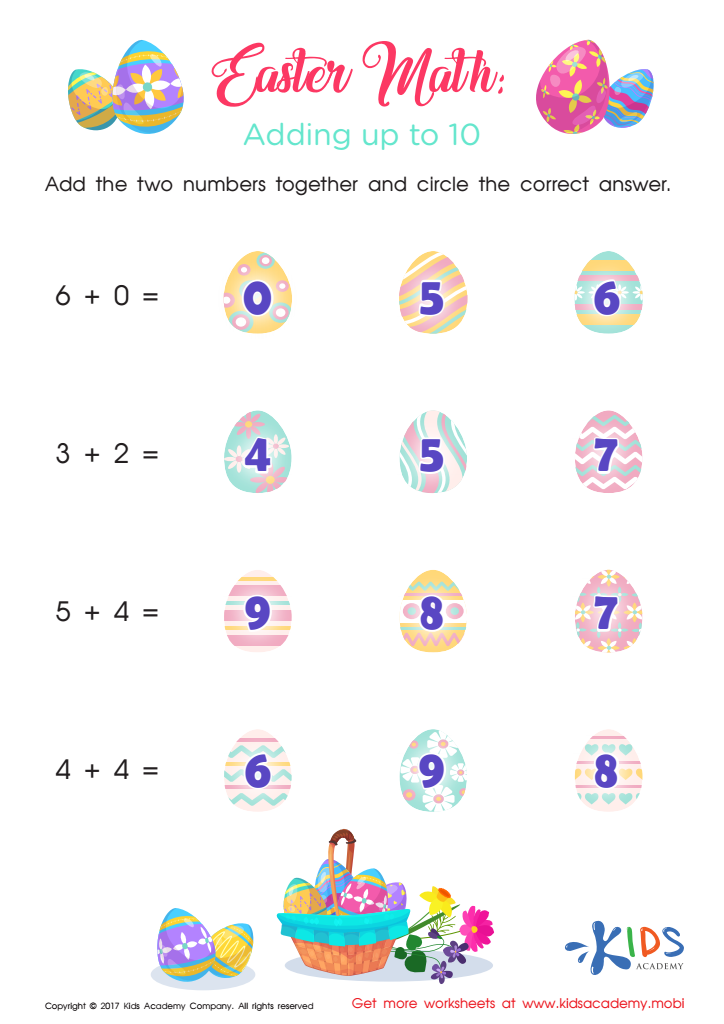
Addition Up To 10 Worksheet
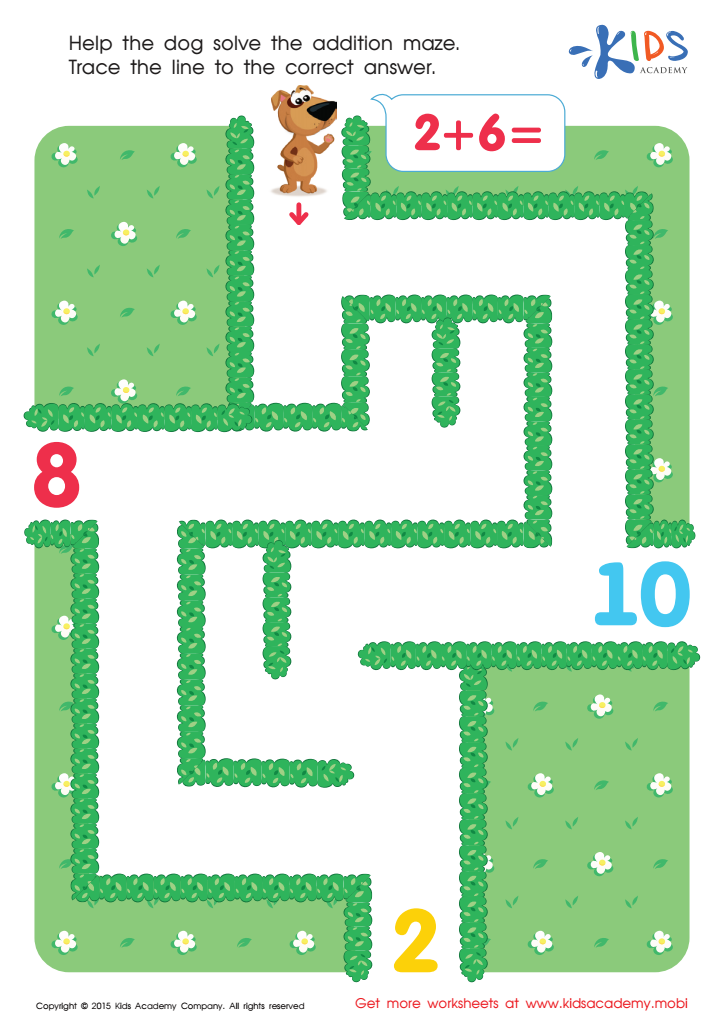
Two Plus Six Addition Worksheet
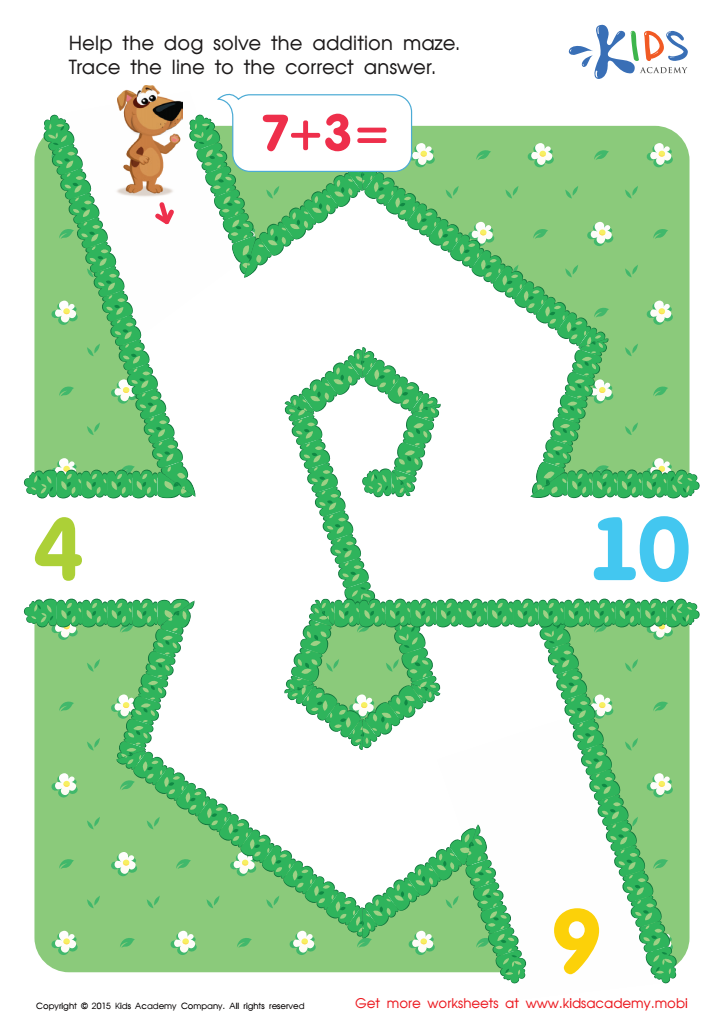
Seven Plus Three Worksheet
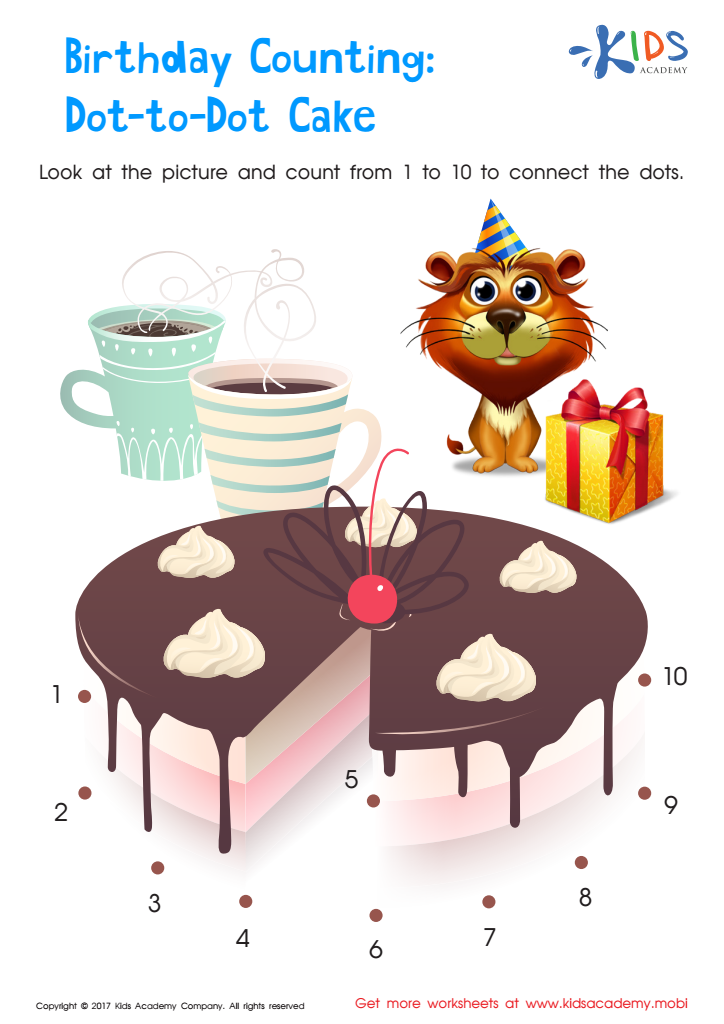
Birthday Counting Connect Dots Worksheet
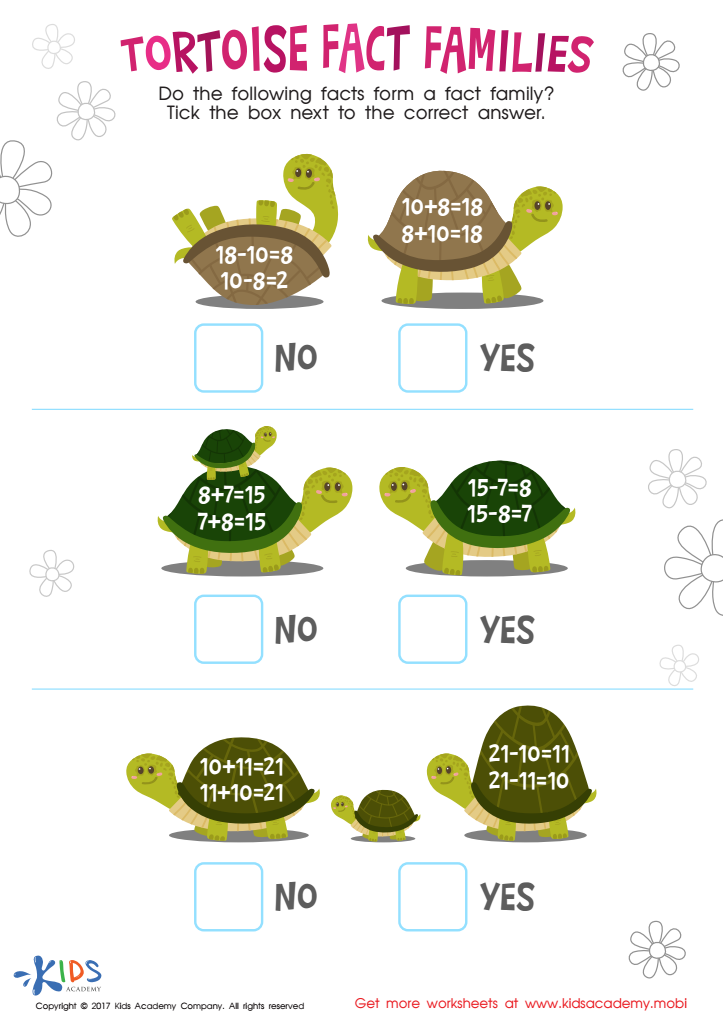
Tortoise Fact Families Printable
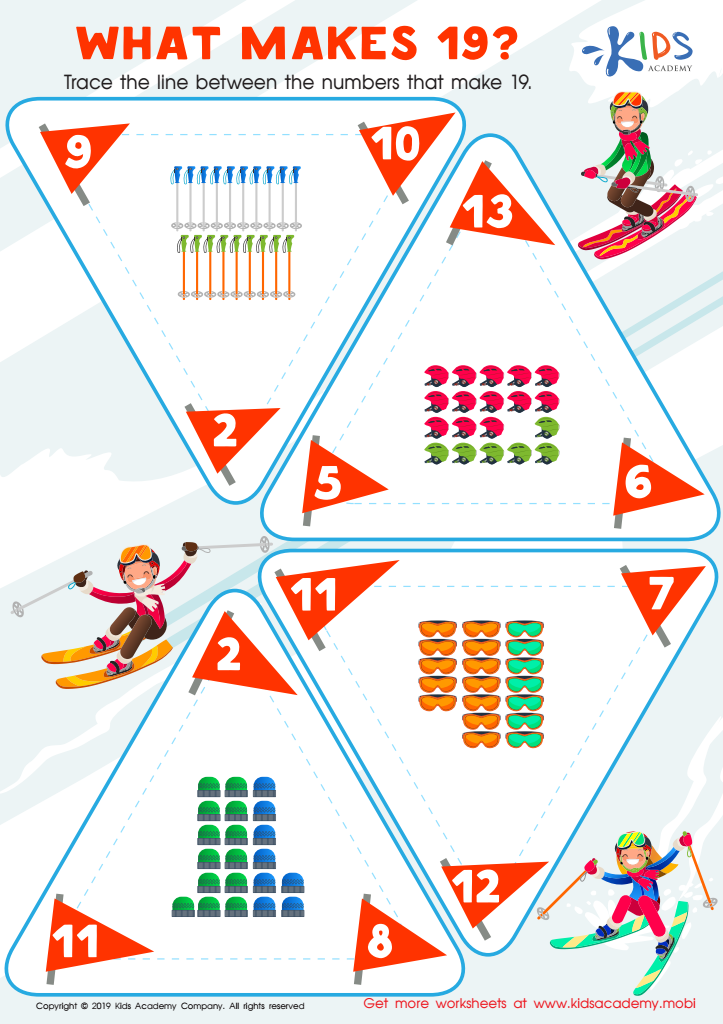
What Makes 19? Worksheet








Basic addition skills are foundational for a child's overall mathematical development and play a crucial role in their early education. For children ages 5-9, mastering these skills not only enhances their number sense but also boosts confidence and problem-solving abilities. Engaging in an "Extra Challenge" for basic addition allows children to deepen their understanding of numerical relationships beyond rote memorization.
Parents and teachers should care about this initiative because it offers opportunities for critical thinking and the application of math in everyday situations. Challenging children helps to engage their curiosity and fosters a love for learning. It can prevent math anxiety in later years by setting a strong base where children feel comfortable exploring more complex mathematical concepts.
Moreover, these skills are transferable, impacting areas like reading comprehension, linear thinking, and organizational abilities. When children participate in advanced challenges, they also learn to persevere in the face of difficulty, cultivate resilience, and develop a growth mindset. Overall, prioritizing basic addition skills through extra challenges ensures that children are well-prepared for future academic success and real-life applications of mathematics. Investing in their early math education benefits their overall cognitive and social development.








