Basic Counting Extra Challenge Worksheets for Ages 5-9
3 filtered results
-
From - To
Introducing our Basic Counting Extra Challenge Worksheets for Ages 5-9! Perfectly designed to bolster foundational math skills, these engaging and diverse activities make learning fun and effective for young minds. Each worksheet focuses on advanced counting techniques to help kids not only count but also recognize patterns, sequences, and numeration. Carefully crafted by experienced educators, these challenges offer a step-by-step progression tailored to your child's pace. Ideal for homeschooling, classroom settings, or supplemental practice at home. Equip your child with essential math skills and watch their confidence soar. Download now and take your child’s counting skills to the next level!
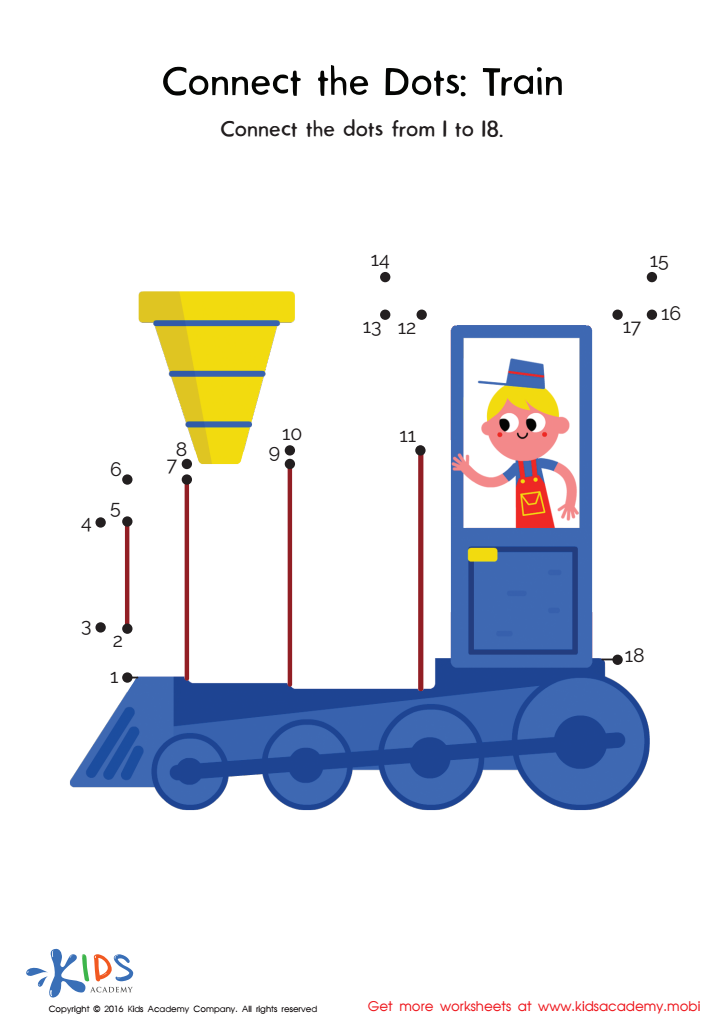
 Assign to My Students
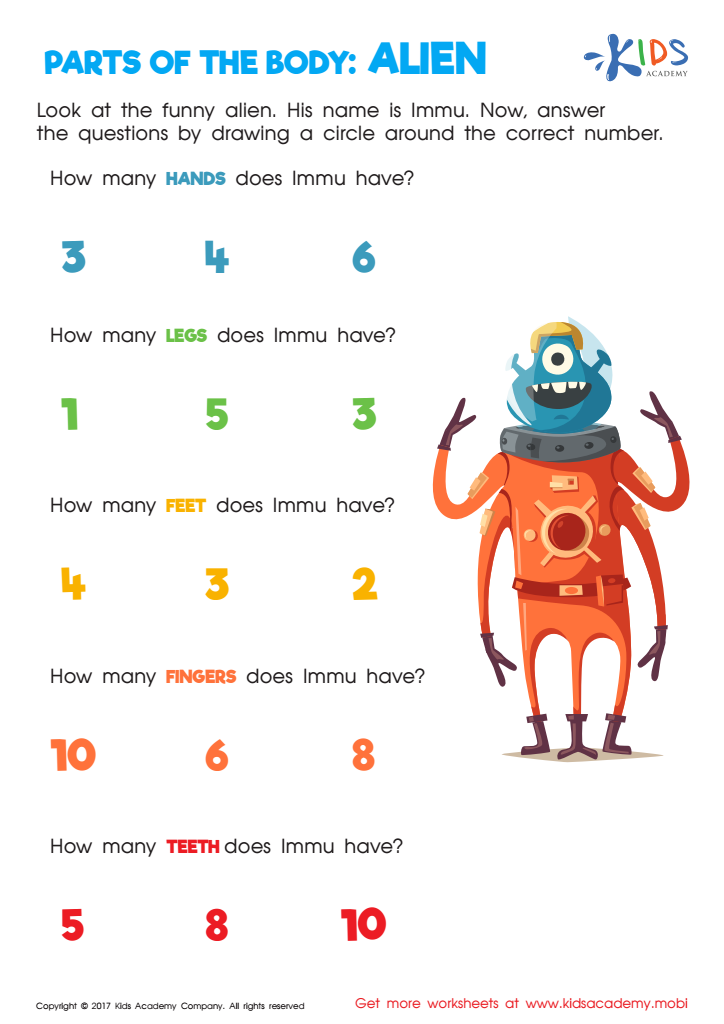
Alien Worksheet
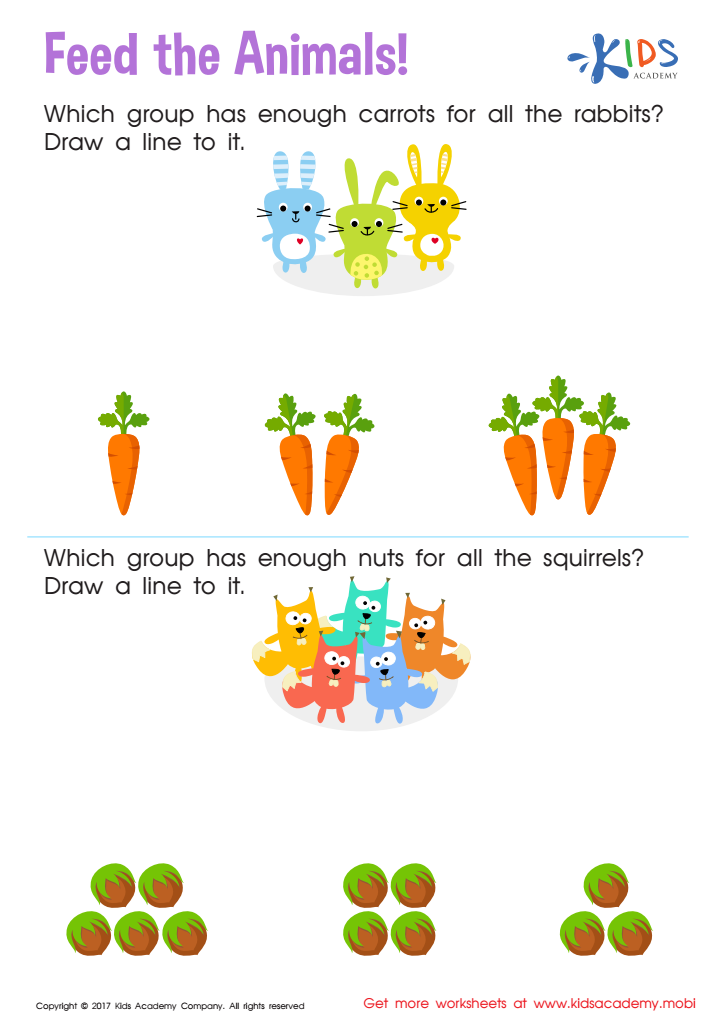
Count and Match: Feed the Animals Worksheet








Basic Counting Extra Challenges are vital for children aged 5-9 as they foster foundational mathematical skills that are crucial for their future academic success. At this developmental stage, children are forming critical neural connections that underpin their cognitive abilities. Engaging with extra counting challenges helps to reinforce these connections, ensuring they grasp important concepts like number recognition, sequencing, and the relationship between numbers.
For parents and teachers, emphasizing these challenges encourages a positive attitude towards math from an early age. Often, children who struggle with math can develop a fear or dislike of the subject; thus, early intervention with fun, engaging counting challenges can build confidence and interest. Additionally, these activities promote problem-solving skills, logical thinking, and attention to detail—abilities crucial not just in math, but across all areas of learning.
Moreover, counting challenges can be easily integrated into everyday activities, making learning seamless and meaningful. For instance, counting steps while climbing stairs, adding fruits in a basket, or sequencing story events enhances learning through practical experiences. Adopting such an approach cultivates a love for learning, ensuring children remain curious and eager to explore new concepts.
In summary, basic counting extra challenges lay down an essential educational foundation, boost children’s confidence and attitudes towards math, and develop critical thinking and problem-solving skills, making them indispensable for ages 5-9.








