Basic counting skills Extra Challenge Worksheets for Ages 5-9
4 filtered results
-
From - To
Boost your child's counting confidence with our Basic Counting Skills Extra Challenge Worksheets, designed for ages 5-9! Tailored to provide that extra push, these engaging activities foster a deeper grasp of numbers and sequencing. Each worksheet builds upon fundamental counting principles through fun, interactive exercises. Watch as your young learner tackles advanced numeric patterns, skip counting, and backwards counting with enthusiasm and ease. Perfect for reinforcing school learning or as a summertime challenge, our worksheets make mastering math both enjoyable and rewarding. Nurture a lifelong love for numbers with Kids Academy – where learning meets fun!
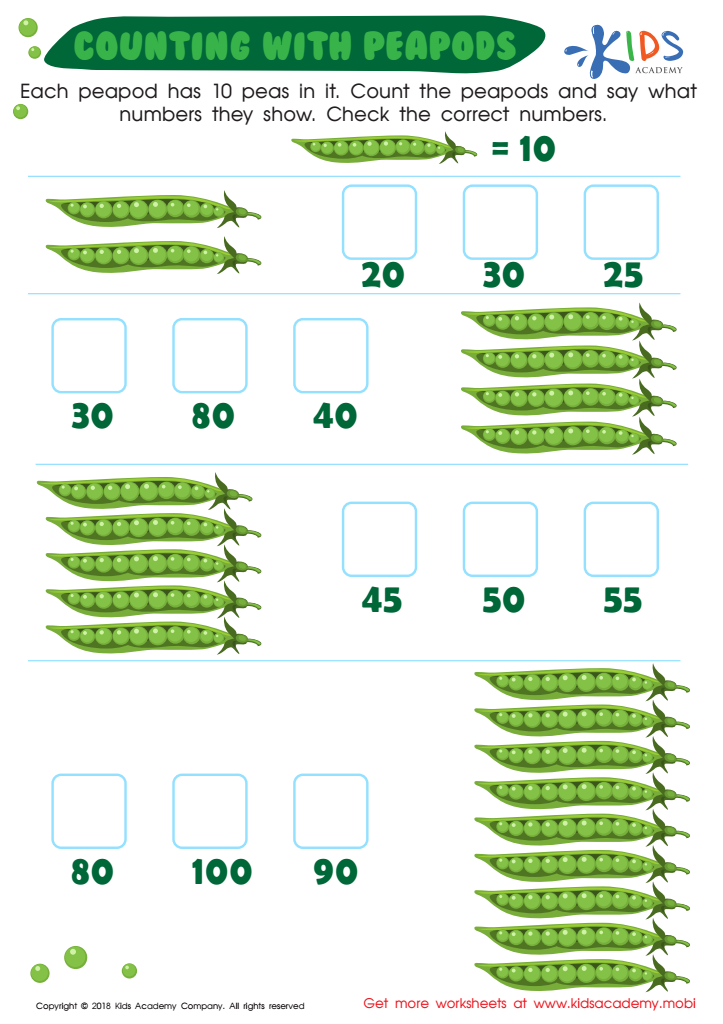
Number Worksheet: Counting With Peapods
 Assign to My Students
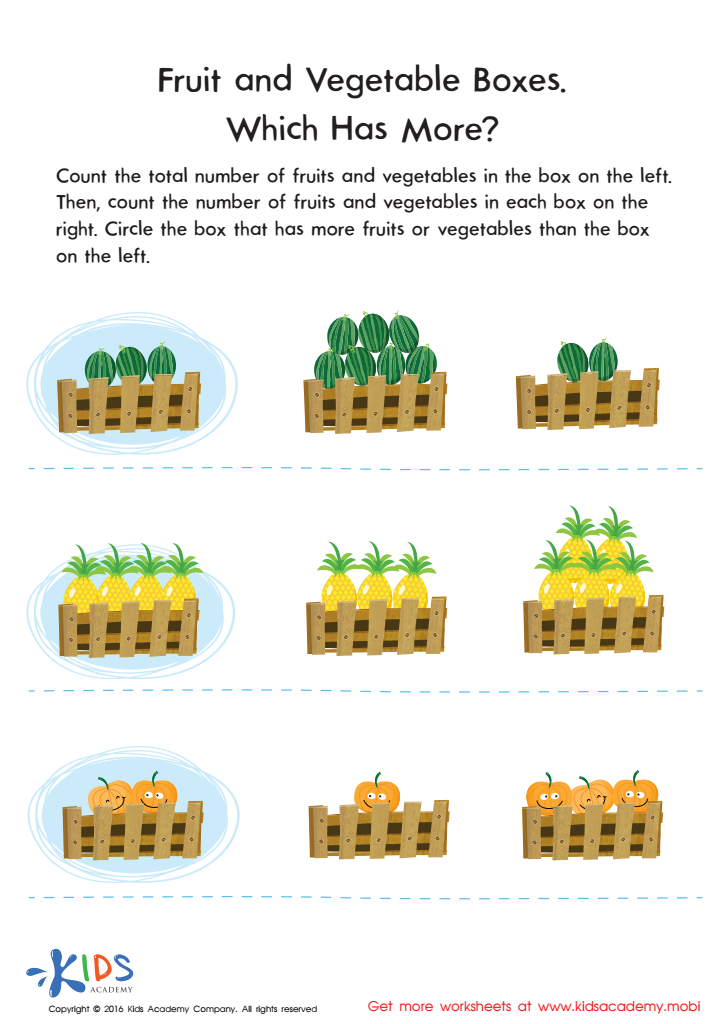
Which Has More? Size Worksheet
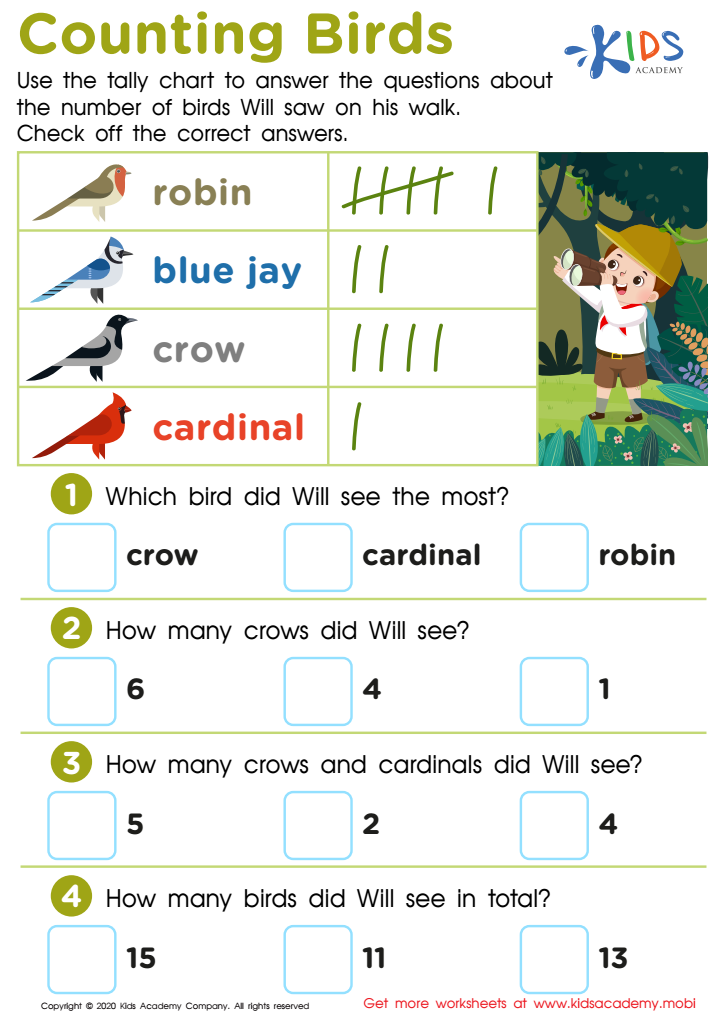
Counting Birds Worksheet
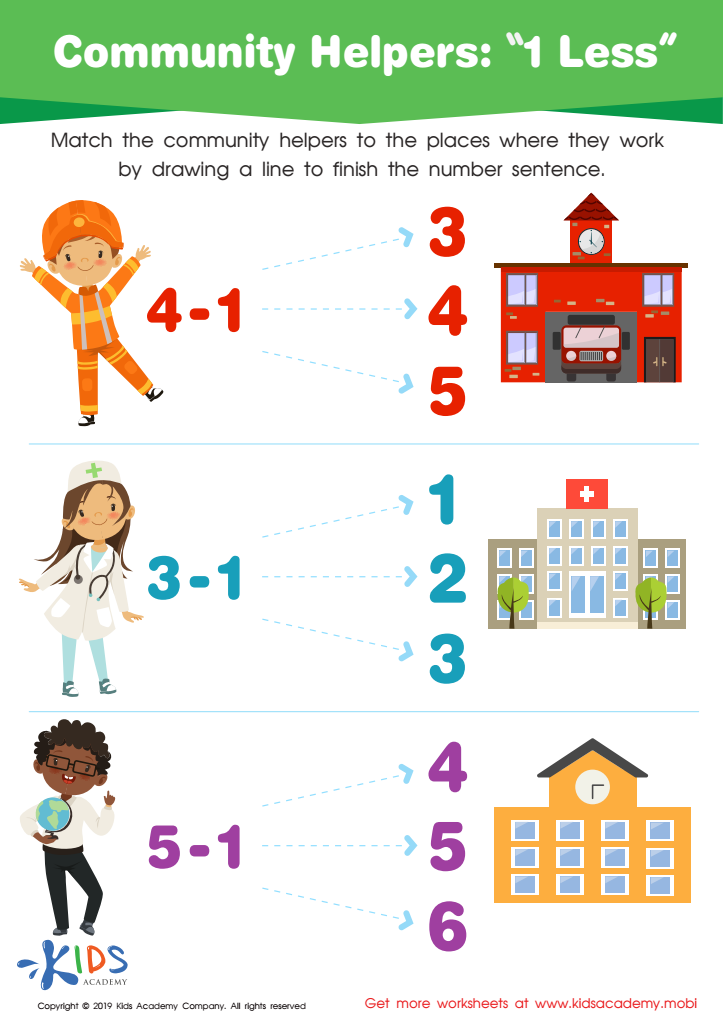
Community Helpers: 1 less Worksheet








Basic counting skills form the bedrock of mathematical understanding for children ages 5-9, as it not only aids in their cognitive development but also sets them up for future academic success. At this formative stage, strengthening counting abilities ensures that children can grasp more complex mathematical concepts with greater ease later on.
Parents and teachers should care about providing extra challenges in counting because it stimulates young minds and encourages a growth mindset. By engaging in activities that go beyond rote memorization, children learn to connect numbers to real-world contexts, which enhances their critical-thinking and problem-solving skills. This kind of mental stretching promotes a deeper comprehension rather than just surface-level learning.
Moreover, adding extra challenges can keep children motivated and interested in math. This enthusiasm is essential; when kids enjoy what they are learning, they are more likely to engage with the material and retain information. Confidence also burgeons when children successfully conquer advanced tasks, fostering a positive attitude towards future academic ventures.
In the long term, a strong foundation in counting and number sense can lead to greater proficiency in subjects like science, economics, and technology. Parents and teachers investing in these skills ensure children reap the long-term benefits of a solid mathematical groundwork.








