Comparing objects Extra Challenge Worksheets for Ages 5-9
3 filtered results
-
From - To
Our "Comparing Objects Extra Challenge Worksheets for Ages 5-9" are designed to bolster critical thinking and observation skills in young learners. Packed with a variety of engaging activities, these printables help children explore similarities and differences in everyday objects, improving their ability to classify and categorize. Each worksheet is thoughtfully crafted to challenge your child's perception and analytical abilities, making learning both fun and educational. Perfect for classroom or home use, these worksheets encourage detailed comparison, fostering foundational skills in math, science, and logical reasoning that will serve them well in their academic journey.
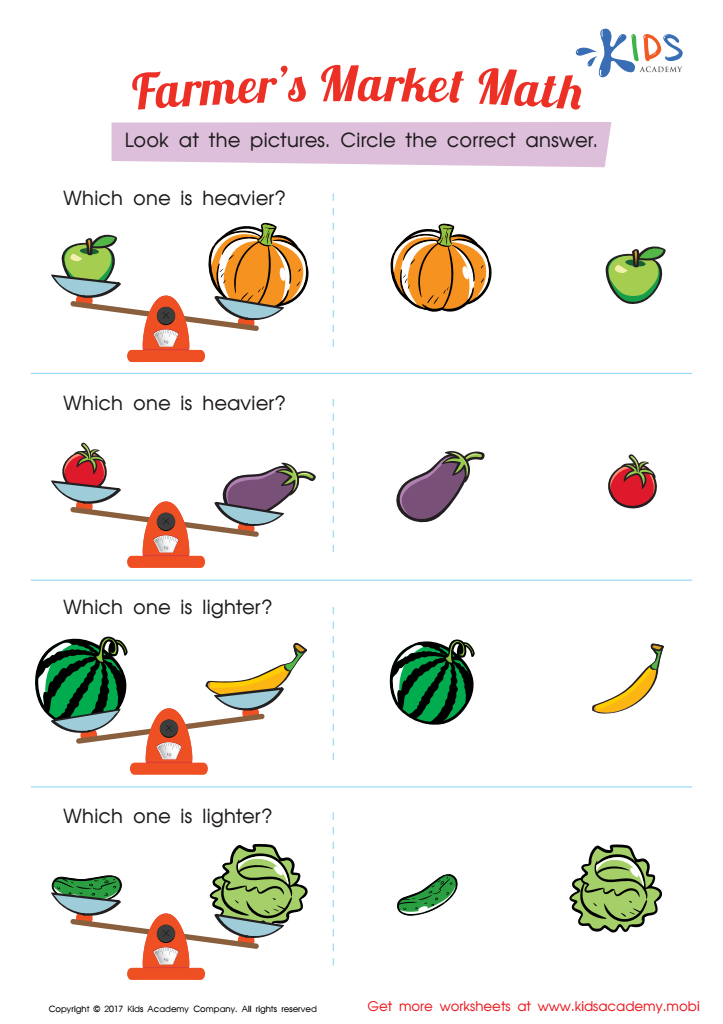
Which One Is Heavier Worksheet
 Assign to My Students
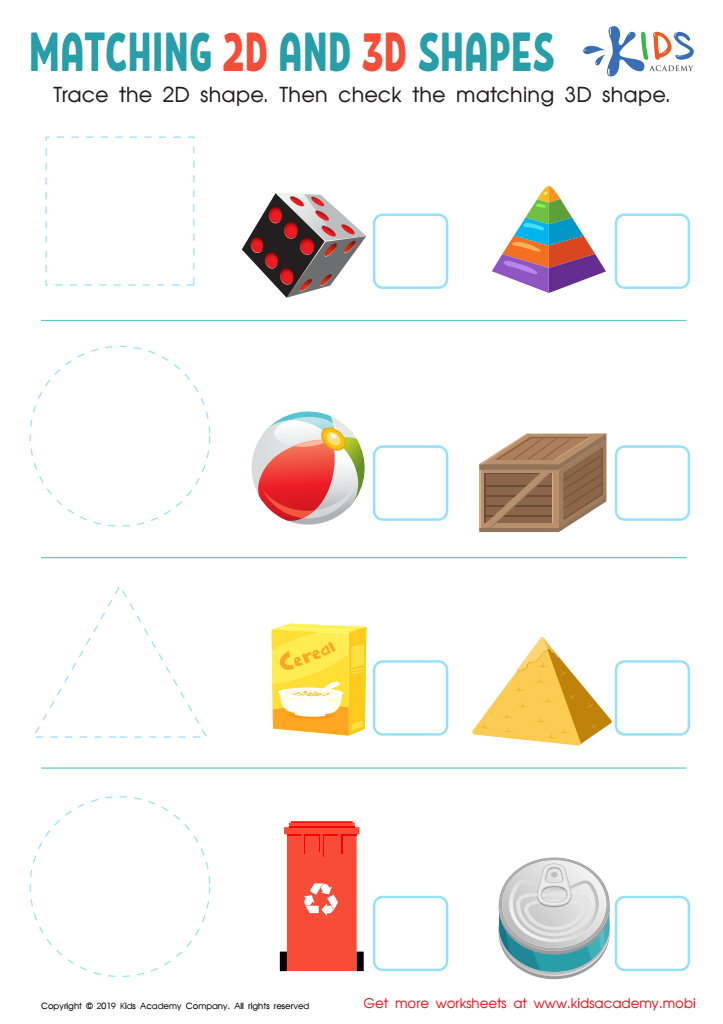
Matching 2D and 3D Shapes Worksheet
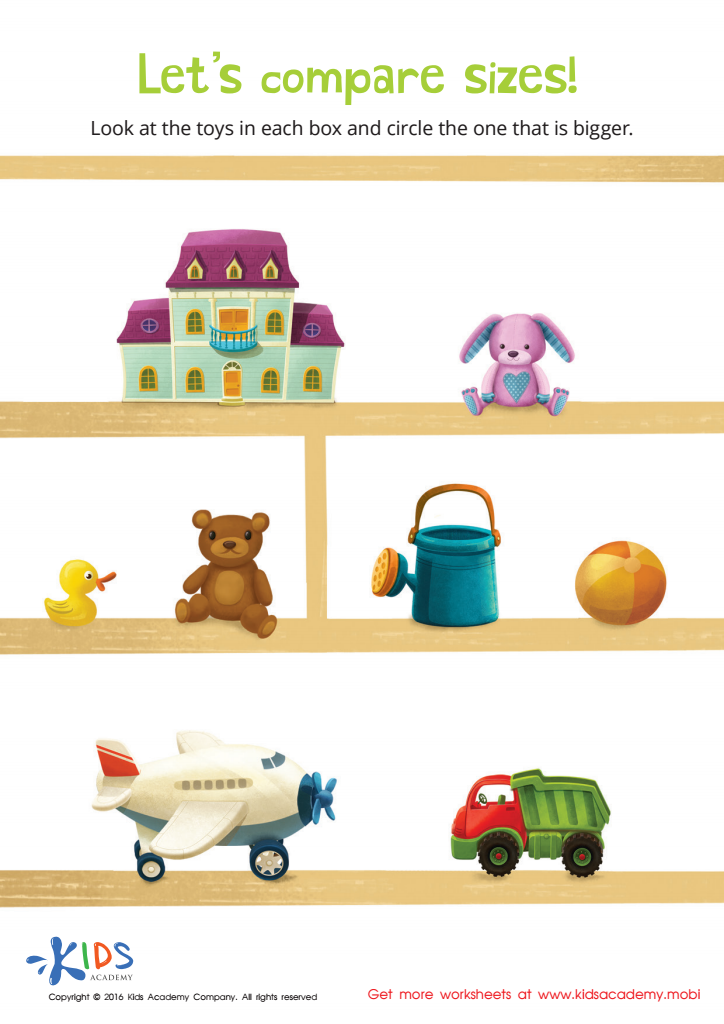
Classifying by Size Sorting Worksheet








Parents and teachers should care about introducing an "Extra Challenge" on comparing objects for children aged 5-9 because it plays a critical role in their cognitive growth and foundational mathematics skills. At this young age, kids are naturally curious and eager to learn through exploration and play. Engaging them in activities that involve comparing objects based on attributes such as size, weight, length, and quantity enhances their observational skills and ability to notice differences and similarities.
Comparing objects helps children develop important analytical and critical thinking skills. By addressing questions like "Which toy is taller?" or "Which container holds more?", kids practice making informed judgments and become adept at reasoning logically. These exercises also pave the way for understanding more complex mathematical concepts such as measurement, sorting, and categorization later in their academic journey.
Furthermore, through collaborative comparison activities, children learn social skills such as sharing, communicating their ideas, and listening to others' perspectives. This form of active learning supports a holistic approach, integrating academic learning with social-emotional growth—a combination vital for well-rounded development. Encouraging children to take on these extra challenges also boosts their self-confidence, fosters a growth mindset, and instills a lasting love for learning.








