Counting skills Extra Challenge Worksheets for Ages 5-9 - Page 3
55 filtered results
-
From - To
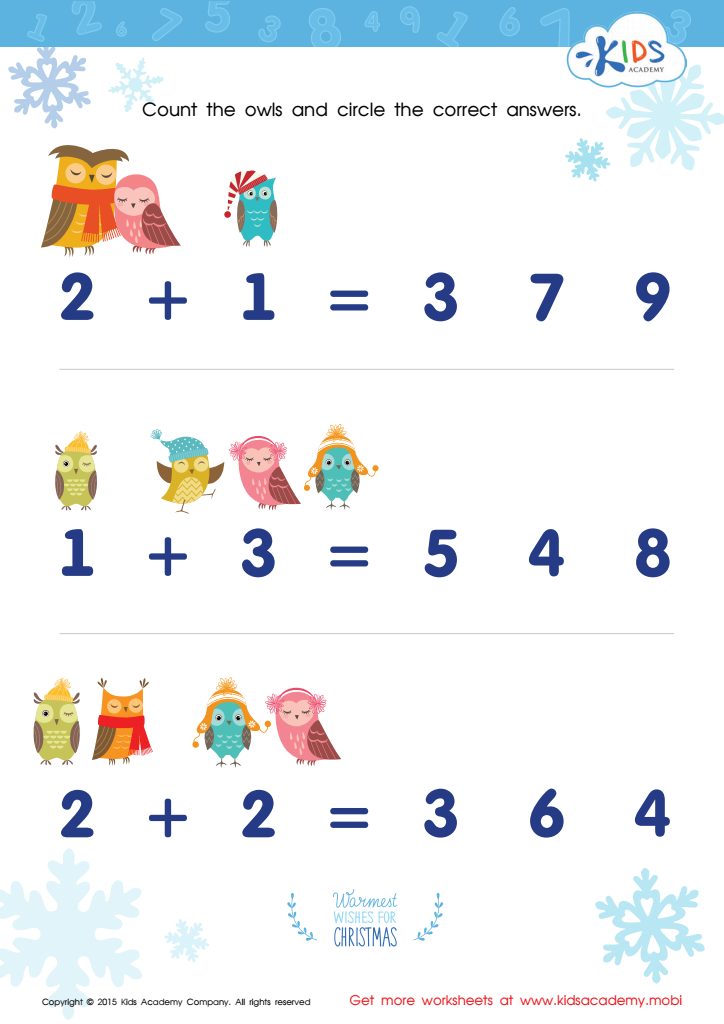
Count Little Owls Worksheet
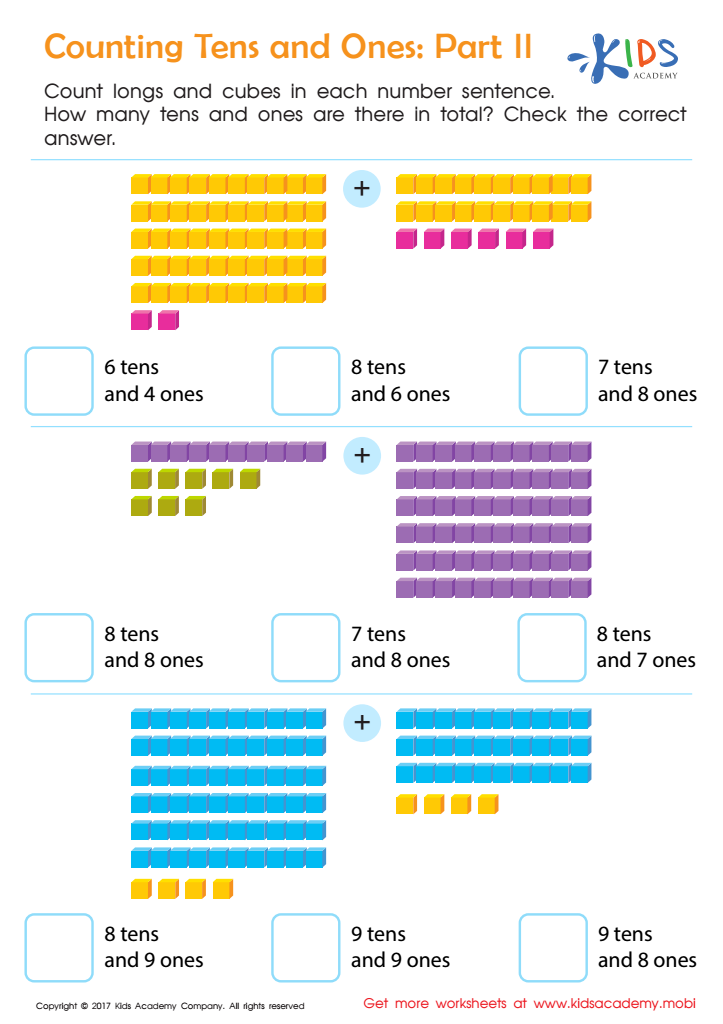
Counting Tens and Ones: Part 2 Worksheet
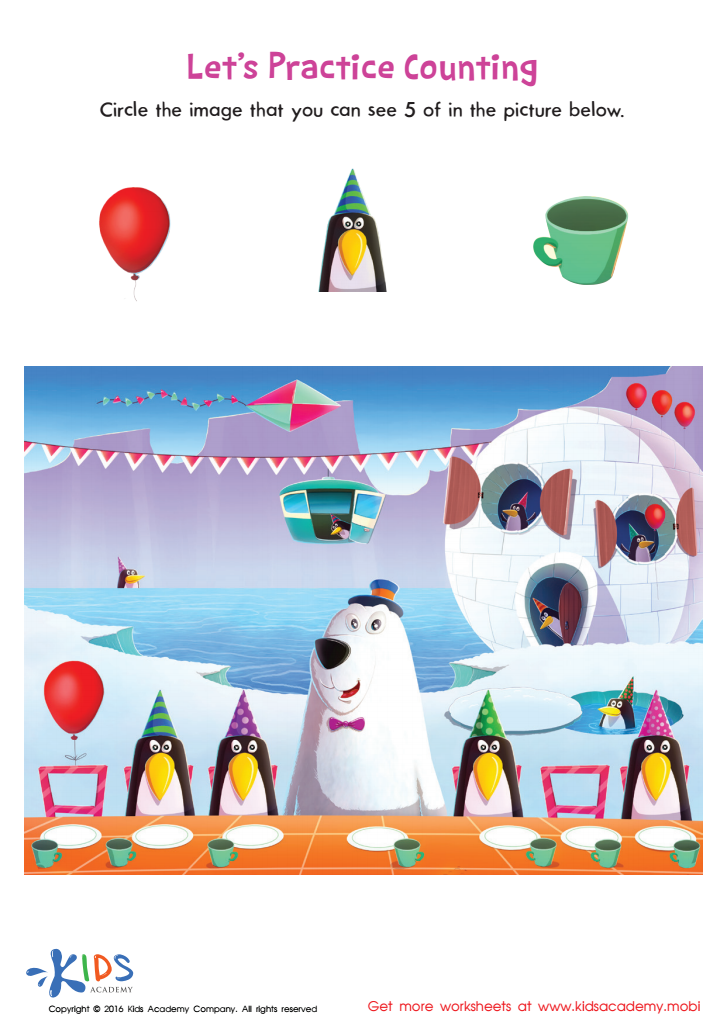
Counting Worksheet: Let's Practice Counting
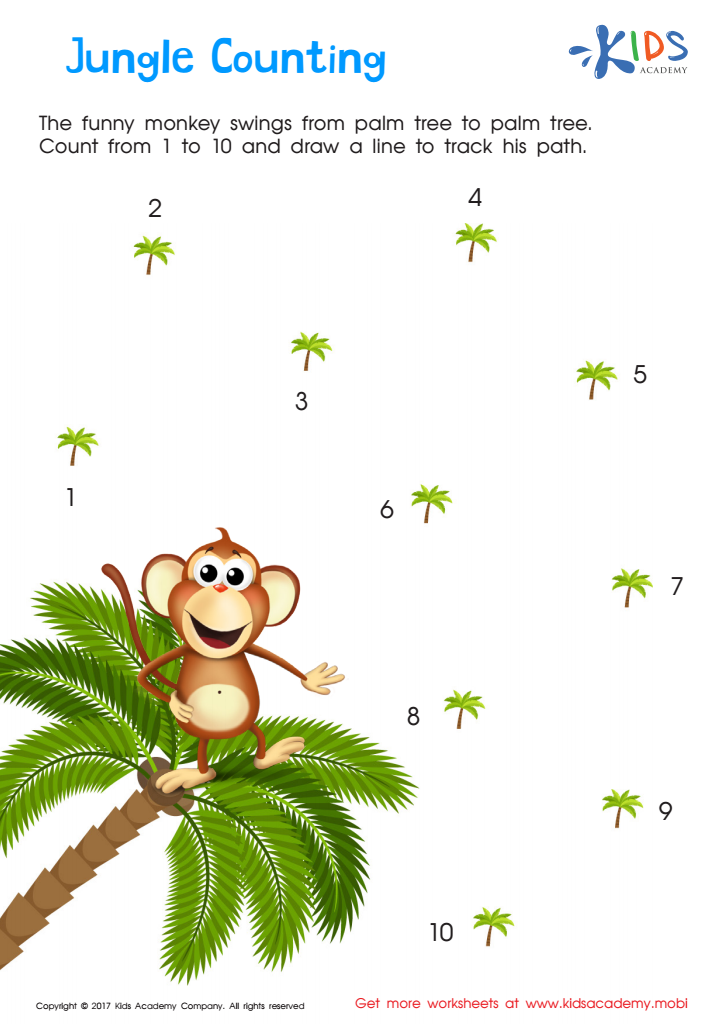
Jungle Counting Connect Dots Worksheet
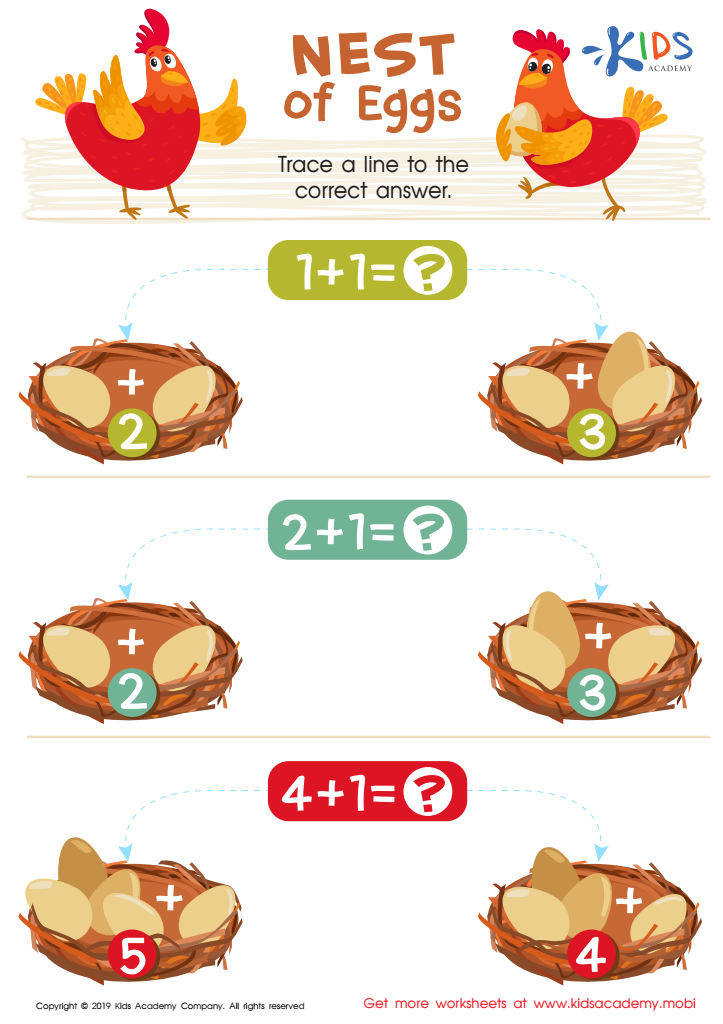
Nest of Eggs Worksheet
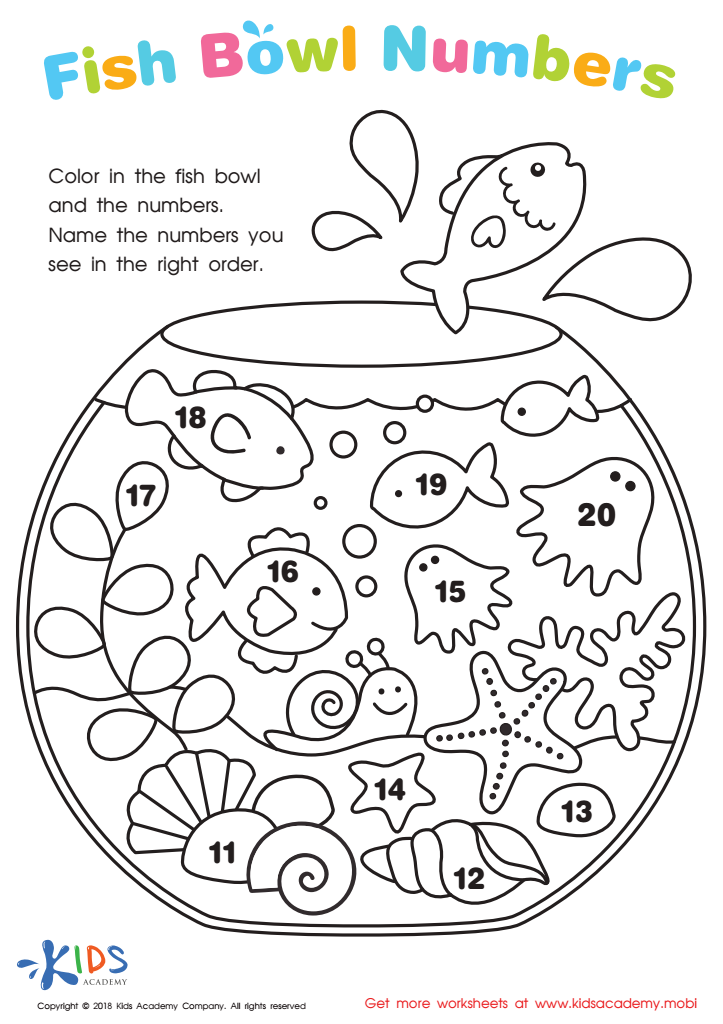
Fish Bowl Numbers Worksheet
 Assign to My Students
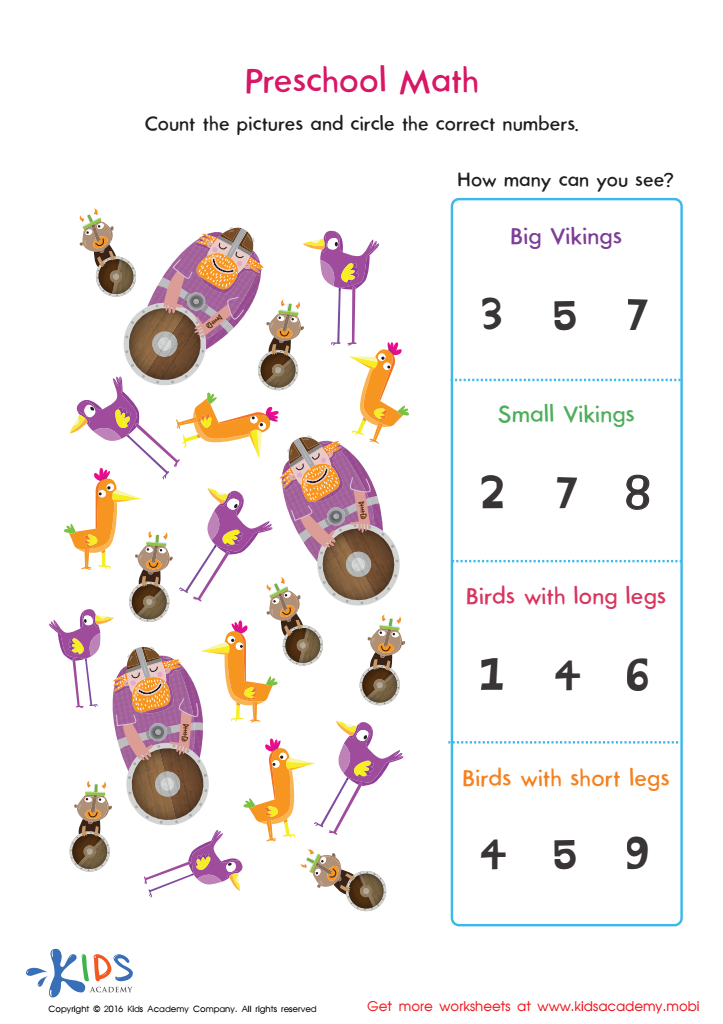








Counting skills form the foundation for broader mathematical understanding and problem-solving, making it crucial for parents and teachers to nurture these skills in children aged 5-9. At this developmental stage, children are transitioning from simple numeric recognition to more complex operations, such as addition, subtraction, and eventually multiplication and division. By introducing counting challenges, educators and parents can enhance number sense, fluency, and confidence in mathematical abilities.
These activities cultivate critical thinking and cognitive development. When children engage in counting tasks, they learn to recognize patterns, understand sequencing, and make predictions. Such skills are not only essential for advanced mathematics but also for everyday activities and logical reasoning.
Additionally, counting challenges can be fun and enjoyable, helping to foster a positive attitude towards learning. Innovative and engaging challenges can spark curiosity and motivation, laying a solid groundwork for a lifelong interest in mathematics and learning in other disciplines.
Early proficiency in counting provides a strong basis for future academic success. Parents and teachers investing time in such challenges can significantly impact a child's educational journey, preparing them for more complex concepts and helping to close learning gaps early in their education.








