Mental math improvement Extra Challenge Worksheets for Ages 5-9
3 filtered results
-
From - To
Introducing our "Mental Math Improvement Extra Challenge Worksheets for Ages 5-9" designed to make math fun and engaging for young learners! These worksheets focus on enhancing critical mental math skills through a variety of challenging and stimulating exercises. From addition and subtraction to multiplication and division, each worksheet helps build a stronger mathematical foundation. With colorful designs and age-appropriate problems, our resources are perfect for both classroom and home use. Boost your child's confidence and problem-solving abilities while developing a love for math! Start improving their mental math skills today with our expertly crafted worksheets.
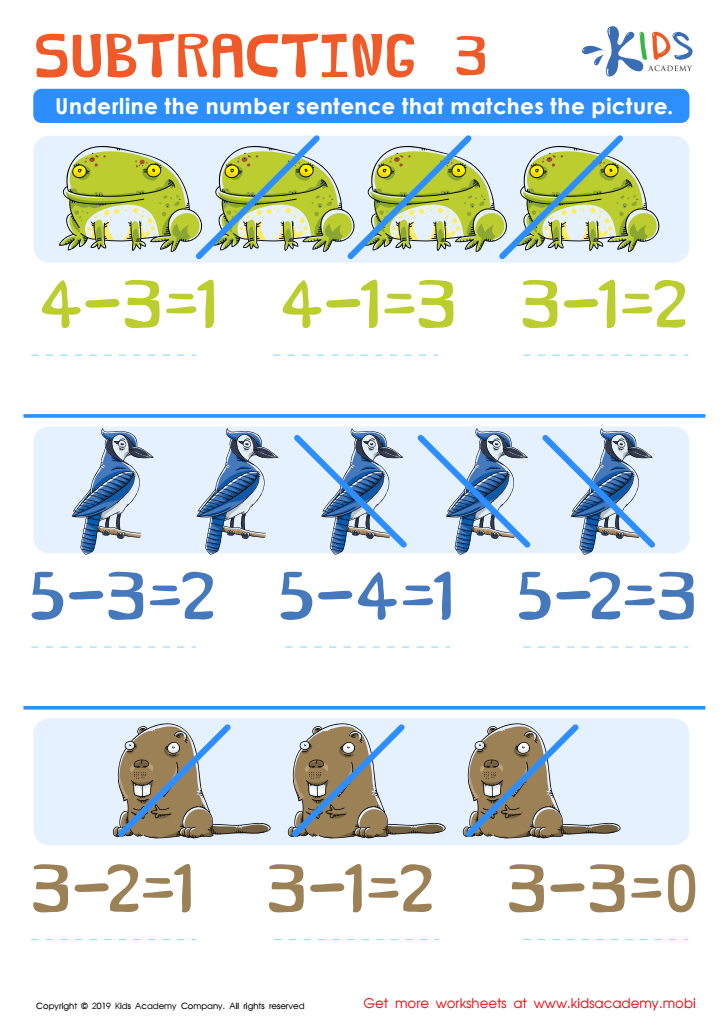
Subtracting 3 Worksheet
 Assign to My Students
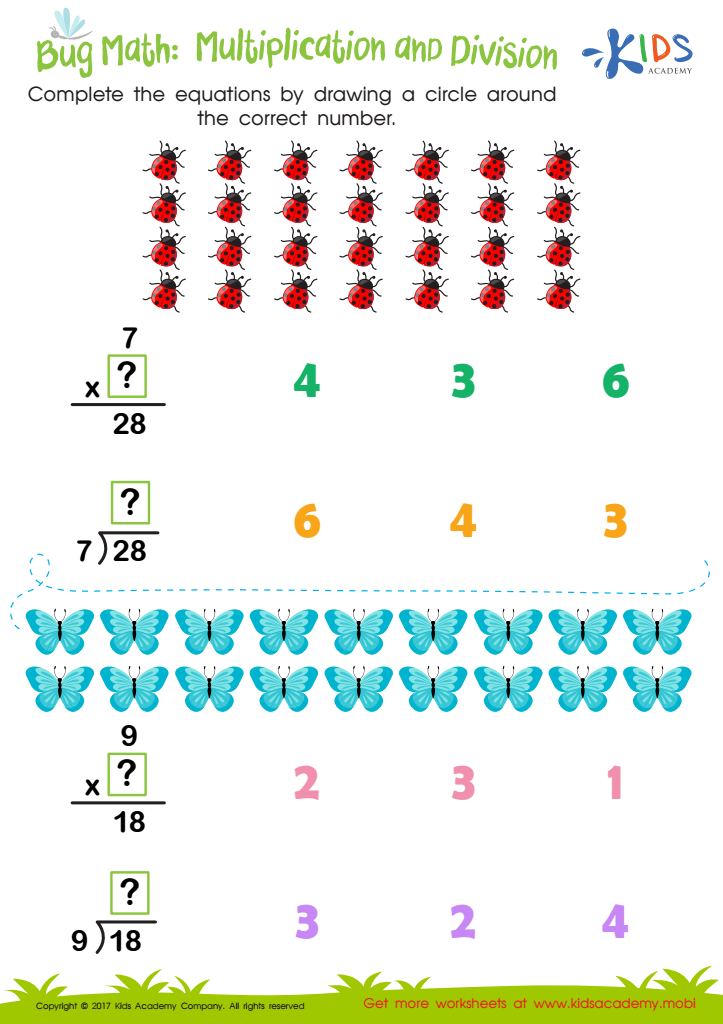
Multiplication and Division Worksheet
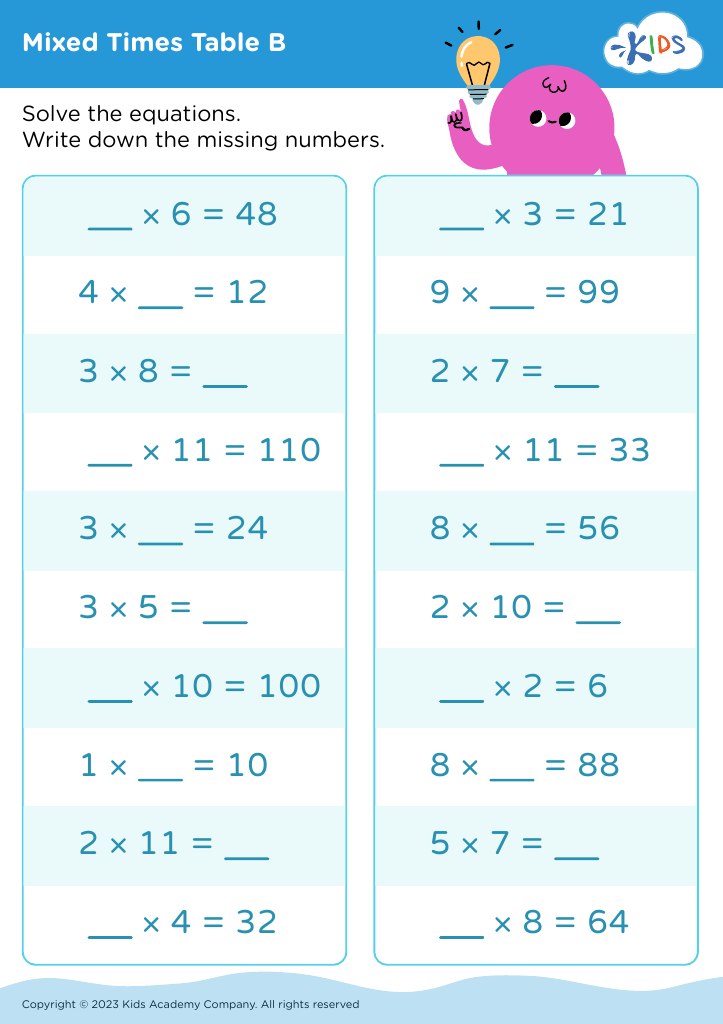








Mental math skills serve as the foundation for more advanced mathematical concepts and reasoning. For children ages 5-9, engaging in mental math improvement challenges holds significant benefits for their overall cognitive and academic development. By enhancing their ability to perform calculations quickly in their heads, children build stronger neural connections that support better memory retention, problem-solving skills, and logical thinking.
Mental math practice helps children become more confident in handling numbers, reducing math anxiety and fostering a positive attitude towards the subject. This mental agility translates to other areas of their lives, improving their ability to think critically and approach problems systematically. Early practice also sets the stage for more complex math concepts such as multiplication, division, and algebra, ensuring that children are better prepared as they progress through their education.
Furthermore, mental math encourages the development of number sense – the intuitive grasp of numbers and their relationships. With a strong number sense, children can estimate, reason proportionally, and understand mathematical concepts at a deeper level. This foundational skill is crucial not just for academic success, but also for everyday activities that require numerical understandings, such as time management, budgeting, and decision making.
Ultimately, by emphasizing mental math improvements in early education, parents and teachers are investing in their children's long-term cognitive growth and problem-solving abilities, helping to cultivate capable, confident learners.








