Time reading skills Extra Challenge Worksheets for Ages 5-9
5 filtered results
-
From - To
Our Time Reading Skills Extra Challenge Worksheets are specially designed for children aged 5-9 to enhance their ability to read both analog and digital clocks. These worksheets provide engaging and challenging problems to help young learners master the concept of time. From simple hour and minute tasks to more complex time conversions and word problems, our materials cater to various skill levels. Perfect for classroom settings or home practice, these worksheets will help build a strong foundation in time management, critical thinking, and problem-solving. Empower your child with the tools they need to become confident timekeepers!
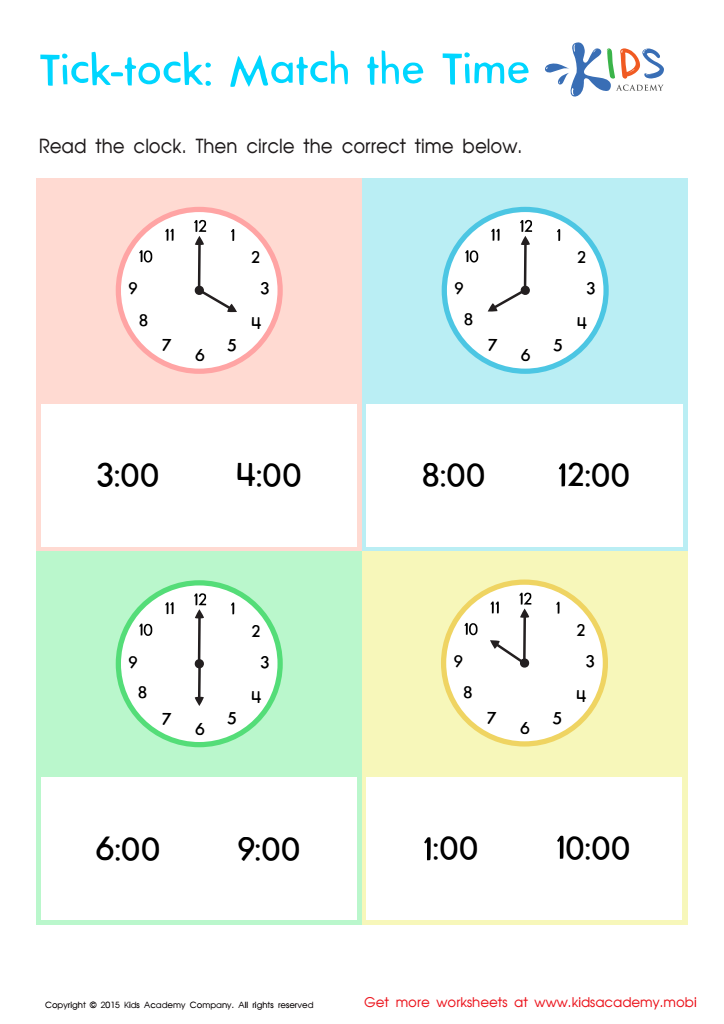
Telling The Time Worksheet: Part 4
 Assign to My Students
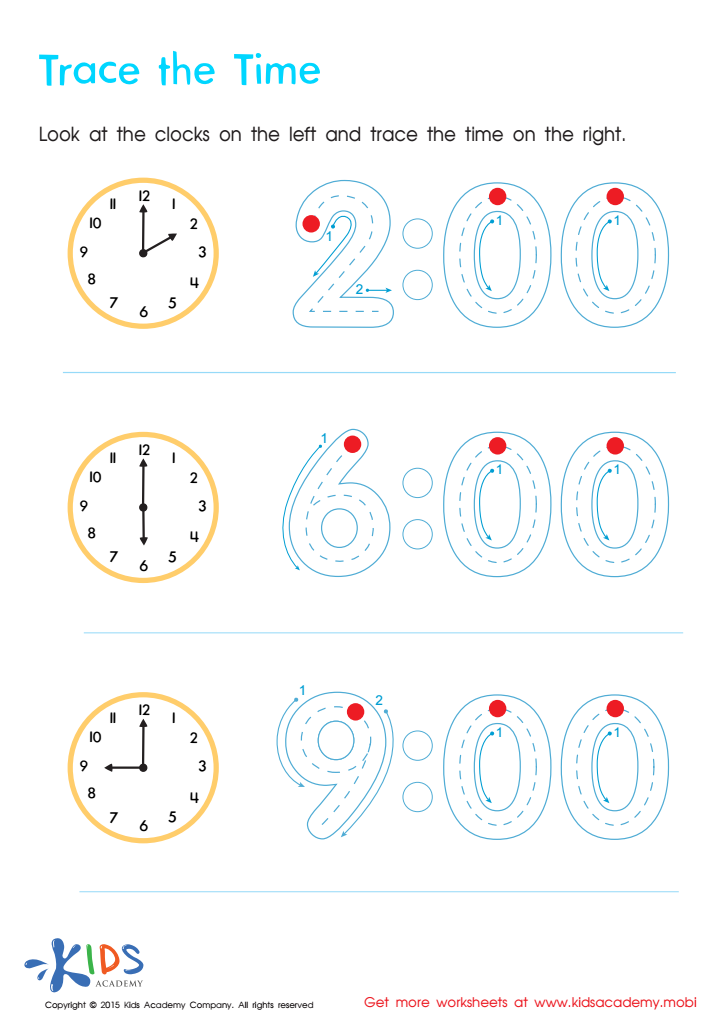
Telling The Time Worksheet: Part 2
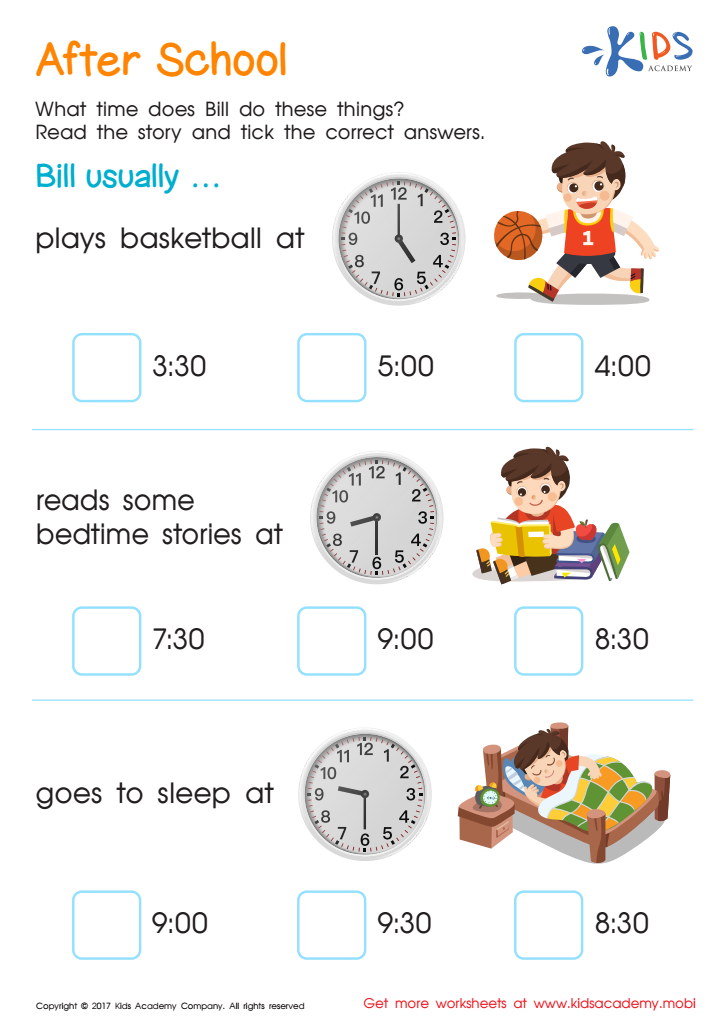
After School Time Printable
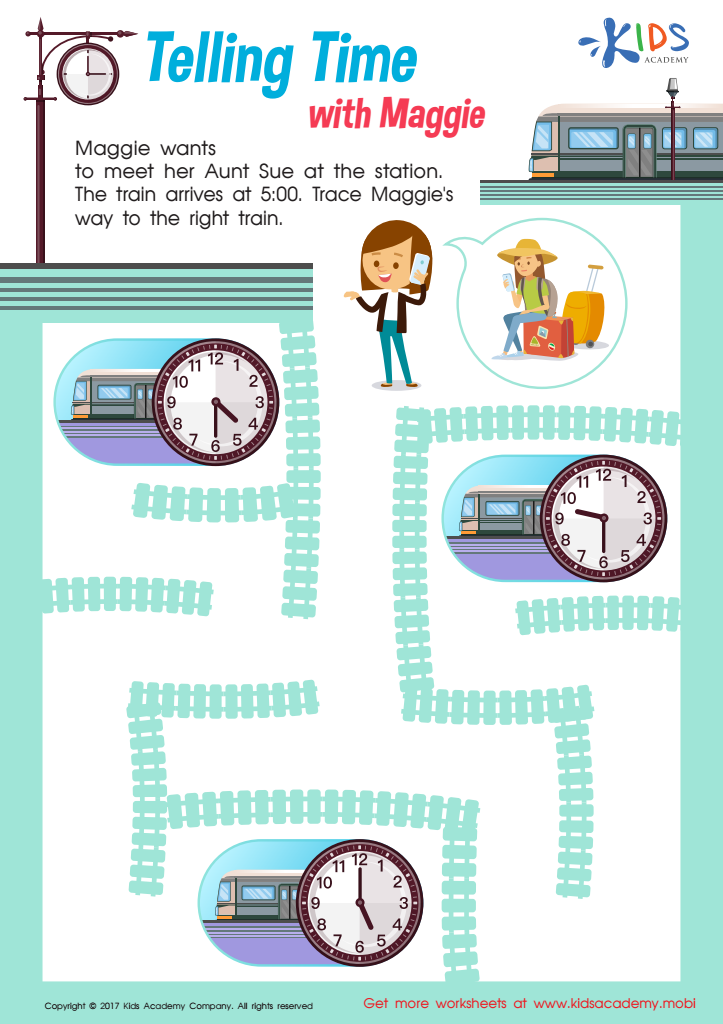
Telling Time With Maggie Time Worksheet
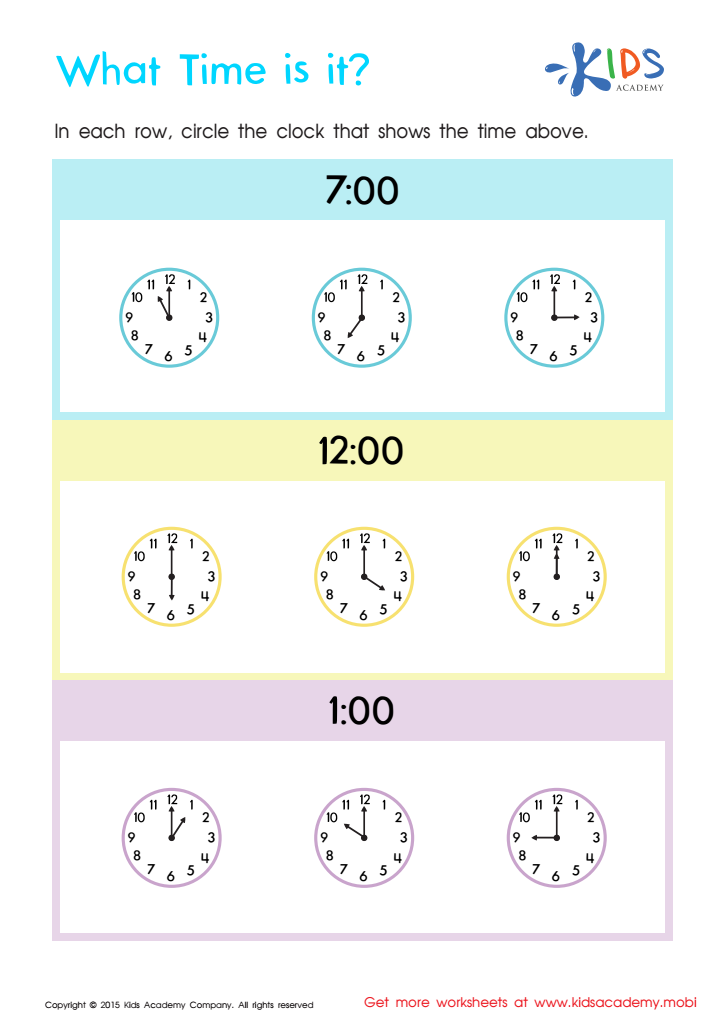
Telling The Time Worksheet: Part 3








Parents and teachers play a crucial role in a child's early development, and prioritizing Time reading skills for children aged 5-9 is essential. These foundational skills extend beyond the ability to tell time on a clock; they enhance cognitive development, reinforce mathematical concepts, and improve daily functioning.
For one, understanding clock reading helps children grasp the concept of time management, a skill vital for academic success and daily planning. By learning to read time, kids become more disciplined, capable of adhering to schedules, and better at prioritizing tasks.
Moreover, telling time involves interpreting both analog and digital clocks, requiring numerical recognition and arithmetic understanding, such as counting by fives. This reinforces essential math skills in a practical context, making math more engaging and relevant.
Additionally, reading skills and cognitive development are positively impacted. When children decode time-related information, it boosts their problem-solving abilities and critical thinking.
Lastly, it instills a sense of independence and responsibility. Children able to manage their time can track activities like play, study, and sleep, cultivating self-regulation.
In summary, emphasizing time reading skills for young children enriches their education, nurtures key life skills, and fosters independence, making it a meaningful focus for both parents and teachers.








