Understanding graphs Extra Challenge Worksheets for Ages 5-9
3 filtered results
-
From - To
Our "Understanding Graphs Extra Challenge Worksheets for Ages 5-9" are designed to help young learners master graph interpretation through fun and engaging activities. These worksheets incorporate colorful visuals and real-life scenarios, making learning both effective and enjoyable. Children will enhance their skills in reading bar graphs, pictograms, and more, building a solid foundation in data interpretation. Ideal for extra practice at home or supplementing classroom lessons, these challenges are sure to boost confidence and proficiency in graph comprehension. Set your child up for success in math with these expertly crafted worksheets from Kids Academy!
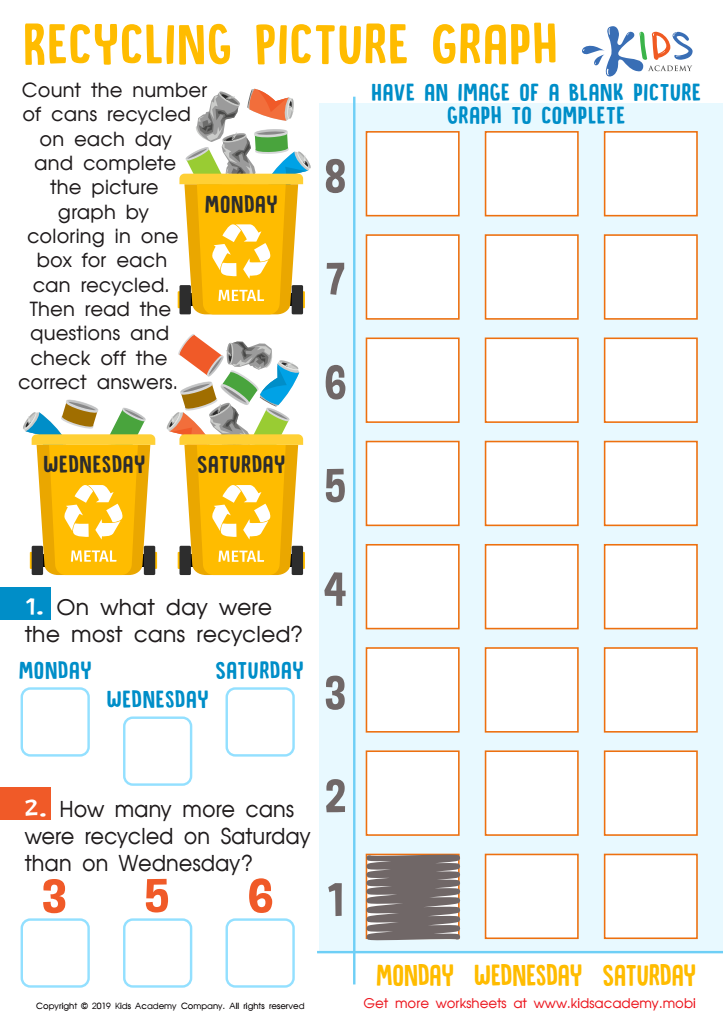
Recycling Picture Graph Worksheet
 Assign to My Students
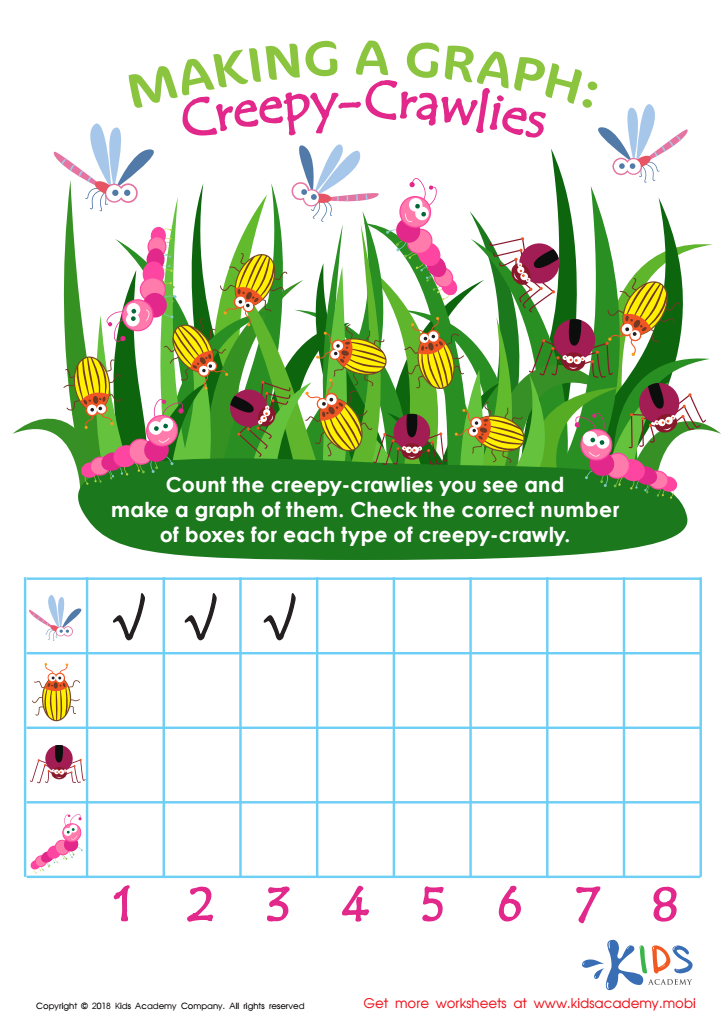
Making a Graph: Creepy Crawlies Worksheet
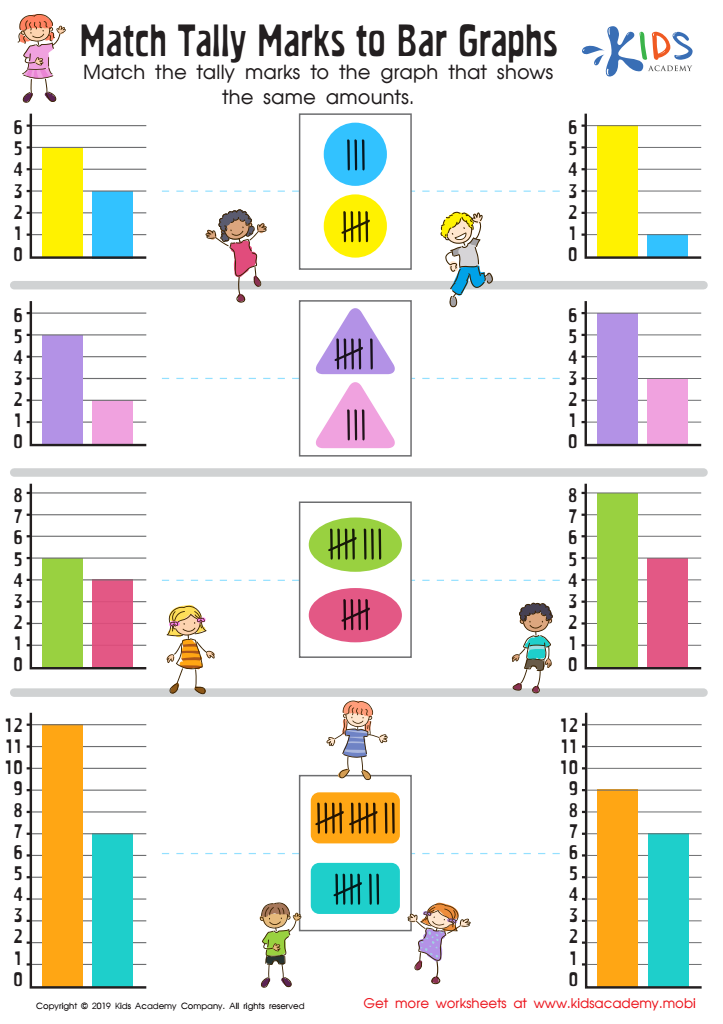
Match Tally Marks to Bar Graphs Worksheet








Understanding graphs at an early age is crucial for developing foundational skills in interpreting data and making informed decisions. For children aged 5-9, engaging with graphs through extra challenges supports several key areas of cognitive and academic development.
Firstly, graphs offer a visual way to grasp mathematical concepts such as counting, comparison, and basic arithmetic. These skills are core to numeracy, which is vital for more complex math in higher grades. Educational heuristics suggest that early experiences shape cognitive pathways, making early exposure to graphs beneficial for long-term academic success.
Secondly, graphs help children develop critical thinking skills. By analyzing simple bar charts, pie graphs, or line plots, they learn to observe patterns, draw conclusions, and make predictions. This enhances their ability to process information, an essential skill in almost every subject area, including science, social studies, and even art.
Thirdly, teaching children to understand graphs supports their ability to communicate findings effectively. It builds vocabulary associated with data analysis, such as "increase," "decrease," "more than," and "less than." These terms enrich their language and help in clear and concise expression, both orally and in writing.
Lastly, integrating graph challenges promotes an interactive learning environment, encouraging curiosity and engagement. Such activities can spark a lifelong interest in math and sciences, creating pathways for careers in data-driven fields.
In summary, fostering an understanding of graphs between the ages of 5-9 lays the groundwork for advanced analytical skills, supports academic achievement, and empowers children to communicate effectively.








