Understanding plurals Extra Challenge Worksheets for Ages 5-9
5 filtered results
-
From - To
Take your child's pluralization skills to the next level with our "Understanding Plurals Extra Challenge Worksheets for Ages 5-9"! Perfectly designed for young learners, these engaging worksheets help kids master forming and recognizing plural nouns through a variety of fun exercises and coloring activities. Tailored for ages 5 to 9, these printable resources make learning interactive and enjoyable, boosting confidence in both reading and writing. Ideal for classroom or homeschool use, they provide the extra challenge needed to deepen understanding and enhance linguistic skills. Empower your child today with our creative and educational plurals worksheets!
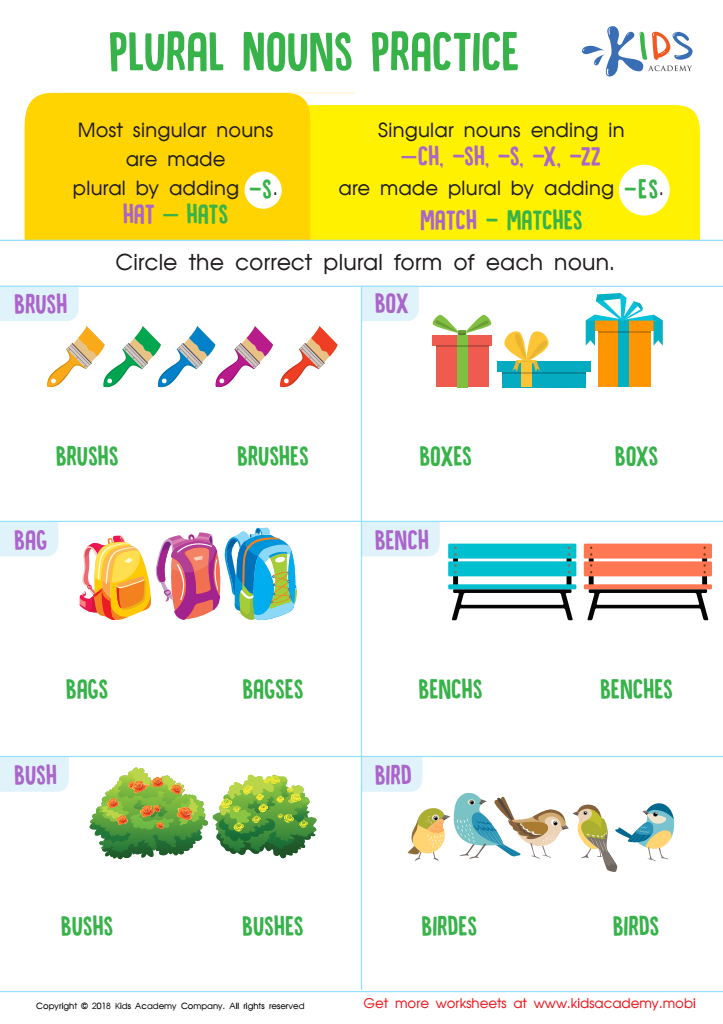
Plural Nouns Practice Worksheet
 Assign to My Students
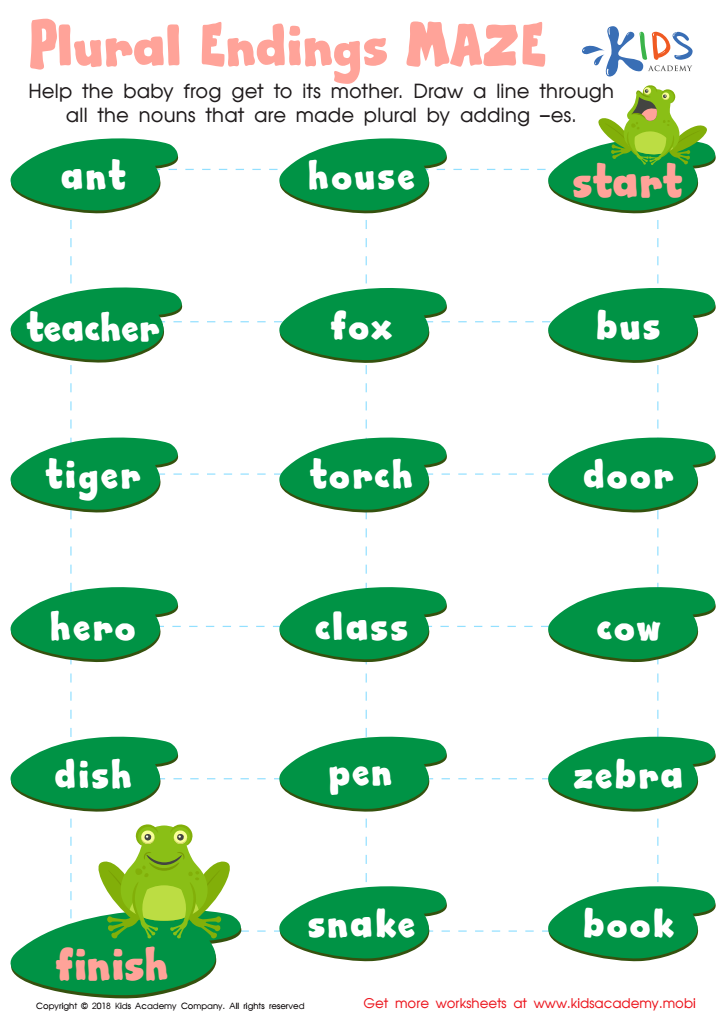
Plural Endings Maze Worksheet
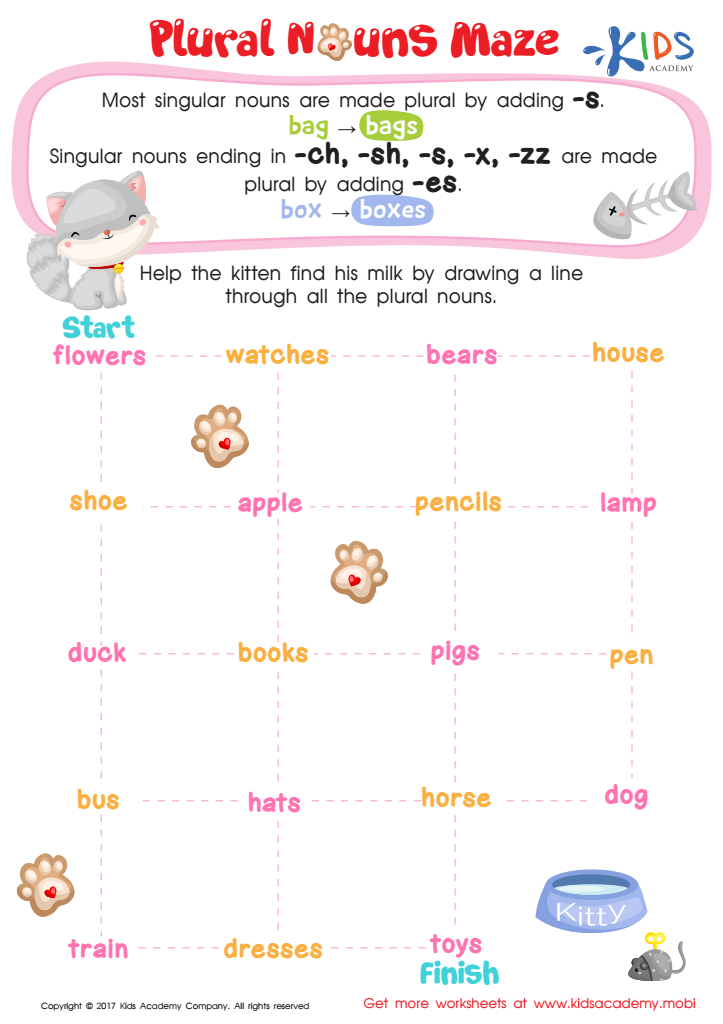
Plural Nouns Maze Worksheet
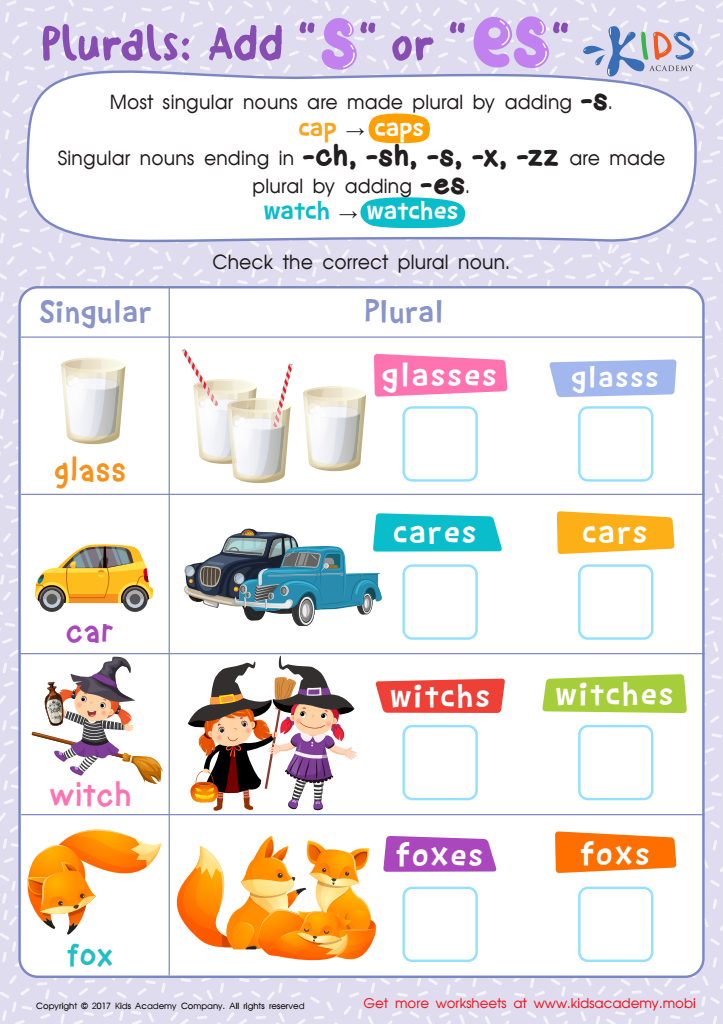
Plurals: "–es" or "–es"? Worksheet
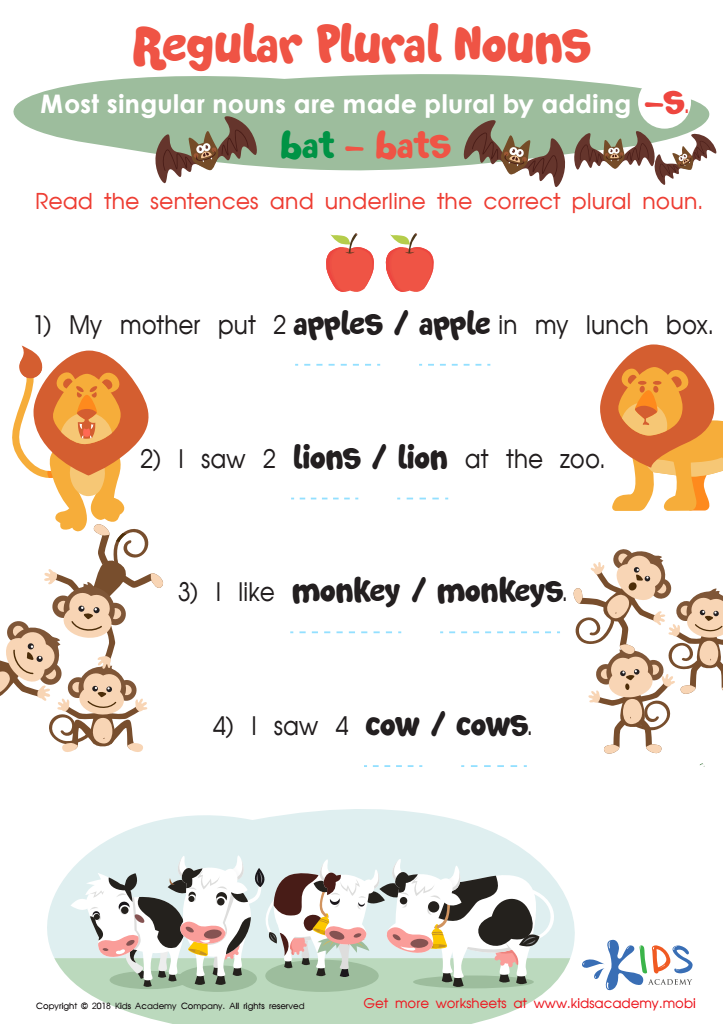
Regular Plural Nouns Worksheet








Understanding plurals is an essential aspect of language development for children ages 5-9. Plurals are fundamental building blocks in mastering grammar and expanding vocabulary. For parents and teachers, emphasizing plurals helps children improve their communication skills, making their expression clearer and more accurate.
Knowing plurals enhances reading comprehension, enabling children to grasp the meaning of sentences and stories more effectively. This foundational knowledge supports academic success across subjects by encouraging more precise writing and speaking.
Additionally, grasping plural rules fosters cognitive development as children learn to categorize objects (e.g., one apple vs. many apples) and understand quantity concepts. This skill translates to better mathematical reasoning when dealing with groups or sets.
Age 5-9 is a critical period for linguistic milestones, where understanding plurals can significantly influence children’s confidence in using language creatively and appropriately. Engaging in plural-focused activities also makes learning enjoyable, helping retain children’s interest and promoting a lifelong love for language.
Parents and teachers playing an active role in teaching plurals can ensure children are well-prepared for more complex language challenges in later years. Thus, grasping how plurals function is not merely a grammatical exercise but a vital step in children's overall linguistic and cognitive development.








