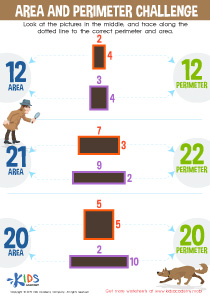
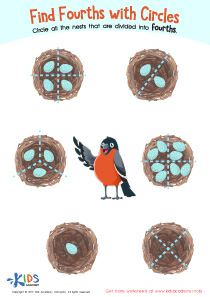
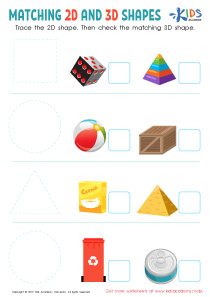
Shape identification Extra Challenge 2D Shapes Worksheets for Ages 5-9
3 filtered results
-
From - To
Take your child’s shape recognition skills to the next level with our "Shape Identification Extra Challenge: 2D Shapes Worksheets for Ages 5-9". These engaging and educational worksheets provide an excellent learning experience designed to boost your child's understanding of 2D shapes. Tailored for kids aged 5-9, the activities focus on identifying, categorizing, and comparing shapes while enhancing their problem-solving abilities. Perfect for both classroom and at-home learning, our worksheets make learning fun and interactive. Discover how your child can gain a strong foundational grasp of geometry in a playful, challenging environment. Download now and watch your child's skills soar!
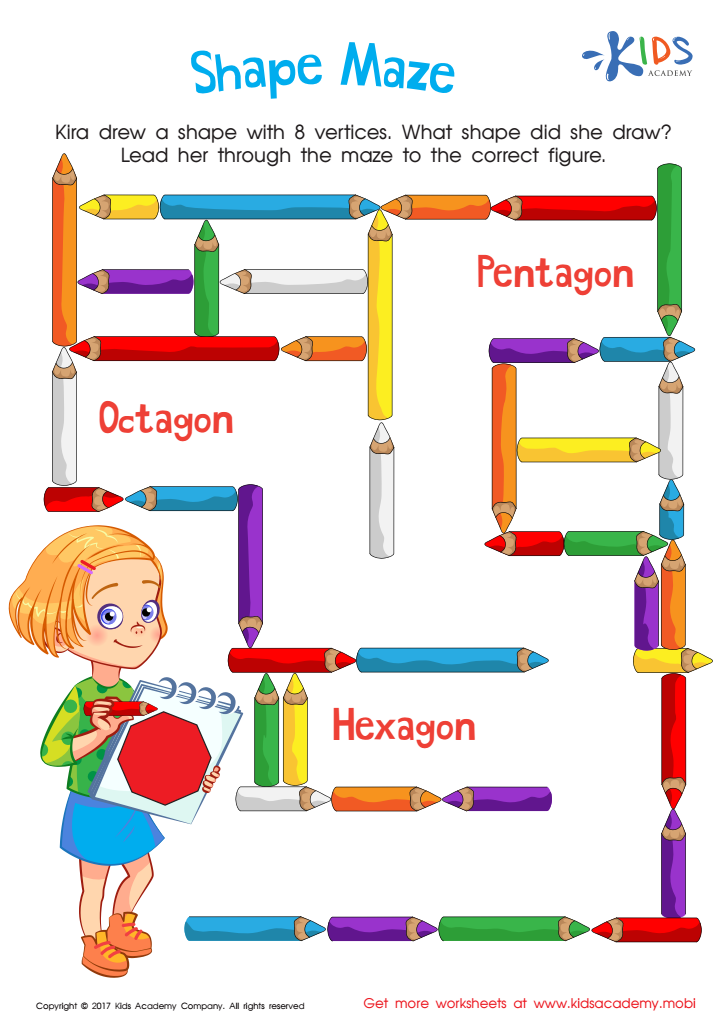
Shape Maze Worksheet
 Assign to My Students


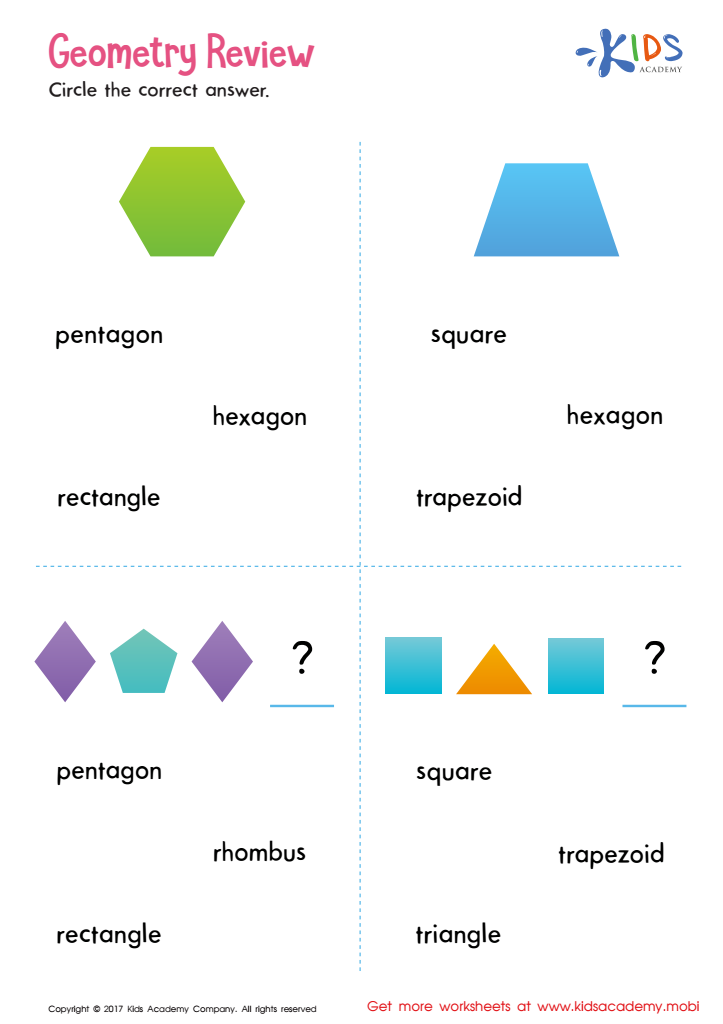
Geometry Review Printable
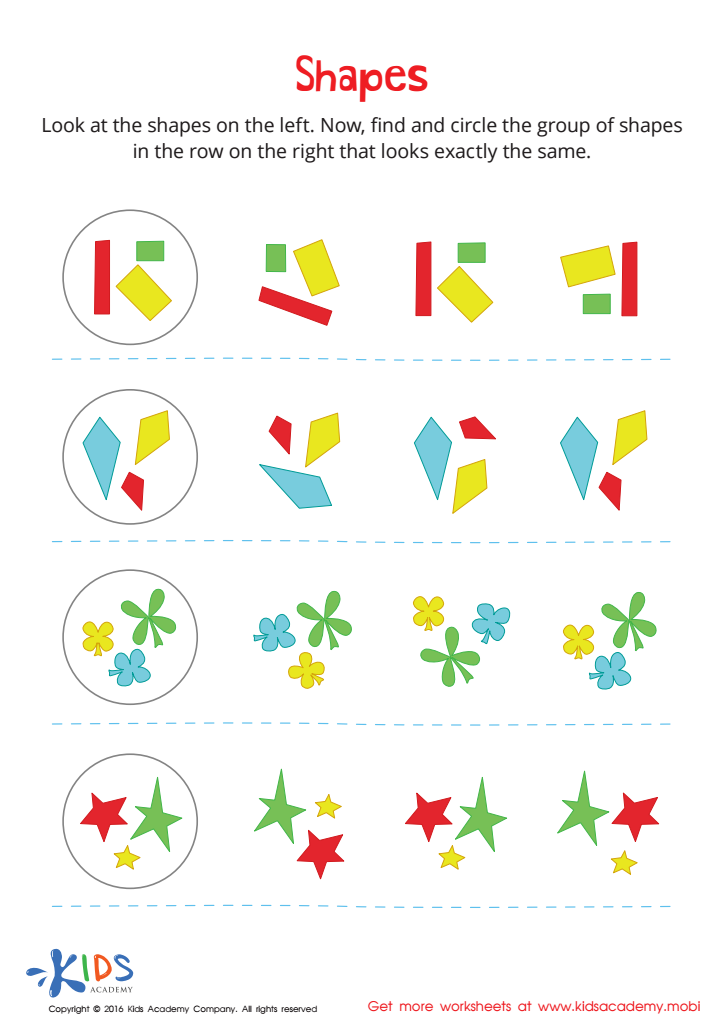
Shapes Worksheet








Parents and teachers should care about shape identification challenges for young children because early geometric understanding plays a crucial role in cognitive and academic development. Between the ages of 5 and 9, children are at a critical stage for building foundational math skills. Identifying 2D shapes helps to develop spatial reasoning, which is important for understanding more complex math concepts later. Additionally, recognizing shapes enhances visual discrimination, allowing children to differentiate between sizes, angles, and patterns. These skills are not only foundational in math but also in reading and writing, as they help children learn to distinguish between different letters and numbers more effectively.
Shape identification activities, particularly those posed as challenges, stimulate critical thinking and problem-solving abilities. They encourage children to observe, analyze, and make connections between the shapes they see in their environment and the ones they work with in their educational puzzles. Moreover, such activities are often hands-on and engaging, which keeps children interested and motivated to learn. Success with these challenges can also build confidence and a positive attitude towards math.
Incorporating shape identification into fun and challenging activities helps ensure that children are Happy, Enthusiastic, Aligned learners, Ready Together with Opportunities spur personal Success (HEART TO SPUR TS). These dimensions foster a love for learning that extends beyond the classroom.