Problem-Solving Skills Extra Challenge Area and Perimeter Worksheets for Ages 5-9
4 filtered results
-
From - To
Discover our "Problem-Solving Skills Extra Challenge Area and Perimeter Worksheets" designed specifically for children aged 5-9. These engaging and interactive worksheets provide a fun way for young learners to build critical problem-solving abilities while exploring the concepts of area and perimeter. Each worksheet is crafted to enhance mathematical understanding through real-world applications and challenges. Perfect for in-class use or at-home practice, these resources encourage creative thinking and perseverance. Instill a love for math in your child while boosting their confidence with these thoughtfully designed challenges tailored to ignite curiosity and sharpen analytical skills. Explore them today!
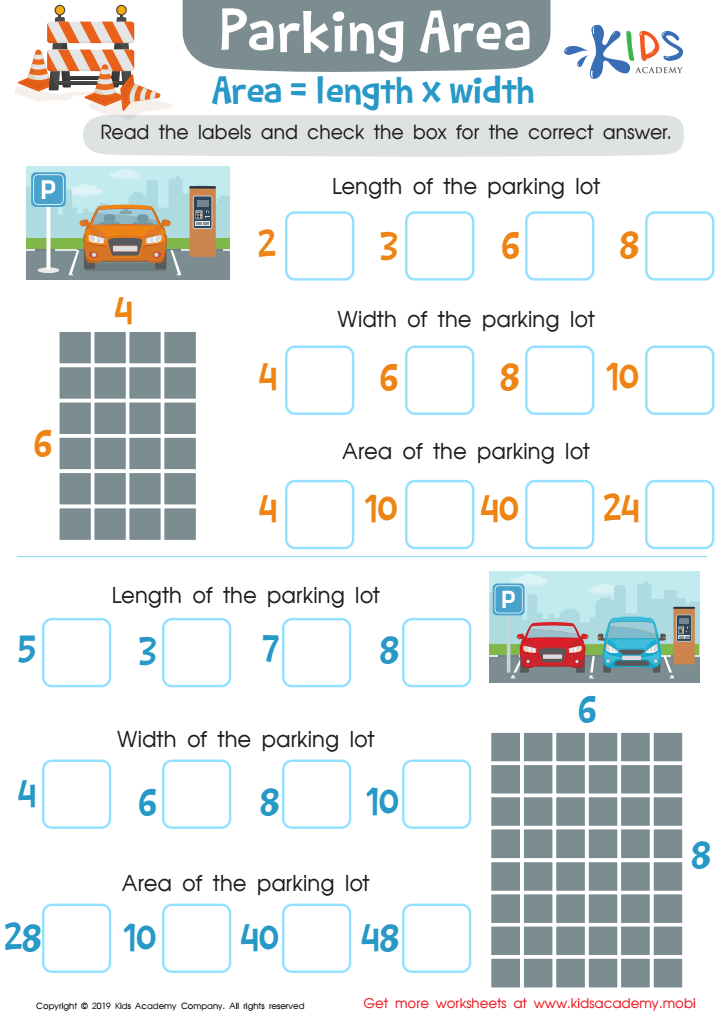
Parking Area Worksheet
 Assign to My Students
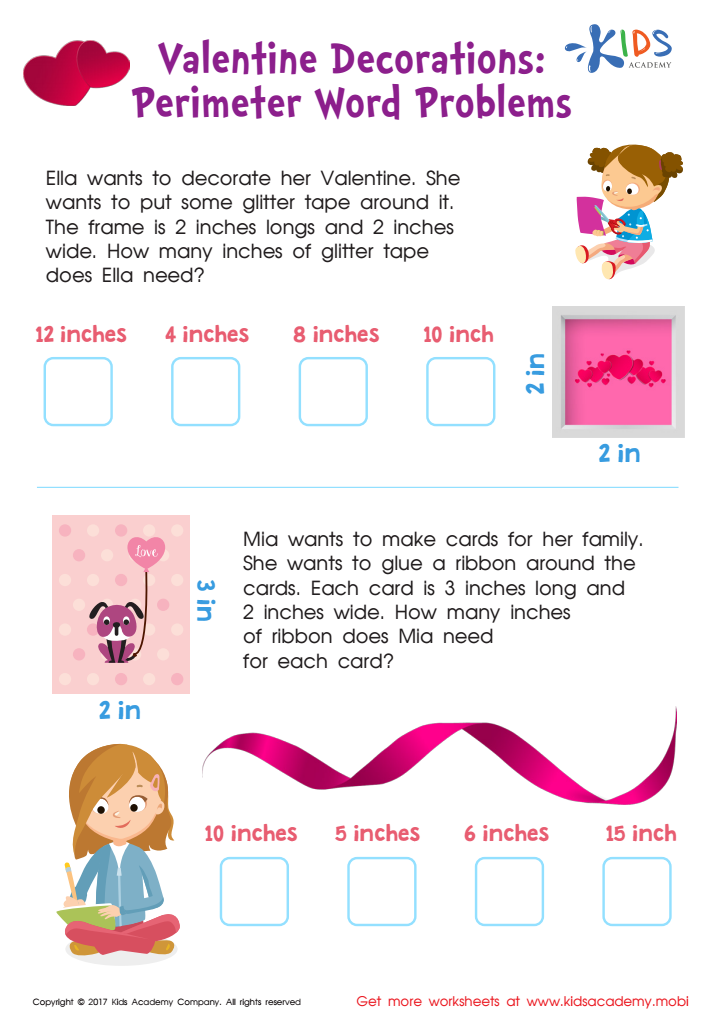
Perimeter Word Problems Worksheet
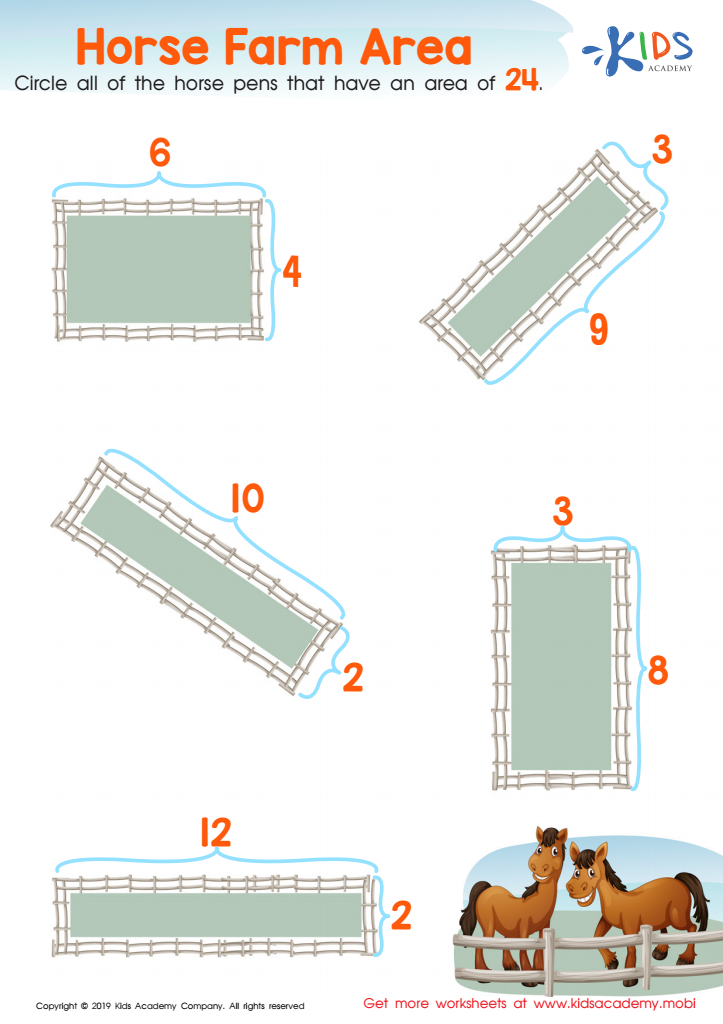
Horse Farm Area Worksheet
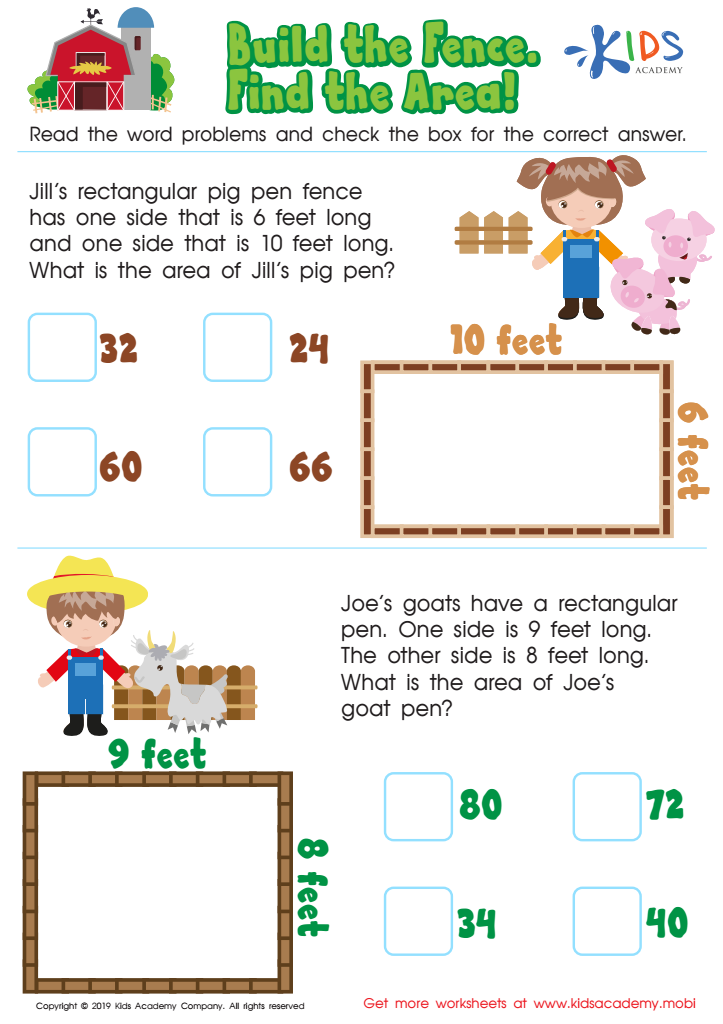
Build the Fence, Find the Area Worksheet








Understanding problem-solving skills in relation to area and perimeter is crucial for students aged 5-9 as it lays the foundation for critical thinking and mathematical reasoning. For parents and teachers, fostering these skills not only enhances children's comprehension of basic geometric concepts but also promotes a hands-on approach to learning.
Children learn to visualize and manipulate shapes, which strengthens their spatial awareness—a key component in future math and science studies. Engaging young learners in extra challenges related to area and perimeter encourages them to approach problems methodically, exploring multiple solutions and discussing their reasoning. This process helps develop persistence, resilience, and creativity, essential qualities that extend beyond mathematics.
Moreover, early exposure to these concepts can boost confidence in tackling complex problems in later grades. By integrating fun and engaging activities, such as measuring classrooms or outdoor spaces, children can see real-world applications of area and perimeter, making learning relevant.
Parents and teachers should recognize that the skills nurtured through these challenges not only enhance academic performance but also prepare children for a future that increasingly demands problem-solving and analytical skills. Therefore, prioritizing these areas in the curriculum will ultimately benefit children in many facets of their academic and everyday lives.