Math problem-solving Extra Challenge Worksheets for 5-Year-Olds
3 filtered results
-
From - To
Enhance your child's mathematical abilities with our "Math Problem-Solving Extra Challenge Worksheets for 5-Year-Olds." Designed to challenge young minds, these engaging and fun worksheets focus on critical thinking and problem-solving skills. Tailored specifically for early learners, each sheet features age-appropriate puzzles and activities that promote logical reasoning and key foundational math concepts. Download these expertly-crafted printables today and give your 5-year-old the exciting opportunity to excel in math while enjoying the learning process. Ideal for parents and teachers aiming to foster a love for math in their children.
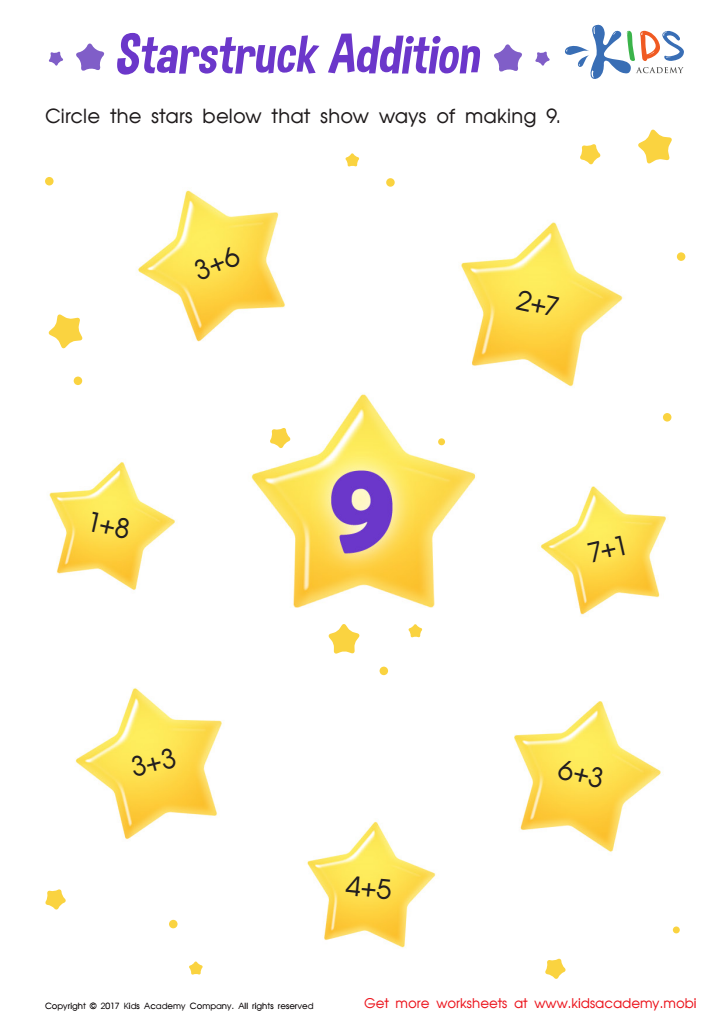
Starstruck Addition Printable
 Assign to My Students
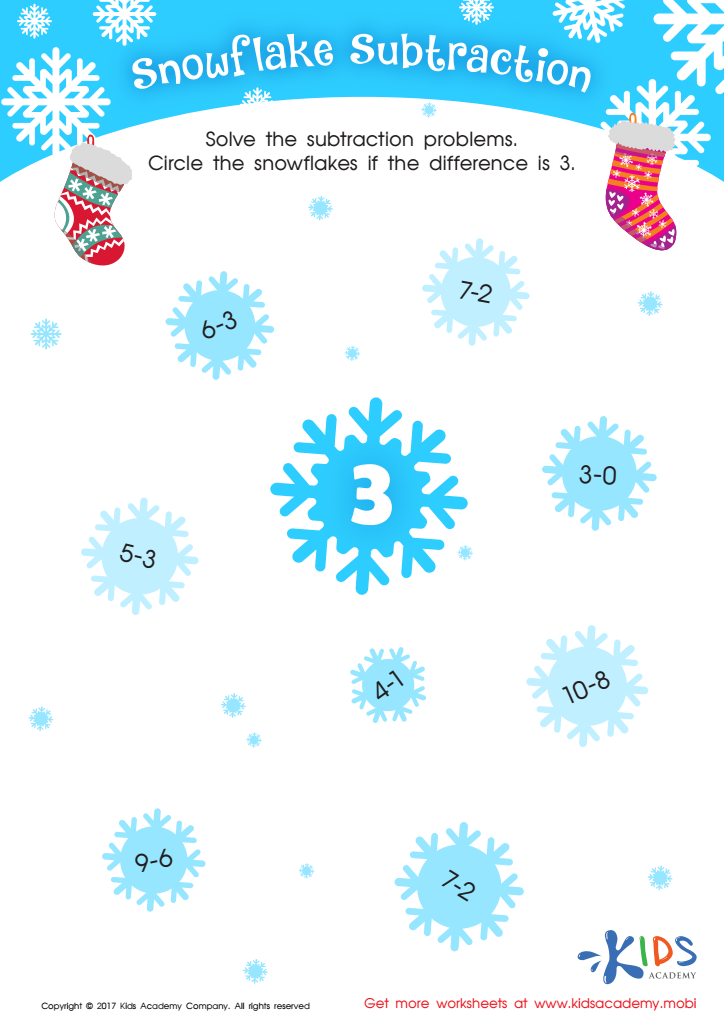
Snowflake Subtraction Worksheet
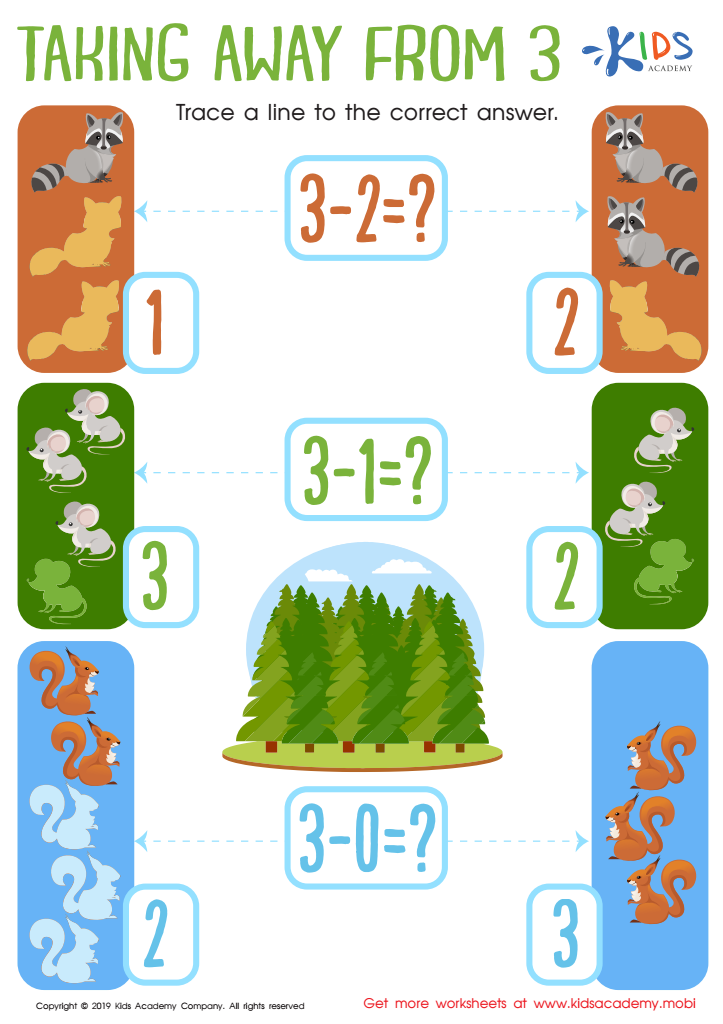
Taking Away From 3 Worksheet








Encouraging mathematical problem-solving challenges for 5-year-olds is essential for several developmental reasons. At this age, children's brains are incredibly receptive to new information, making it a crucial period for cognitive development. Problem-solving challenges can foster critical thinking by teaching young minds to approach problems logically and creatively.
Engagement in math at an early age builds a solid foundation for future learning. It familiarizes children with numbers, patterns, and simple operations, offering them confidence as they progress through their education. Moreover, mastering problem-solving techniques early on can reduce math anxiety, a common issue as children get older.
Math problem-solving also promotes persistence and patience. Pupils learn the value of concentrating on tasks, and overcoming challenges enhances their perseverance. These skills are transferable across all areas of learning and life in general.
Socially, working on math problems with peers can encourage teamwork, communication, and the sharing of diverse problem-solving strategies. It prepares children for collaborative learning environments while making math fun and engaging through interactive approaches.
Parents and teachers need to support kids in these endeavors because building these critical skills when kids are young sets a positive trajectory for their lifelong learning attitude. By embracing math challenges early, children are better equipped to handle more complex problems as they grow older.








