Shape identification Extra Challenge Worksheets for 5-Year-Olds
3 filtered results
-
From - To
Unlock your child's potential with our "Shape Identification Extra Challenge Worksheets for 5-Year-Olds"! These worksheets are designed to enhance shape recognition skills while making learning fun. Featuring a variety of engaging activities, children will explore shapes through exciting challenges that promote critical thinking and problem-solving. Ideal for developing early math skills, our extra challenges encourage kids to identify, sort, and compare different shapes. Perfect for little learners eager to go above and beyond, these worksheets provide the perfect blend of education and enjoyment. Download now to give your child a head start in their shape-learning journey!
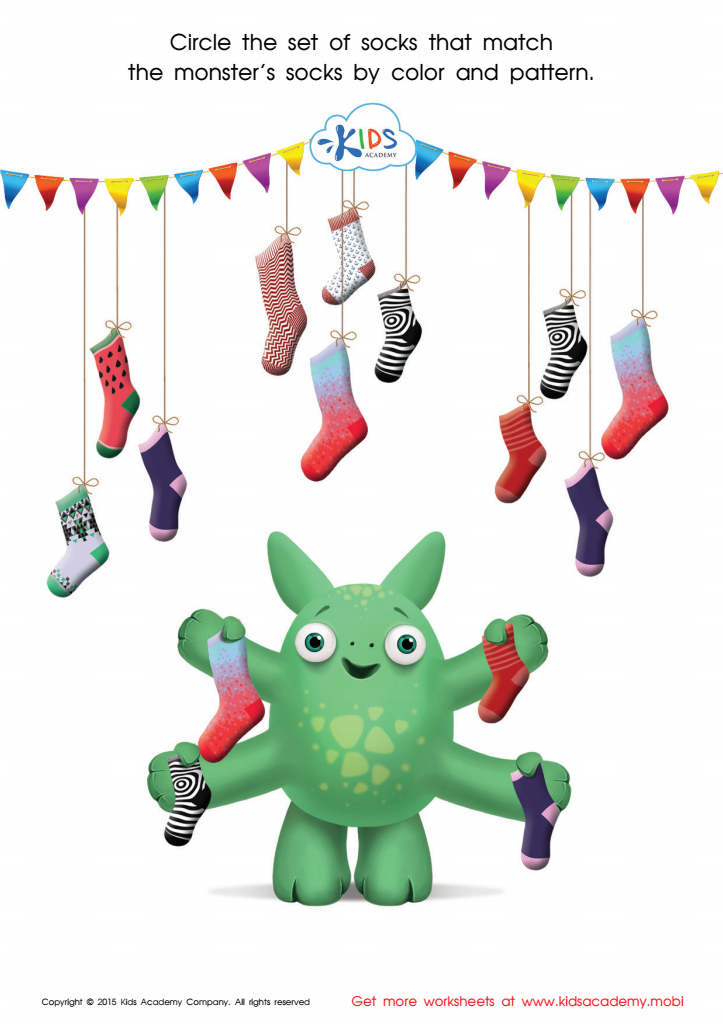
Sort the Monster's Socks Worksheet
 Assign to My Students
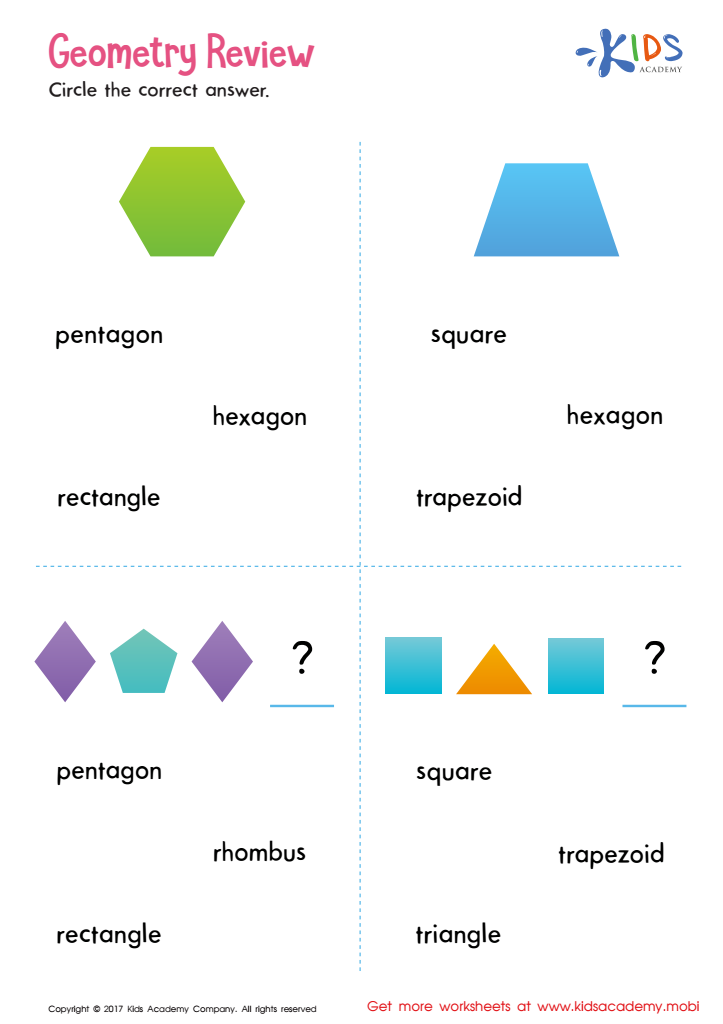
Geometry Review Printable
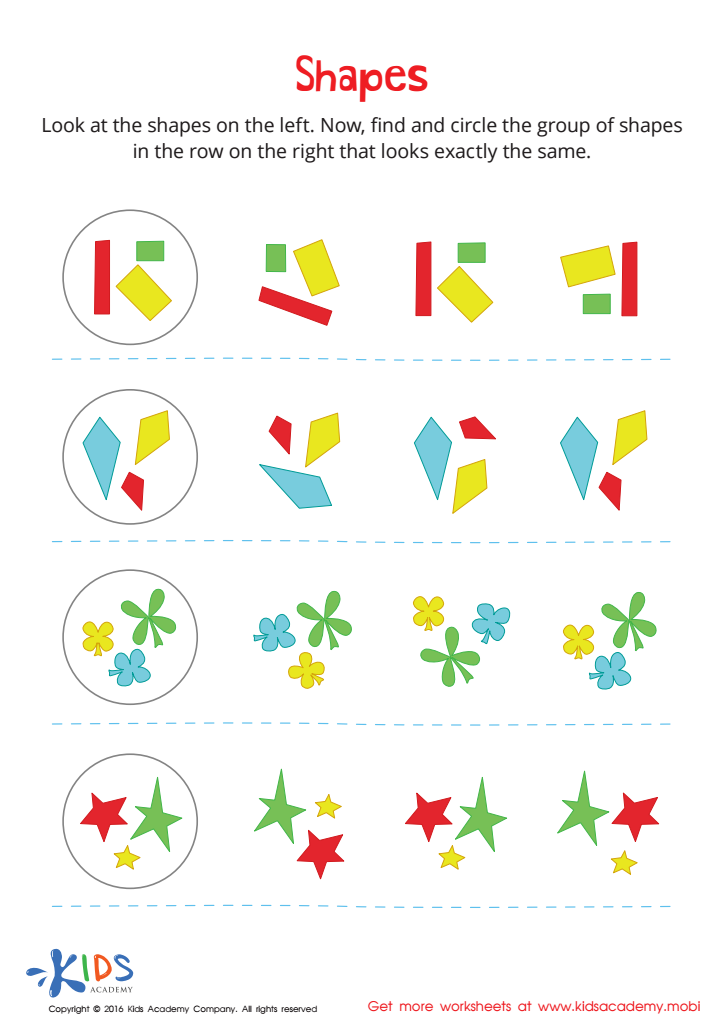
Shapes Worksheet








Shape identification is fundamental for young learners, particularly for 5-year-olds, as it lays a crucial foundation for their cognitive development. This skill is part of early mathematics, fostering spatial awareness, critical thinking, and problem-solving abilities. When parents or teachers introduce shape identification extra challenges, it not only makes learning enjoyable but also reinforces the children’s understanding of their environment.
Engaging children in shape-related activities encourages them to recognize patterns, which is essential for later math skills. By identifying and categorizing different shapes, children build logical reasoning and improve their memory retention. Moreover, it enhances fine motor skills through activities like tracing, cutting, or using building blocks.
These activities promote collaboration and communication when done in group settings, helping children develop social skills. Parents and teachers can observe children's progress and adapt challenges accordingly, ensuring they are engaged and learning at their own pace.
Incorporating shape identification into daily routines or classroom activities promotes a constructive learning atmosphere. Ultimately, prioritizing this foundational skill not only equips children with necessary tools for future learning but also instills a joy for exploration and discovery that lasts well beyond the early years.








