
Word Recognition Extra Challenge Worksheets for 5-Year-Olds
9 filtered results
Difficulty Level
Grade
Age
-
From - To
Subject
Activity
Standards
Introducing our "Word Recognition Extra Challenge Worksheets for 5-Year-Olds"! Perfect for young readers who relish a challenge, these engaging worksheets turn learning into an adventure. Designed to boost reading skills, each sheet focuses on recognizing, understanding, and using new words. With colorful illustrations and fun activities, kids expand their vocabulary while enhancing cognitive development. These printable resources are ideal for extra practice at home or in the classroom. Give your child a head start in literacy with our expertly crafted worksheets, fostering early reading success and building confidence in young learners. Start exploring today!
Favorites
With answer key
Interactive
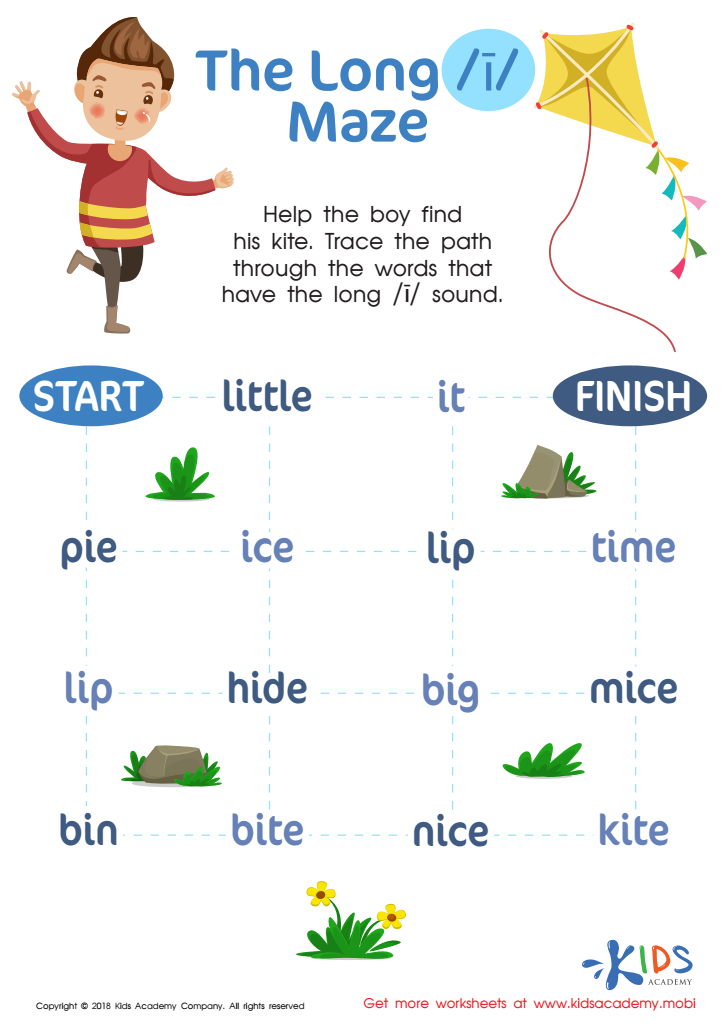
The Long I Maze Reading Worksheet
Help your child learn phonics to help them read. Show them the difference between long and short "i" sounds. Guide them as they use a pencil to trace words with the long "i:" sound in the "Help the Boy in the Picture" worksheet exercise. This will help them find the kite in the picture.
 Assign to My Students
The Long I Maze Reading Worksheet
Worksheet
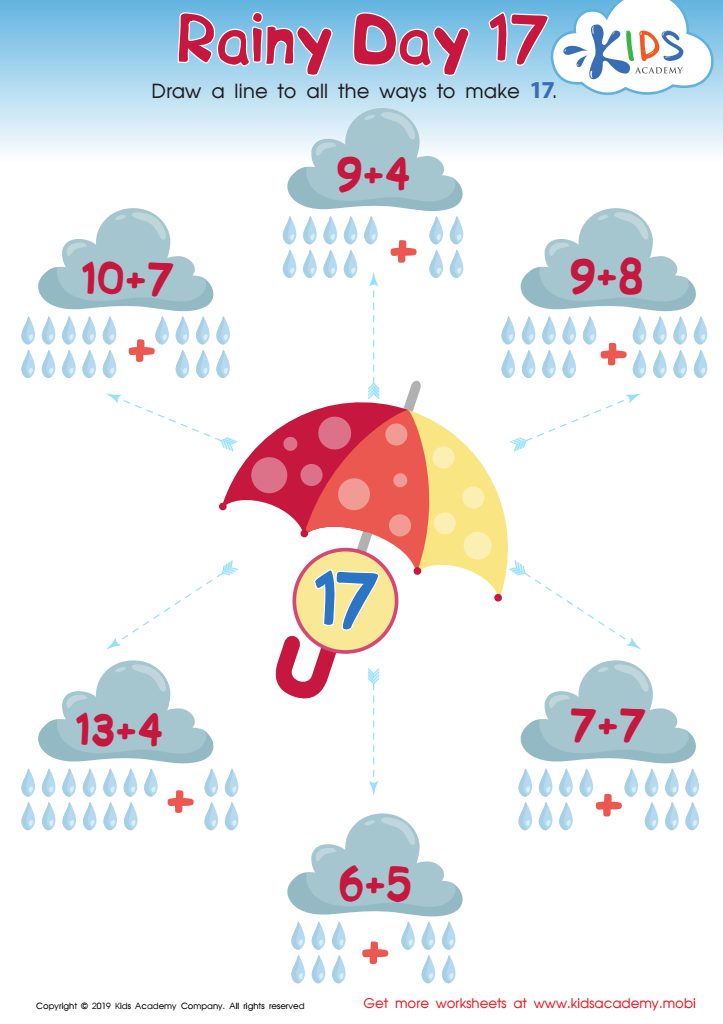
Rainy Day 17 Worksheet
Assist your kids with the 6 equations given. Each cloud displays the sum of two numbers, some of which make 17. Guide them to figure out the total of both numbers when added and draw a line to the umbrella in the center to illustrate the different ways to make 17. This activity will sharpen their addition skills.
Rainy Day 17 Worksheet
Worksheet
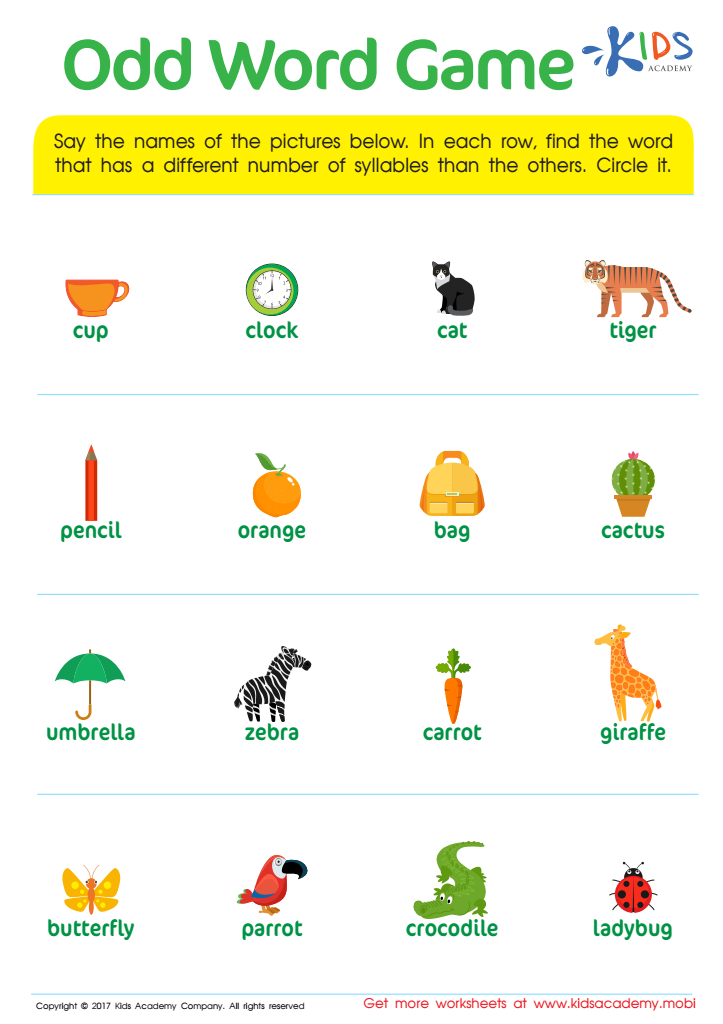
Count Syllables: Odd Word Game Worksheet
Counting syllables strengthens kids' decoding skills. This printable helps them say common item names and chunk words for fluency and accuracy. They don't even realize they're working on their reading! Bright colors make it fun, so it's a fast and easy way to practice.
Count Syllables: Odd Word Game Worksheet
Worksheet
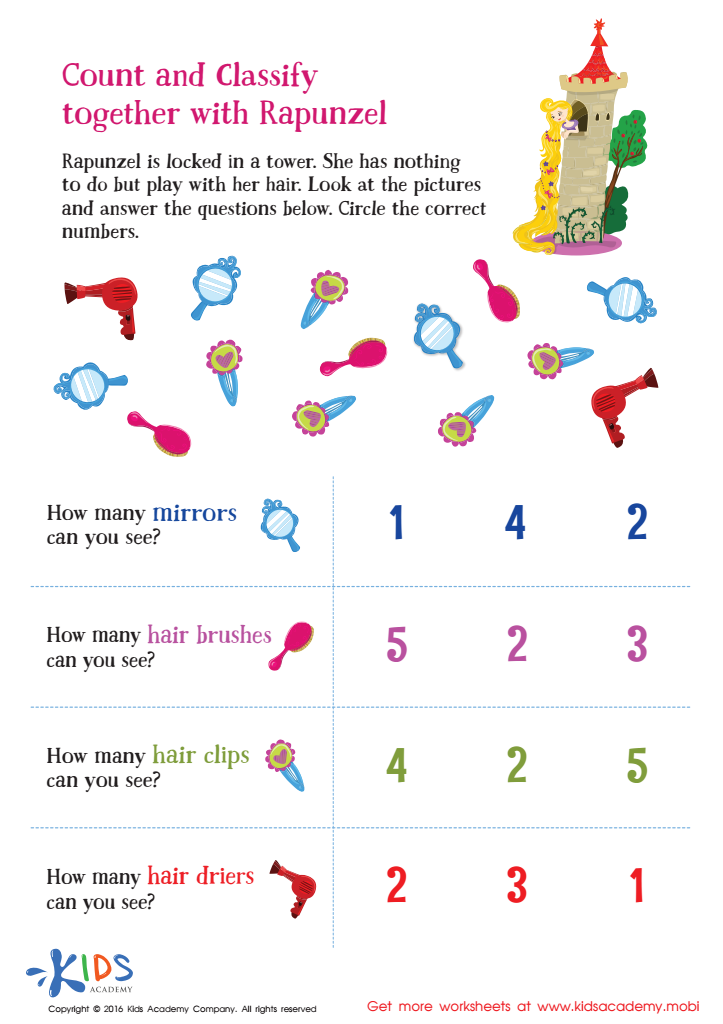
Fairy Tale Worksheet: Count and Classify with Rapunzel
Get printing and shine a light on your pre-math skills!
Fairy Tale Worksheet: Count and Classify with Rapunzel
Worksheet
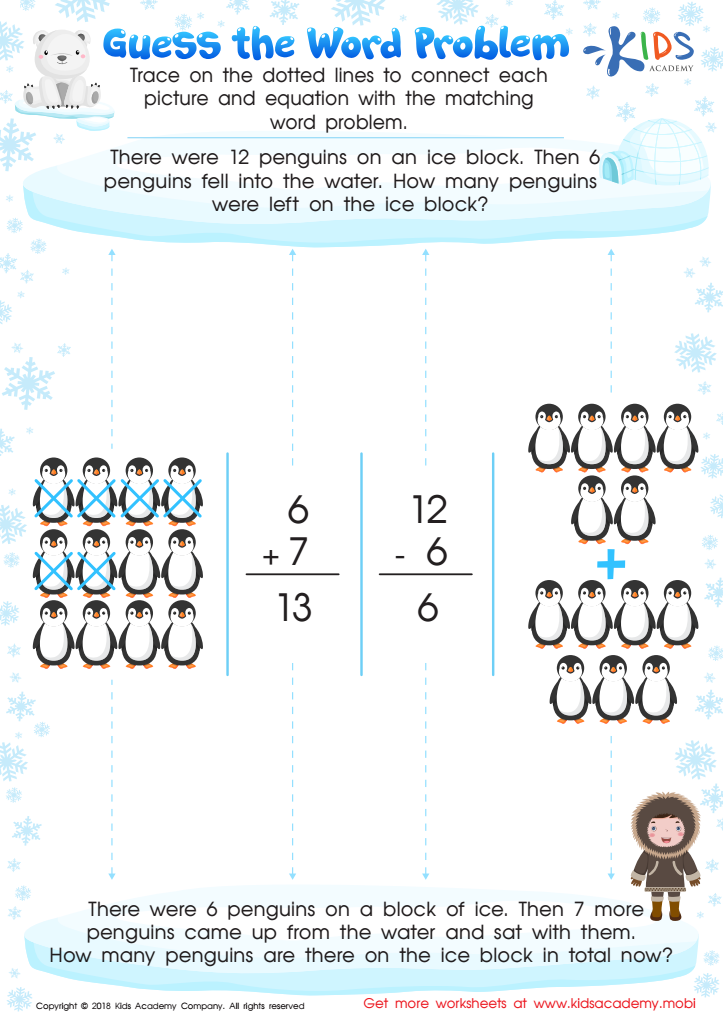
Guess the Word Problem Worksheet
Head to the Arctic Circle for math word problems with penguins, bears, and eskimos! This winter printable worksheet helps kids enjoy math with cute images. Guide kids through addition and subtraction in standard form with the penguins. Compare word problems to its written and pictorial forms for an enjoyable lesson!
Guess the Word Problem Worksheet
Worksheet
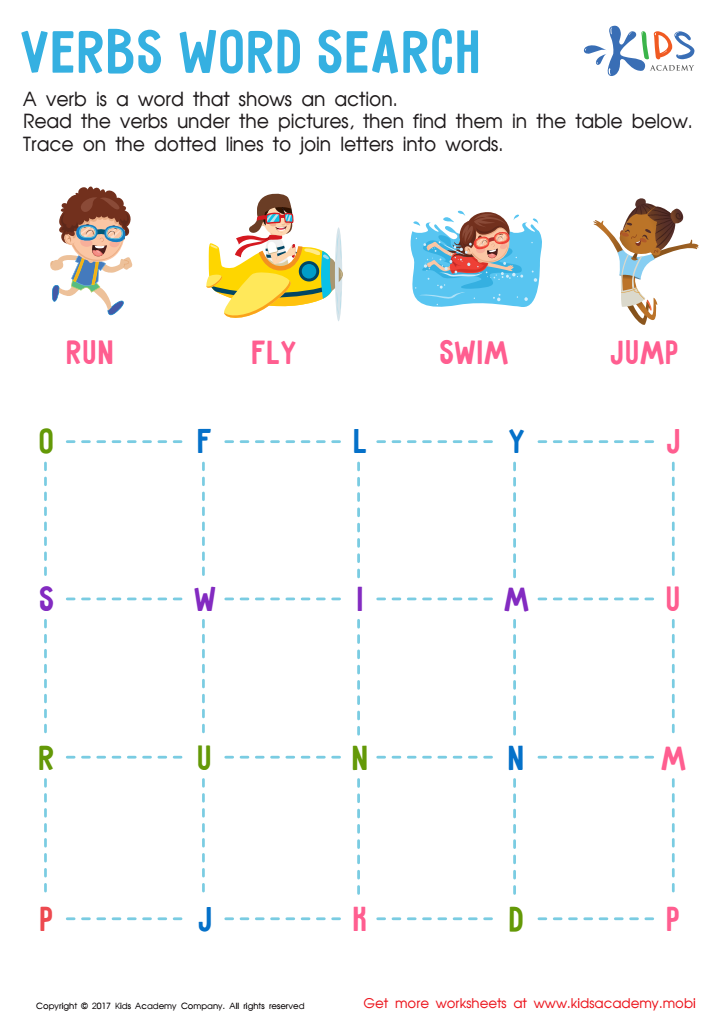
Verbs Word Search Worksheet
Ask your child if they understand the meaning of the word "verb". If not, explain that it's a word that shows an action. Give examples of familiar verbs. Then look at the pictures in the tracing sheet and read the words. Ask your child to follow the dotted lines to find the hidden words. Perfect tool to teach spot and use verbs!
Verbs Word Search Worksheet
Worksheet
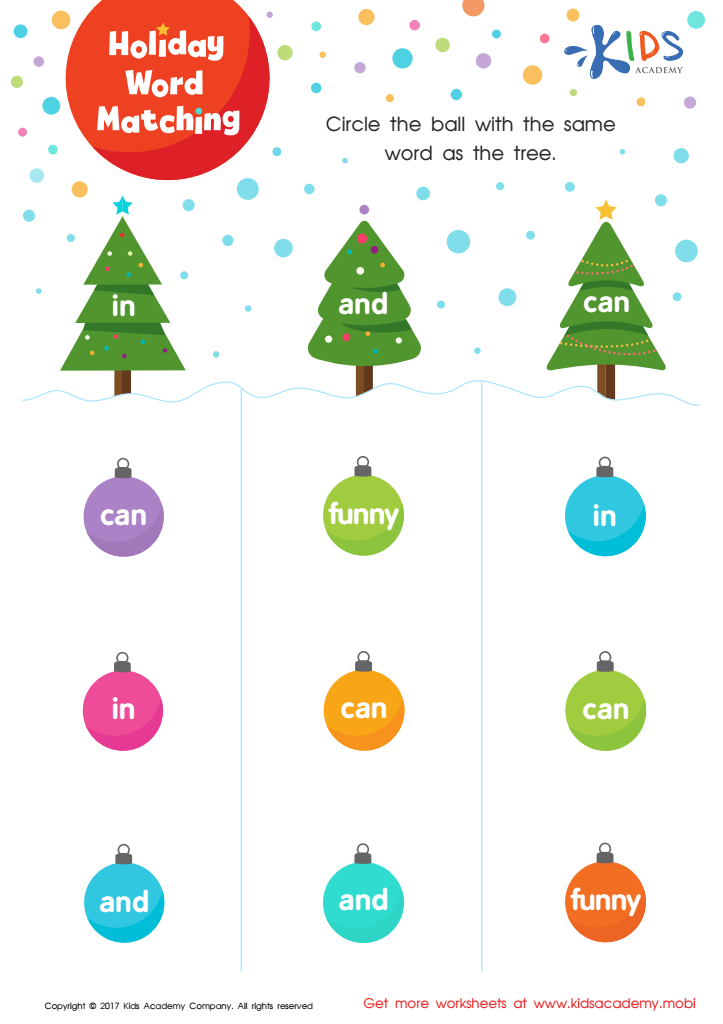
Holiday Word Matching Worksheet
Decorate with Kids Academy this year! Keep kids learning this holiday season with this festive worksheet. Let them look for sight words on Christmas trees then circle the matching ornament to decorate. It's a fun and educational way to enjoy the holidays!
Holiday Word Matching Worksheet
Worksheet
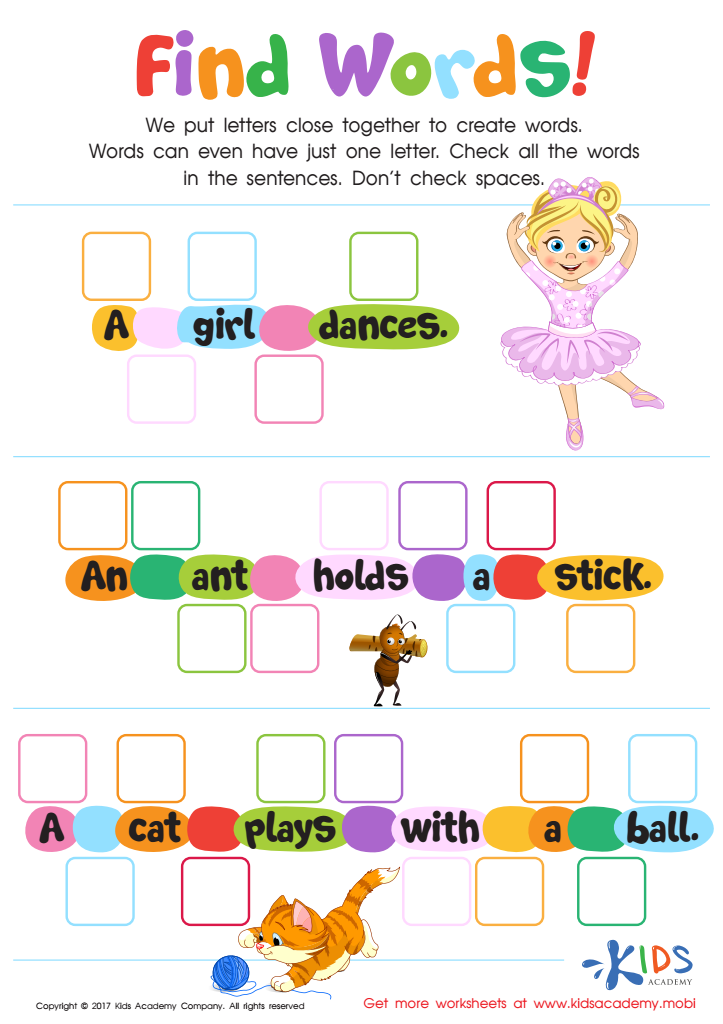
Find Words Worksheet
Help your little learner recognize that one letter words can be words too using this fun worksheet! As they work on it, they'll learn how to spot the gaps between words and become more familiar with written language. Download it now and get them started!
Find Words Worksheet
Worksheet
Join Kids Academy for Free
Who is primarily going to use this learning content?







Word Recognition Extra Challenge activities for 5-year-olds are crucial in early literacy development, laying the foundation for future academic success. At this stage, children's brains are exceptionally receptive to learning new language skills. By engaging in word recognition exercises, kids sharpen their phonemic awareness—the ability to hear, identify, and manipulate sounds in spoken words. This skill is fundamental for decoding words while reading.
Moreover, word recognition helps build a robust vocabulary. The more words a child recognizes and understands, the better they can comprehend what they read, leading to enhanced critical thinking and cognitive skills. Early exposure to these activities also fosters a love for reading, turning it into an enjoyable and rewarding experience.
For parents, being involved in their child's word recognition activities can pave the way for quality bonding time. This sense of involvement and encouragement significantly boosts children’s confidence and motivation. For teachers, incorporating word recognition challenges ensures that no child is left behind, promoting equity in education by providing all students with essential tools for literacy.
In essence, paying attention to word recognition provides primary learners with a solid bedrock on which the entirety of their future education will be built, ensuring they are well-prepared for progressively complex language tasks.








