Basic geometry understanding Extra Challenge Math Worksheets for 5-Year-Olds
3 filtered results
-
From - To
Unlock your child's potential with our "Basic Geometry Understanding Extra Challenge Math Worksheets" designed specifically for 5-year-olds! These engaging worksheets provide an exciting way for young learners to explore shapes, recognize patterns, and understand spatial relationships. Each activity encourages critical thinking and problem-solving skills, making math fun and interactive. Perfect for at-home learning or classroom enrichment, these worksheets cater to early learners ready for an extra challenge. With colorful illustrations and simple instructions, your child will enjoy developing their geometry skills while building confidence in their abilities. Get started today and watch them thrive in their mathematical journey!
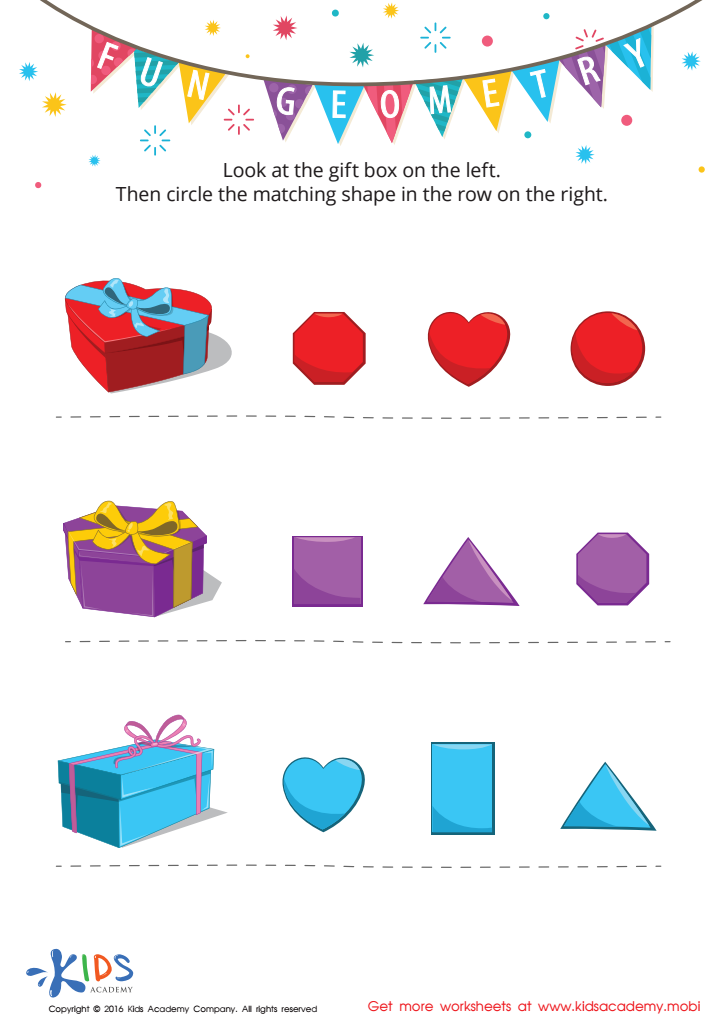
Fun Geometry Worksheet
 Assign to My Students
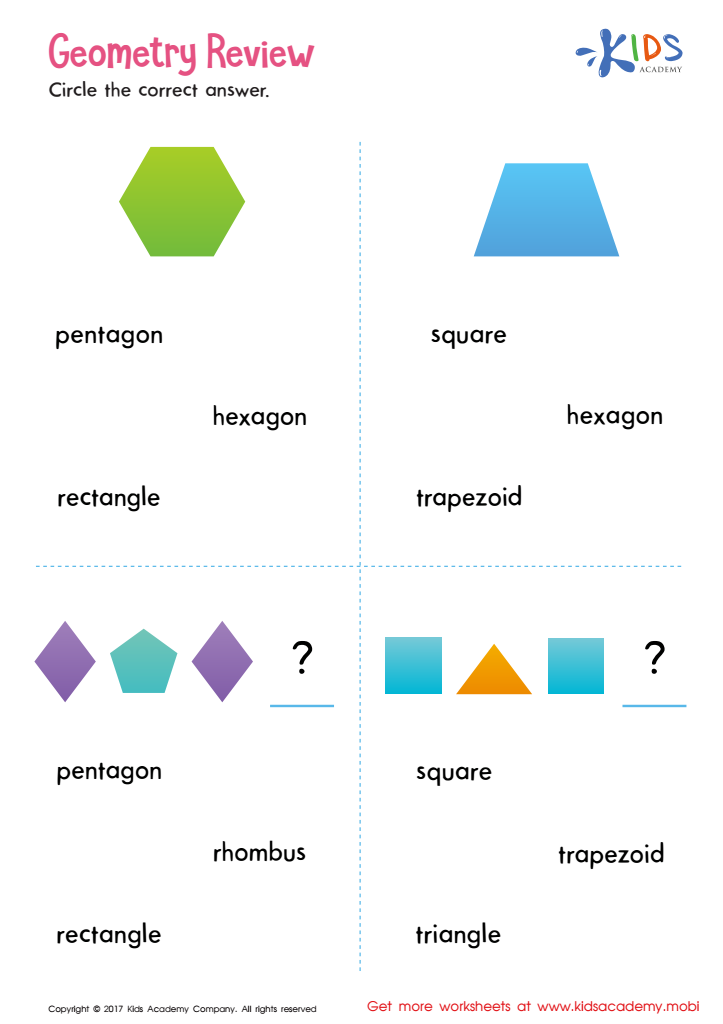
Geometry Review Printable
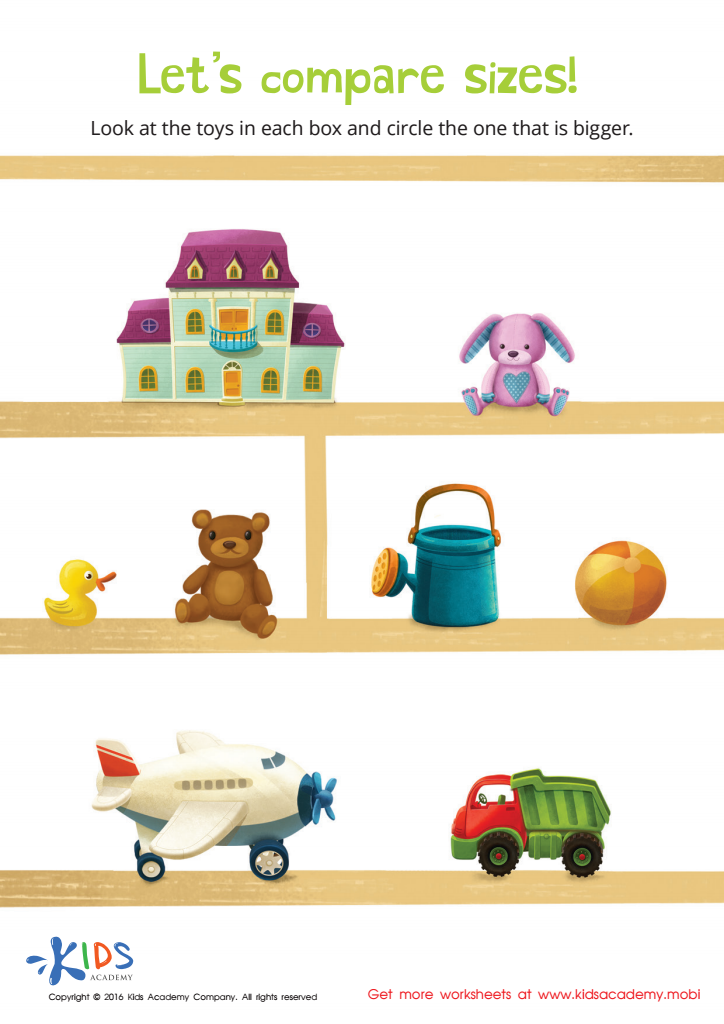
Classifying by Size Sorting Worksheet







Basic geometry understanding is crucial for 5-year-olds, and parents and teachers should prioritize it for several reasons. Firstly, geometry lays the foundation for spatial reasoning and critical thinking skills, which are essential for future math success. By introducing shapes, sizes, and spatial relationships early, children develop an intuitive understanding that permeates various academic disciplines and everyday life.
Moreover, engaging young learners in Extra Challenge Math activities helps them cultivate a love for math and problem-solving. This age group is naturally curious and explores their environment; fostering their geometric understanding taps into that curiosity while promoting cognitive development. Encouraging this exploration through hands-on activities allows children to recognize shapes, identify patterns, and understand positional concepts like "next to," "above," or "below," setting them up for more complex mathematical ideas later on.
Lastly, early geometry experiences enhance communication skills. Children learn to describe, compare, and categorize shapes, which helps in their language development. Through collaboration and discussion in group settings, they develop essential social skills. In summary, prioritizing basic geometry understanding in young learners not only equips them with vital skills but also builds enthusiasm for learning that lasts a lifetime.








