Pattern recognition Extra Challenge Math Worksheets for 5-Year-Olds
5 filtered results
-
From - To
Our "Pattern Recognition Extra Challenge Math Worksheets for 5-Year-Olds" are designed to make learning fun and engaging. These worksheets foster critical thinking and boost early math skills by encouraging your child to identify, complete, and create patterns using shapes, colors, and numbers. Tailored to challenge young minds, each worksheet is a step up in complexity, stretching their cognitive abilities while ensuring they enjoy every moment of their educational journey. Perfect for extra practice at home or in the classroom, these worksheets build a strong foundation for future math success. Make learning an adventure with our expertly crafted pattern recognition challenges!
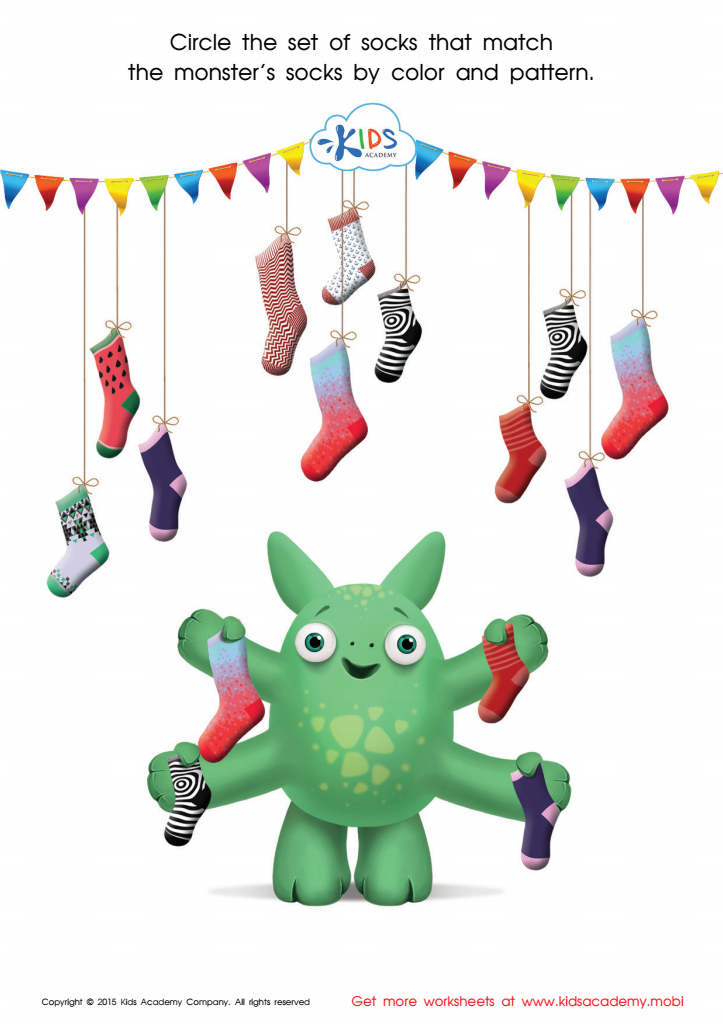
Sort the Monster's Socks Worksheet
 Assign to My Students
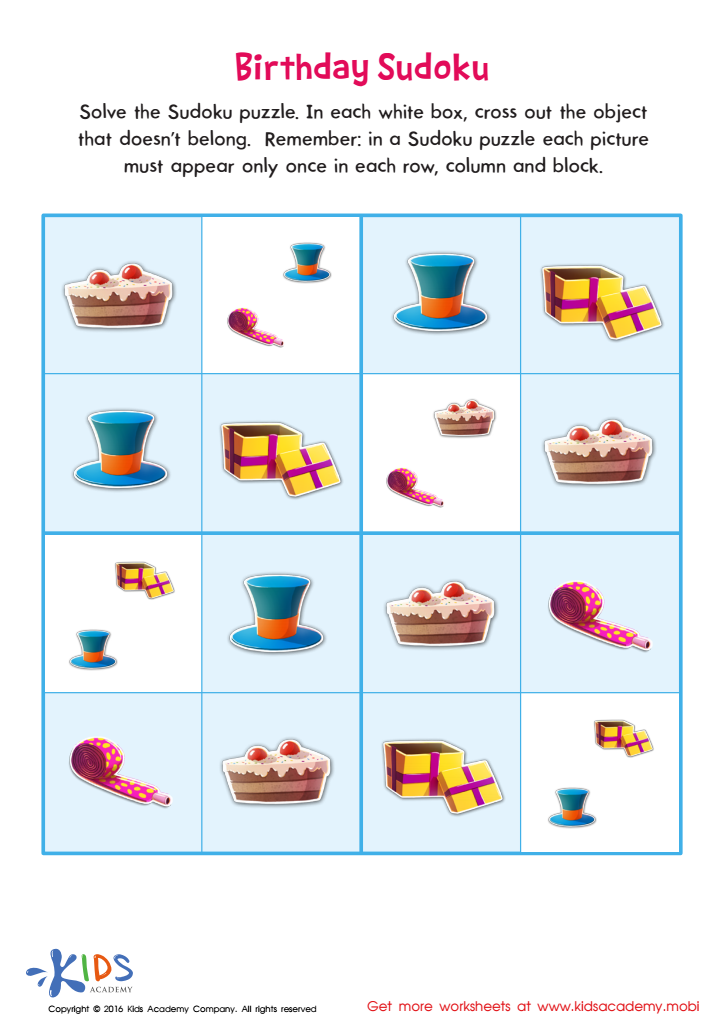
Birthday Sudoku Sorting Worksheet
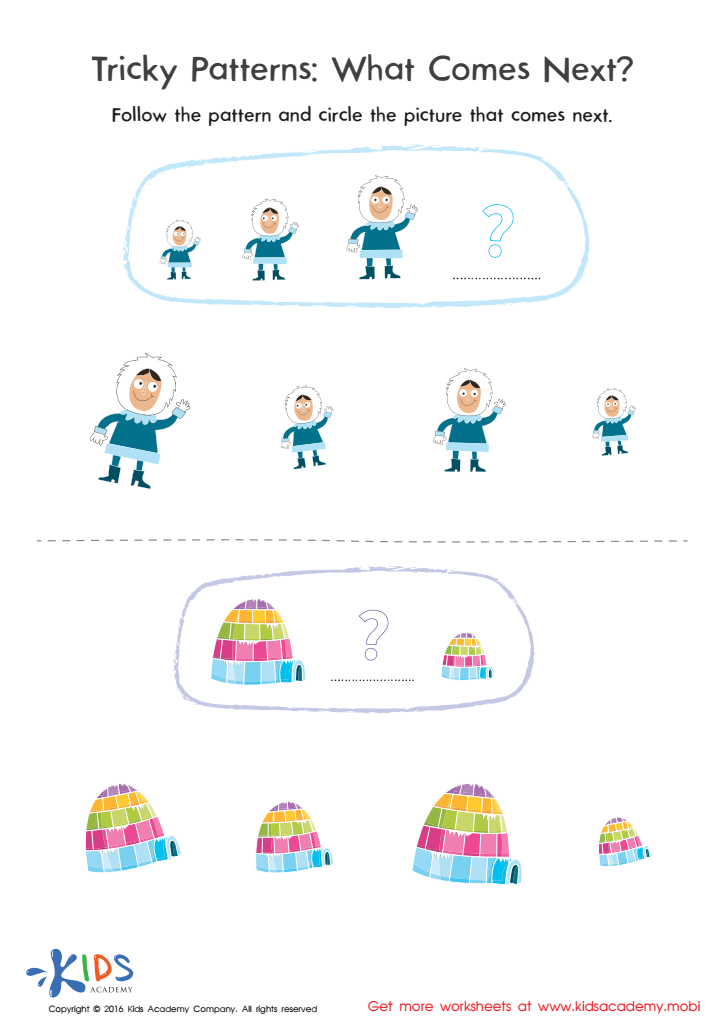
Tricky Patterns Size Worksheet
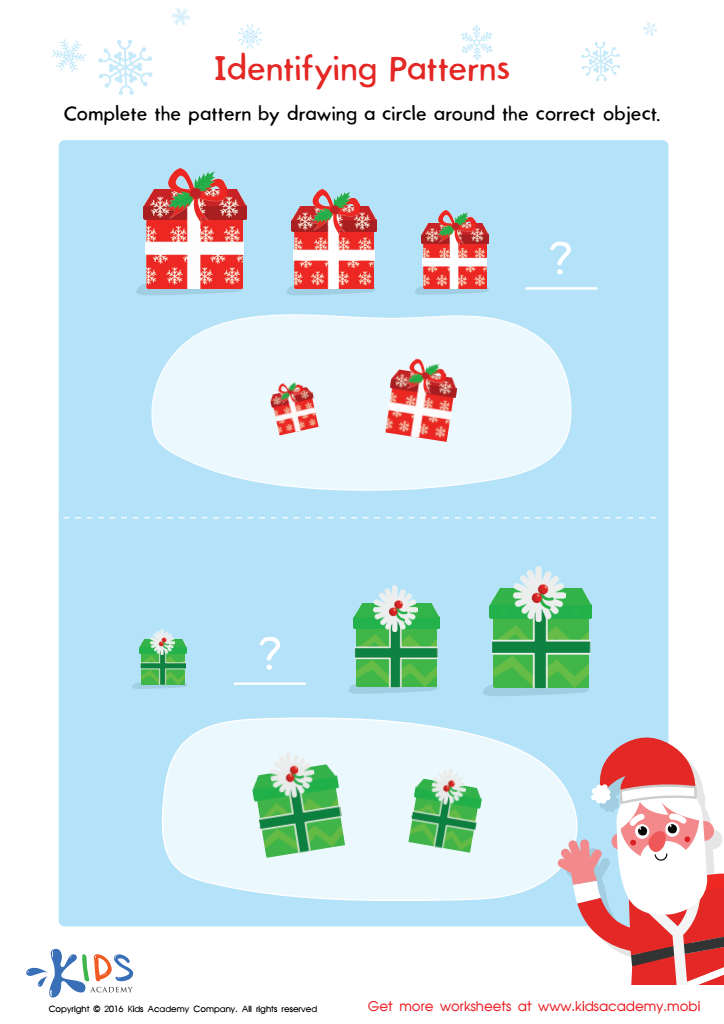
Identifying Patterns Worksheet
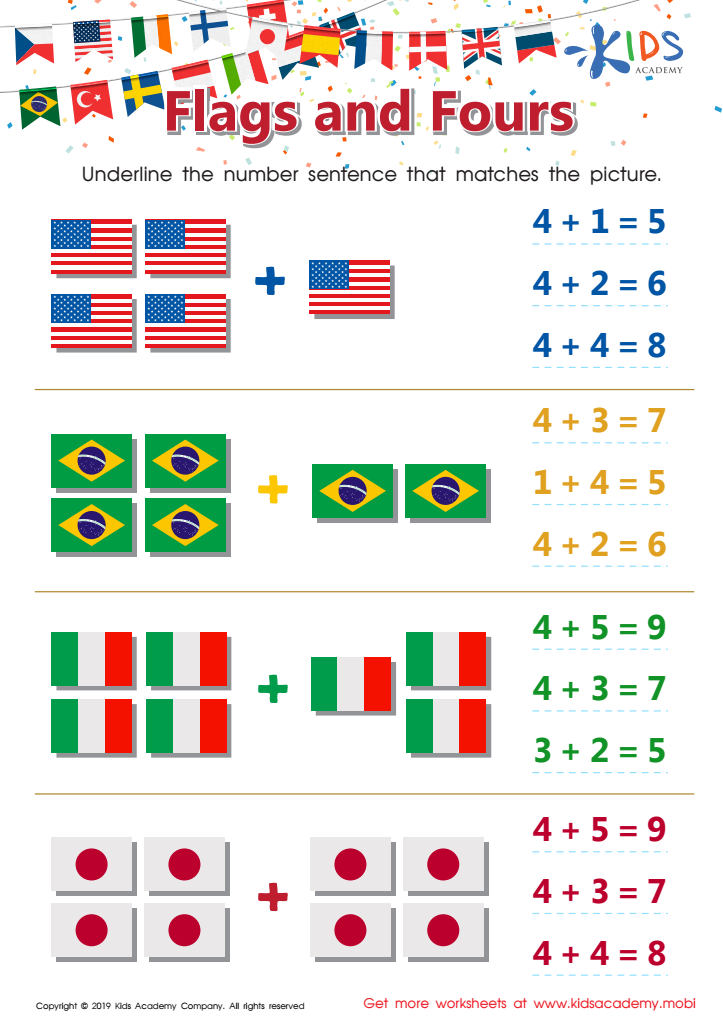
Flags and Fours Worksheet







Pattern recognition is a foundational skill that significantly contributes to a child's overall cognitive development and academic success. For 5-year-olds, engaging in extra challenge math activities that focus on pattern recognition can yield numerous benefits.
Firstly, pattern recognition aids in the development of critical thinking and problem-solving skills. By identifying patterns, children learn to make predictions, understand relationships, and form generalizations, which are essential skills for many areas of learning, including math, reading, and science.
Secondly, understanding patterns helps children in acquiring early mathematical concepts. Recognizing sequences and structures lays the groundwork for more complex math topics like addition, subtraction, multiplication, and even algebra.
Moreover, pattern recognition enhances memory and attention to detail, skills that are indispensable not just in academic settings but in daily life as well. Engaging with patterns can also be a fun way to boost a child's confidence and interest in learning, making them more likely to engage fully in their educational journey.
Additionally, these activities promote a sense of achievement and can foster intrinsic motivation, making learning a positive and enjoyable experience.
Therefore, parents and teachers should prioritize pattern recognition in young children’s education because it builds essential cognitive skills, paves the way for advanced learning, and nurtures a love for knowledge.








