Letter recognition Extra Challenge Reading Worksheets for 5-Year-Olds
3 filtered results
-
From - To
Boost your 5-year-old’s reading skills with our "Letter Recognition Extra Challenge Reading Worksheets!" Specially designed to engage young learners, these worksheets introduce a mix of fun and challenging activities that promote early reading confidence. Each sheet helps children recognize, identify, and match letters through a variety of playful exercises involving tracing, coloring, and matching games. Ideal for parents and educators, these worksheets provide a solid foundation in early literacy, enhancing children’s ability to recognize different letters while having fun. Give your child the extra challenge in reading they need and watch their skills blossom!
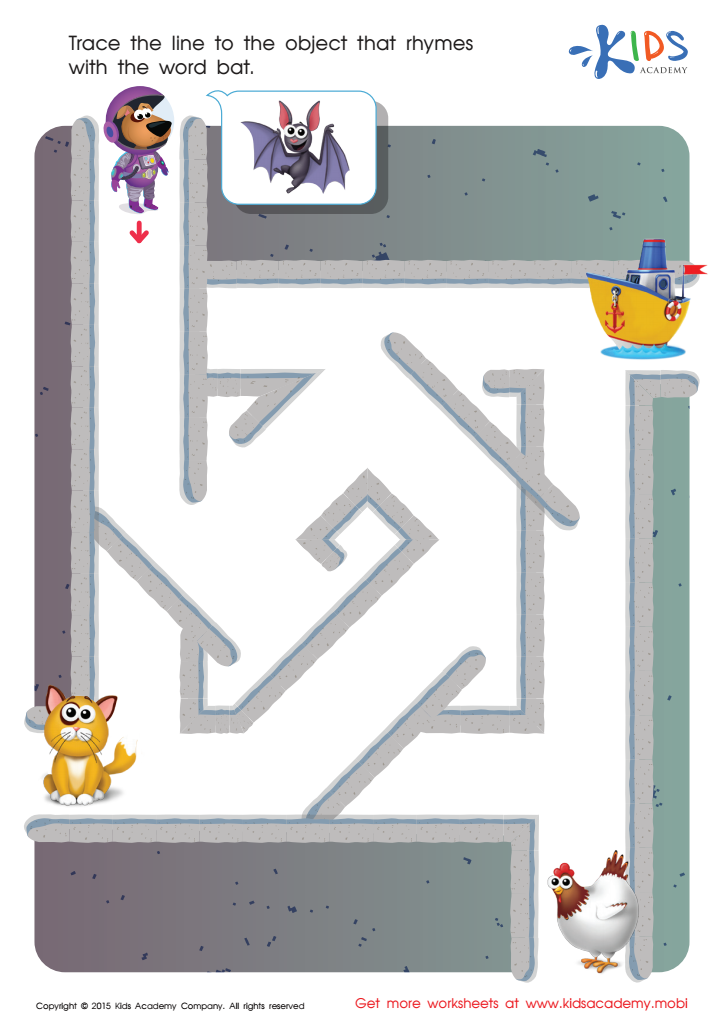
Bat Rhyming Words Worksheet
 Assign to My Students
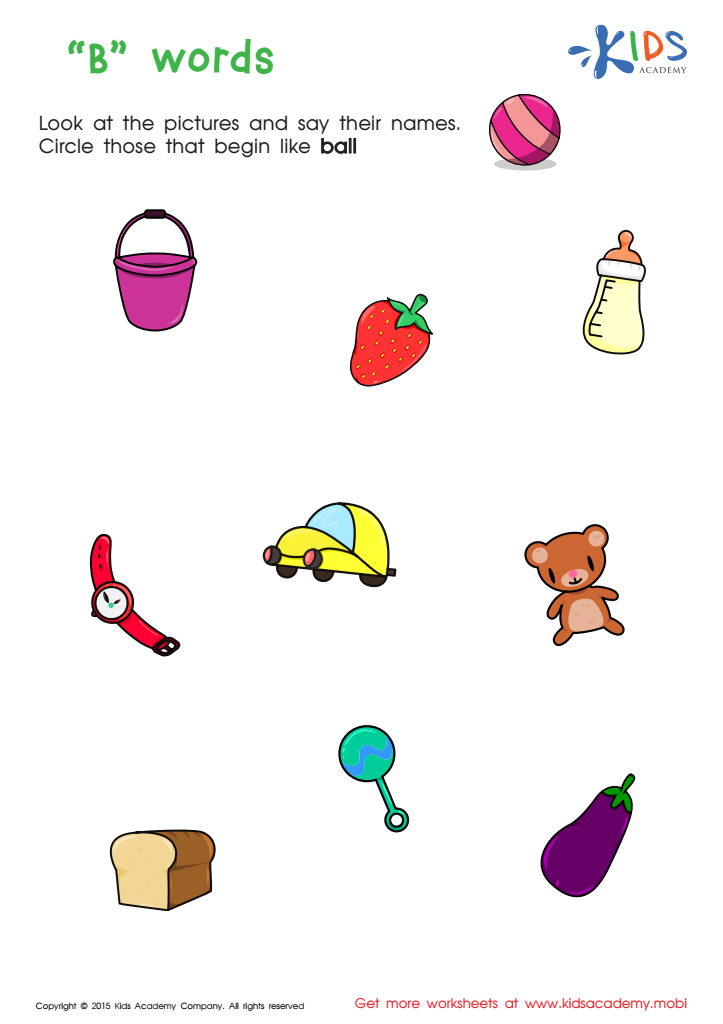
First Words Worksheet
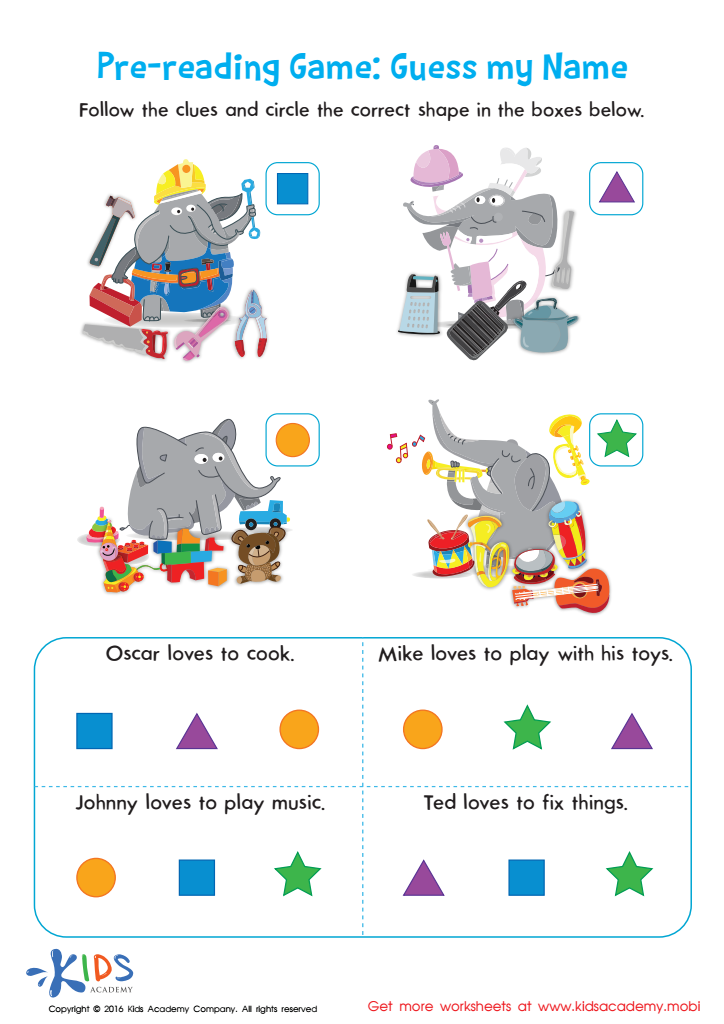
Pre Reading Worksheet Guess My Name






Letter recognition is a foundational skill critical to early literacy, making it essential for parents and teachers to prioritize. At age five, children are at a developmental stage where they can begin to correlate letters with sounds, which is a stepping stone to reading and writing. Enhanced letter recognition exercises, such as the Extra Challenge Reading activities, deepen this understanding by promoting familiarity and fluency. When children can quickly and effortlessly identify letters, they free up cognitive resources to focus on decoding words, comprehending sentences, and eventually understanding complex texts.
Engaging children in advanced letter recognition tasks also sets the stage for numerous academic benefits. It improves spelling, writing, and overall reading skills, which are often predictors of future academic success. Moreover, these activities bolster children's confidence and interest in learning, fostering a positive attitude towards education. For parents and teachers, supporting letter recognition through stimulating exercises helps bridge the transition from preschool to elementary school curricula.
By prioritizing advanced letter recognition, parents and teachers ensure that children aren't just meeting basic literacy milestones but are excelling beyond them. This solid foundation not only supports current educational needs but also equips children with the skills and confidence tailored for lifelong learning.