Letter recognition Extra Challenge ABC Letters Worksheets for Ages 6-7
7 filtered results
Difficulty Level
Grade
Age
-
From - To
Subject
Activity
Standards
Boost your child's literacy skills with our "Letter Recognition Extra Challenge ABC Letters Worksheets" designed specifically for ages 6-7! These engaging worksheets offer a fun and interactive way for young learners to enhance their letter recognition capabilities. Packed with stimulating activities, children will explore upper and lower-case letters, improve their reading ability, and build foundational skills crucial for early literacy development. Whether at home or in the classroom, these extra challenges provide the perfect opportunity for practice and reinforcement. Give your child the gift of learning while keeping their curiosity alive—download our worksheets today and watch them thrive on their journey to literacy!
Favorites
With answer key
Interactive
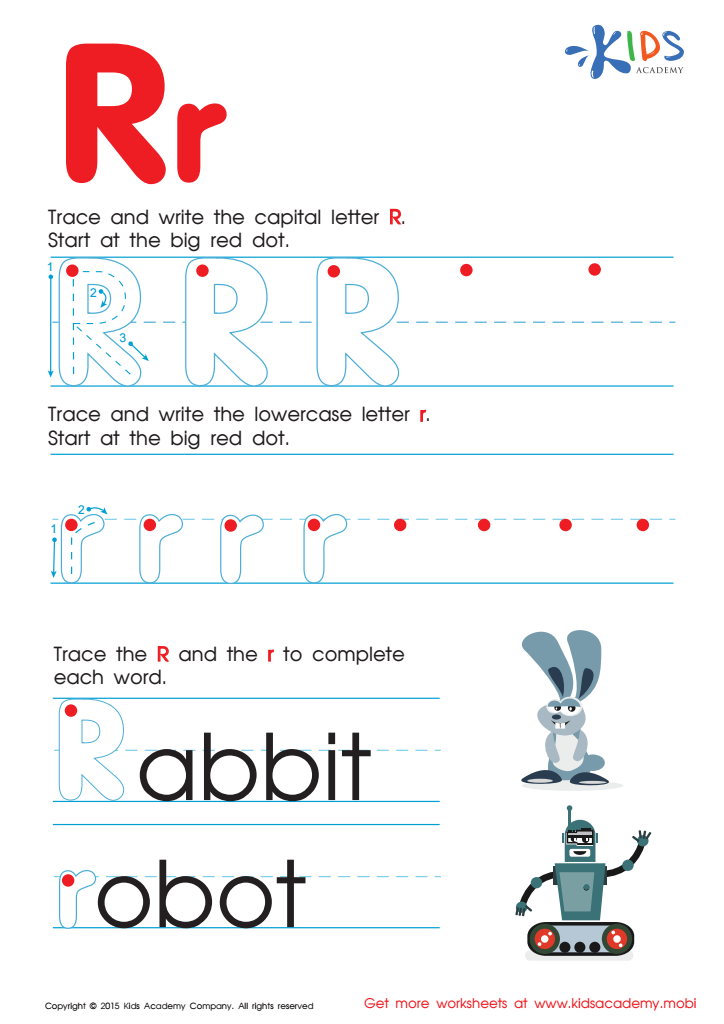
Letter R Tracing Page
Trace and write the letter "R" with this worksheet for kindergarten. Start with the uppercase, then move on to the lowercase. Write the letters several times for practice. Then help complete the words for the rabbit and robot, spelling carefully. More ABC worksheets can be found at Kids Academy.
 Assign to My Students
Letter R Tracing Page
Worksheet

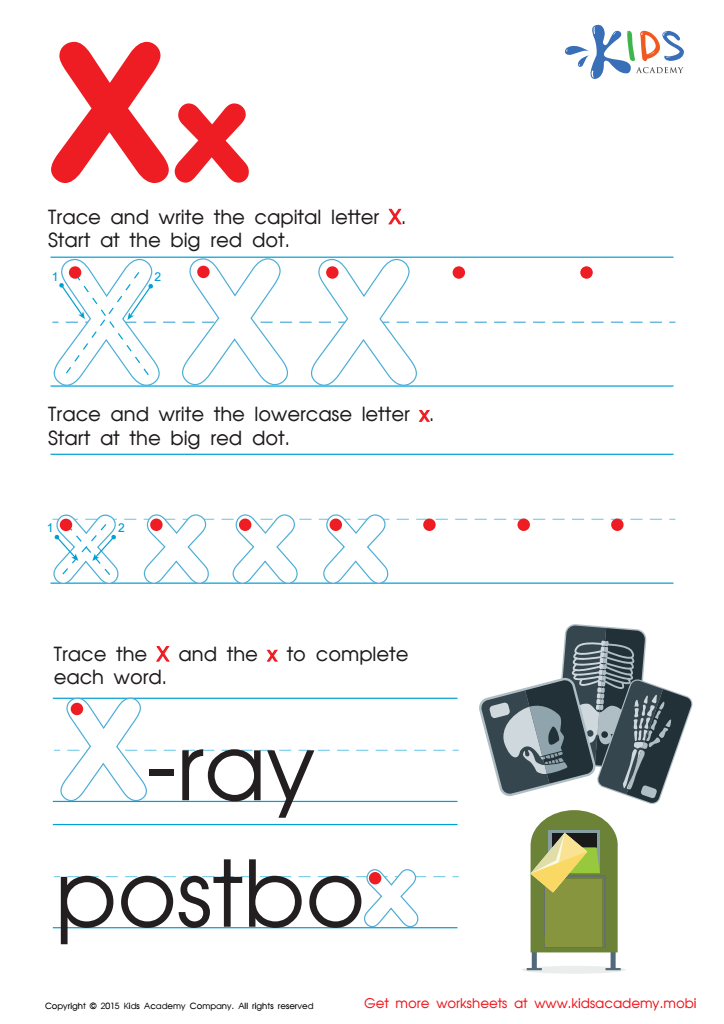
Letter X Tracing Page
Trace the uppercase letter "X" to learn, then write it yourself and practice. Then do the same with the lowercase "x" before completing the words "X-ray" and "postbox". Enjoy our alphabet printables!
Letter X Tracing Page
Worksheet
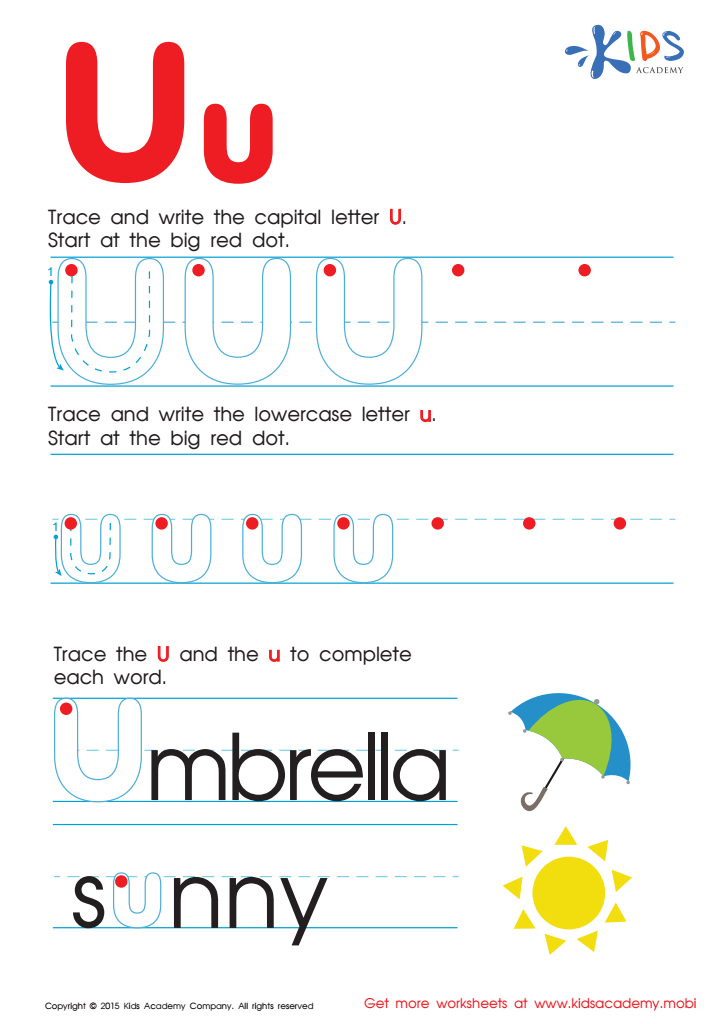
Letter U Tracing Page
Ready to trace and write the letter "U"? Use our worksheet and practice tracing both uppercase and lowercase letters. Complete the words "umbrella" and "sunny" with a capital "U". Check our full collection of alphabet printables for more activities.
Letter U Tracing Page
Worksheet
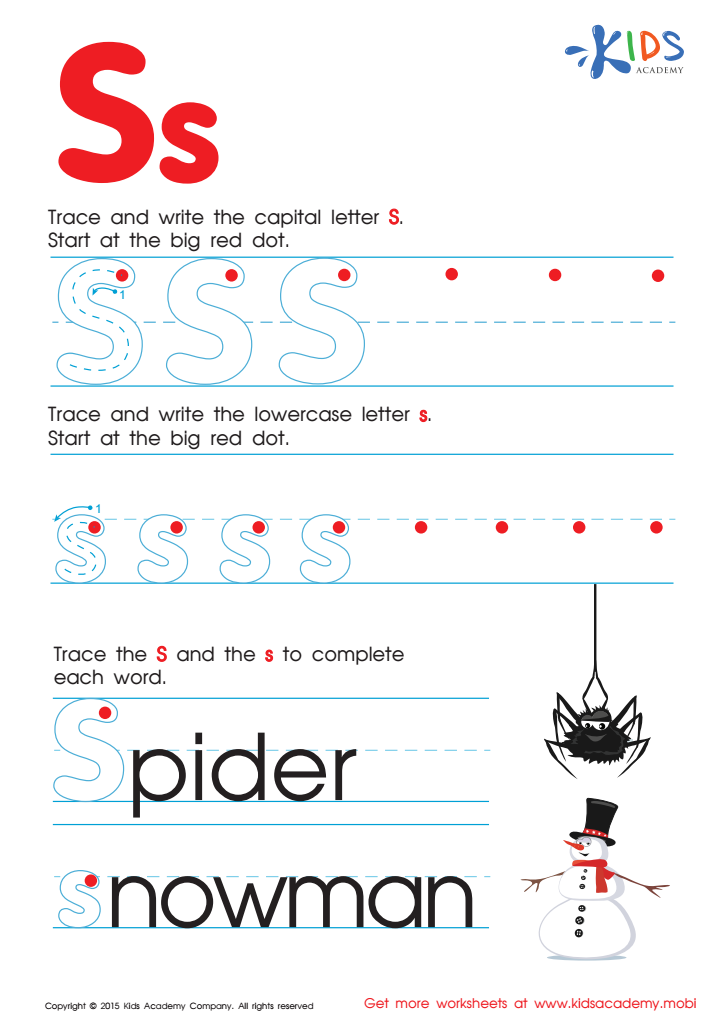
Letter S Tracing Page
Trace and write the capital and lowercase "S" on this ABC worksheet for kindergarten. Start with the big red dot and be careful. When you finish, help the spider and snowman in the pictures restore their words with the capital and lowercase letters. Continue learning the alphabet with Kids Academy.
Letter S Tracing Page
Worksheet
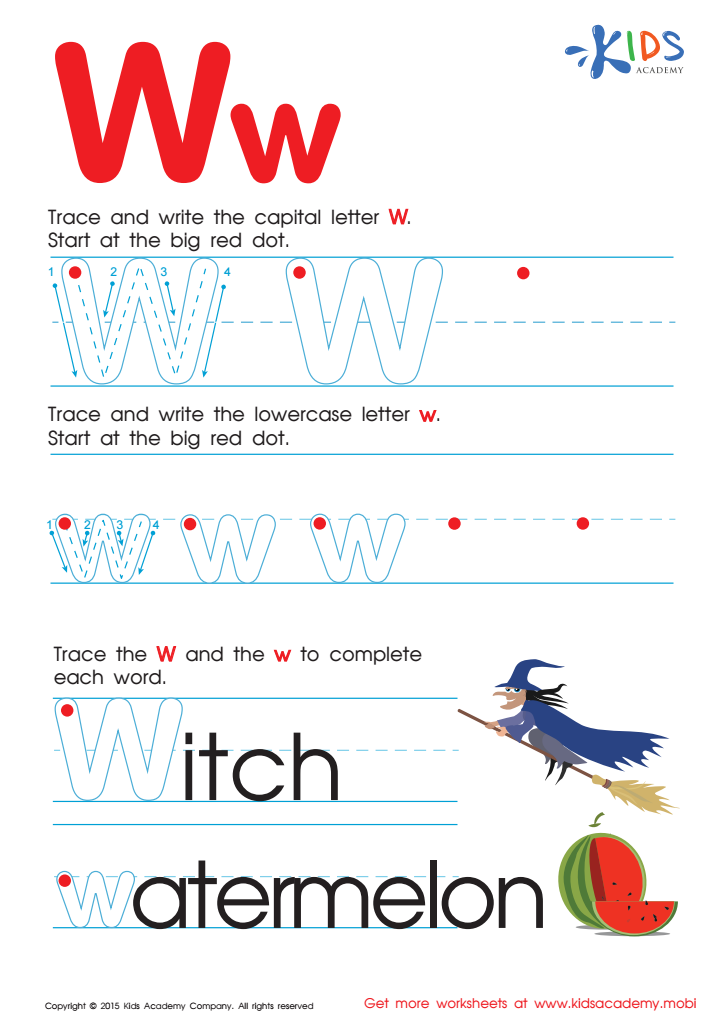
Letter W Tracing Page
Trace and write the capital and lowercase letter W with this free letter tracing worksheet by Kids Academy. Complete the words "Witch" (capital) and "watermelon" (lowercase). Check out our other kindergarten alphabet worksheets!
Letter W Tracing Page
Worksheet
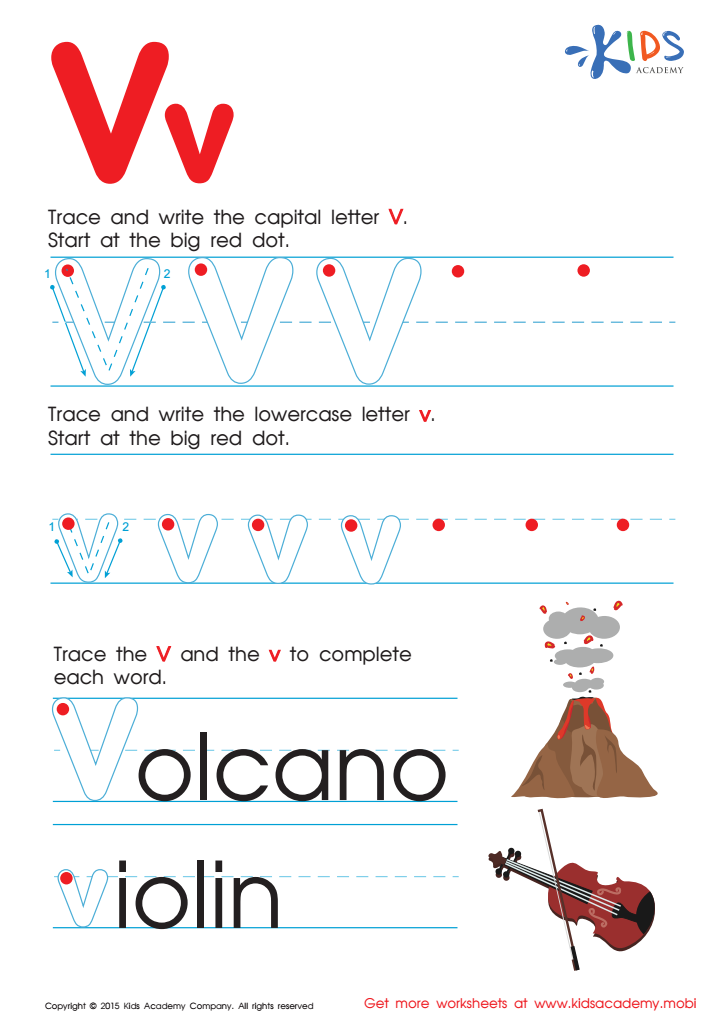
Letter V Tracing Page
Trace the uppercase and lowercase letter "V" with our kindergarten tracing worksheet. Begin at the red dot and follow the lines. Write it several times. Complete the words "Volcano" and "violin". Get more alphabet activities at Kids Academy.
Letter V Tracing Page
Worksheet
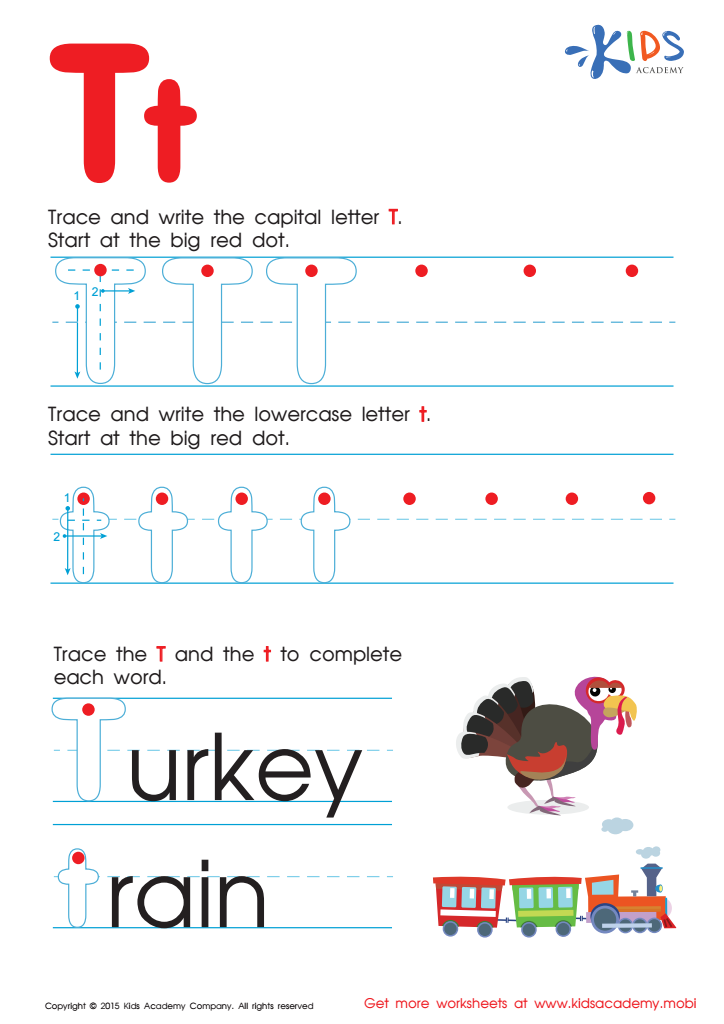
Letter T Tracing Page
Trace letters, complete words, draw pictures and see your kids having fun!
Kids Academy offers alphabet tracing worksheets to learn to write letters. Start with the big red dot, trace the letter, then write it. Practice uppercase and lowercase. Have fun completing words with a Turkey or a rain-train and draw pictures. Get more printable worksheets to make learning enjoyable.
Letter T Tracing Page
Worksheet
Join Kids Academy for Free
Who is primarily going to use this learning content?





Letter recognition is a critical foundational skill for children aged 6-7, significantly influencing their literacy development and academic success. Parents and teachers should prioritize activities like the “Extra Challenge ABC Letters” to ensure children can identify and differentiate letters confidently. Mastery of letter recognition aids early reading skills, enabling kids to decode words, understand phonics, and ultimately foster a love for reading.
Engaging with letter recognition activities also enhances fine motor skills, as children often manipulate letter cards or engage in writing exercises. The hands-on approach promotes active learning, keeping children invested and motivated. Additionally, early proficiency in letter recognition correlates with later writing skills, as children become more comfortable forming letters and constructing sentences.
Moreover, improved letter recognition can lead to increased confidence in classroom participation. Children who struggle with letters may feel hesitant during reading time, but those who excel are more likely to engage positively. This confidence has long-term benefits for self-esteem and the joy of learning. Lastly, addressing potential learning challenges through fun and challenging activities can help identify any issues early, allowing for timely support and interventions. For these reasons, letter recognition programs are integral to fostering a strong literacy foundation.