Alphabet Recognition Extra Challenge Alphabet Worksheets for Ages 6-7
3 filtered results
Difficulty Level
Grade
Age
-
From - To
Subject
Activity
Standards
Boost your child's alphabet recognition skills with our engaging Extra Challenge Alphabet Worksheets, designed specifically for ages 6-7. These worksheets offer a variety of fun and stimulating activities that challenge young learners to identify, trace, and manipulate letters in a creative way. Each page promotes critical thinking and fine motor skills through puzzles, mazes, and interactive tasks, ensuring that learning the alphabet is an enjoyable experience. Perfect for both classroom and home learning, these worksheets help reinforce letter recognition and phonetic awareness, paving the way for successful reading. Enhance your child's literacy journey with our thoughtfully crafted resources!
Favorites
With answer key
Interactive
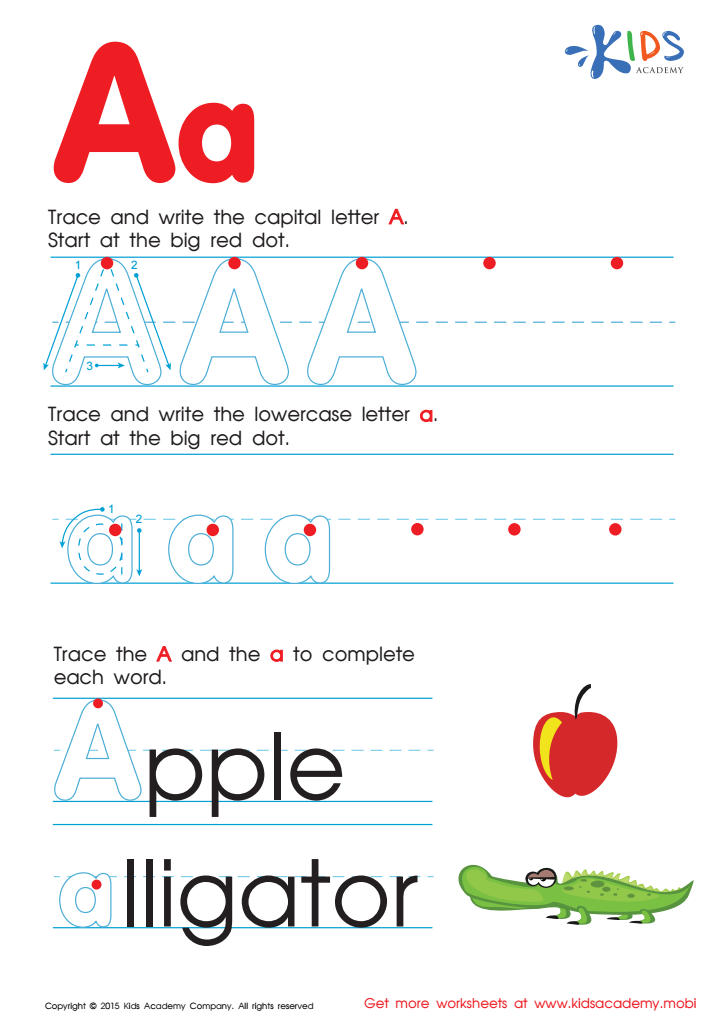
Letter A Tracing Page
Trace and write the letter "A"! Start with the big red dot, then do the capital and lowercase versions. Then write it again with two words - apple and alligator. Download more tracing worksheets at Kids Academy.
 Assign to My Students
Letter A Tracing Page
Worksheet
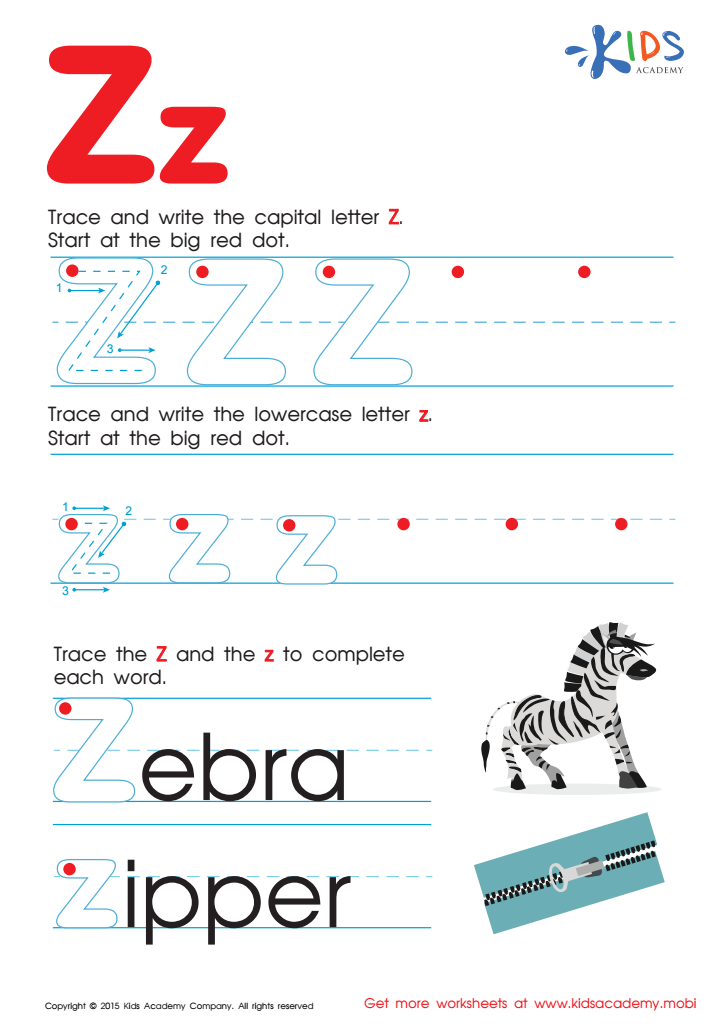
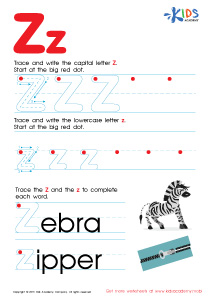
Letter Z Tracing Page
Trace and write capital "Z" and lowercase "z". Complete words "zebra" and "zipper". Be attentive and have fun! (80 words)
Letter Z Tracing Page
Worksheet
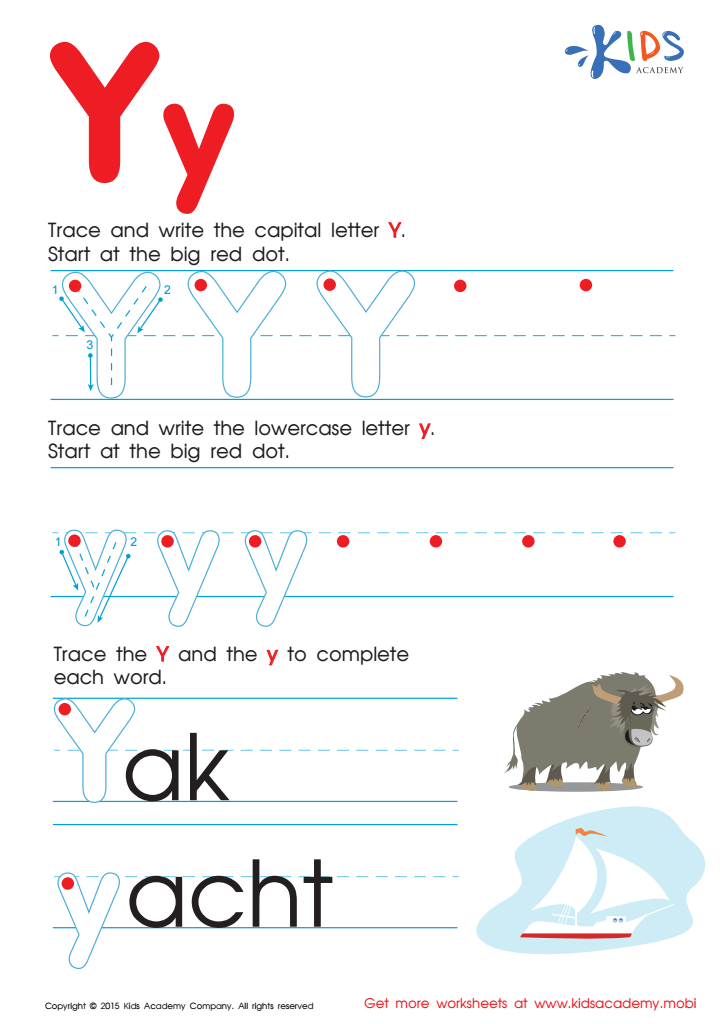
Letter Y Tracing Page
Trace the capital letter "Y" on the red dot, then trace and write the lowercase letter. Complete the words to help the Yak walk and the yacht swim. More worksheets at Kids Academy.
Letter Y Tracing Page
Worksheet
Join Kids Academy for Free
Who is primarily going to use this learning content?






Alphabet recognition is a crucial foundational skill for children aged 6-7, as it directly impacts their reading and writing abilities. The "Alphabet Recognition Extra Challenge" program provides targeted exercises that engage young learners beyond basic identification, fostering deeper comprehension links between letters and sounds. Such challenges promote not just rote memorization, but critical thinking and problem-solving skills.
Parents and teachers should prioritize this program, as it addresses varying learning paces and styles. Some children may need extra practice to solidify their understanding, while others may thrive in a more stimulating environment. Incorporating fun and diverse activities ignites interest, motivates students, and reinforces learning in a dynamic way feasible in classrooms and at home.
Moreover, strong alphabet recognition lays the groundwork for future literacy skills. As children improve their ability to identify letters and understand their sounds, they become more confident in their reading, which in turn supports overall academic success. By investing in programs like the Alphabet Recognition Extra Challenge, adults equip children with essential tools for lifelong learning, enhancing their educational journeys and fostering a love for reading that can last a lifetime. Supporting these efforts ensures that children reach their full potential in literacy and beyond.