Alphabet Recognition Extra Challenge Letter Recognition Worksheets for Ages 6-7
3 filtered results
Difficulty Level
Grade
Age
-
From - To
Subject
Activity
Standards
Discover our engaging "Alphabet Recognition Extra Challenge Letter Recognition Worksheets" designed for children ages 6-7! These worksheets provide a fun and stimulating way for young learners to enhance their letter recognition skills. Each page is filled with interactive activities, including tracing, coloring, and identifying letters in various contexts. Perfect for classroom settings or at-home practice, these worksheets help reinforce foundational literacy skills and boost confidence in early reading. Challenge your child to recognize letters in diverse formats, promoting creativity and critical thinking. Empower their learning journey today and build a strong foundation for future literacy success! Download now for endless fun!
Favorites
With answer key
Interactive
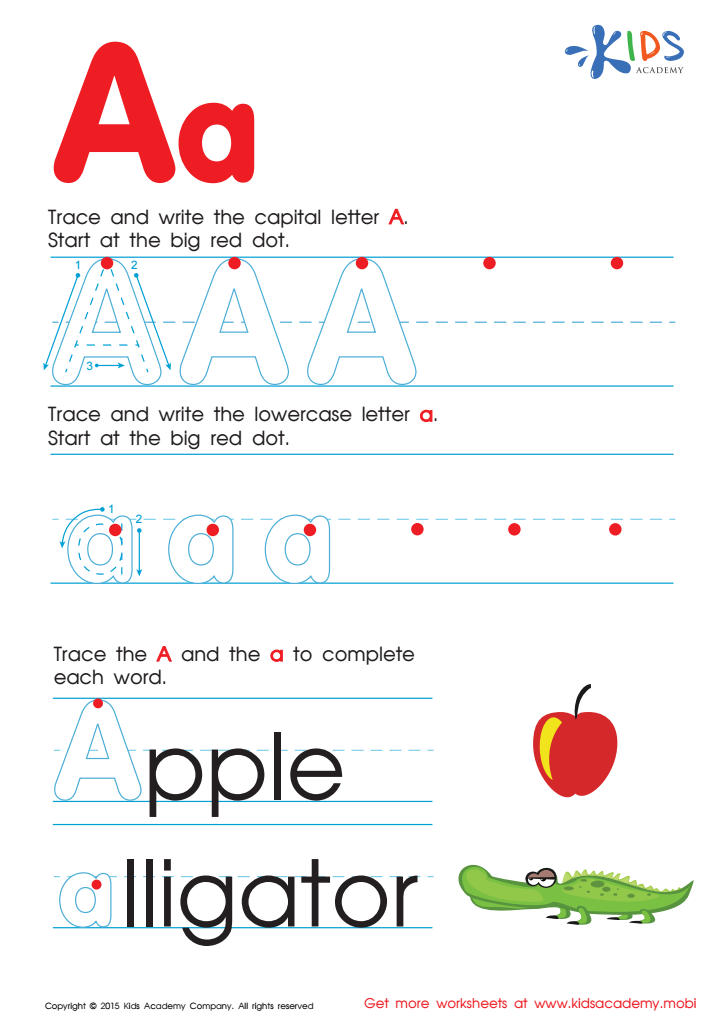
Letter A Tracing Page
Trace and write the letter "A"! Start with the big red dot, then do the capital and lowercase versions. Then write it again with two words - apple and alligator. Download more tracing worksheets at Kids Academy.
 Assign to My Students
Letter A Tracing Page
Worksheet
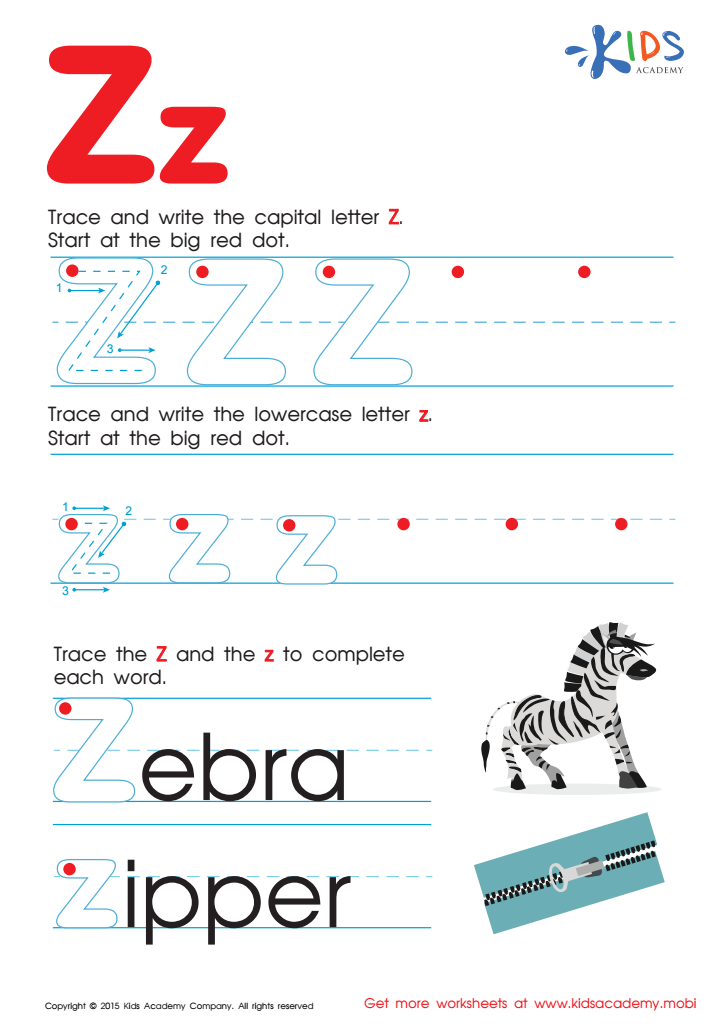
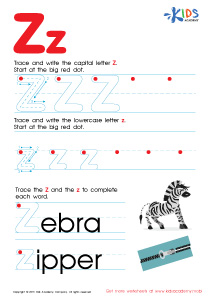
Letter Z Tracing Page
Trace and write capital "Z" and lowercase "z". Complete words "zebra" and "zipper". Be attentive and have fun! (80 words)
Letter Z Tracing Page
Worksheet
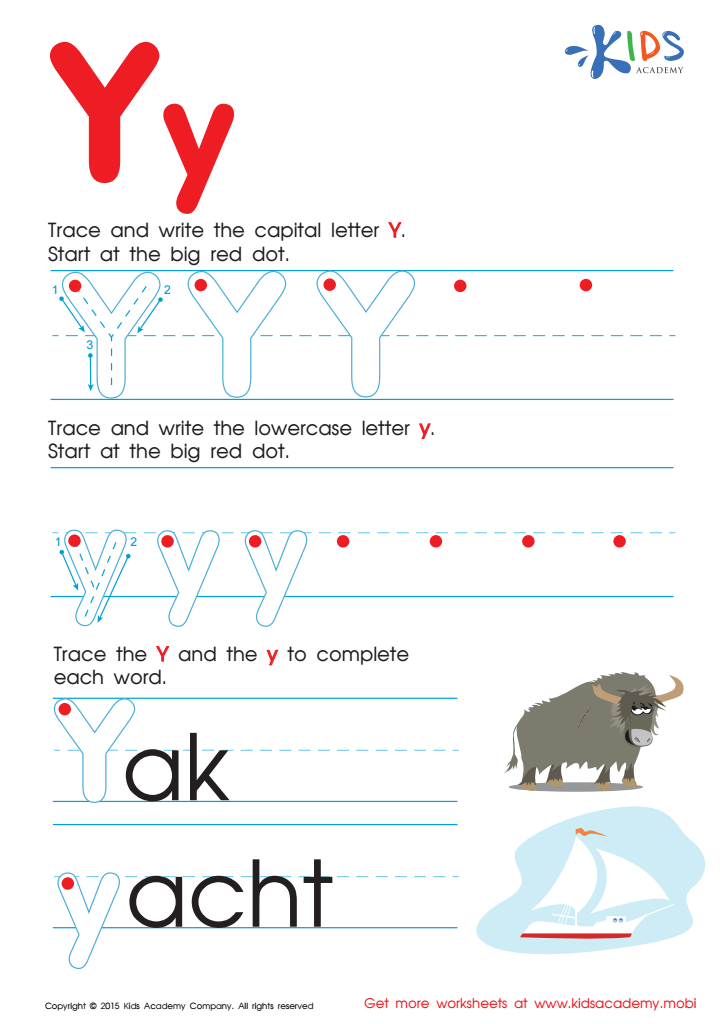
Letter Y Tracing Page
Trace the capital letter "Y" on the red dot, then trace and write the lowercase letter. Complete the words to help the Yak walk and the yacht swim. More worksheets at Kids Academy.
Letter Y Tracing Page
Worksheet
Join Kids Academy for Free
Who is primarily going to use this learning content?








Alphabet recognition is a foundational skill for children aged 6-7, establishing the primary basis for literacy and communication. During this critical developmental stage, mastering both upper and lower case letters is essential as it enhances a child’s reading and writing abilities. Recognizing letters is not just about identifying shapes; it fosters phonemic awareness, helps with vocabulary building, and strengthens comprehension skills.
The Extra Challenge in letter recognition offers an engaging way to ensure children surpass basic requirements, encouraging higher cognitive thrill and intellectual curiosity. It can involve activities that promote sound-letter association and phonics, essential for effective reading strategies. For parents and teachers, this initiative helps identify children who may need additional support, ensuring no child is left behind.
Moreover, enhancing alphabet recognition skills aligns with educational standards and promotes a lifelong love for learning. With the world becoming increasingly reliant on literacy, equipping students with robust skills at this early stage cultivates confident communicators and critical thinkers. By actively participating in the Alphabet Recognition Extra Challenge, parents and teachers reinforce not only intimate knowledge of letters but also lay a strong foundation for future academic success, ensuring children excel in a constantly evolving educational landscape.