Handwriting practice Extra Challenge Letter Recognition Worksheets for Ages 6-7
5 filtered results
Difficulty Level
Grade
Age
-
From - To
Subject
Activity
Standards
Unlock your child’s potential with our "Handwriting Practice Extra Challenge Letter Recognition Worksheets" designed specifically for ages 6-7. These engaging worksheets combine handwriting practice with letter recognition skills, promoting both fine motor development and literacy confidence. Each activity is crafted to challenge young learners, making them perfect for children ready to advance beyond basic skills. With fun and interactive designs, your child will enjoy tracing letters while honing their ability to identify and differentiate between each one. Boost their learning journey today with these thoughtfully curated worksheets, ensuring a solid foundation for lifelong writing and reading success!
Favorites
With answer key
Interactive
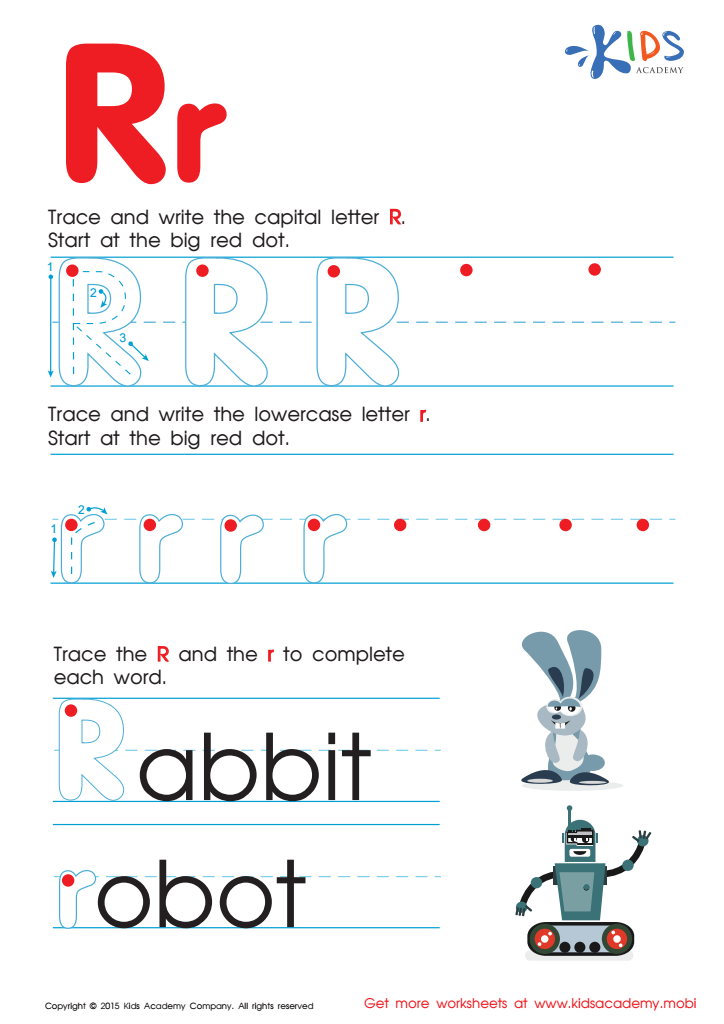
Letter R Tracing Page
Trace and write the letter "R" with this worksheet for kindergarten. Start with the uppercase, then move on to the lowercase. Write the letters several times for practice. Then help complete the words for the rabbit and robot, spelling carefully. More ABC worksheets can be found at Kids Academy.
 Assign to My Students
Letter R Tracing Page
Worksheet
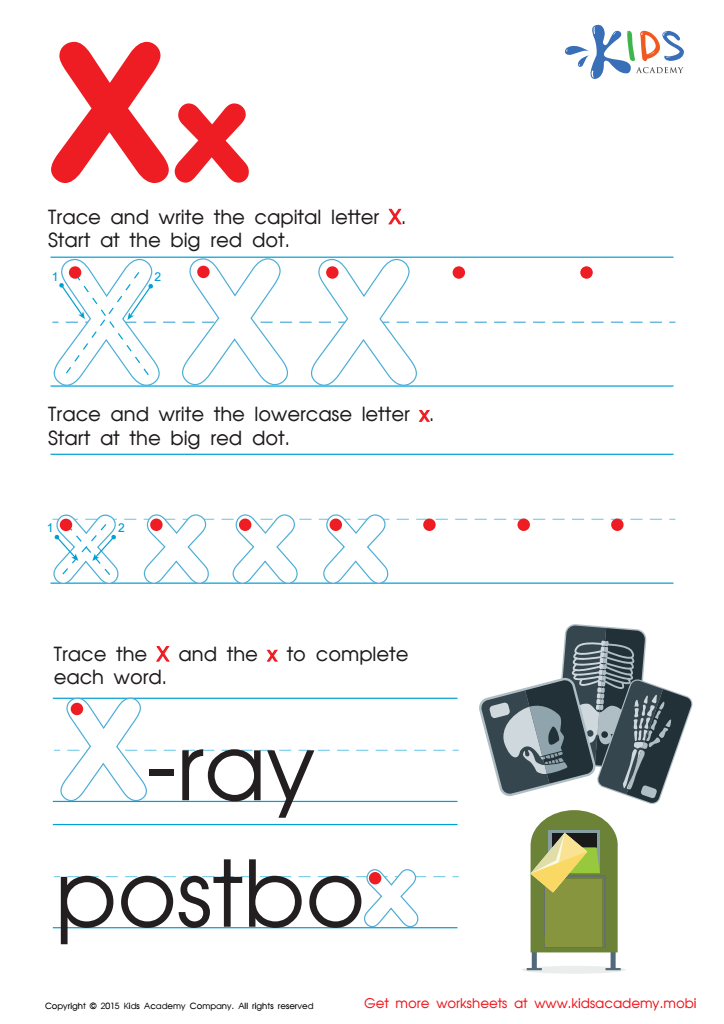
Letter X Tracing Page
Trace the uppercase letter "X" to learn, then write it yourself and practice. Then do the same with the lowercase "x" before completing the words "X-ray" and "postbox". Enjoy our alphabet printables!
Letter X Tracing Page
Worksheet
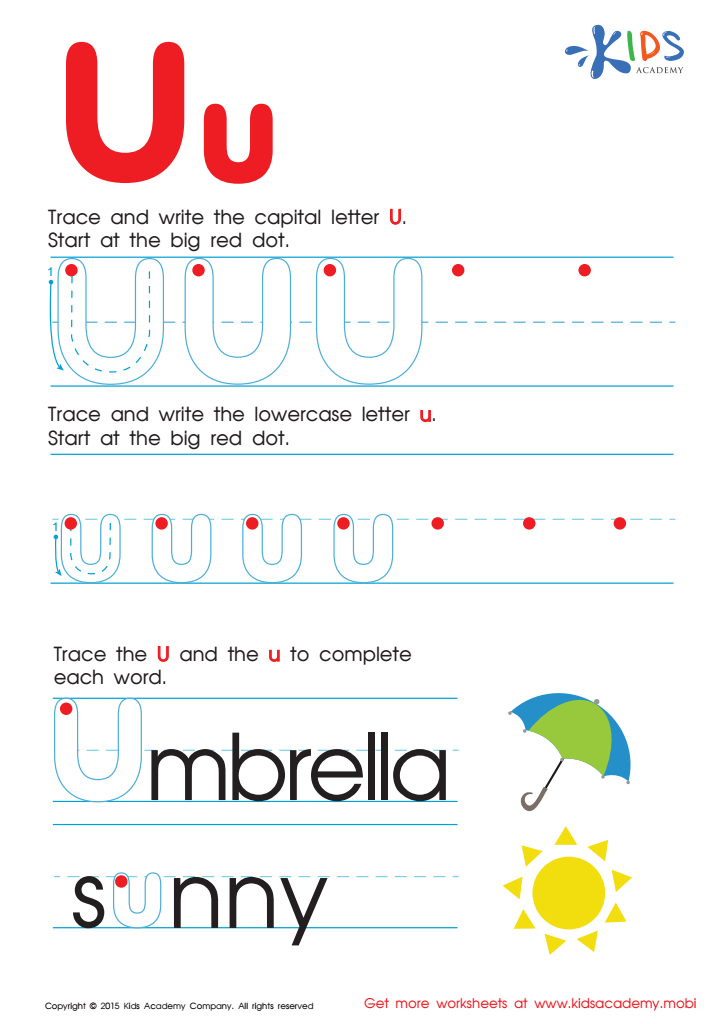
Letter U Tracing Page
Ready to trace and write the letter "U"? Use our worksheet and practice tracing both uppercase and lowercase letters. Complete the words "umbrella" and "sunny" with a capital "U". Check our full collection of alphabet printables for more activities.
Letter U Tracing Page
Worksheet
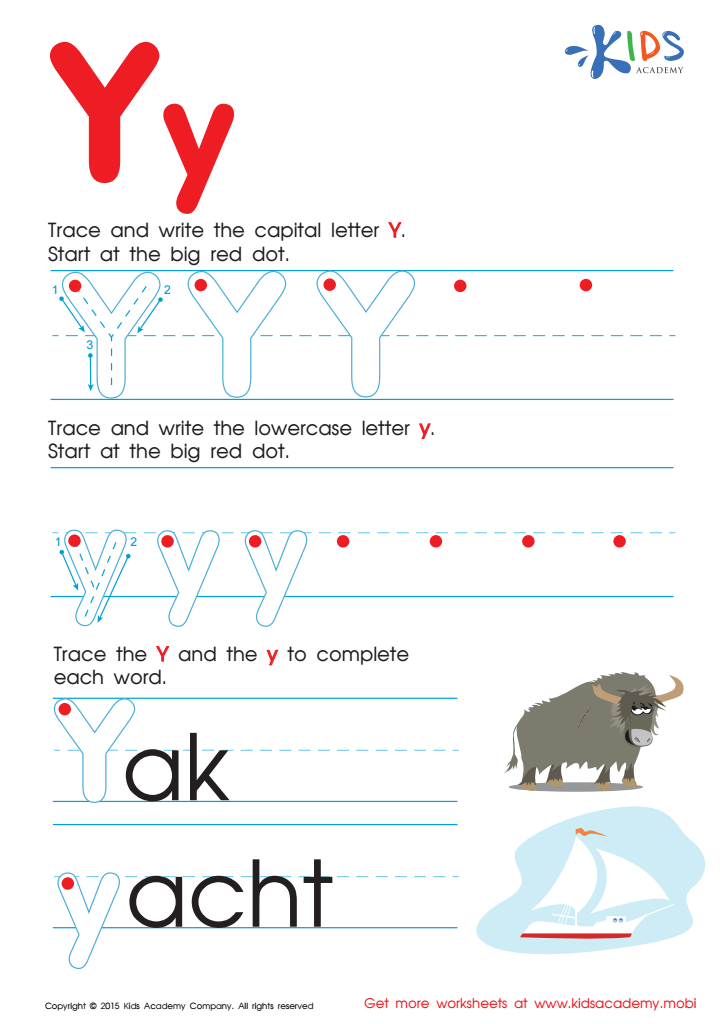
Letter Y Tracing Page
Trace the capital letter "Y" on the red dot, then trace and write the lowercase letter. Complete the words to help the Yak walk and the yacht swim. More worksheets at Kids Academy.
Letter Y Tracing Page
Worksheet
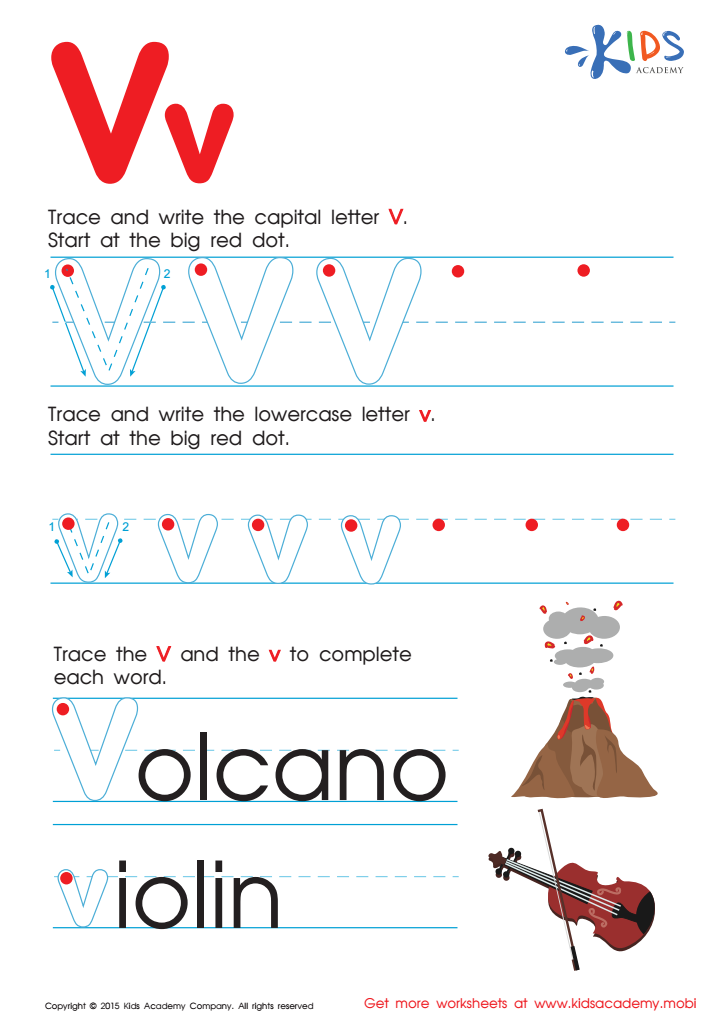
Letter V Tracing Page
Trace the uppercase and lowercase letter "V" with our kindergarten tracing worksheet. Begin at the red dot and follow the lines. Write it several times. Complete the words "Volcano" and "violin". Get more alphabet activities at Kids Academy.
Letter V Tracing Page
Worksheet
Join Kids Academy for Free
Who is primarily going to use this learning content?








Handwriting practice and letter recognition are crucial components of early childhood education, particularly for children aged 6-7, as these skills lay the groundwork for future academic success. At this age, children are transitioning from learning to read and write to being able to express their thoughts effectively through written communication. Practicing handwriting helps develop fine motor skills, hand-eye coordination, and dexterity, which are essential for writing not only in early grades but throughout life.
Moreover, letter recognition enhances reading abilities, as it allows children to identify letters, understand their sounds, and form words. When combined with handwriting practice, children gain a holistic understanding of the writing process, reinforcing the connection between spoken and written language. This synergy improves their confidence and willingness to engage in writing activities.
Parents and teachers play a significant role in fostering these skills. Encouraging additional handwriting practice and recognition through fun and interactive methods, such as games, crafts, and engaging workbooks, can make learning enjoyable. By prioritizing these foundational literacy skills, they ensure children are not only prepared for academic challenges but also develop a love for writing that can last a lifetime. Ultimately, investing time in these practices benefits a child's overall cognitive and emotional development.