Alphabet Recognition Extra Challenge English for Beginners Worksheets for Ages 6-7
3 filtered results
-
From - To
Enhance your child's alphabet knowledge with our "Alphabet Recognition Extra Challenge" worksheets, designed for beginning English learners aged 6-7. These engaging, printable resources help young learners identify, recognize, and practice each letter through a variety of fun and stimulating activities. Perfect for ESL students, they offer an extra layer of challenge to strengthen foundational language skills. Each worksheet integrates vibrant illustrations and interactive tasks, ensuring learning remains enjoyable and effective. Spark your child's interest in the English language and build their confidence with our expertly crafted educational content tailored to meet young learners' needs.
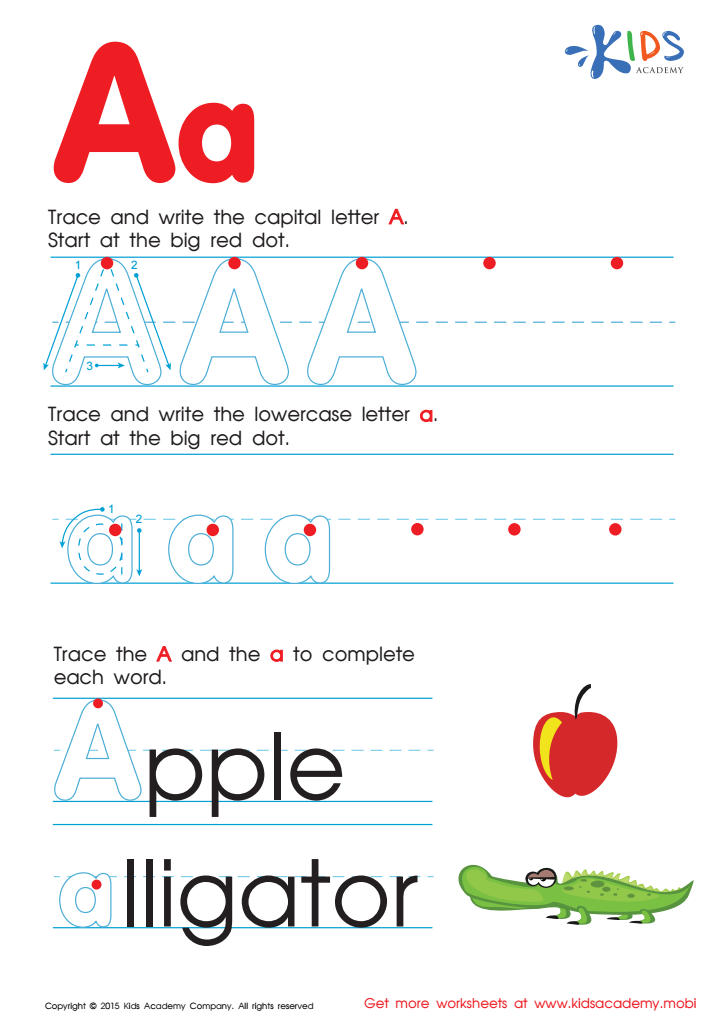
Letter A Tracing Page
 Assign to My Students
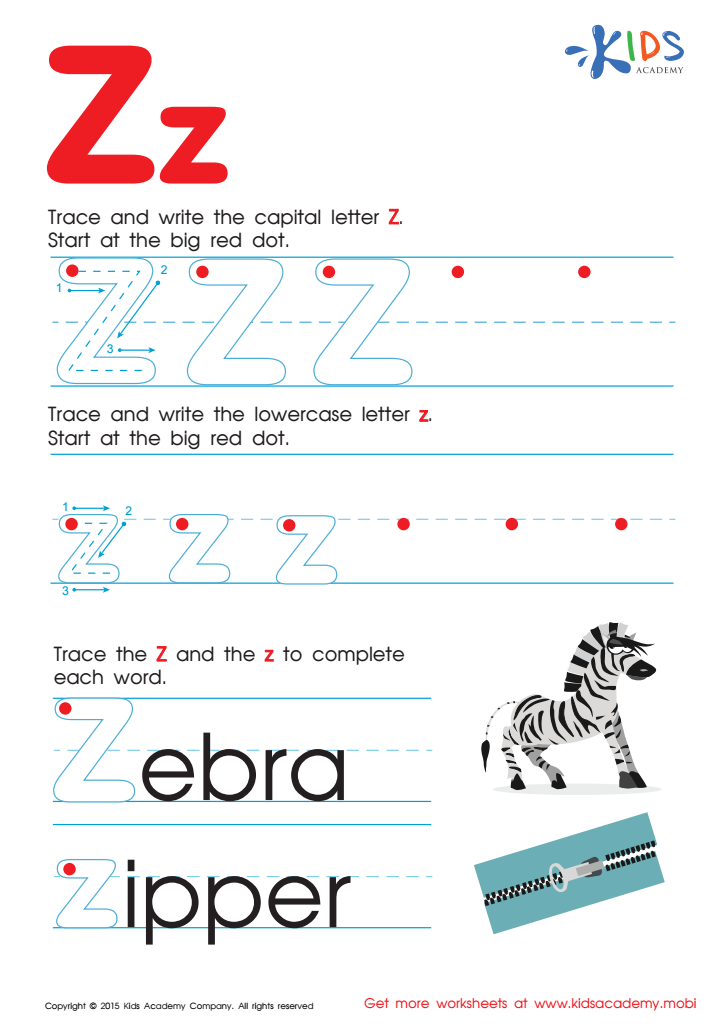
Letter Z Tracing Page
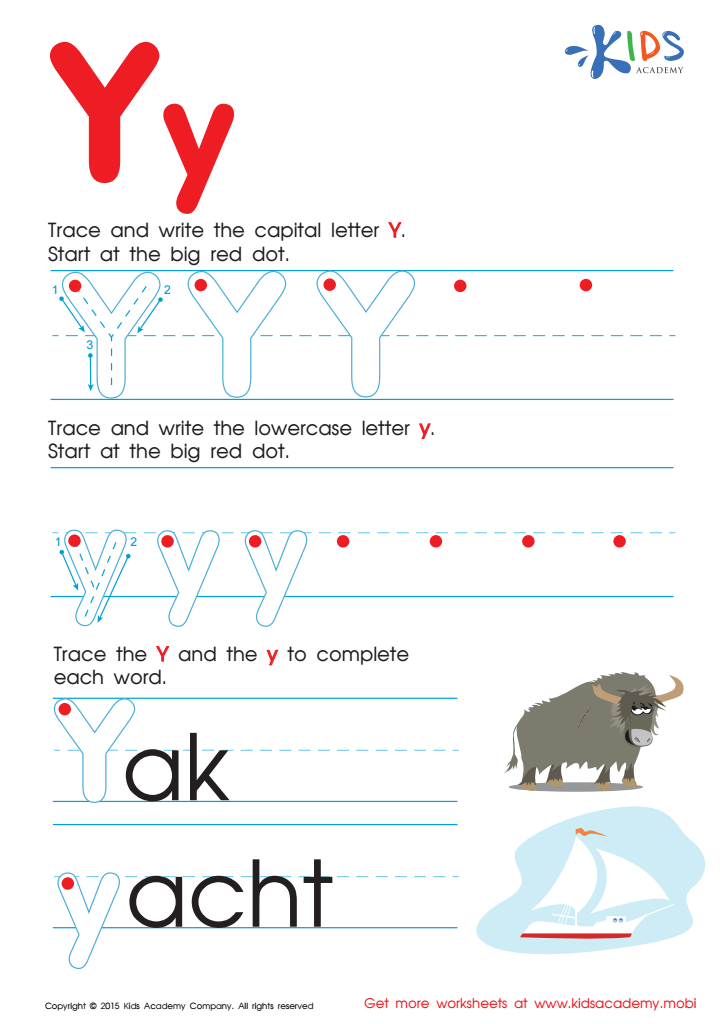
Letter Y Tracing Page





Parents and teachers should prioritize Alphabet Recognition Extra Challenge English for Beginners for children aged 6-7 because it forms the foundational block upon which all future literacy skills are built. At this critical developmental stage, children are transitioning from pre-reading to actual reading, making it imperative to strengthen their grasp on alphabet recognition.
Firstly, alphabet recognition is essential for children to understand that letters are symbols representing sounds, a key principle of phonics. This understanding boosts their ability to decode words, enhancing reading fluency and comprehension. Engaging in extra challenges can make this process fun and stimulating, helping children retain information more effectively.
Secondly, early success with alphabet recognition promotes confidence and encourages a positive attitude towards reading. This enthusiasm often translates into a love for learning in general, setting the stage for academic success.
Additionally, extra challenges can cater to various learning styles, whether visual, auditory, or kinesthetic, ensuring that each child can grasp the concept in a manner that's most effective for them. Furthermore, these activities promote fine motor skills, attention to detail, and cognitive abilities through hands-on learning.
In summary, investing in Alphabet Recognition Extra Challenge English activities equips children with critical reading skills, bolsters their confidence, ignites a passion for learning, and caters to diverse learning needs, all of which are pivotal for their overall academic and personal development.








