Basic counting skills Extra Challenge Worksheets for Ages 6-7
4 filtered results
-
From - To
Elevate your child's math prowess with our "Basic Counting Skills Extra Challenge Worksheets" designed specifically for ages 6-7! These engaging and challenging worksheets go beyond simple counting, providing exciting activities that foster critical thinking and problem-solving abilities. Your young learner will enjoy various tasks, from counting objects to solving interactive number puzzles, ensuring they build a strong numerical foundation. Each worksheet emphasizes fun and creativity while reinforcing essential math concepts, making learning an exciting adventure. Perfect for at-home practice or supplementary classroom learning, our worksheets offer a comprehensive way to enhance your child's counting skills. Download now and watch them thrive!
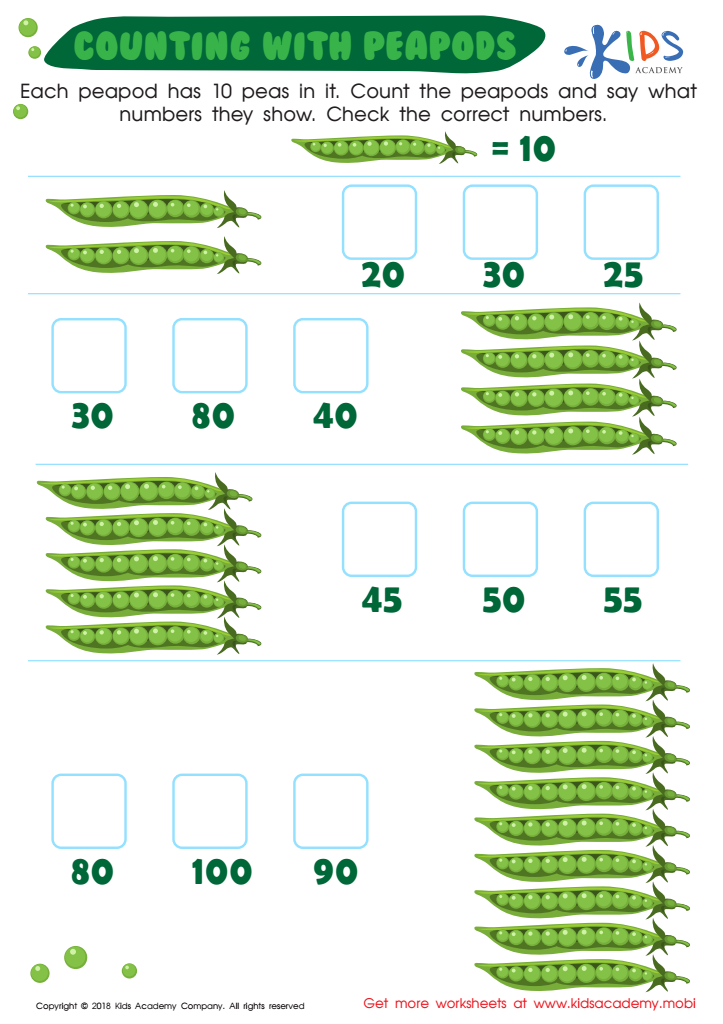
Number Worksheet: Counting With Peapods
 Assign to My Students
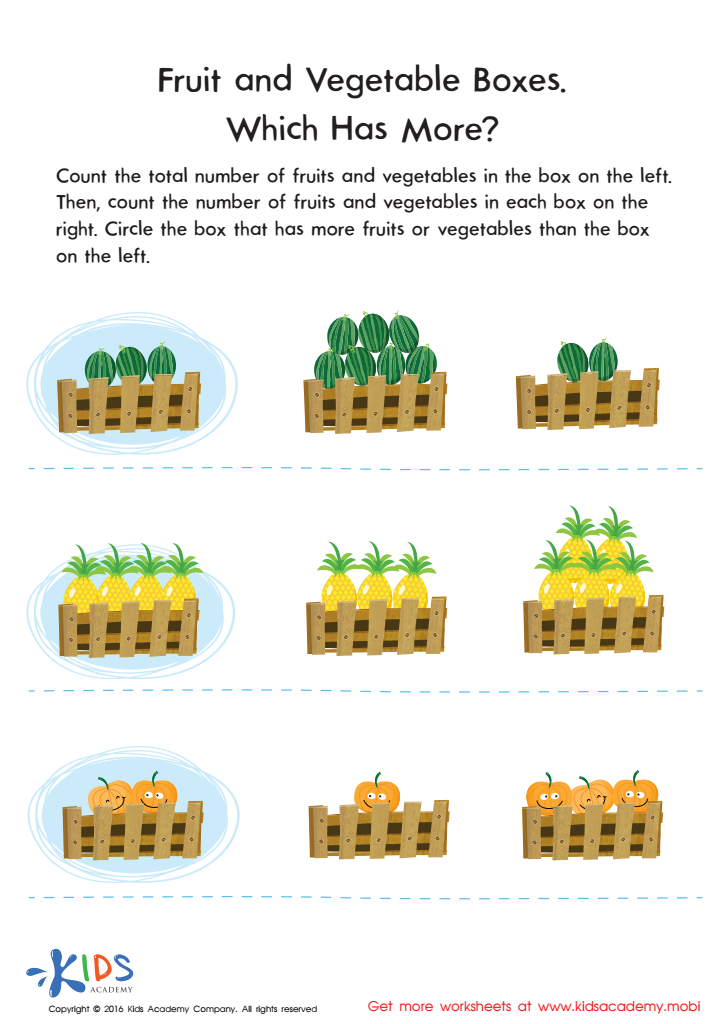
Which Has More? Size Worksheet
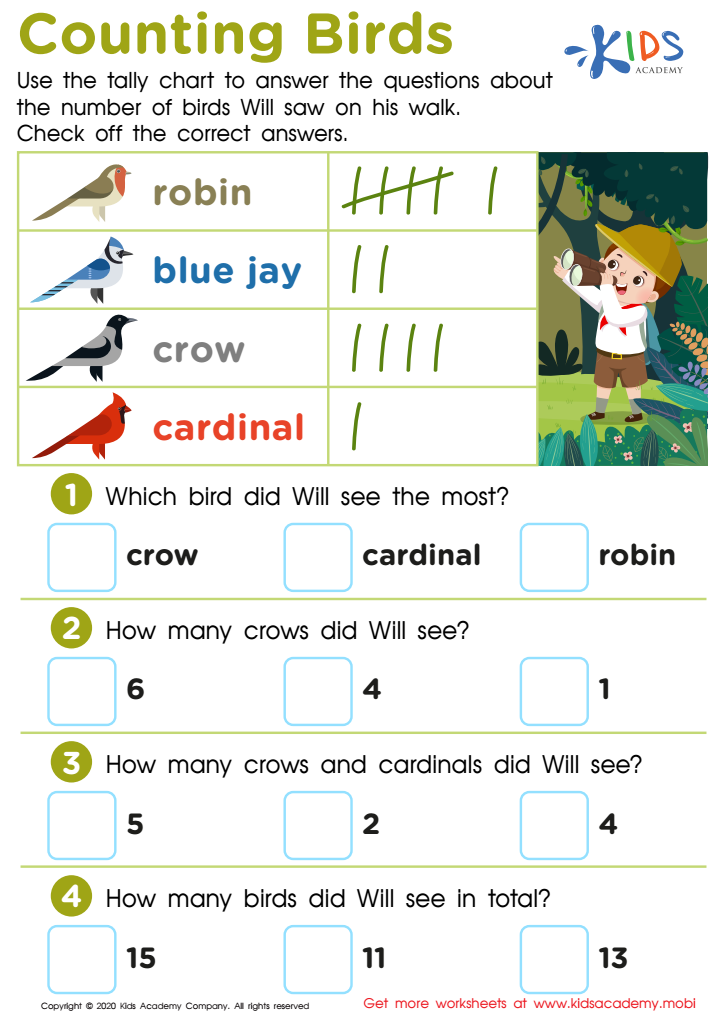
Counting Birds Worksheet
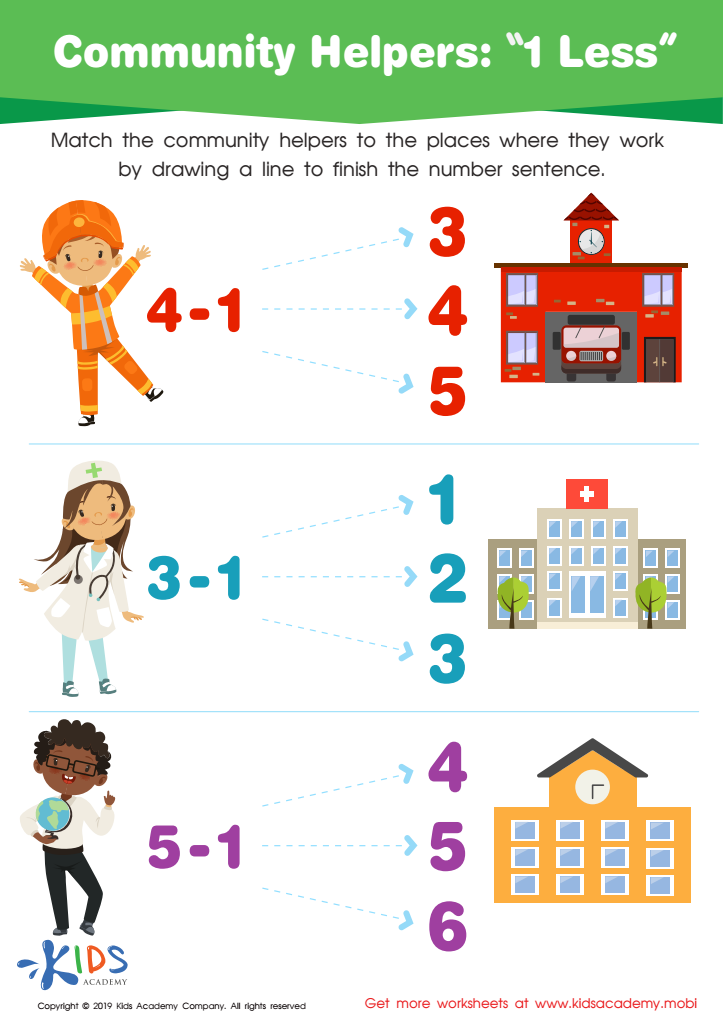
Community Helpers: 1 less Worksheet








Basic counting skills are foundational to a child’s overall mathematical development and essential for their academic success. For children ages 6-7, mastering these skills paves the way for more complex concepts such as addition, subtraction, and critical thinking. Early proficiency in counting enhances a child's confidence and fosters a positive attitude toward math, making them more eager to engage with future mathematical challenges.
Parents and teachers play a crucial role in this developmental stage. By incorporating basic counting exercises through everyday activities—from counting fruits during snack time to tallying scores in games—they can provide practical, real-life applications that make learning enjoyable and relevant. Moreover, focusing on counting can help children develop problem-solving skills and improve their number sense, which are vital across all subjects, not just math.
Additionally, proficiency in counting supports social skills by teaching children to collaborate, share, and communicate mathematically. Recognizing and addressing challenges early can prevent learning gaps that may hinder future academic success. Therefore, by prioritizing basic counting skills, parents and teachers create a solid foundation for lifelong learning and foster positive attitudes towards math and other subjects.








