Comparing lengths Extra Challenge Worksheets for Ages 6-7
5 filtered results
-
From - To
Introducing our "Comparing Lengths Extra Challenge Worksheets for Ages 6-7" – the perfect resource for young learners eager to sharpen their measurement skills! These engaging worksheets offer playful, educational exercises designed to help children compare lengths in a fun, interactive way. Through colorful visuals and diverse activities, your child will develop critical thinking and observational skills necessary for mastering basic concepts of measurement. Ideal for classroom use or at-home practice, these worksheets cater to various learning styles, ensuring every young mind enjoys the journey. Boost your child's confidence and math prowess today with our expertly crafted comparing lengths worksheets!
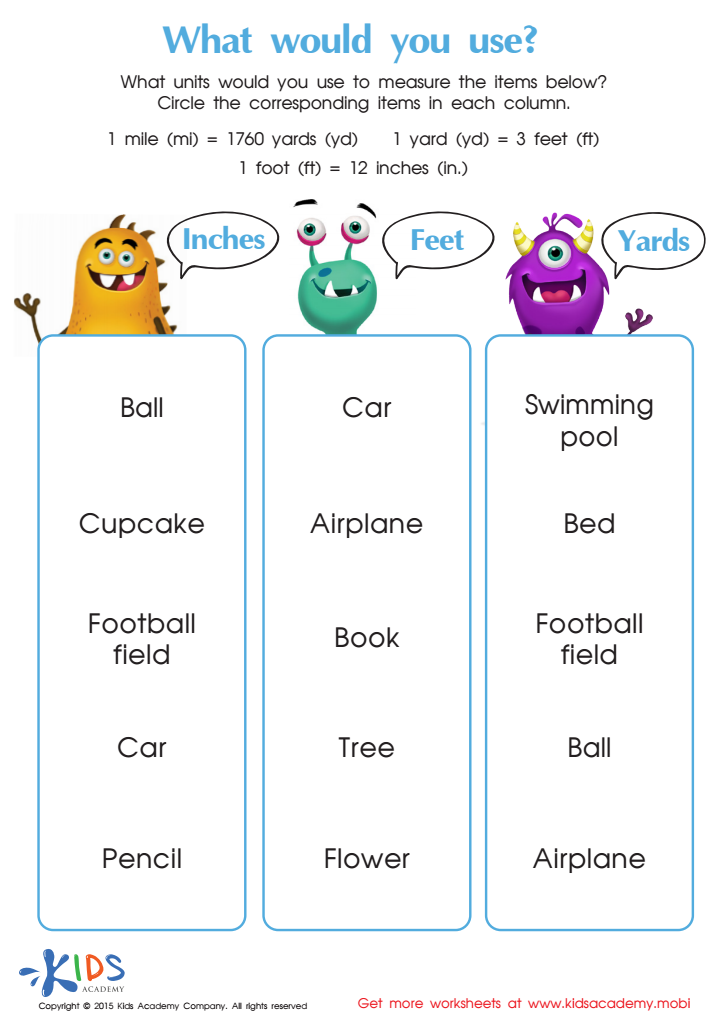
Learning about measuring objects in inches, feet and yards Worksheet
 Assign to My Students
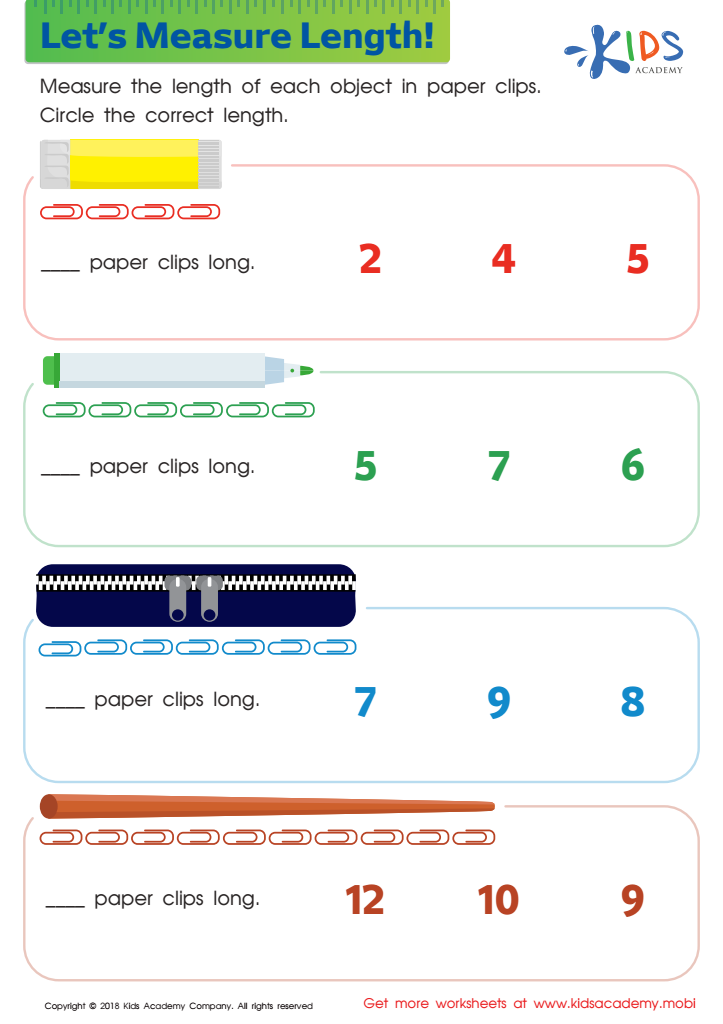
Lets Measure Length Worksheet
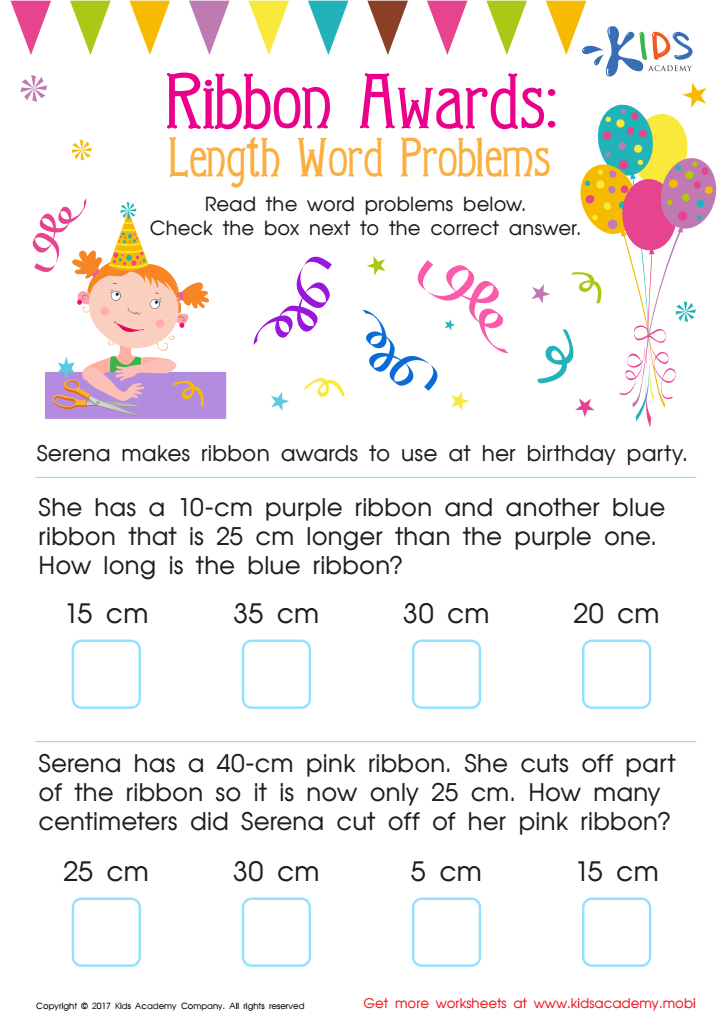
Length Word Problems Worksheet
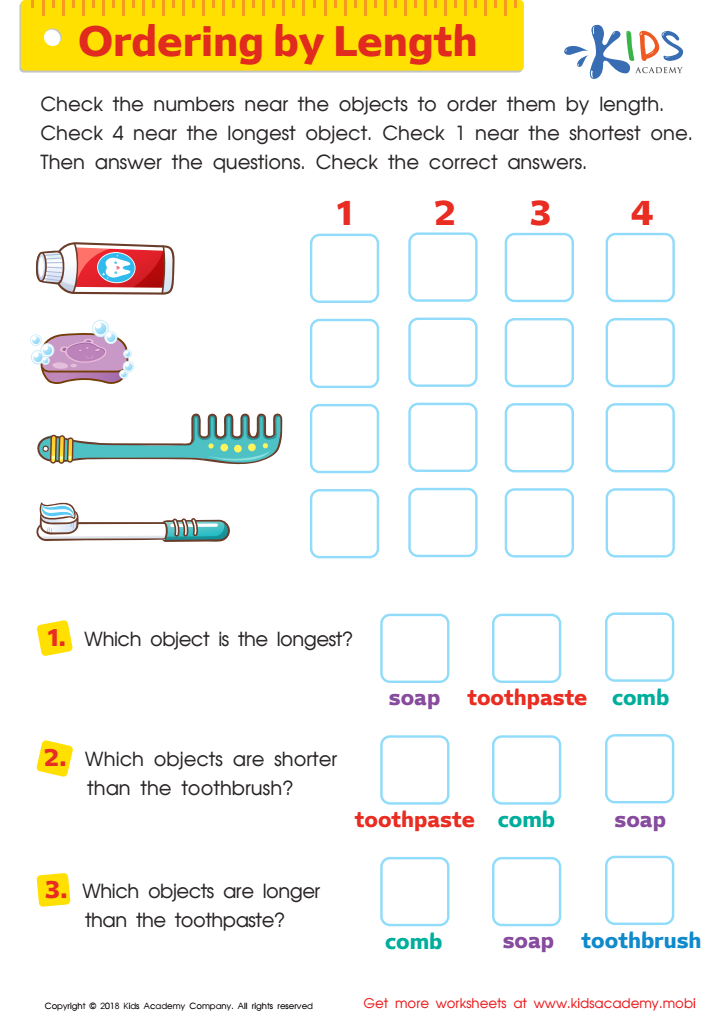
Ordering by Length Worksheet
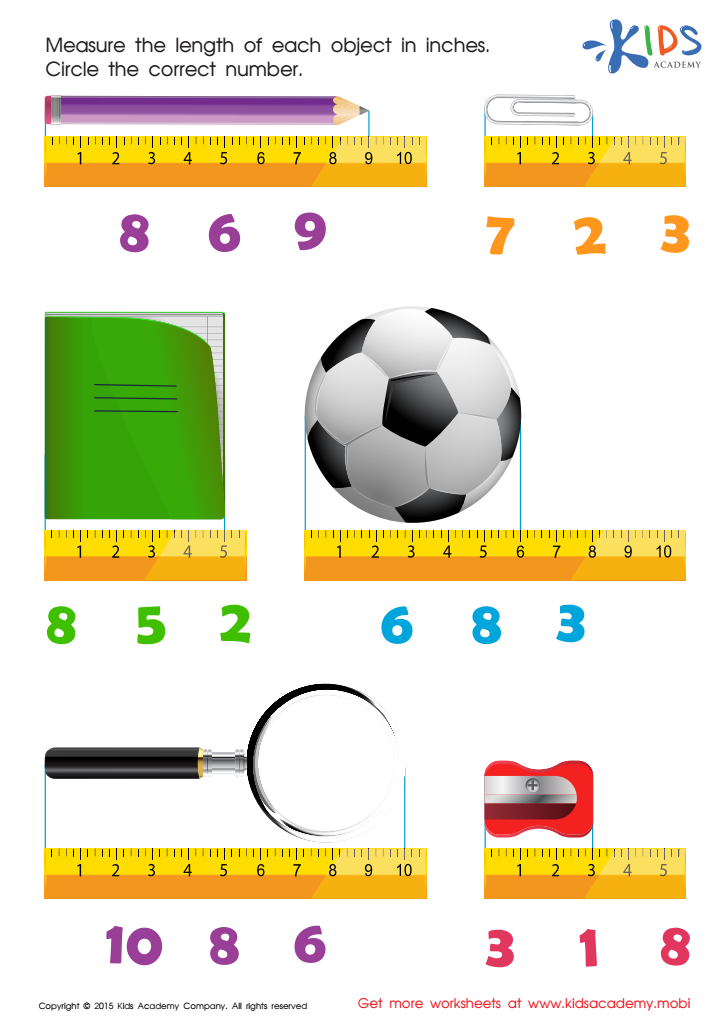
Learning measuring objects in inches Worksheet




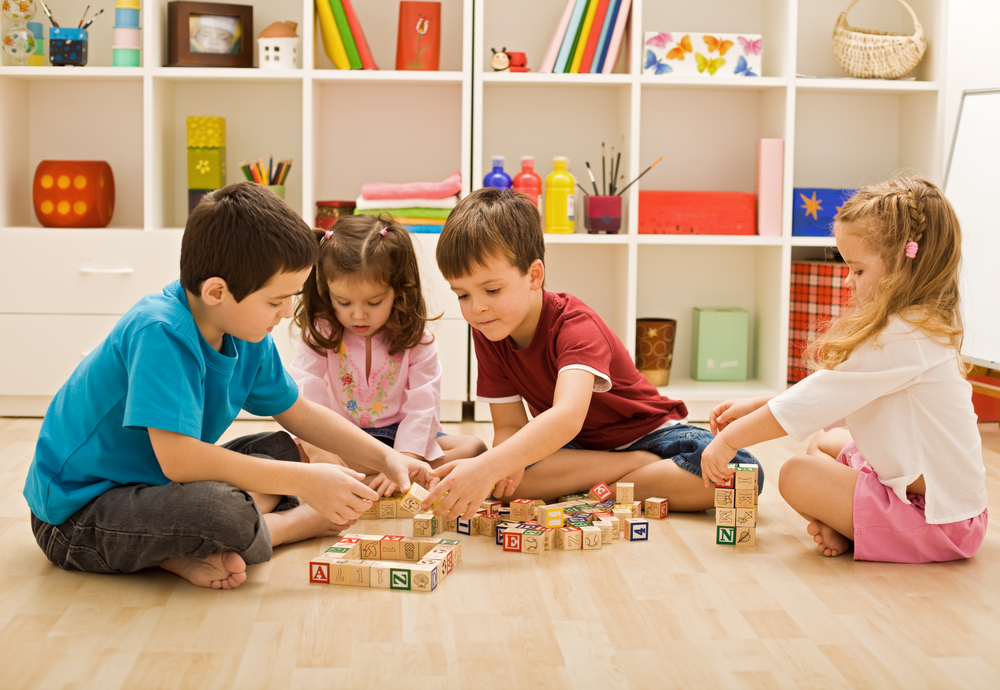

Comparing lengths is an important mathematical skill for young learners aged 6-7. It forms the foundation for understanding measurement and geometry. When parents and teachers emphasize comparing lengths as an extra challenge, children develop an early grasp of quantitative reasoning, which is crucial for later academic success.
At this age, children are naturally curious and enthusiastic about exploring the world around them. Measuring and comparing lengths taps into this curiosity by encouraging hands-on, interactive learning. It helps them recognize differences and similarities in objects, such as understanding that one object is longer, shorter, or the same length as another.
Additionally, this comparison activity aids in the development of vocabulary and language skills. As children describe lengths, they learn terms like "longer," "shorter," "taller," and "equal," which broadens their descriptive language and enhances communication abilities.
Moreover, comparing lengths integrates practical life skills. Children learn to use measurement tools like rulers and tape measures appropriately. These skills are not only useful in academics but also in everyday contexts, such as helping out with cooking or DIY projects.
Overall, engaging young learners in comparing lengths builds a strong mathematical foundation, bolsters cognitive development, and nurtures essential life skills, making it an integral part of early education.








