Understanding adjectives Extra Challenge Worksheets for Ages 6-7
3 filtered results
-
From - To
Unlock your child's potential with our "Understanding Adjectives Extra Challenge Worksheets for Ages 6-7." Designed to elevate young learners’ comprehension, these worksheets introduce vibrant, engaging exercises that bolster vocabulary and language skills. Each activity encourages kids to identify, use, and explore adjectives in varied contexts. Combining fun with learning, our worksheets detail colorful illustrations and thought-provoking tasks to keep children excited and committed to mastering the descriptive power of adjectives. Perfect for reinforcing school lessons or at-home practice, these worksheets lay a strong language foundation for your child’s academic journey. Empower their storytelling and descriptive prowess today!
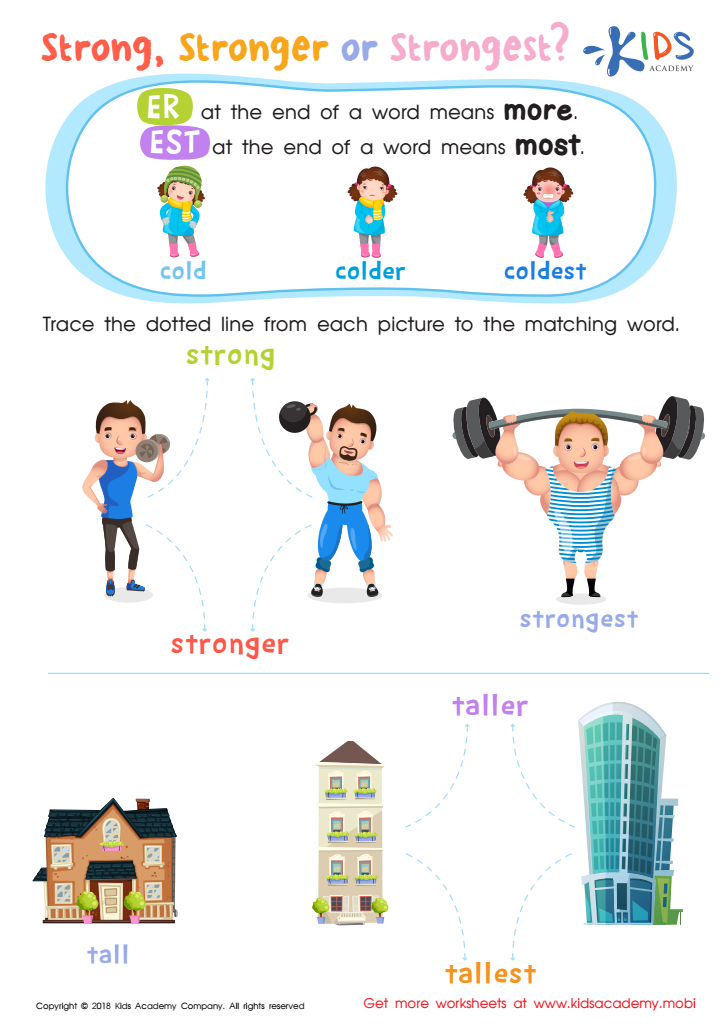
Strong or Stronger? Worksheet
 Assign to My Students
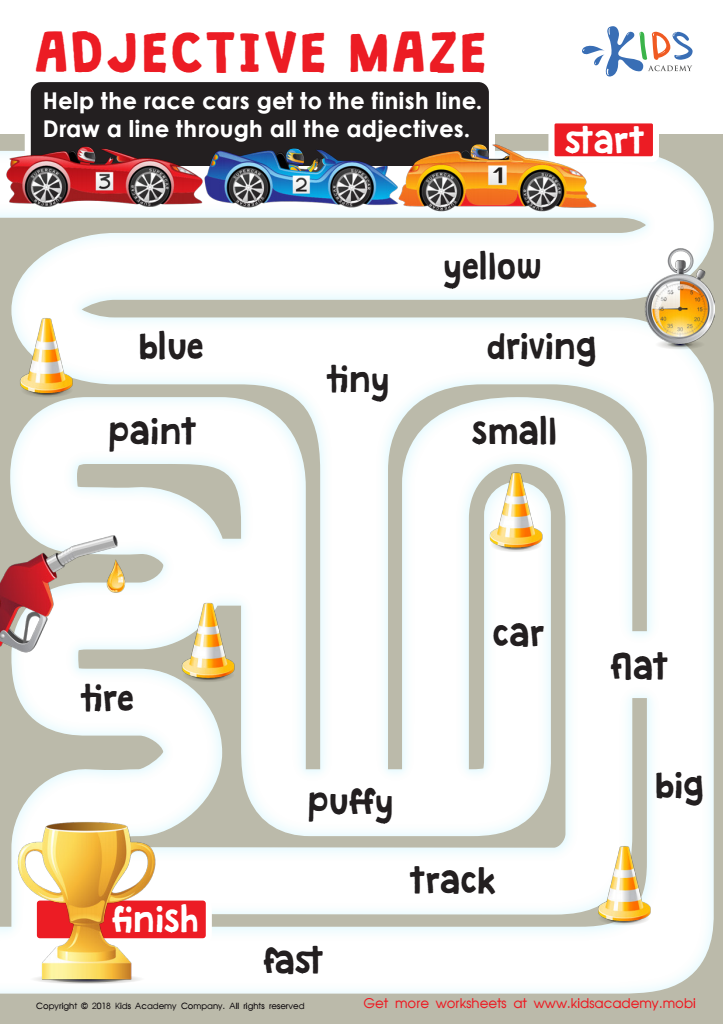
Adjective Maze Worksheet
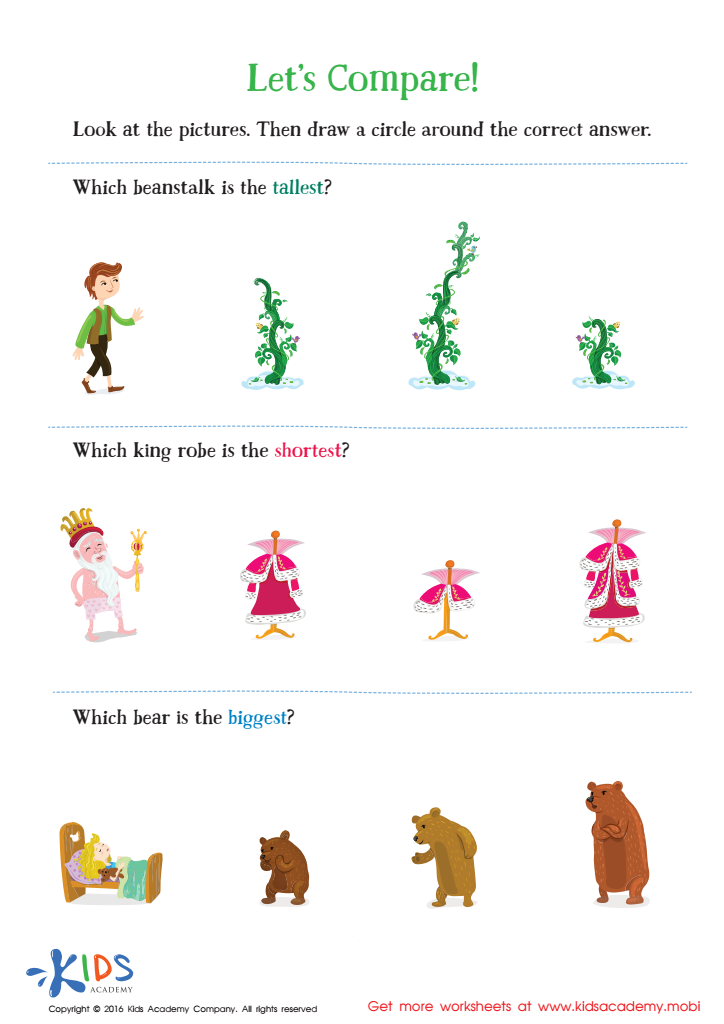
Fairy Tale Worksheet: Let's Compare







Understanding adjectives is crucial for children aged 6-7, a developmental phase where language skills grow exponentially. Parents and teachers should prioritize this for several reasons. Firstly, adjectives enrich a child's vocabulary, enabling more expressive and detailed communication. Instead of saying "a cat," children learn to say "a fluffy, white cat," which enhances their descriptive abilities and helps others visualize their thoughts better.
Secondly, grasping the use of adjectives supports reading comprehension. Stories become more vivid and interesting, maintaining the child's engagement and fostering a love for reading. It also translates to improved writing skills. When children know how to use adjectives accurately, their writing becomes more creative and compelling, setting a strong foundation for future academic success.
Thirdly, learning adjectives can positively impact cognitive development. Adjectives require kids to consider characteristics and details, thereby sharpening their analytical skills. Asking a child to describe objects or experiences elevates their critical thinking and observation abilities.
Lastly, it's fun! Activities around adjectives, such as descriptive games or storytelling, make learning enjoyable and memorable, promoting a positive attitude toward education. Ultimately, mastering adjectives at an early age equips children with the tools to communicate more effectively and think more deeply, essential skills for lifelong learning.








