Recognizing shapes Extra Challenge Geometry Worksheets for Ages 6-7
3 filtered results
-
From - To
Explore our "Recognizing Shapes Extra Challenge Geometry Worksheets" designed for children aged 6-7. These engaging worksheets provide an exciting opportunity for young learners to deepen their understanding of geometric shapes. Each activity encourages critical thinking and reinforces shape recognition skills through fun, interactive exercises. From identifying common shapes to exploring their attributes, these worksheets make learning both enjoyable and educational. Help your child take their geometry skills to the next level with our thoughtfully designed challenges that inspire curiosity and boost confidence. Perfect for at-home learning or classroom use, our worksheets are a great resource for early math development!
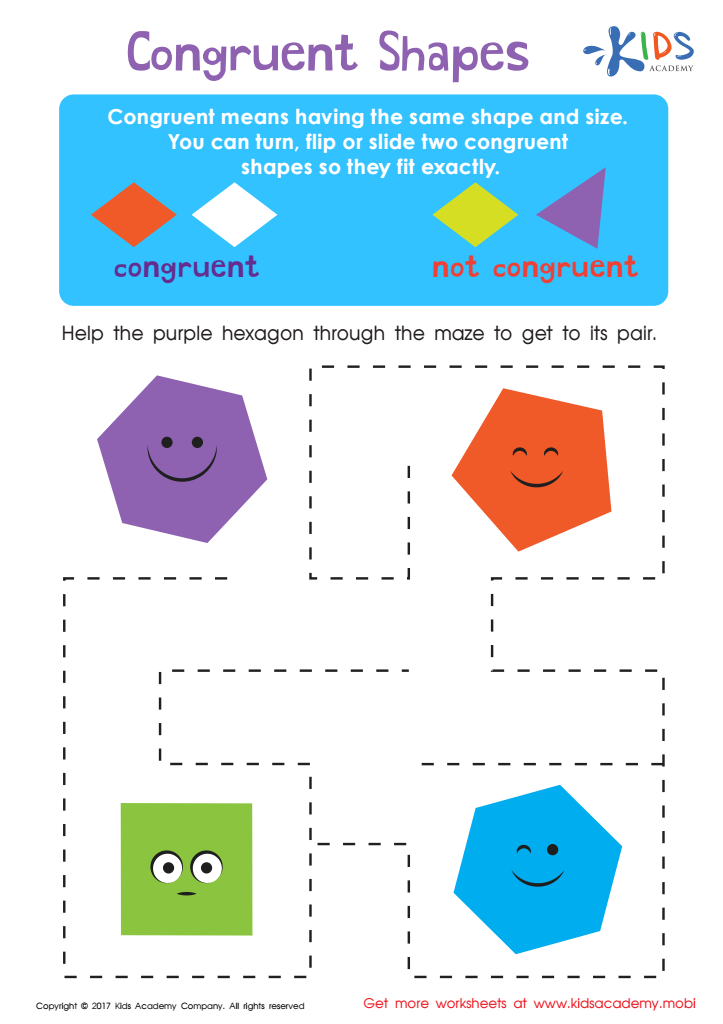
Congruent Shapes Worksheet
 Assign to My Students











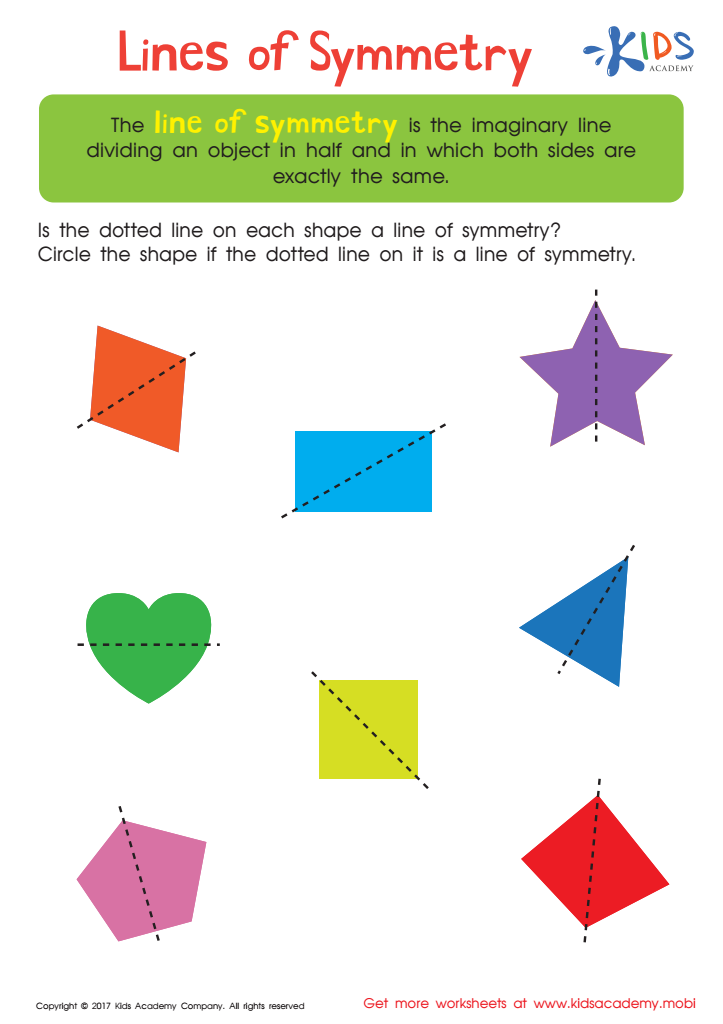
Lines of Symmetry Printable
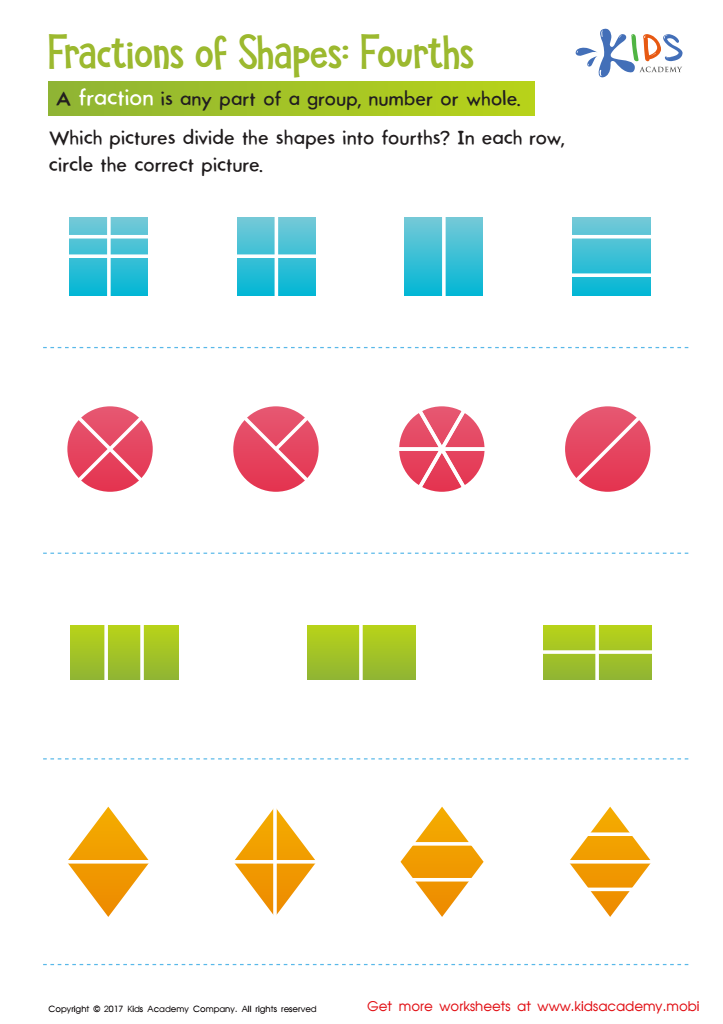
Fractions of Shapes Worksheet








Recognizing shapes is a fundamental skill that serves as one of the building blocks for children's mathematical understanding and cognitive development. For children aged 6-7, engaging in activities like the "Recognizing Shapes Extra Challenge Geometry" not only enhances their geometry skills but also strengthens critical thinking and problem-solving abilities.
Parents and teachers should care about this because early exposure to geometry helps children make sense of the world around them. Recognizing shapes fosters spatial awareness, which can improve skills in more complex mathematical concepts, including measurement and volume, later on. Additionally, shapes are prevalent in everyday life—from architecture to nature—providing context and relevance to the curriculum.
Participation in challenge-based activities promotes engagement and motivation, as children often prefer hands-on learning experiences. This type of learning also allows for differentiation, accommodating various skill levels and learning styles within a classroom or home setting. Ultimately, nurturing shape recognition skills will not only aid in a child's current education but also lay a strong foundation for future academic success in mathematics and science. Encouraging this development reflects a commitment to well-rounded education, fostering both cognitive and practical life skills.








