Comparing sizes Extra Challenge Math Worksheets for Ages 6-7
5 filtered results
-
From - To
Discover our "Comparing Sizes Extra Challenge Math Worksheets" designed for children ages 6-7! These engaging and interactive worksheets enhance your little one's understanding of size comparison through fun exercises. Ideal for reinforcing learning at home or in the classroom, our resources offer colorful visuals and diverse activities, ensuring that kids grasp essential math concepts while enjoying their experience. Encourage critical thinking as they categorize objects, answer comparative questions, and hone their analytical skills. Perfect for gifted learners or those seeking additional challenges, these worksheets make learning size comparisons exciting and enjoyable. Download now to give your child a head start in math!
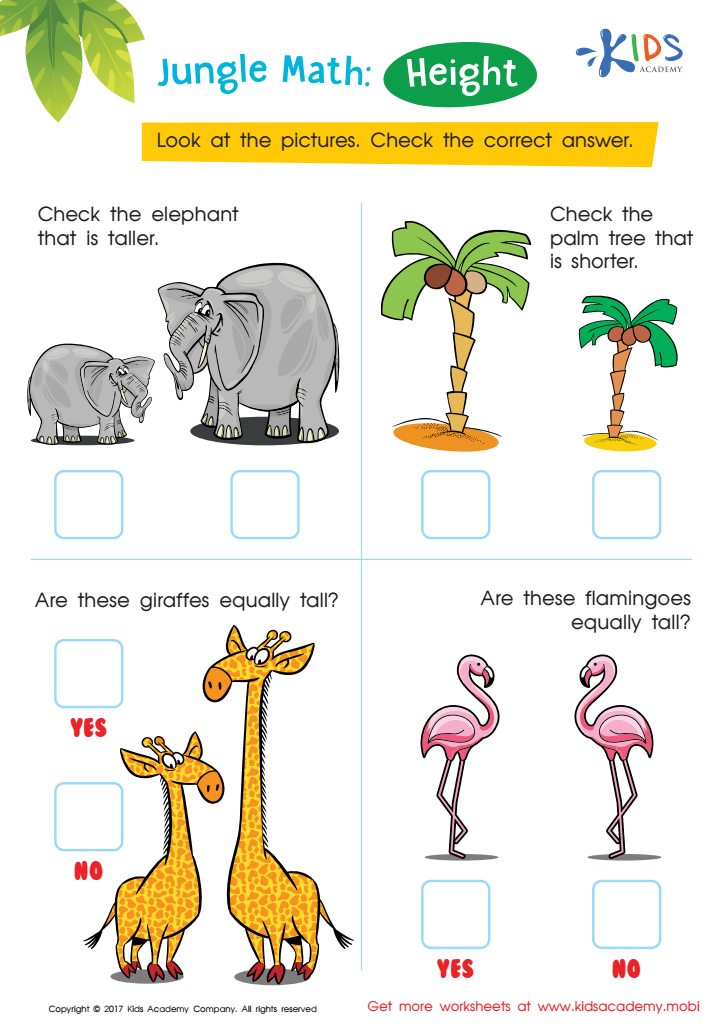
Which Is Taller Worksheet
 Assign to My Students
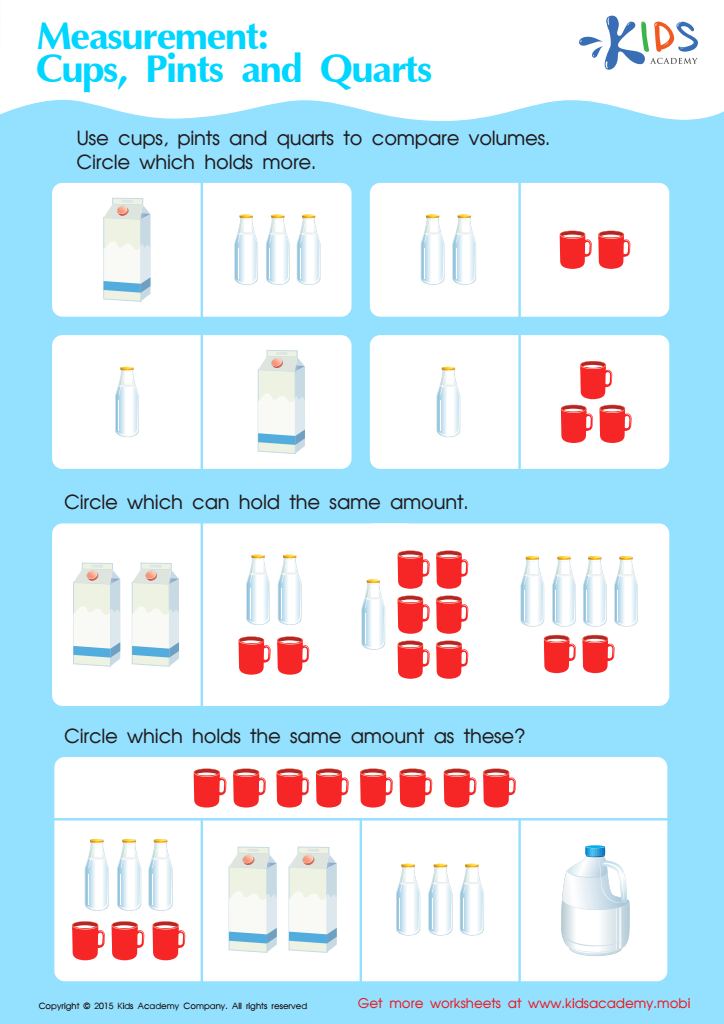
Measurement: Compare Volumes Worksheet
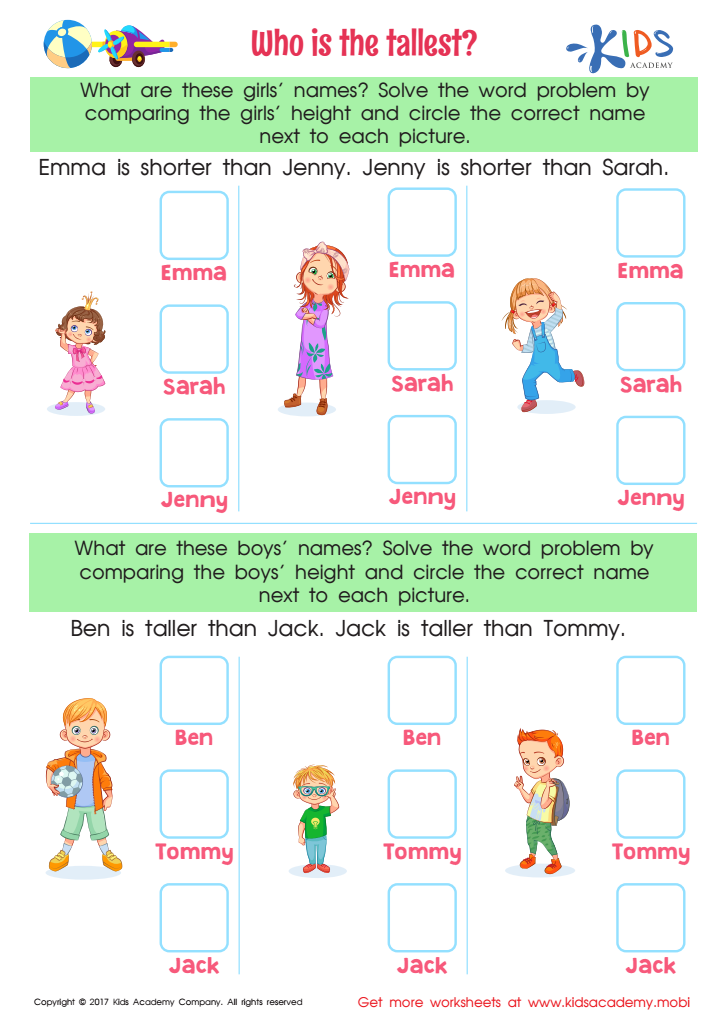
Who Tallest Printable
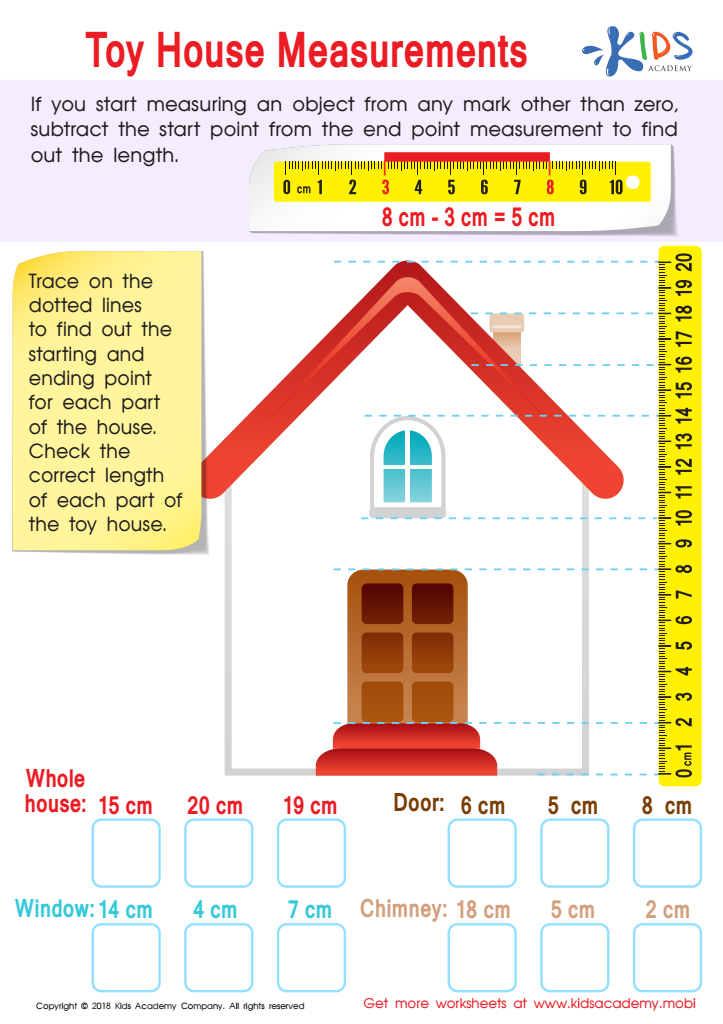
Toy House Measurements Worksheet
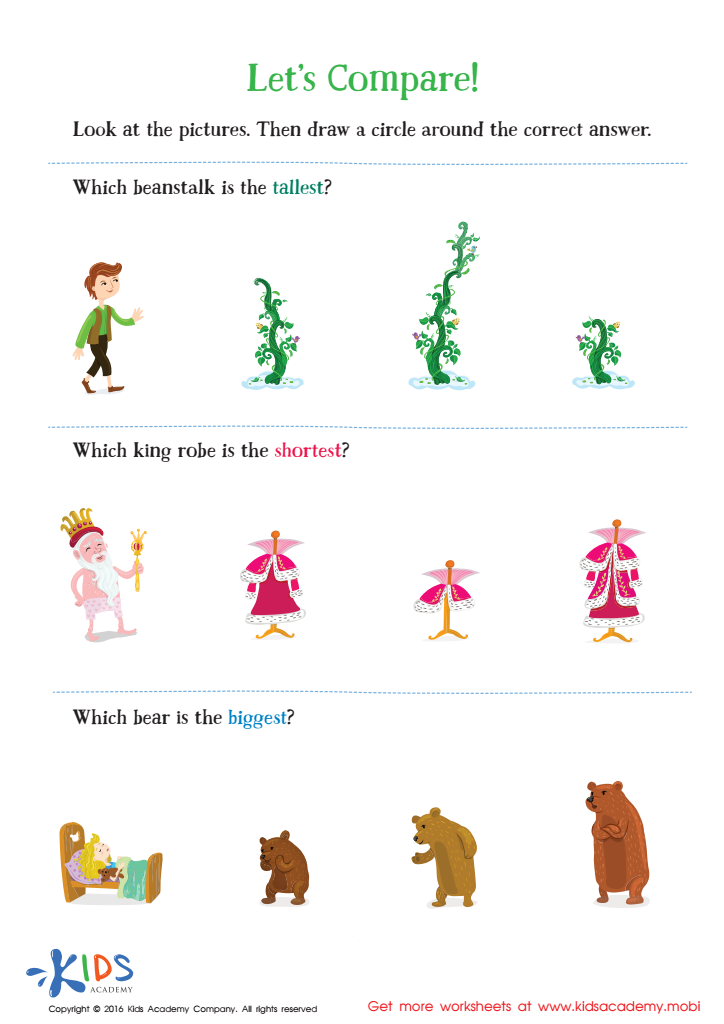
Fairy Tale Worksheet: Let's Compare








Comparing sizes is a fundamental math skill that lays the foundation for various concepts children will encounter later in their education. For children ages 6-7, understanding how to compare sizes enhances critical thinking and problem-solving skills. It fosters an awareness of their environment as they learn to categorize and differentiate objects based on dimensions, such as height, length, and weight.
Engaging in activities that involve comparing sizes not only supports mathematical development but also promotes language skills. Children learn to use terms such as larger, smaller, taller, and shorter, enriching their vocabulary and aiding in effective communication. Additionally, these exercises often involve hands-on activities, making learning interactive and enjoyable, which can build a positive attitude towards math.
For parents and teachers, emphasizing comparing sizes connects practical experiences with academic concepts. It can turn everyday situations—like sorting laundry or arranging toys—into valuable teaching moments. Furthermore, mastering size comparison encourages teamwork and social skills when children engage in group activities. In a diverse learning landscape, understanding how to compare and classify promotes cognitive growth, preparing children for more complex math concepts and real-world problem-solving skills. Thus, supporting this learning process is crucial for parents and teachers alike.








