Matching numbers Extra Challenge Math Worksheets for Ages 6-7
5 filtered results
Difficulty Level
Grade
Age
-
From - To
Subject
Activity
Standards
Unlock your child's potential with our "Matching Numbers Extra Challenge Math Worksheets" designed for ages 6-7! These engaging resources enhance number recognition and critical thinking skills. Perfect for at-home learning or as an extension of classroom activities, these worksheets provide a fun way for children to match numbers with images and quantities. By incorporating visual aids, kids will improve their math fluency and boost their confidence. Ideal for parents and teachers alike, these extra challenges encourage exploration and mastery of early math concepts. Download now to support your child's journey to mathematical success while keeping learning fun and exciting!
Favorites
With answer key
Interactive
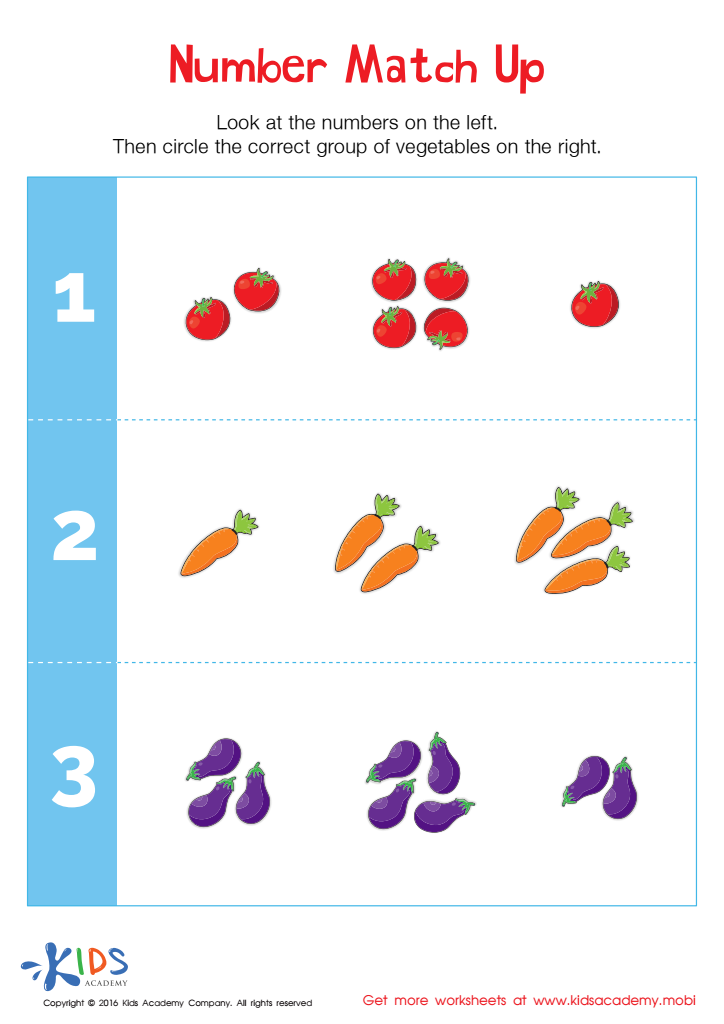
Number Match Up Worksheet
Help your child learn early math skills with this cute number match-up worksheet! Through this exercise, your preschooler can practice following directions, recognizing numbers, counting and understanding the difference between left and right. Bright and catchy pictures such as veggies make the worksheet fun and engaging. Print it out and let your child enjoy counting and matching the veggies!
 Assign to My Students
Number Match Up Worksheet
Worksheet
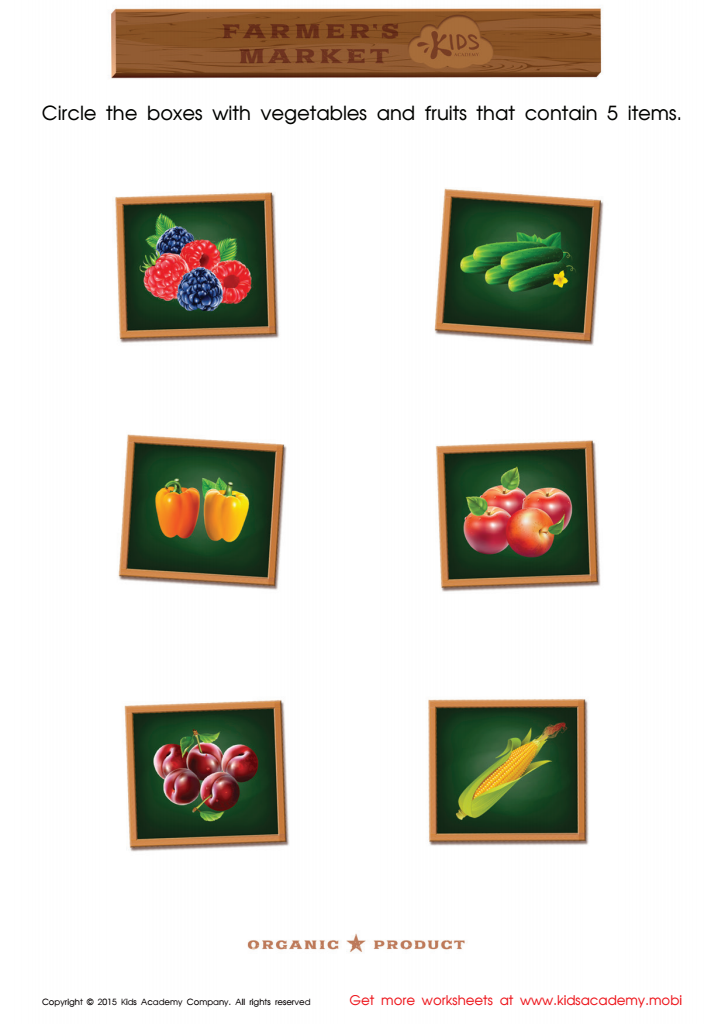
Count and Match Vegetables 1 – 7 Math Worksheet
Print this bright math worksheet from Kids Academy and give your child a fun way to enhance their counting skills. Based on Singapore Math, the colourful pictures make it easy for children to comprehend math. Get additional free worksheets here!
Count and Match Vegetables 1 – 7 Math Worksheet
Worksheet
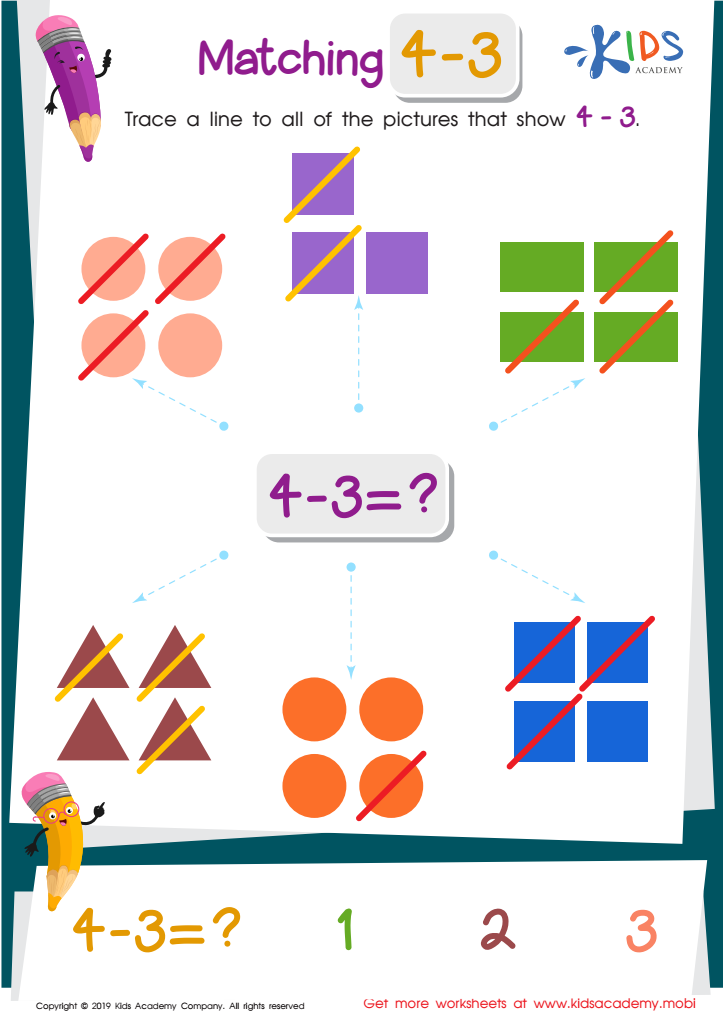
Matching 4 – 3 Worksheet
Help your kids master basic math concepts like addition and subtraction with fun exercises. Test their understanding with simple problems. For example, in this worksheet, ask them to count the objects in each picture and draw a line to the pictures that show 4 - 3 = 1. This will help them get better at solving equations.
Matching 4 – 3 Worksheet
Worksheet
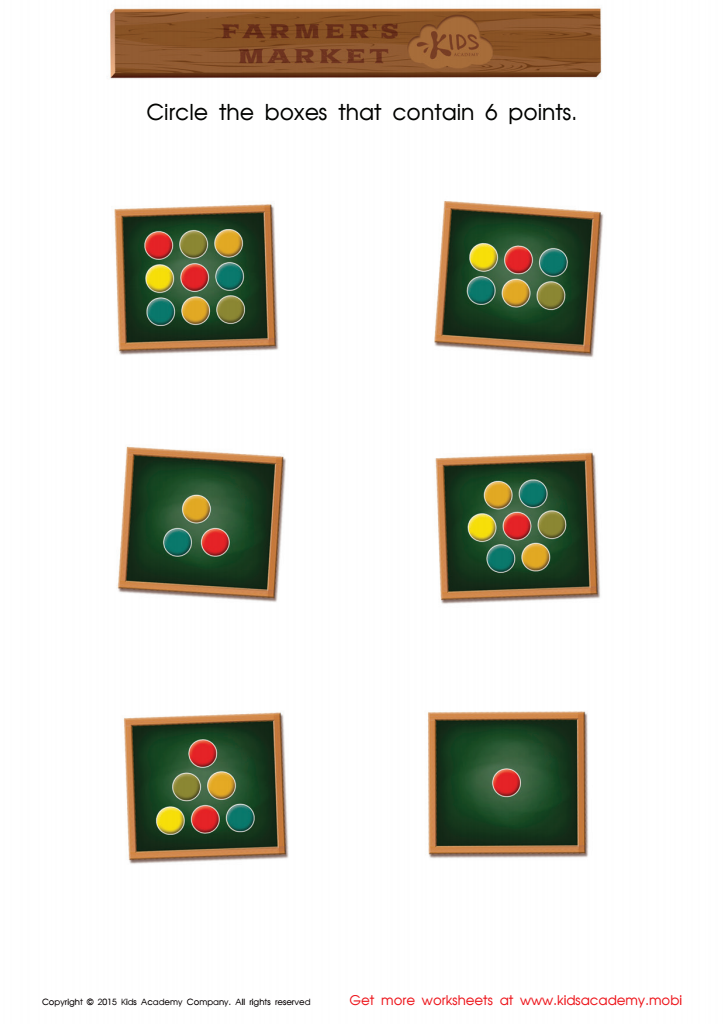
Count and Match Points 6 Math Worksheet
Help your child with mathematics by guiding them with this fun printable worksheet. They will practice counting numbers by looking at all the boxes and circling the ones containing 6 dots. Together you will gain a better understanding of mathematics.
Count and Match Points 6 Math Worksheet
Worksheet
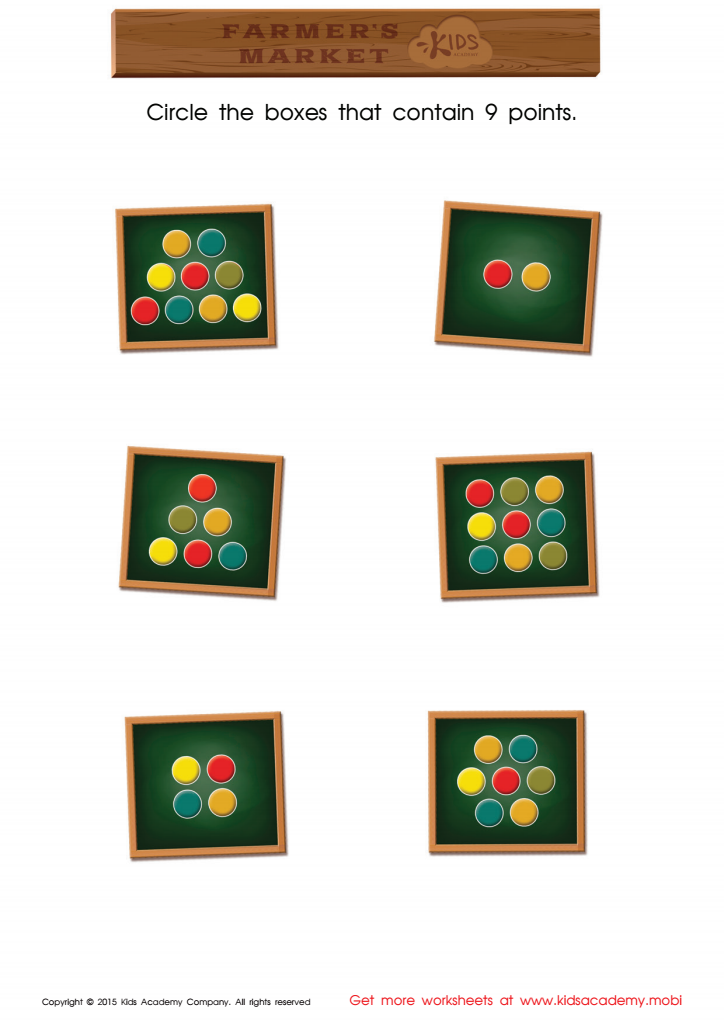
Count and Match Points 9 Math Worksheet
Circle the boxes with 9 points. Examine and count the colorful points in each of the 6 boxes. It's not easy as points are not arranged similarly, so have your child think hard and count carefully.
Count and Match Points 9 Math Worksheet
Worksheet
Join Kids Academy for Free
Who is primarily going to use this learning content?







Matching Numbers Extra Challenge Math for Ages 6-7 is an essential tool that supports young learners in developing foundational math skills. At this critical age, children begin to build their understanding of numbers, patterns, and mathematical operations. Engaging with matching numbers activities enhances their ability to recognize numerals, understand quantities, and develop problem-solving skills.
Parents and teachers should care about these challenges because they foster an interactive learning environment that encourages children to explore math concepts in a fun and engaging way. By participating in matching numbers exercises, students enhance their cognitive abilities, memory recall, and attention to detail—skills that extend beyond math and into everyday life.
Moreover, early intervention in math skills can influence a child’s confidence and attitude towards learning. Positive experiences with challenging games can inspire a lifelong love for math and a desire to explore further. By investing time in common tools like Matching Numbers, parents and teachers actively participate in building a strong mathematical foundation that supports academic success. As students master these crucial skills, they pave the way for future learning, ensuring they are well-prepared for more complex concepts as they progress in their education.