Time reading skills Extra Challenge Time Worksheets for Ages 6-7
5 filtered results
-
From - To
Introducing our "Time Reading Skills Extra Challenge Worksheets" for ages 6-7! These engaging resources are designed to enhance your child's ability to read and understand time through fun and interactive activities. Our worksheets include various exercises, such as analog clock readings, digital time matching, and real-life time application scenarios. With a focus on both fine motor skills and numerical practice, these tasks help reinforce essential time-telling skills, making learning enjoyable. Perfect for use in the classroom or at home, our Extra Challenge Worksheets ensure that young learners get the practice they need to become confident in reading time. Start the adventure today!
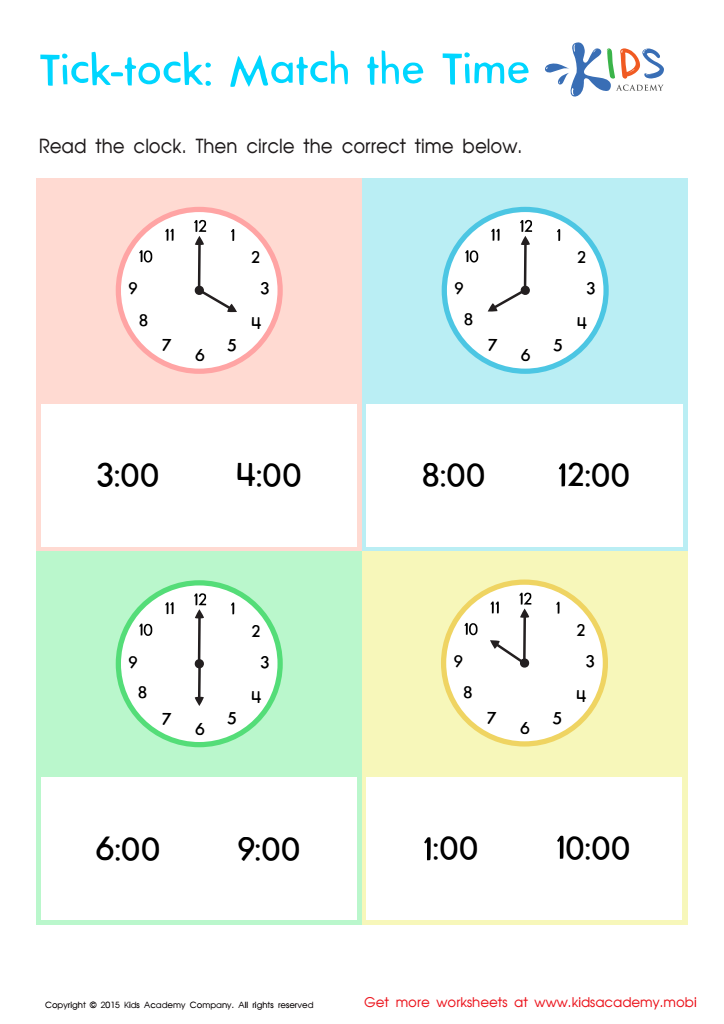
Telling The Time Worksheet: Part 4
 Assign to My Students
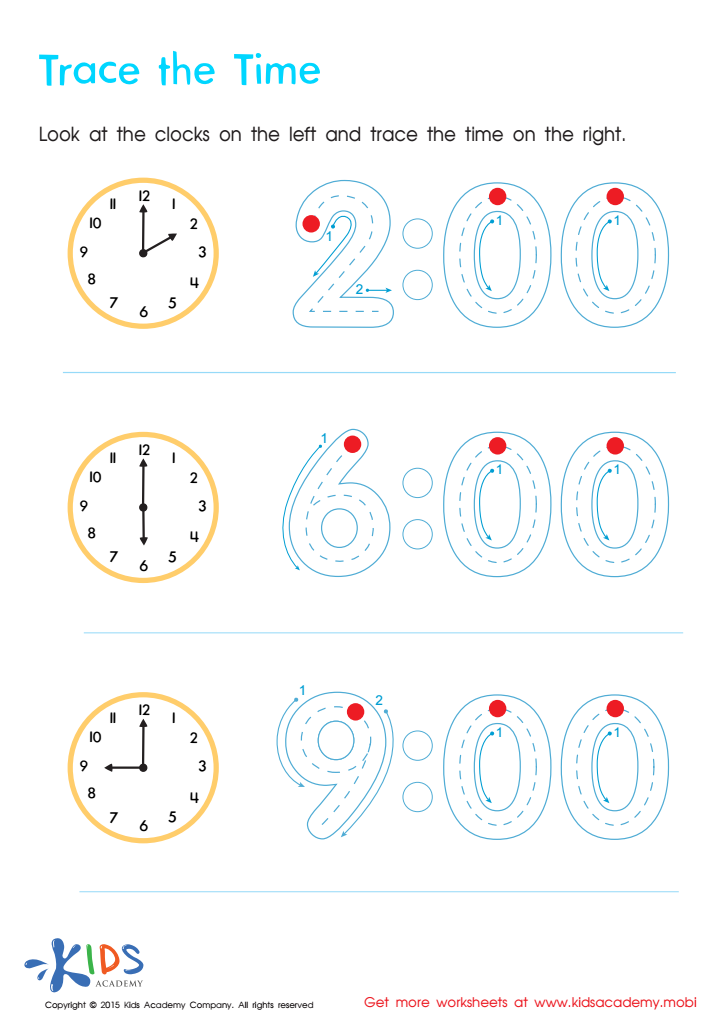
Telling The Time Worksheet: Part 2
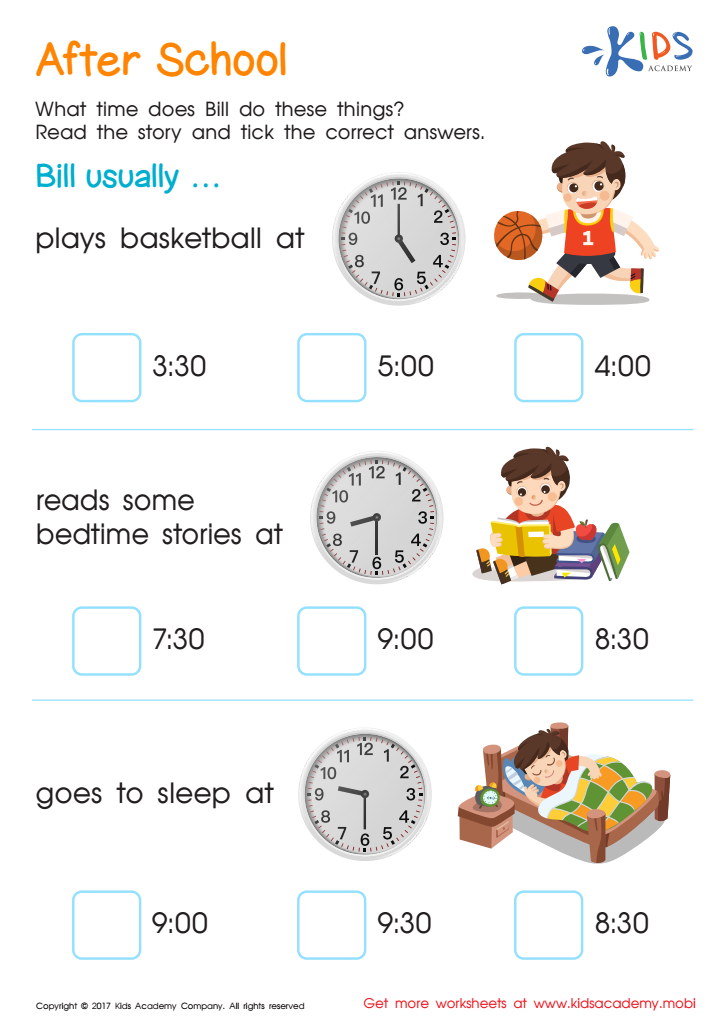
After School Time Printable
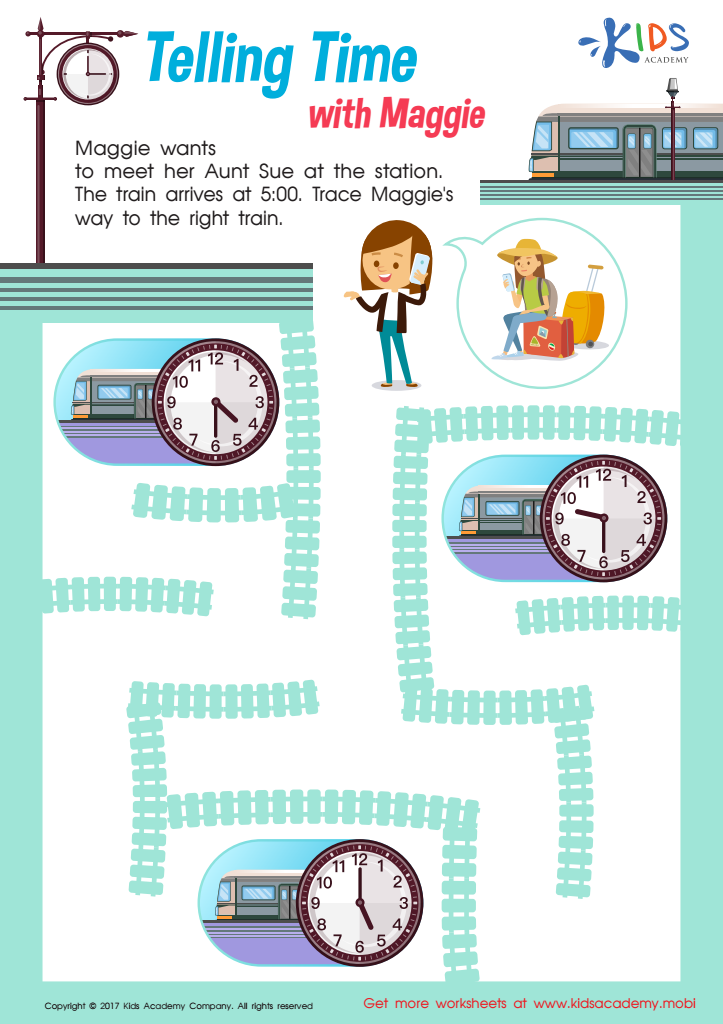
Telling Time With Maggie Time Worksheet
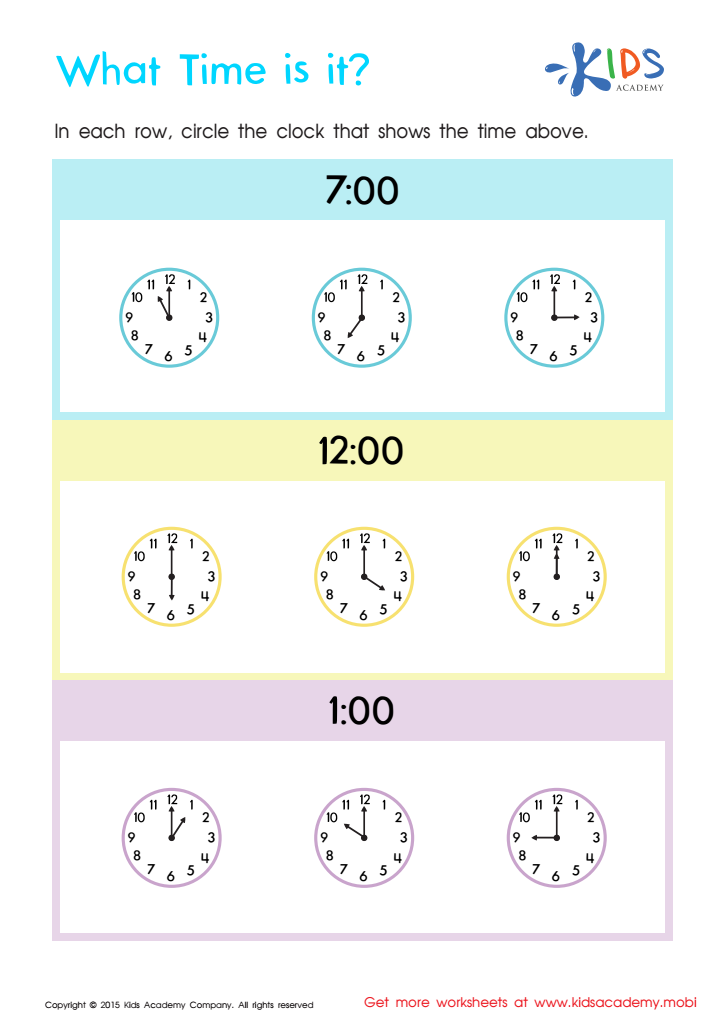
Telling The Time Worksheet: Part 3








Time reading skills are crucial for children aged 6-7 as they lay the foundation for time management, responsibility, and effective planning—skills they'll need throughout their lives. Early understanding of time concepts fosters independence; children can understand routines and schedules, promoting self-regulation and accountability. Parents and teachers should care because grasping time reading enhances overall academic success, aiding children in following school timetables, participating in activities, and completing assignments on time.
Additionally, time-related activities can be integrated across the curriculum—art projects on clock-making, math lessons on time intervals, and storytelling that emphasizes sequencing—creating engaging, multifaceted learning opportunities. These experiences also help cultivate critical thinking and problem-solving skills, as children learn how to allocate their time wisely for various tasks.
Moreover, in our increasingly fast-paced world, ensuring kids have strong time-reading skills prepares them for the responsibilities of digital life later on. As children learn to read time on analog and digital clocks, they grow more confident and competent thinkers. Ultimately, investing in time reading skills contributes to competent, responsible students who can navigate both present academic demands and future endeavors effectively. Therefore, parents and educators must prioritize and cultivate these skills in young learners.








