Handwriting practice Extra Challenge Alphabet Worksheets for Ages 6-8
5 filtered results
Difficulty Level
Grade
Age
-
From - To
Subject
Activity
Standards
Enhance your child's handwriting skills with our "Handwriting Practice Extra Challenge Alphabet Worksheets" designed specifically for ages 6-8. These worksheets provide innovative activities that go beyond basic handwriting practice, encouraging students to develop their fine motor skills while mastering letter formation. With engaging exercises that include tracing, coloring, and unique challenges, your child will build confidence and fluency in their writing. Each worksheet focuses on different letters and incorporates creative elements to make learning enjoyable. Perfect for at-home learning or classroom use, these extra challenge worksheets are an excellent way to support your child’s educational journey and nurture their love for writing!
Favorites
With answer key
Interactive
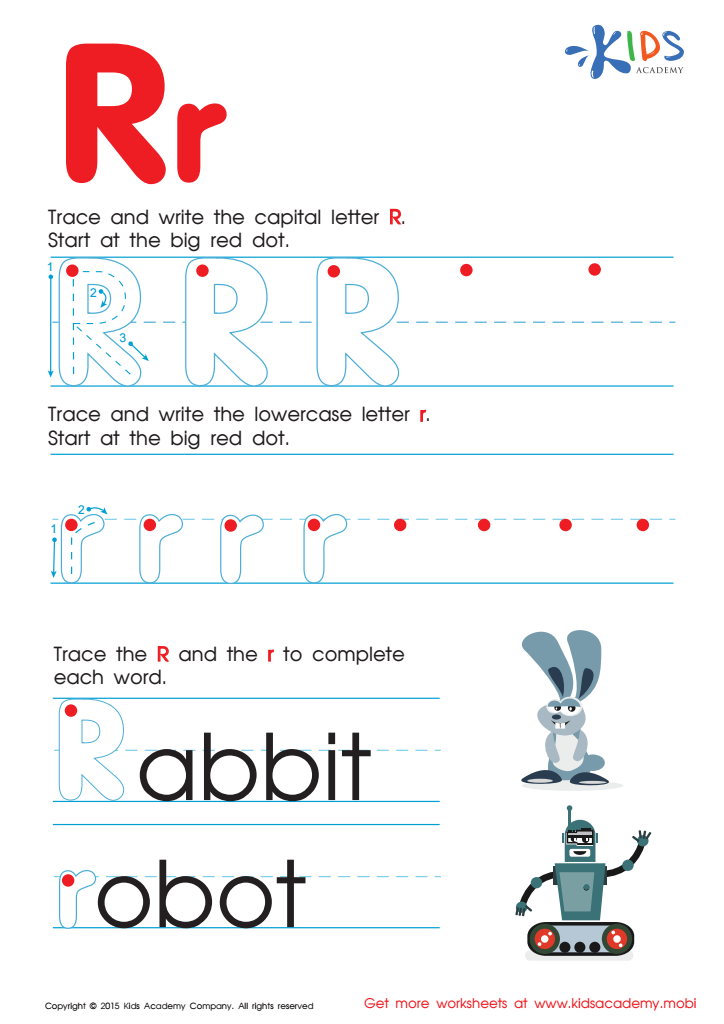
Letter R Tracing Page
Trace and write the letter "R" with this worksheet for kindergarten. Start with the uppercase, then move on to the lowercase. Write the letters several times for practice. Then help complete the words for the rabbit and robot, spelling carefully. More ABC worksheets can be found at Kids Academy.
 Assign to My Students
Letter R Tracing Page
Worksheet
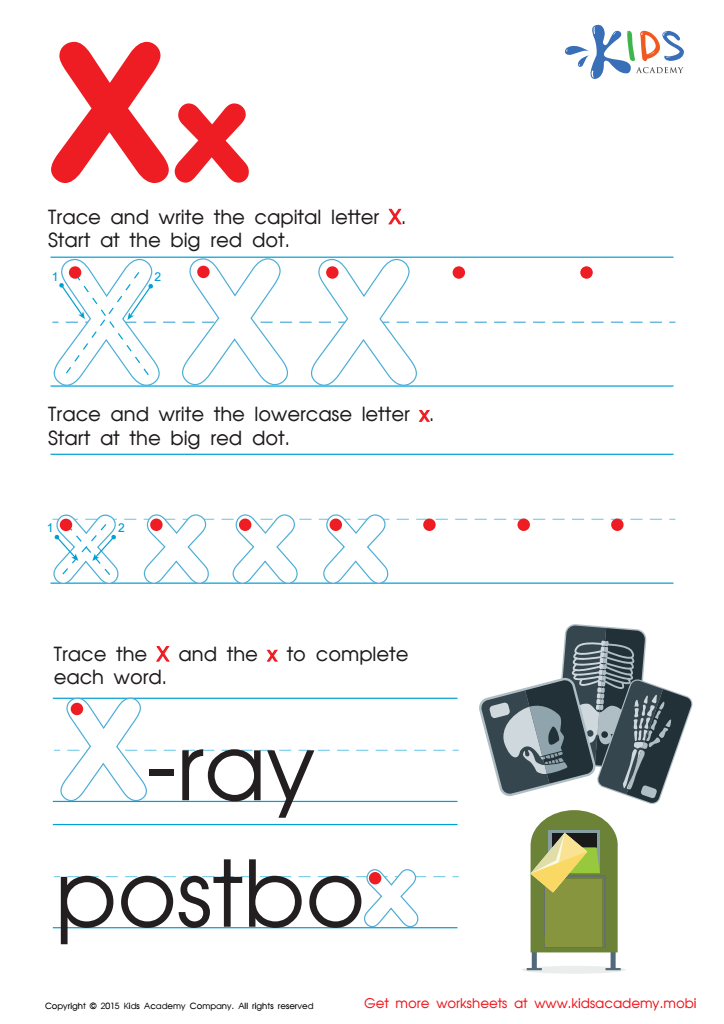
Letter X Tracing Page
Trace the uppercase letter "X" to learn, then write it yourself and practice. Then do the same with the lowercase "x" before completing the words "X-ray" and "postbox". Enjoy our alphabet printables!
Letter X Tracing Page
Worksheet
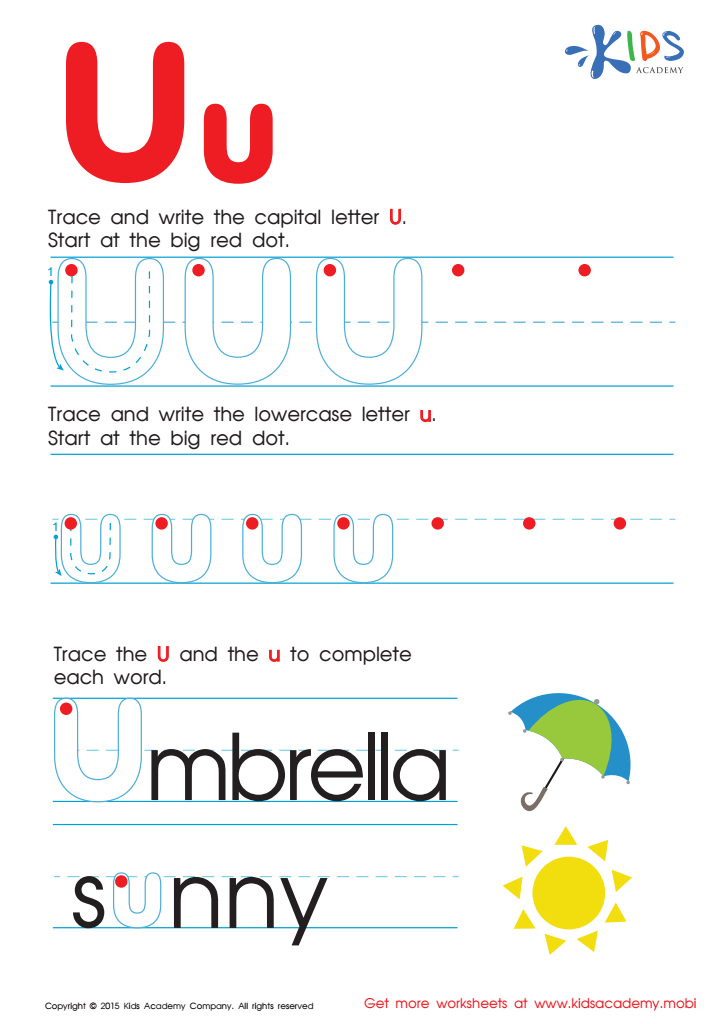
Letter U Tracing Page
Ready to trace and write the letter "U"? Use our worksheet and practice tracing both uppercase and lowercase letters. Complete the words "umbrella" and "sunny" with a capital "U". Check our full collection of alphabet printables for more activities.
Letter U Tracing Page
Worksheet
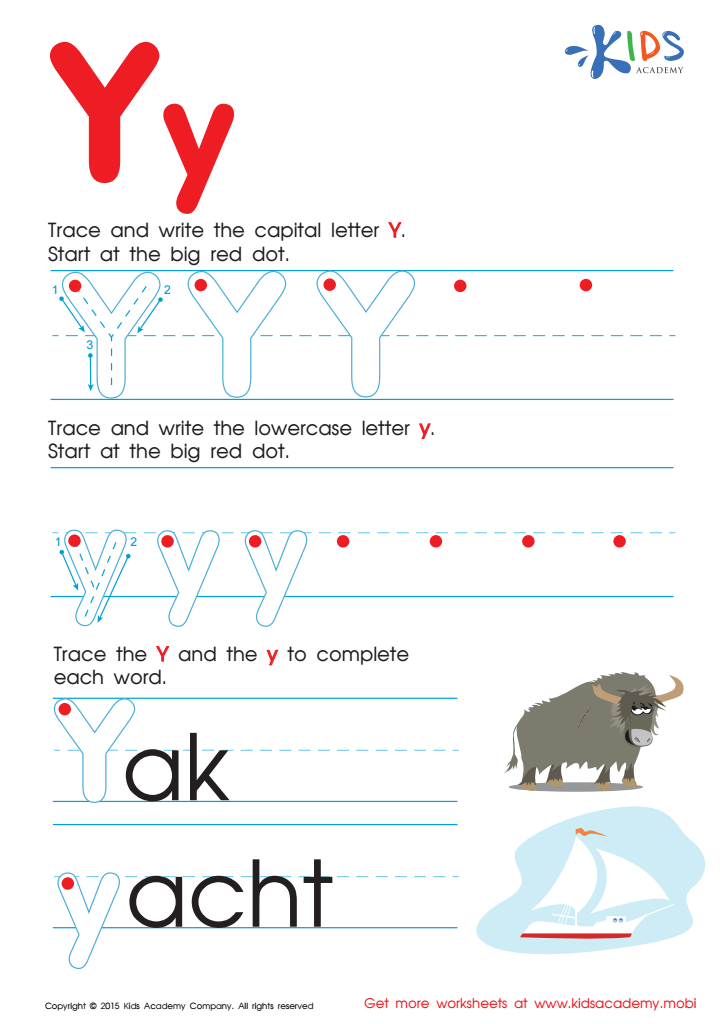
Letter Y Tracing Page
Trace the capital letter "Y" on the red dot, then trace and write the lowercase letter. Complete the words to help the Yak walk and the yacht swim. More worksheets at Kids Academy.
Letter Y Tracing Page
Worksheet
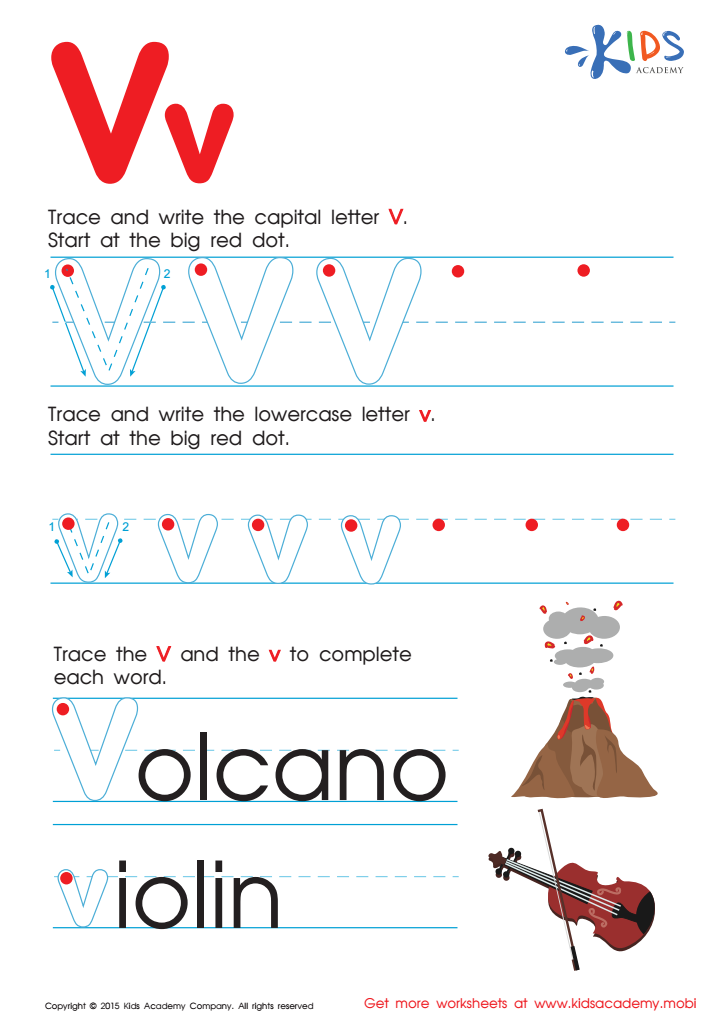
Letter V Tracing Page
Trace the uppercase and lowercase letter "V" with our kindergarten tracing worksheet. Begin at the red dot and follow the lines. Write it several times. Complete the words "Volcano" and "violin". Get more alphabet activities at Kids Academy.
Letter V Tracing Page
Worksheet
Join Kids Academy for Free
Who is primarily going to use this learning content?








Handwriting practice, particularly the Extra Challenge Alphabet for ages 6-8, is crucial for several reasons that parents and teachers should genuinely care about. First, handwriting is a foundational skill that enhances children's literacy and communication abilities. As children learn letter formation and spacing, they build a connection between the sounds of letters and their written representations, bolstering their reading and writing skills.
Moreover, mastering handwriting fosters fine motor skills and hand-eye coordination. The practice of writing letters helps children develop the dexterity necessary for efficient writing, which is beneficial not just academically but in daily activities too.
Additionally, personalized challenges, like the Extra Challenge Alphabet, can engage children at various skill levels, making learning more dynamic and fun. This can instill a sense of achievement as kids improve their handwriting, boosting their confidence.
Furthermore, with the increasing prevalence of digital communication, gaining a strong foundation in handwriting can differentiate young learners. They develop a unique voice that is reflected through their handwriting.
In short, embracing handwriting practice in the early years is essential for cognitive, motor, and emotional development, making it a priority for both parents and educators.