Strategic thinking development Extra Challenge Worksheets for Ages 6-8
3 filtered results
-
From - To
Unlock your child's potential with our Strategic Thinking Development Extra Challenge Worksheets designed for ages 6-8. These engaging worksheets encourage critical thinking and problem-solving skills, essential for young minds. Each activity is crafted to challenge students and ignite their creativity, making learning fun and impactful. As children develop their strategic thinking abilities, they gain confidence in navigating complex scenarios, fostering independence and resilience. Perfect for home or classroom use, these worksheets blend play with education, ensuring kids stay excited about learning. Equip your child with valuable skills early on and watch them thrive academically and beyond!
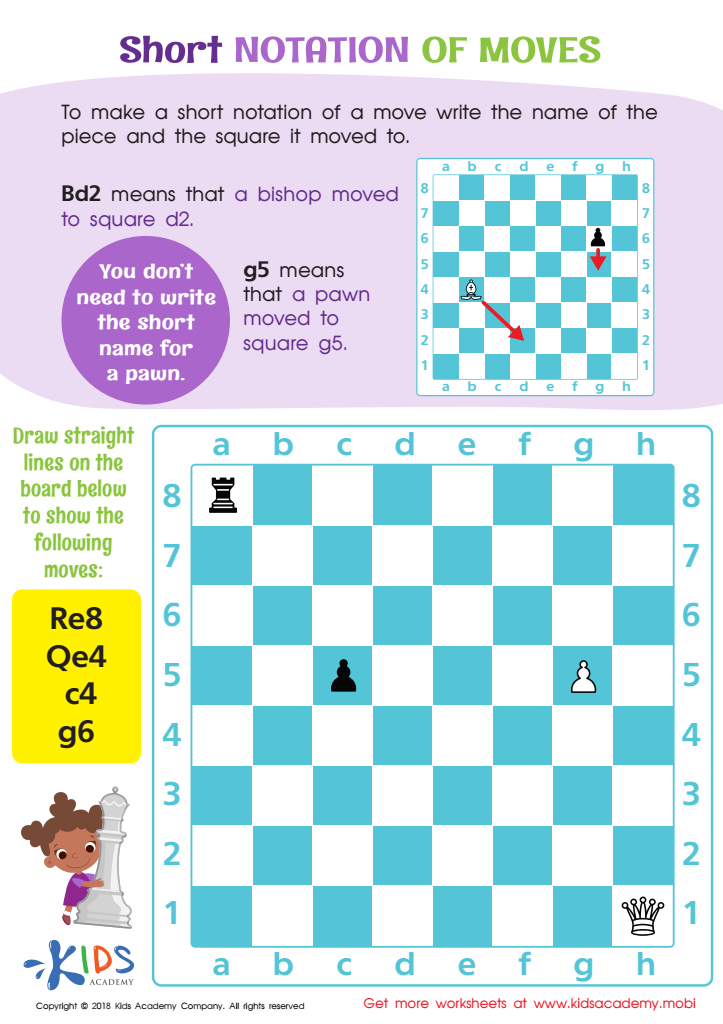
Short Notation of Moves Worksheet
 Assign to My Students
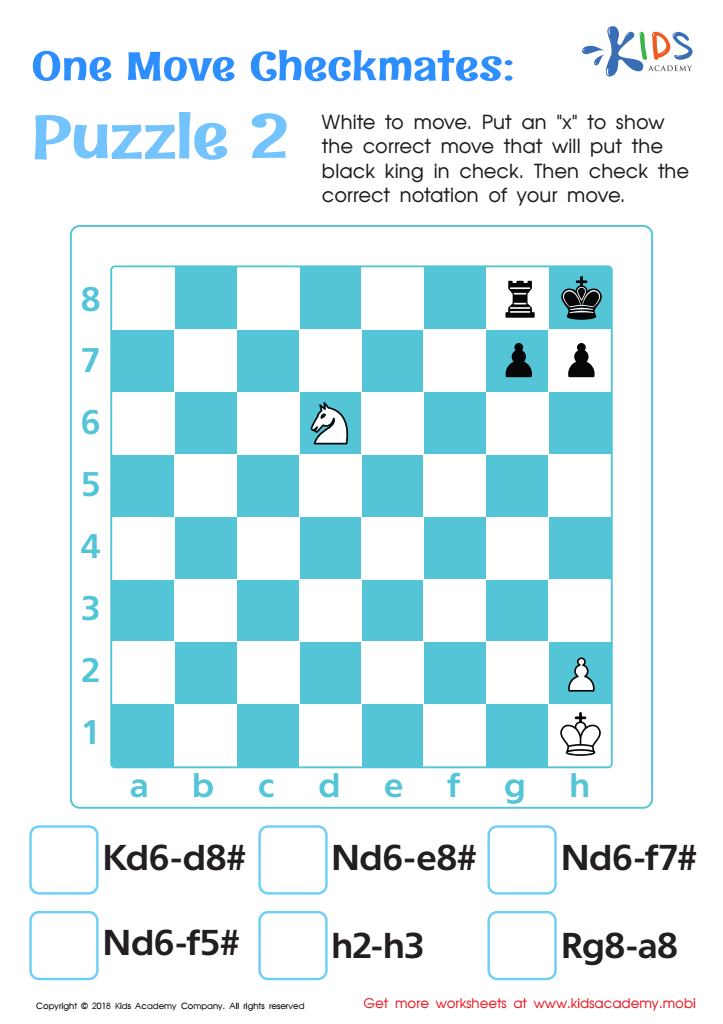
One Move Checkmates: Puzzle 2 Worksheet
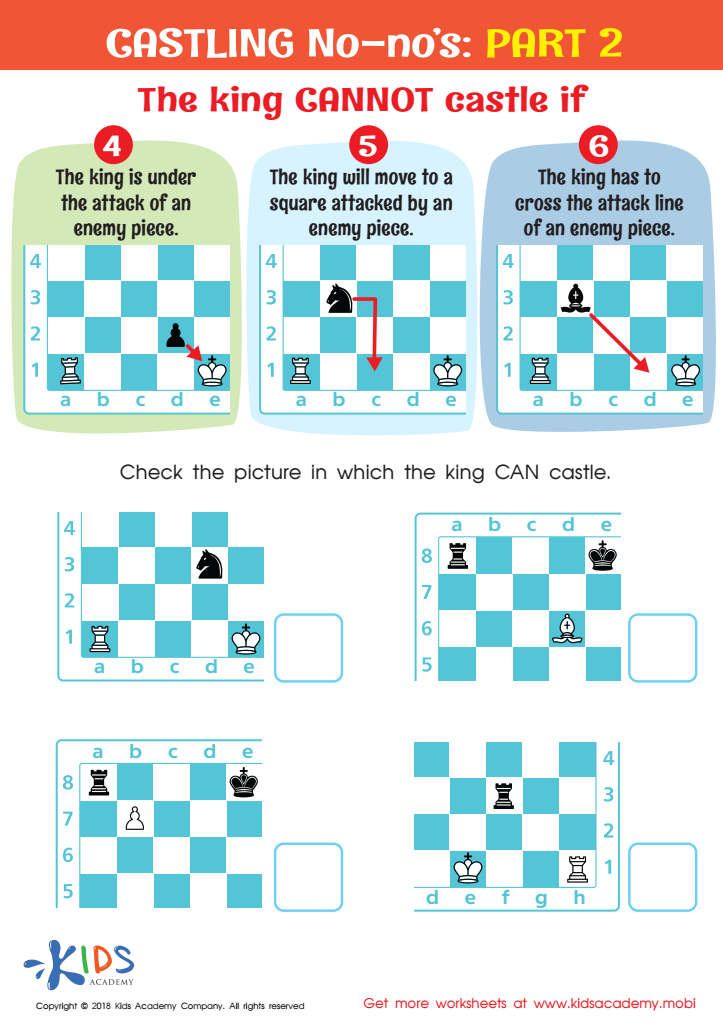
Castling No - no's: Part 2 Worksheet


.jpg)
.jpg)




Parents and teachers should prioritize the development of strategic thinking skills in children aged 6-8 as it lays the foundation for lifelong learning and problem-solving abilities. At this age, children are naturally curious and beginning to understand cause-and-effect relationships. Encouraging strategic thinking enhances cognitive flexibility, allowing kids to approach challenges with creativity and resilience.
Strategic thinking involves planning, foresight, and decision-making—all essential skills in both academic contexts and everyday life. By engaging in activities that promote these skills, such as puzzles, games, and collaborative projects, children learn to evaluate different scenarios and choose the best solutions. This not only boosts confidence but further fosters a sense of independence as they take on new challenges.
Moreover, developing strategic thinking enhances social skills. As children work in groups to solve problems, they learn to communicate effectively, listen to others, and understand diverse perspectives, which is vital for their emotional and social development.
Ultimately, investing in strategic thinking at this formative stage equips children with tools that will benefit them in school and beyond, preparing them for a rapidly changing world where adaptability and critical thinking are essential. Parents and teachers play a crucial role in nurturing these skills to foster well-rounded, capable individuals.








