Visual Learning Extra Challenge Worksheets for Ages 6-8
3 filtered results
-
From - To
Discover an exciting way to enhance your child's learning with our Visual Learning Extra Challenge Worksheets for ages 6-8. These engaging and vibrant worksheets are specifically designed to develop visual-spatial skills, critical thinking, and problem-solving abilities. Each worksheet presents fun, stimulating puzzles and activities that encourage children to think outside the box and improve their visual comprehension and pattern recognition. Perfect for young learners who crave an extra challenge, these resources not only boost confidence but also make learning enjoyable. Give your child the head start they deserve with our expertly crafted Visual Learning Worksheets!
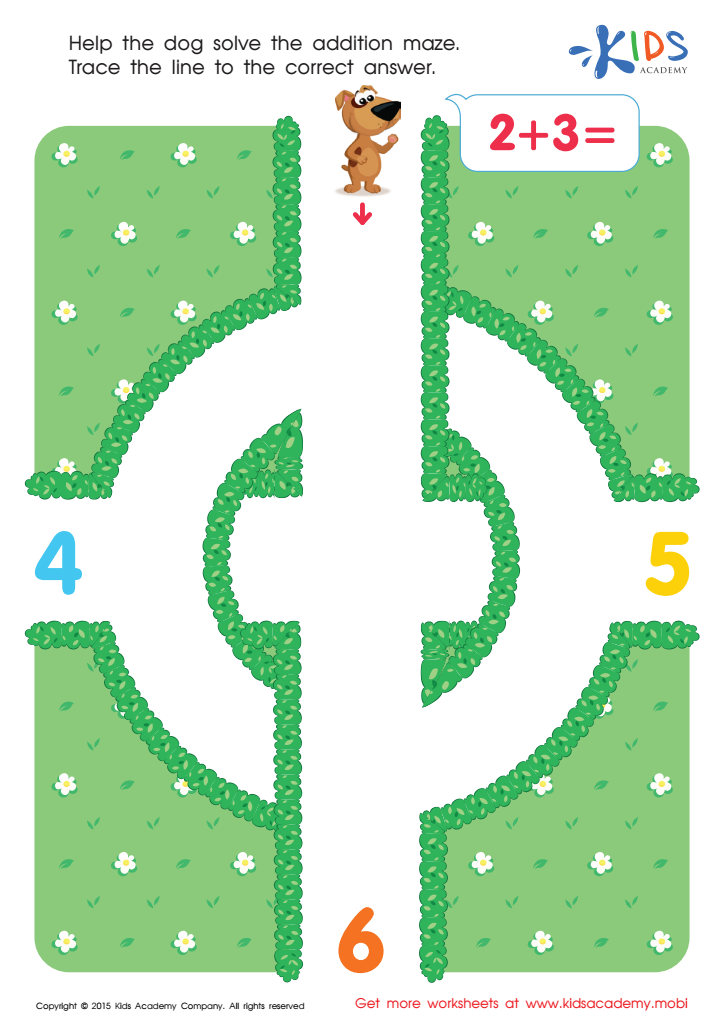
Two And Three Addition Worksheet
 Assign to My Students
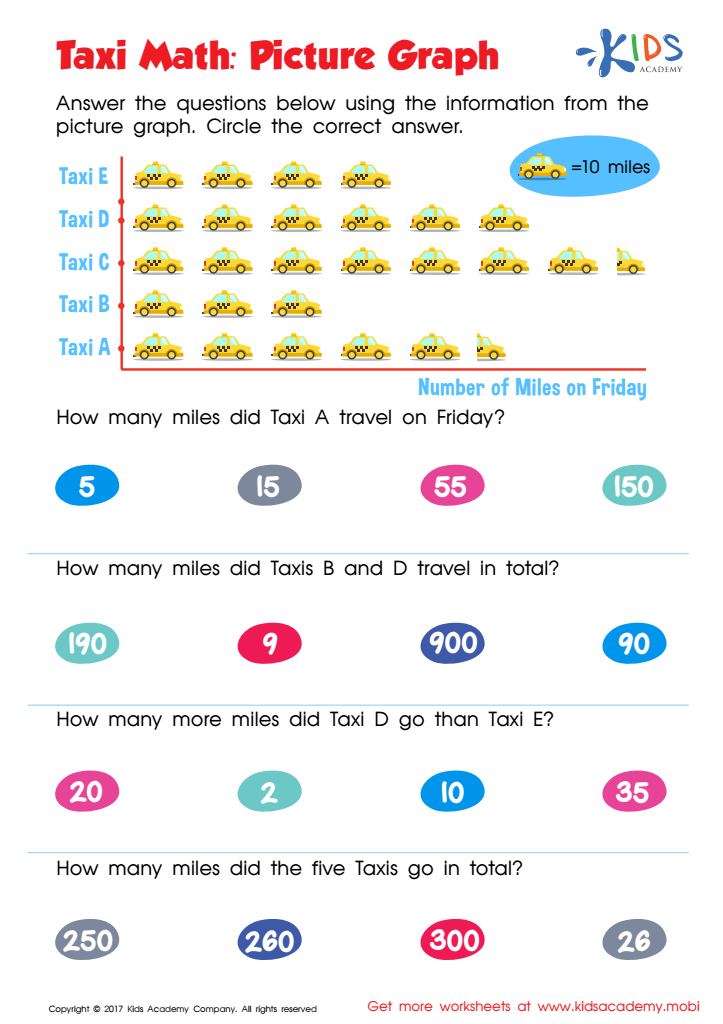
Taxi Math Worksheet
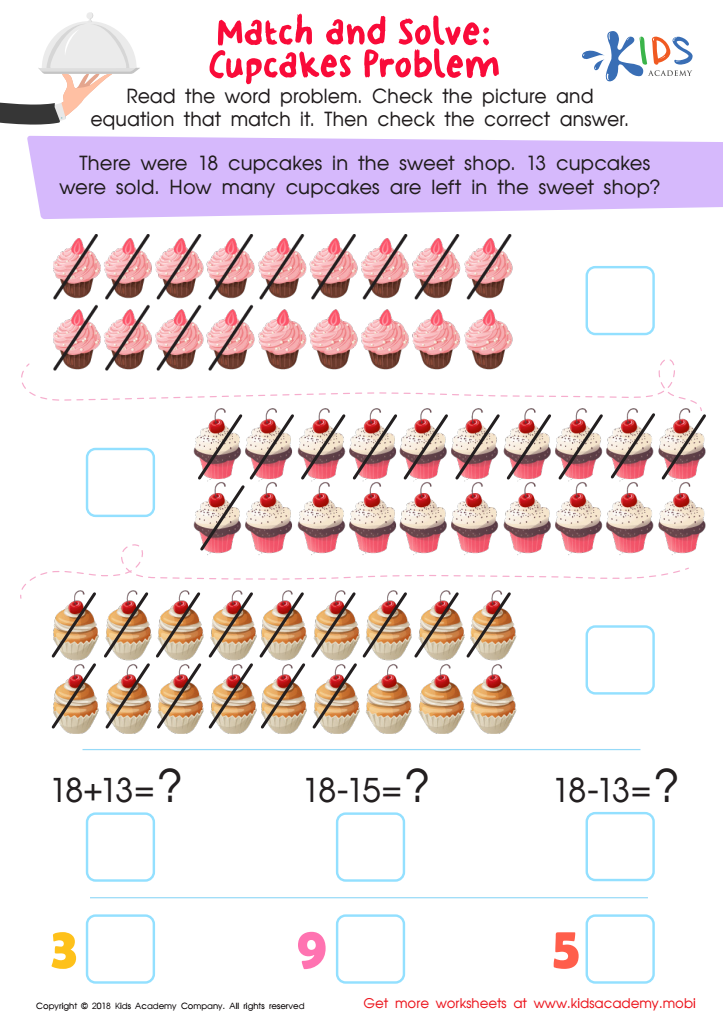
Match and Solve: Cupcakes Problem Worksheet








Visual Learning Extra Challenges for children ages 6-8 are essential for several key reasons. Firstly, young children are naturally visual learners; around 80% of all learning they do happens via visual processing. As kids are highly responsive to imagery, introducing extra visual challenges helps to capture their attention and facilitate better understanding of complex concepts. For example, activities involving puzzles, drawing, and graphic organizers can significantly aid in grasping mathematical patterns, understanding story sequences, and even enhancing vocabulary development.
Secondly, visual challenges can cater to diverse learning styles, benefiting children who may struggle with traditional text-based or auditory instructional methods. By incorporating visuals, parents and teachers can create a more inclusive learning environment and help each child reach their full potential.
Additionally, these activities contribute to developing essential skills such as critical thinking, spatial awareness, and problem-solving. Engaging with visual challenges encourages children to observe closely, analyze differences, identify relationships, and derive conclusions, all critical skills in academic and real-world problem-solving scenarios.
Moreover, visual learning activities often promote creativity and can make learning more enjoyable. When children enjoy the learning process, they are more likely to engage fully and retain information longer. Thus, embracing visual learning challenges fosters a richer and more equitable educational experience for young learners.








