Understanding fractions Extra Challenge Fractions of Shapes Worksheets for Ages 6-8
7 filtered results
-
From - To
Welcome to our "Understanding Fractions Extra Challenge: Fractions of Shapes Worksheets," designed for children ages 6-8! Our engaging worksheets help young learners grasp foundational fraction concepts through interactive and hands-on activities. Each exercise challenges students to identify, color, and compare various shapes divided into fractions, reinforcing their understanding in a fun way. By exploring different shapes, kids develop critical thinking and problem-solving skills, laying the groundwork for more advanced math. Perfect for classroom use or homework assignments, these worksheets make learning fractions enjoyable and effective. Ignite your child's mathematical journey today with these exciting challenges!
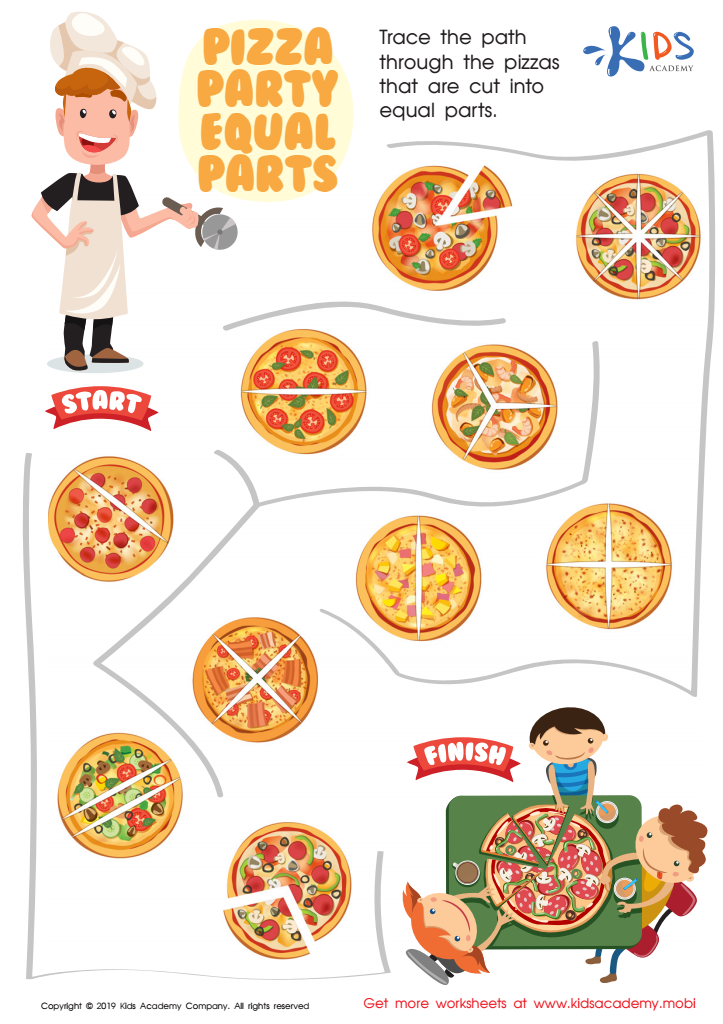
Pizza Party Equal Parts Worksheet
 Assign to My Students
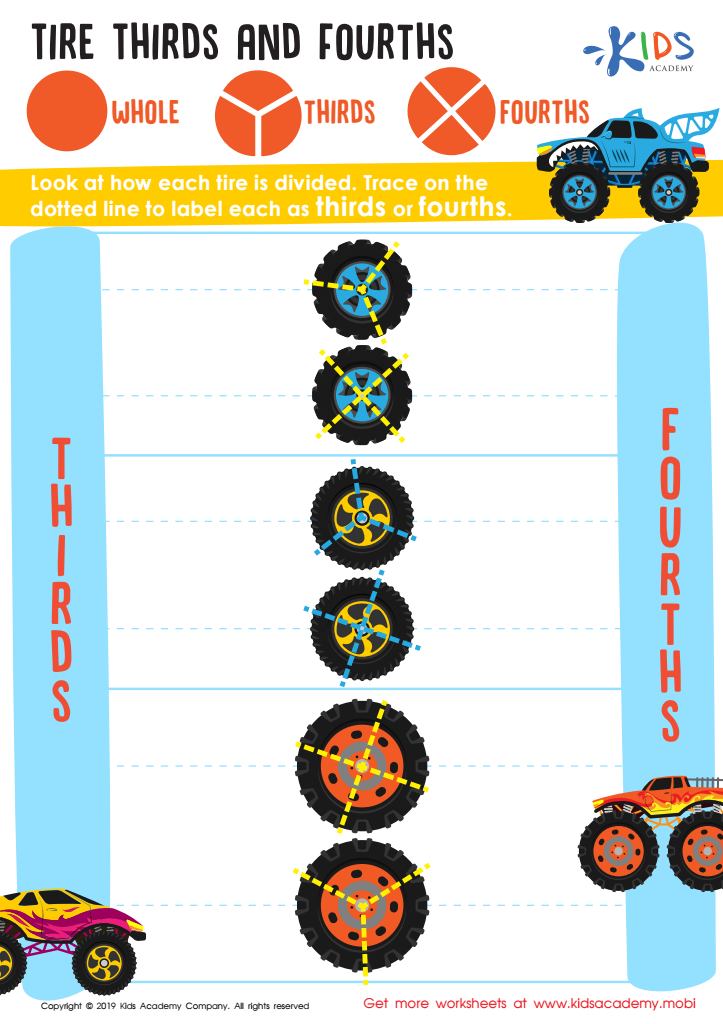
Tire Thirds and Fourths Worksheet
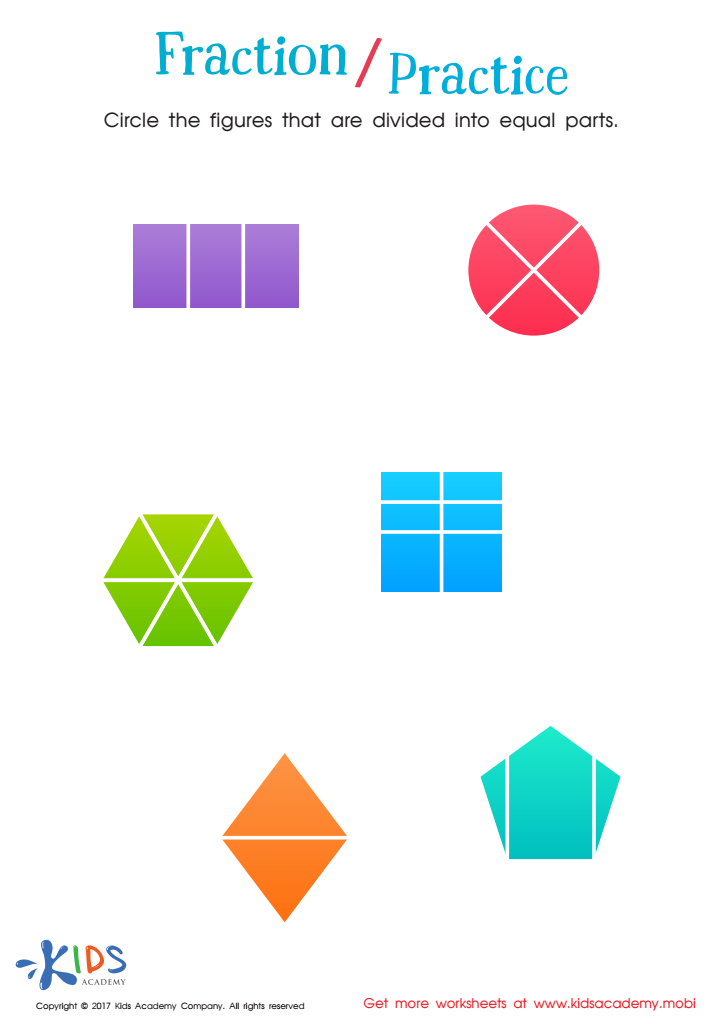
Fractions: Shapes Worksheet
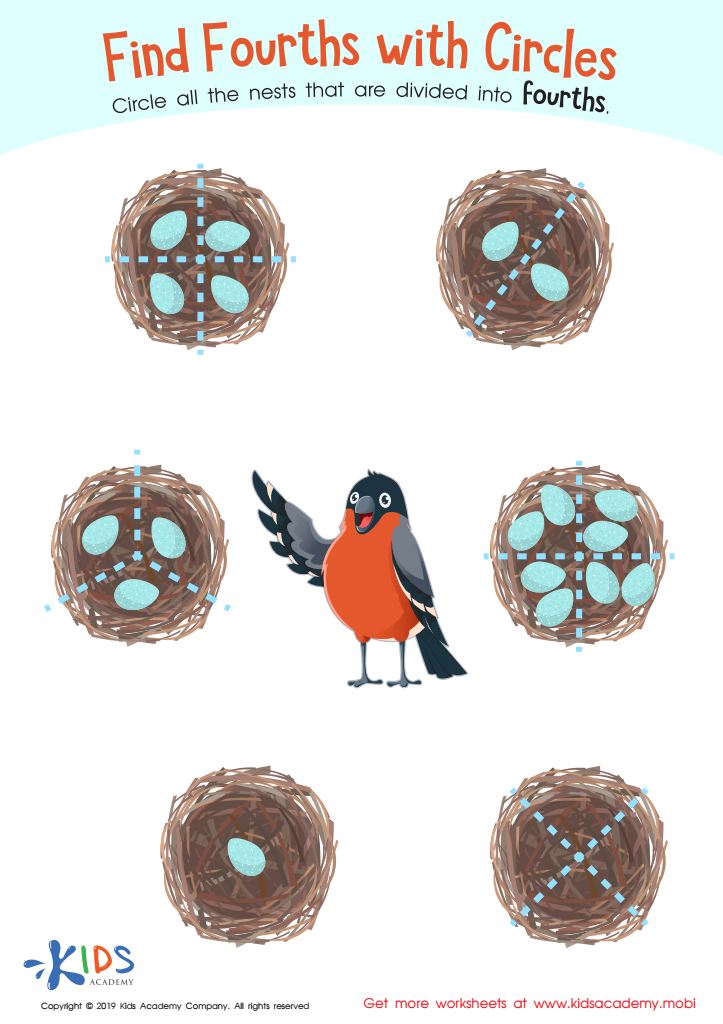
Find Fourths Circles Worksheet
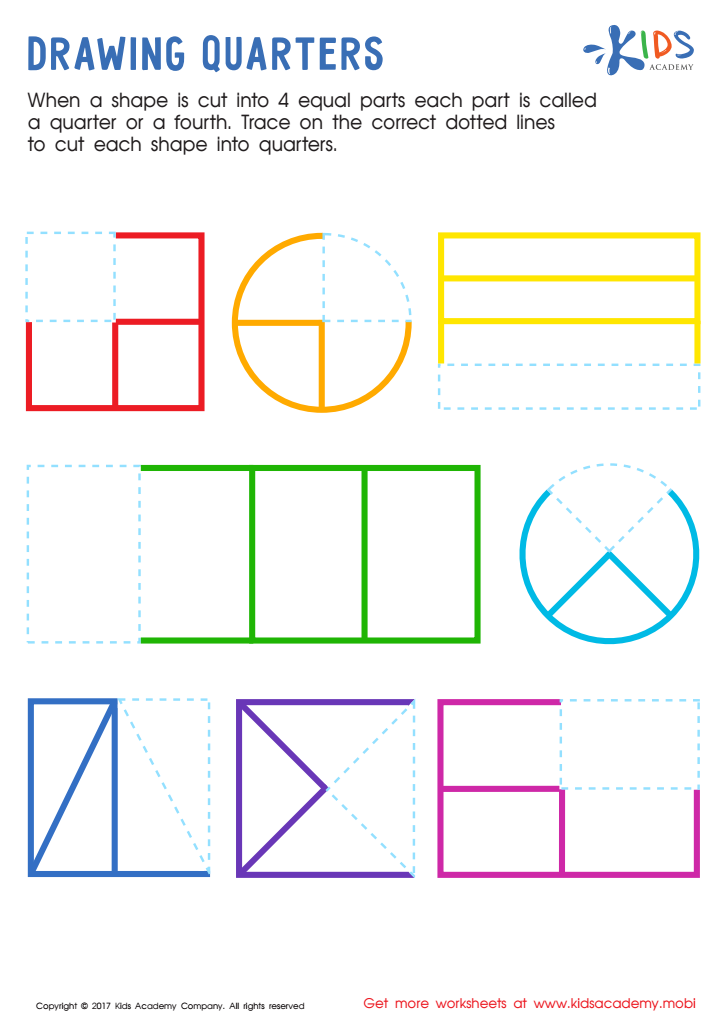
Drawing Quarters Worksheet
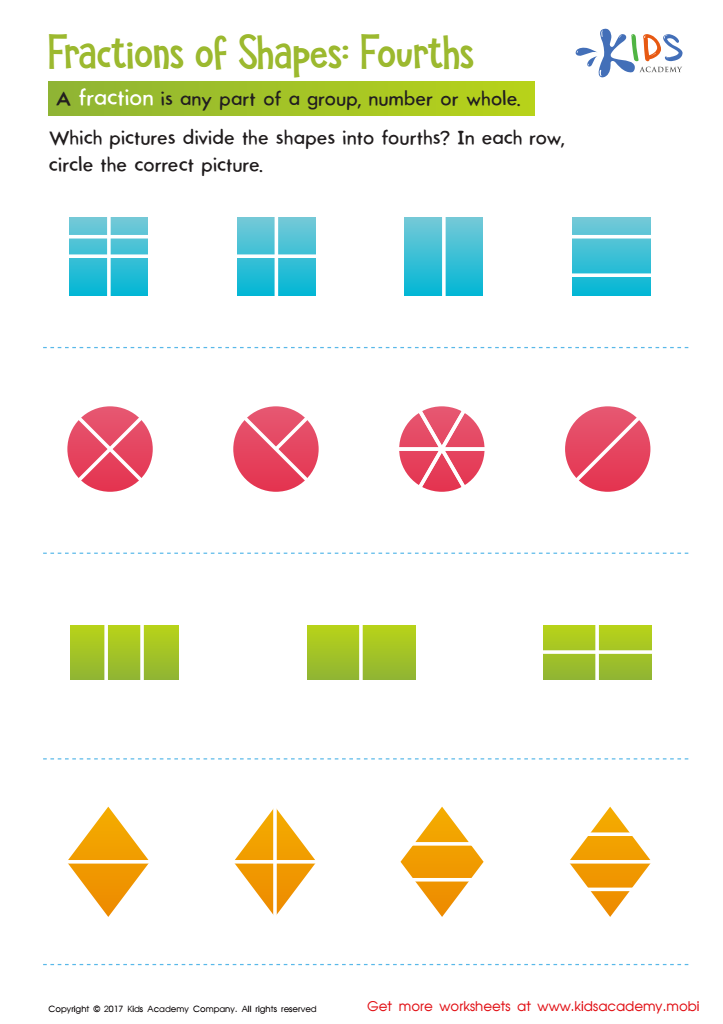
Fractions of Shapes Worksheet
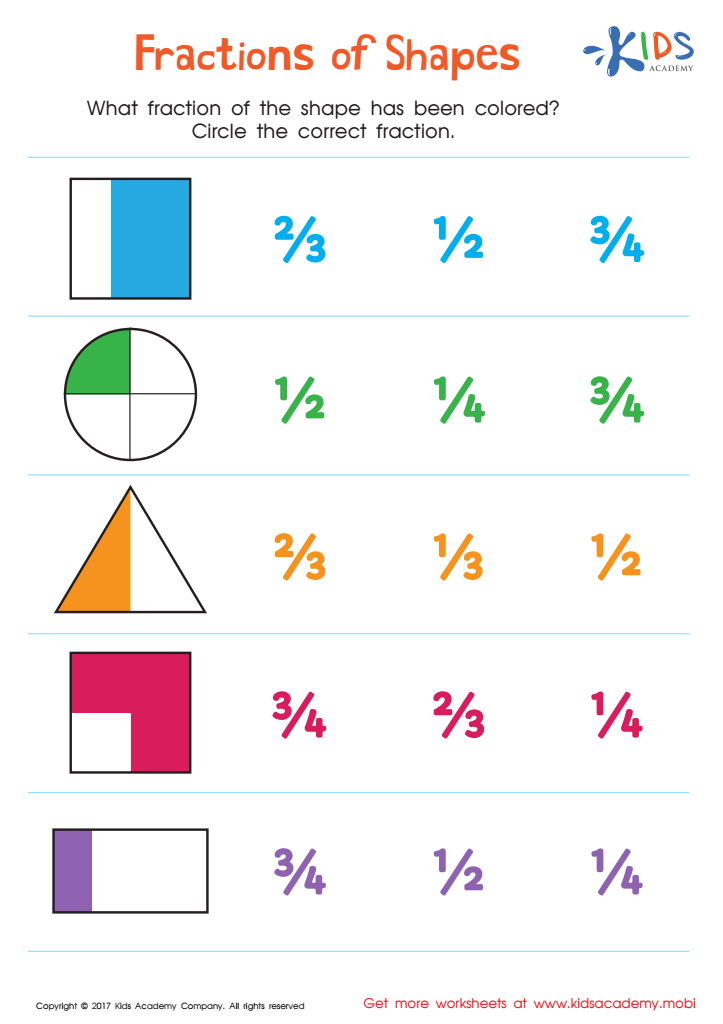
Fractions of Shapes: Math Concept Worksheet








Understanding fractions, especially through engaging activities like "Fractions of Shapes," is crucial for children aged 6-8 as it lays the foundation for their future mathematical skills. At this age, children are developing their ability to visualize and manipulate numbers, and fractions introduce them to essential concepts of part-whole relationships.
Parents and teachers should care about this topic because it nurtures critical thinking and problem-solving abilities. When children engage with fractions of shapes, they practice skills such as comparison, partitioning, and recognizing equivalent amounts, fostering their spatial awareness and logical reasoning. These skills are not only important in mathematics but also in everyday situations—like cooking or sharing which builds teamwork and social skills.
Moreover, a solid grasp of fractions is essential for more advanced mathematical concepts in later grades, including decimals and ratios. Early exposure to and hands-on experiences with fractions can combat common math anxieties, making children feel more confident and enthusiastic about the subject. Ultimately, ensuring children grasp these fundamental concepts empowers them with the tools they need for academic success and daily problem-solving as they grow. Engaging activities also help build a positive attitude towards learning, paving the way for continual educational growth.