Extra Challenge Numbers 11–20 Worksheets for Ages 6-8
3 filtered results
Difficulty Level
Grade
Age
-
From - To
Subject
Activity
Standards
Enhance your child's math skills with our Extra Challenge Numbers 11–20 Worksheets, specially designed for ages 6-8. These engaging worksheets provide interactive exercises that bolster understanding of numbers 11 through 20, including counting, sequencing, and comparison tasks. Each worksheet promises to make learning fun with vibrant illustrations and varied problem-solving activities. Perfect for reinforcing classroom lessons and boosting confidence, our worksheets offer the extra challenge needed to advance your child's numeric abilities. Utilize these resources to support your young learner’s journey towards mastering numbers 11-20 in an enjoyable and effective way.
Favorites
With answer key
Interactive
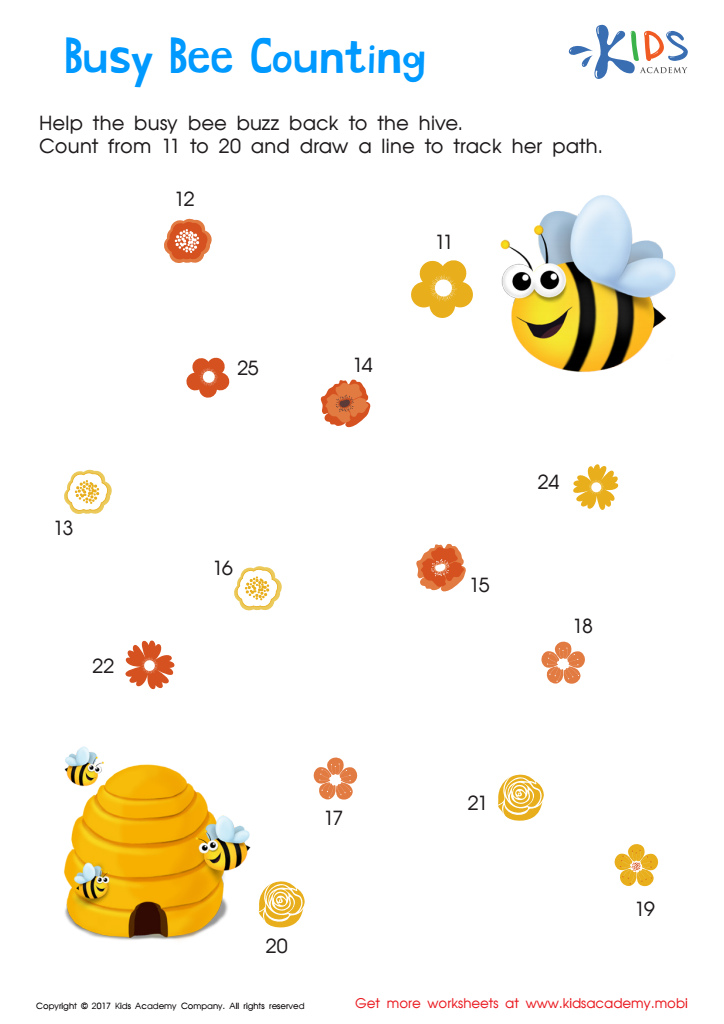
Ordering 11–20: Busy Bee Counting Worksheet
Help your child master counting from 11 to 20 with our connect the dot counting worksheet. Kids will have fun counting, drawing and problem-solving with this vibrant worksheet. With clear directions, adorable pictures and a sense of purpose, your child will develop crucial numeracy skills without even knowing it!
 Assign to My Students
Ordering 11–20: Busy Bee Counting Worksheet
Worksheet
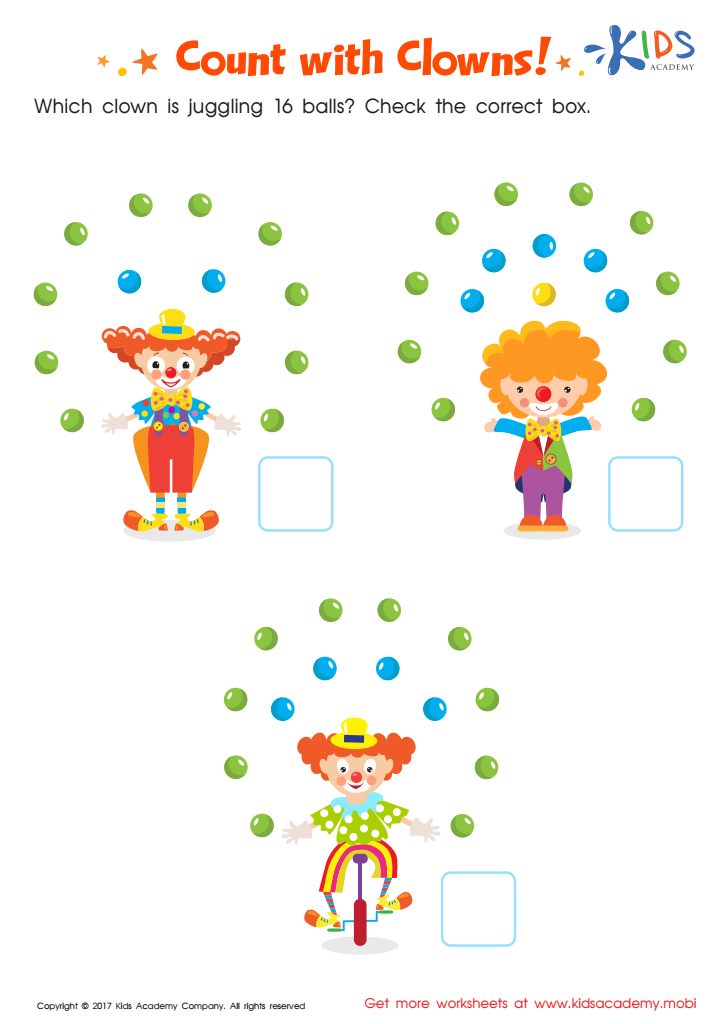
Count with Clowns Worksheet
Math may not be a laughing matter, but this worksheet sure is! Download the PDF and get ready to count balls with the clowns! Your child will have a blast and learn how to count at the same time. It's an easy, fun way to practice math!
Count with Clowns Worksheet
Worksheet
Join Kids Academy for Free
Who is primarily going to use this learning content?



Extra Challenge Numbers 11–20 for ages 6-8 are fundamental for young learners because they play a crucial role in building a robust mathematical foundation. At this early stage, children are transitioning from counting to understanding more complex number concepts. By mastering numbers 11-20, they grasp the fundamentals of place value, learning how the digits in a two-digit number represent different amounts (tens and ones), which is essential for their future math education.
These challenges also encourage critical thinking and problem-solving skills. Activities that involve these numbers can include counting, sequencing, simple arithmetic, and even introductory word problems. When children engage with numbers beyond 10, they practice skills such as addition and subtraction within 20, providing them with the opportunity to understand and apply these concepts practically.
Additionally, involving parents in practicing these numbers can lead to a more supportive learning environment. Parents can reinforce what is taught in the classroom, making learning a shared and continuous experience. This collaborative support can boost children's confidence, encourage a positive attitude towards math, and instill perseverance.
Overall, these extra challenges help children to become more confident and proficient in their early math skills, which sets a strong foundation for their ongoing education.