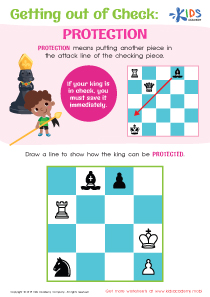
Critical thinking enhancement Extra Challenge Chess Worksheets for Ages 6-9
3 filtered results
-
From - To
Unlock your child's potential with our Critical Thinking Enhancement Extra Challenge Chess Worksheets designed for ages 6-9! These engaging worksheets combine the strategic world of chess with fun and interactive activities that promote critical thinking and problem-solving skills. Perfect for young learners, each worksheet presents thought-provoking challenges that encourage logical reasoning and decision-making. By exploring various chess scenarios, kids will enhance their cognitive abilities while having fun. Whether used in the classroom or at home, these worksheets provide an excellent opportunity for children to build a strong foundation in critical thinking. Stimulate their minds and watch them thrive!
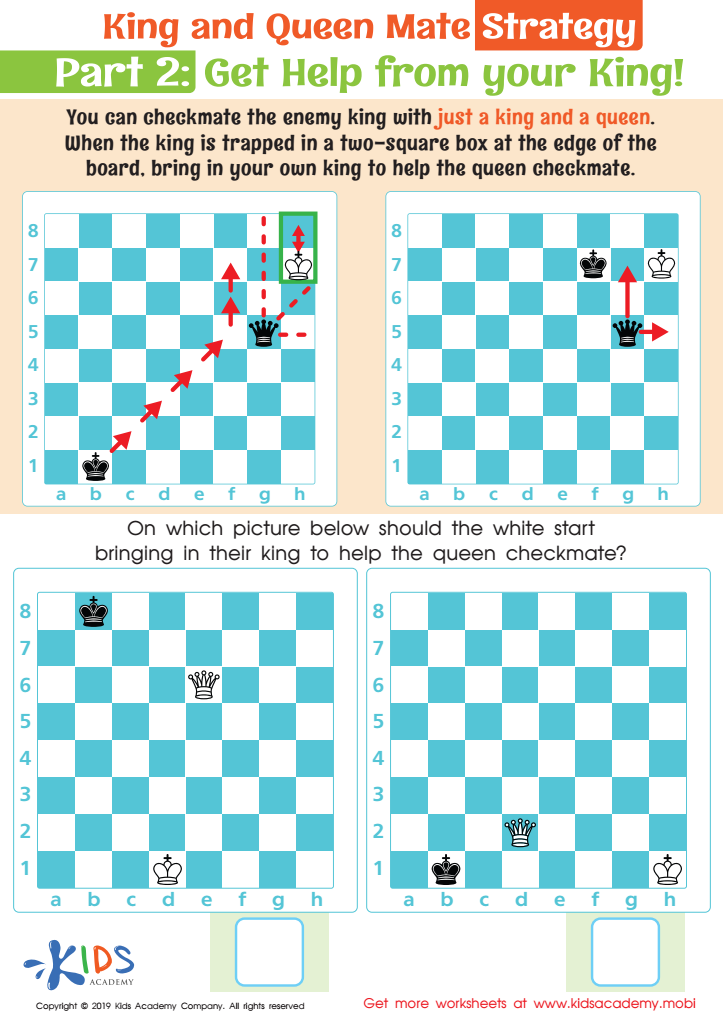
King and Queen Mate Strategy: Part 2 Worksheet
 Assign to My Students
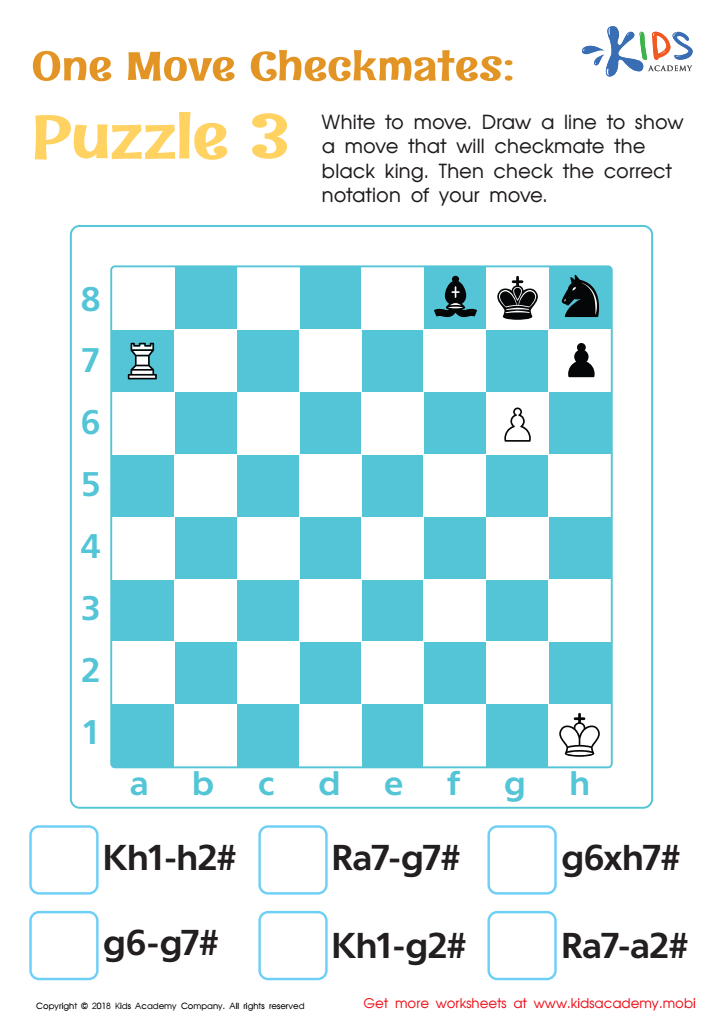
One Move Checkmates: Puzzle 3 Worksheet
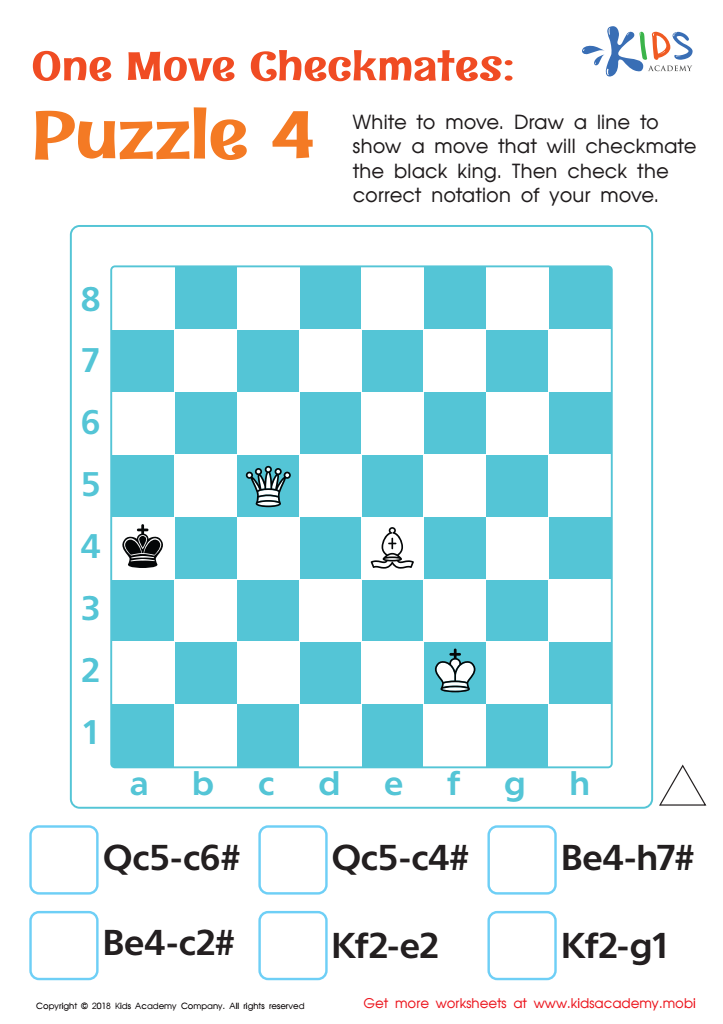
One Move Checkmates: Puzzle 4 Worksheet






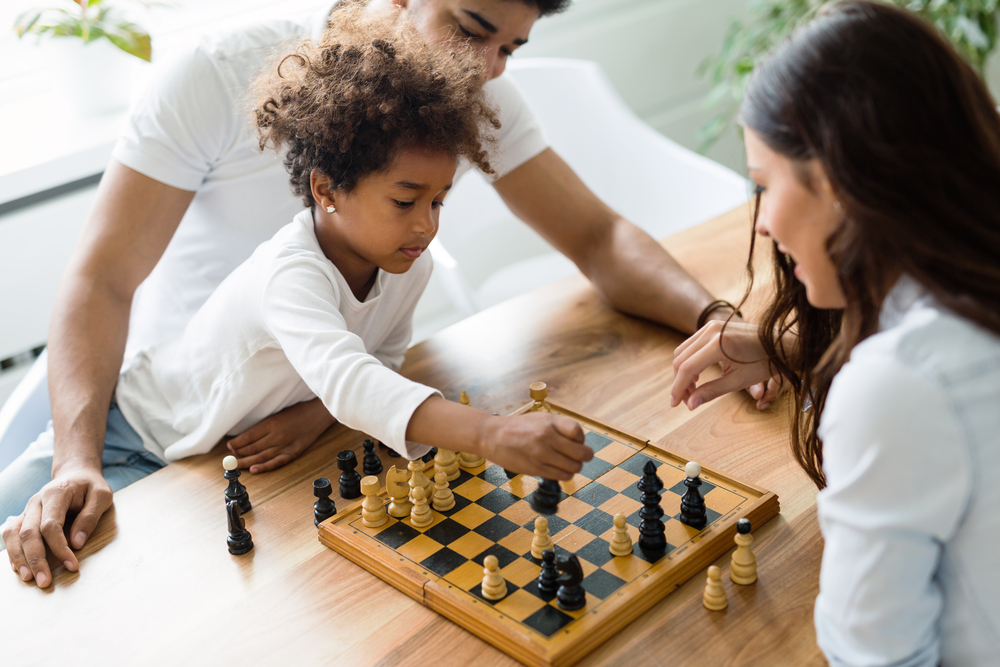

Critical thinking enhancement through programs like Extra Challenge Chess for ages 6-9 is vital for parents and teachers for several reasons. Firstly, chess is not just a game; it's a unique educational tool that cultivates critical thinking skills. Players must constantly assess situations, anticipate opponents' moves, and devise strategies based on logical reasoning.
As children engage with chess, they learn to break down complex problems into manageable parts, enhancing their ability to analyze and make informed decisions—skills that are essential in and out of the classroom. Chess also promotes creativity as children explore various strategies and solutions, building their innovation and flexibility in thinking.
Moreover, involving children in chess from an early age instills patience and discipline, teaching them the importance of perseverance when faced with challenges. This focus on long-term thinking and planning is immensely beneficial in an academic environment where such skills are crucial for success.
Finally, organizations like Extra Challenge Chess provide children with a sense of community and support, fostering social skills and respect for opponents. Therefore, parents and teachers should prioritize this opportunity to develop not just young chess players, but well-rounded thinkers prepared to face future complexities in their academic and personal lives.