Basic geometry understanding Extra Challenge Worksheets for Ages 6-9
4 filtered results
-
From - To
Discover our "Basic Geometry Understanding Extra Challenge Worksheets" designed for kids aged 6-9! These engaging and thoughtfully curated worksheets are perfect for young learners eager to dive deeper into essential geometric concepts. Ideal for enhancing critical thinking skills, these extra challenges cover a variety of topics such as shapes, symmetry, and spatial reasoning. With colorful illustrations and interactive exercises, students will enjoy exploring the exciting world of geometry while honing their problem-solving abilities. These worksheets not only support classroom learning but can also be used at home, making math both fun and educational. Equip your child with the skills they need for success!
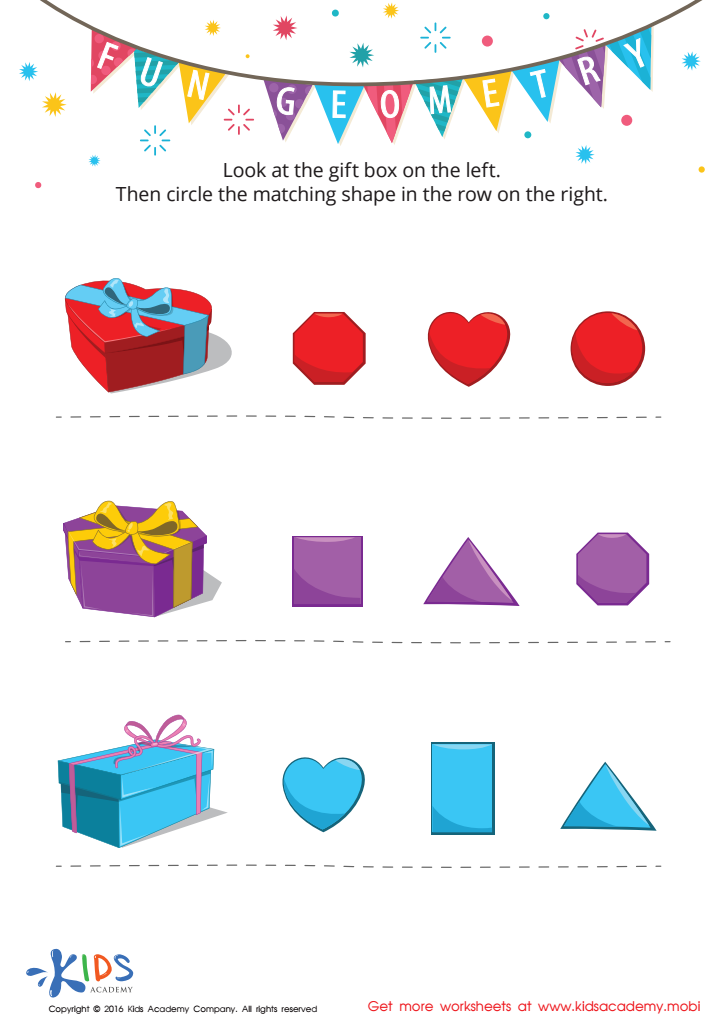
Fun Geometry Worksheet
 Assign to My Students
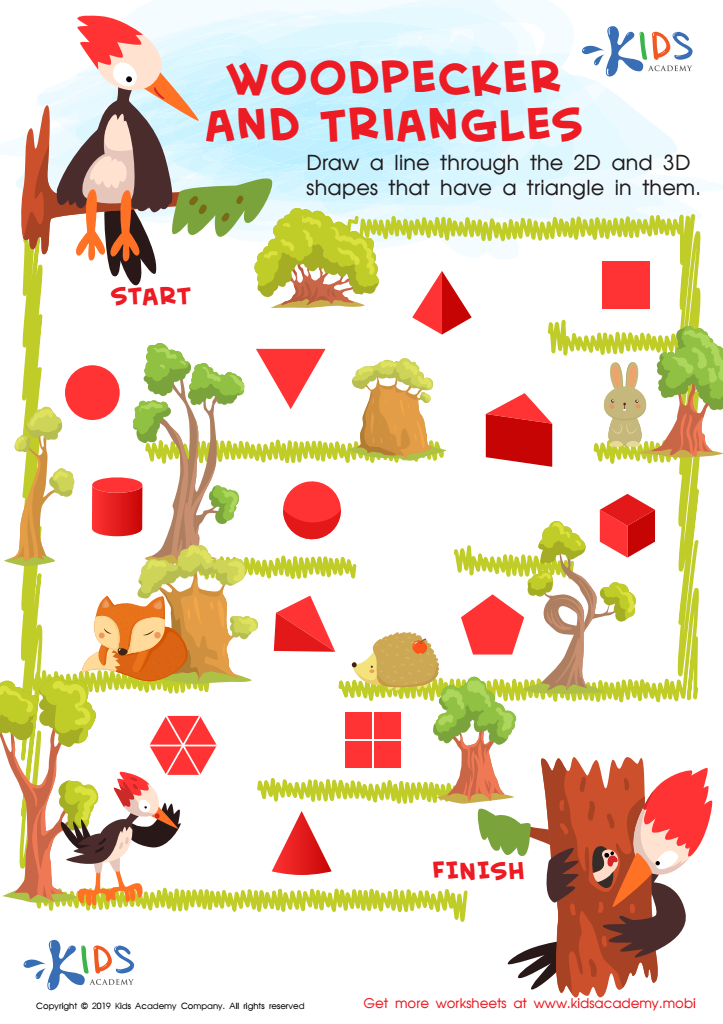
Woodpecker and Triangles Worksheet
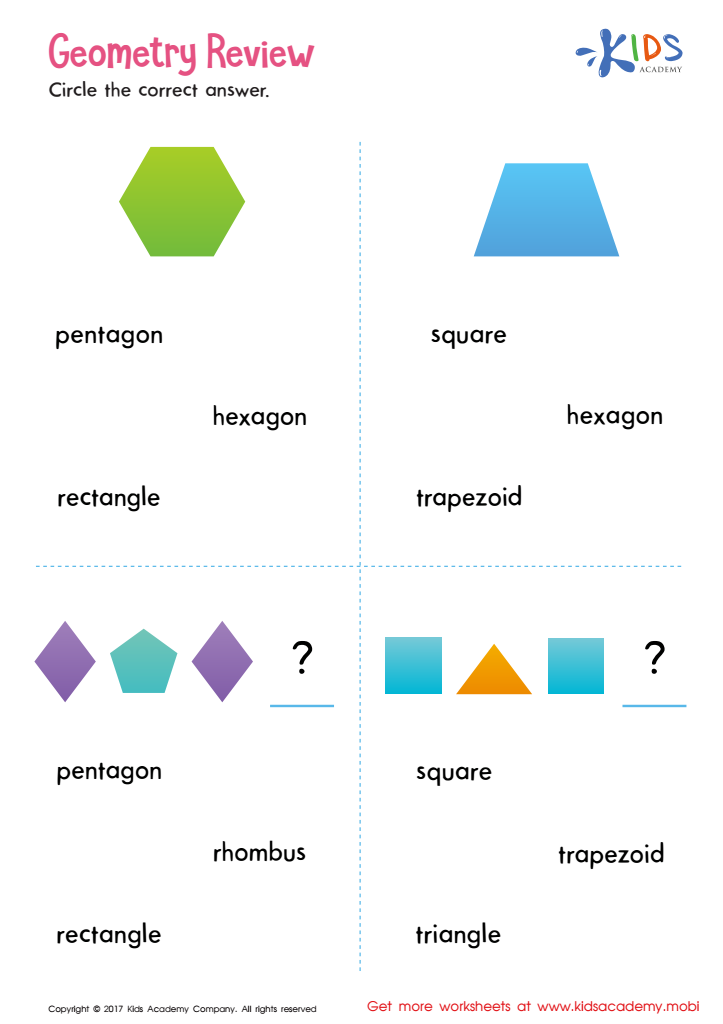
Geometry Review Printable
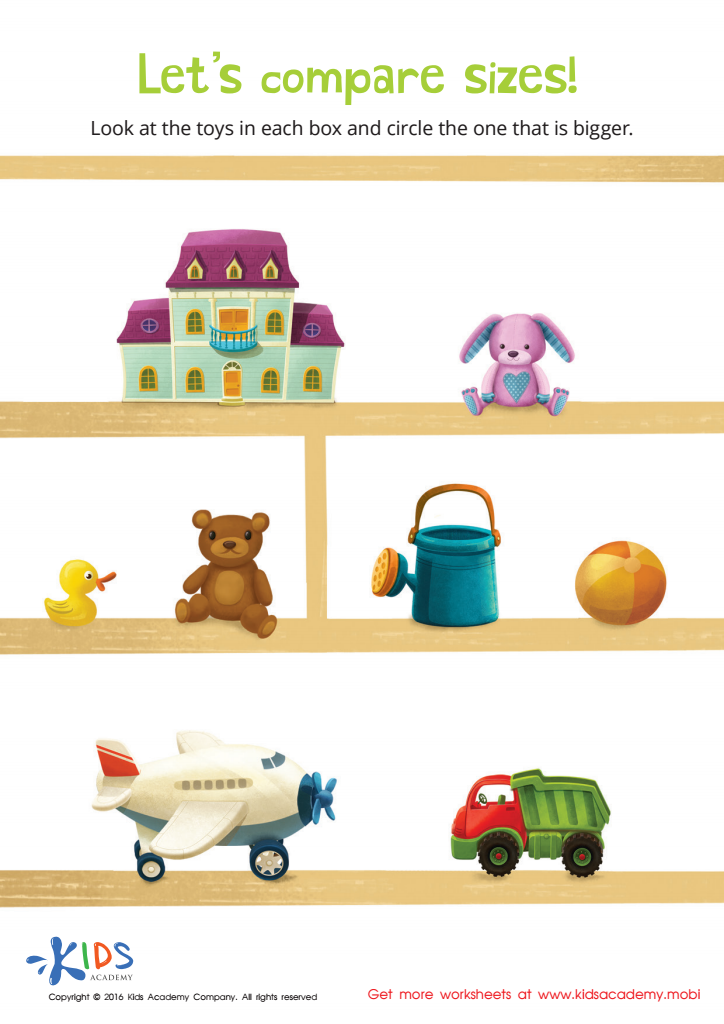
Classifying by Size Sorting Worksheet







Understanding basic geometry is crucial for children aged 6-9, as it lays the groundwork for broader mathematical concepts and critical thinking skills. At this age, children are naturally curious and eager to explore the shapes and patterns around them. By engaging in geometry, they develop spatial awareness, an essential skill for problem-solving across various subjects, especially in STEM (science, technology, engineering, and mathematics) fields.
Parents and teachers should prioritize geometry understanding because it enhances logical reasoning, encourages teamwork, and fosters creativity. Activities such as recognizing shapes, measuring angles, or creating patterns can motivate children to see math as a fun and applicable subject. Moreover, a solid grasp of basic geometry can help children in everyday situations, such as planning spaces and understanding directions.
When children master these concepts early on, it boosts their confidence, leading to improved performance in higher-level math classes. Moreover, foundational geometry skills are woven into many aspects of daily life and other academic subjects. By promoting this understanding at a young age, we prepare our children for future success and inspire a lifelong appreciation for learning. Therefore, it is vital for parents and teachers to encourage this exploration of geometry.








