
Understanding patterns Extra Challenge Worksheets for Ages 6-9
7 filtered results
Difficulty Level
Grade
Age
-
From - To
Subject
Activity
Standards
Introducing our "Understanding Patterns Extra Challenge Worksheets for Ages 6-9"! Tailored to make learning both fun and effective, these worksheets will nurture your child's critical thinking and problem-solving skills. With engaging and interactive exercises, kids can explore different types of patterns, reinforcing their math and logic foundations. Perfect for young learners who are ready to take on an extra challenge, our worksheets cover various difficulty levels to suit individual progress and learning pace. Spark your child's curiosity and boost their confidence in recognizing and predicting patterns with these expertly-designed activities. Download and print for endless educational fun!
Favorites
With answer key
Interactive
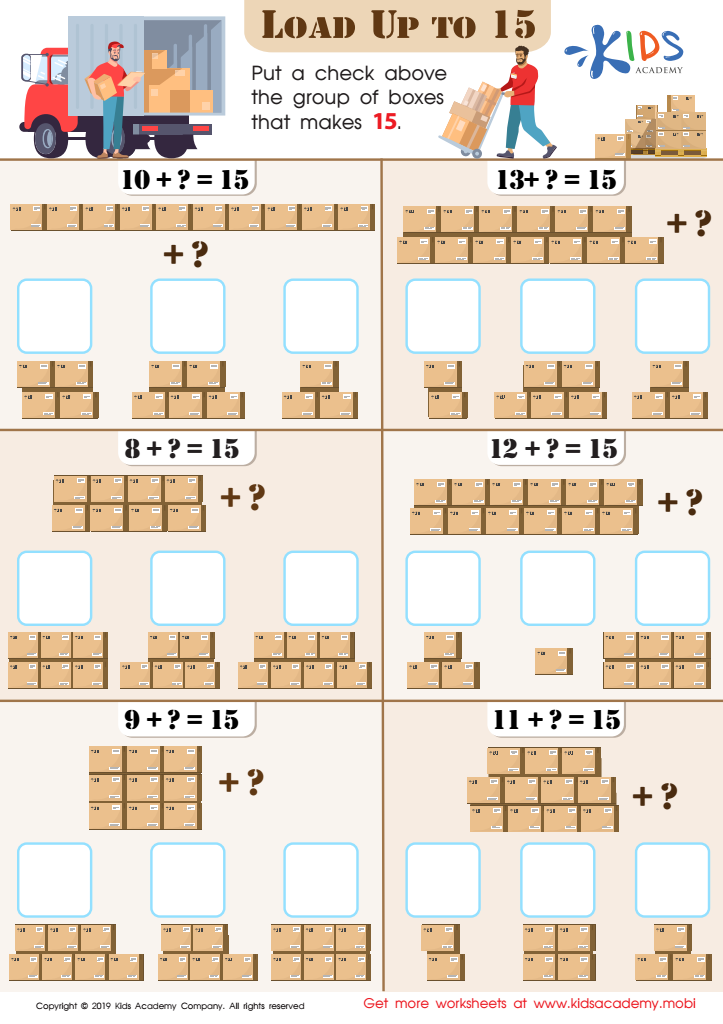
Load up to 15 Worksheet
Your students can practice addition and counting skills with this worksheet. Each equation has 6 boxes to count. Check the group that equals 15 to complete the exercise. Help your kindergartners if they need it.
Load up to 15 Worksheet
Worksheet
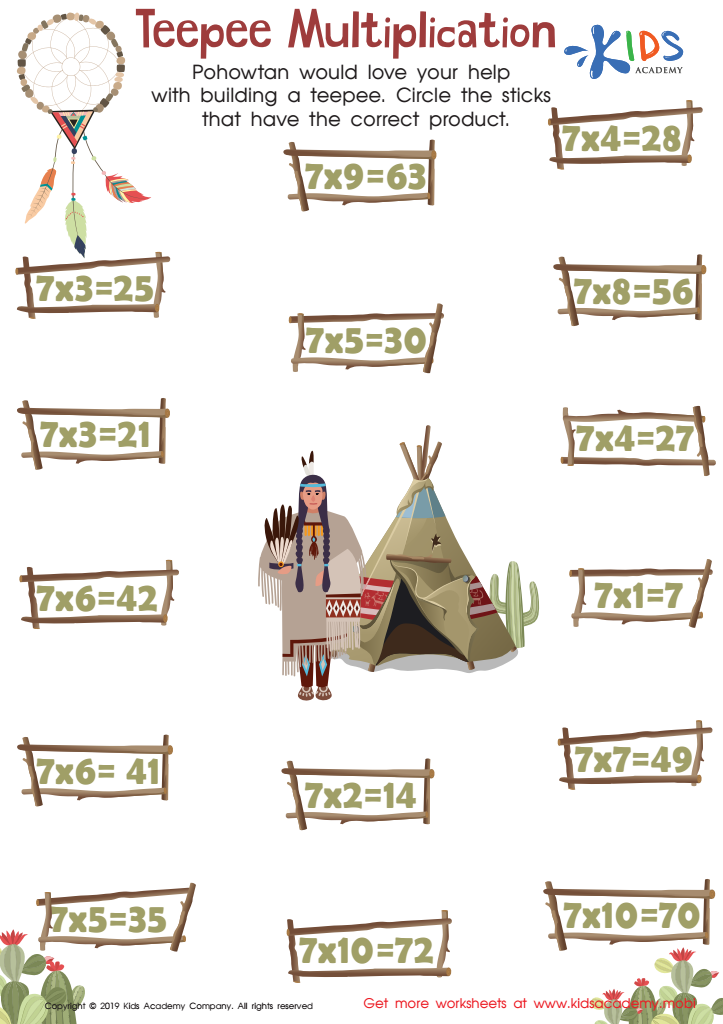
Teepee Multiplication Worksheet
Help the Native American man build his teepee by checking multiplication facts! Learners are given purpose and excitement with this fun math worksheet. Check each set of sticks, find, and circle the ones with the correct product to complete.
Teepee Multiplication Worksheet
Worksheet
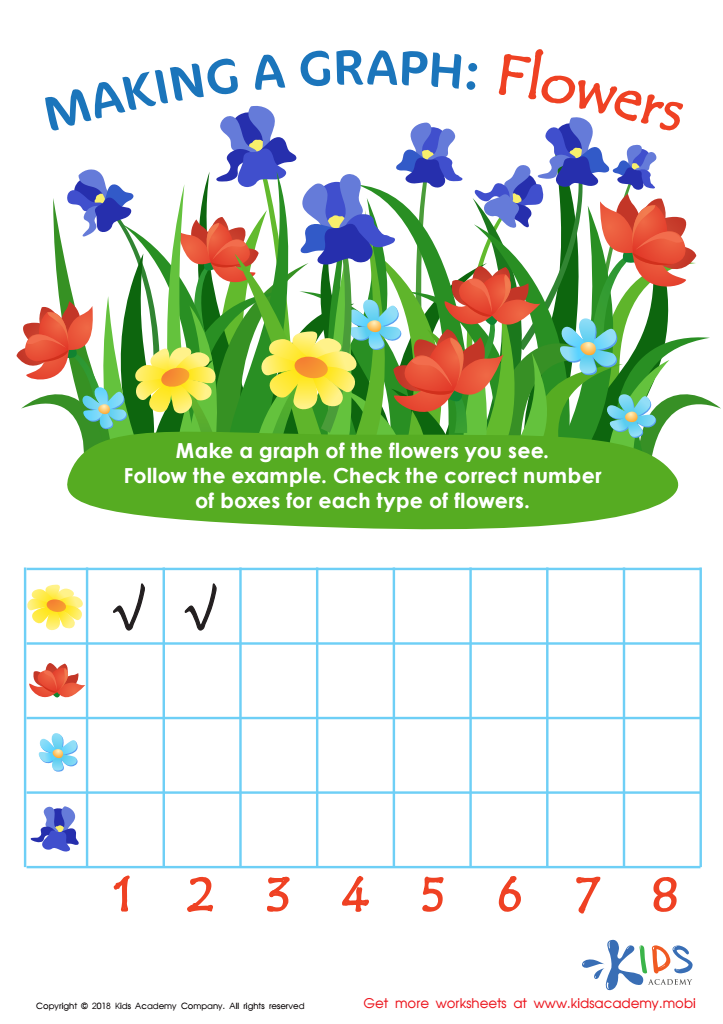
Making a Graph: Flowers Worksheet
Kids will love this engaging PDF graph. They'll count flowers and use checkmarks to represent the number on the graph, tangibly seeing the differences in an organized way they contributed to. All while developing their number representation and concrete number sense skills without even realizing it!
Making a Graph: Flowers Worksheet
Worksheet
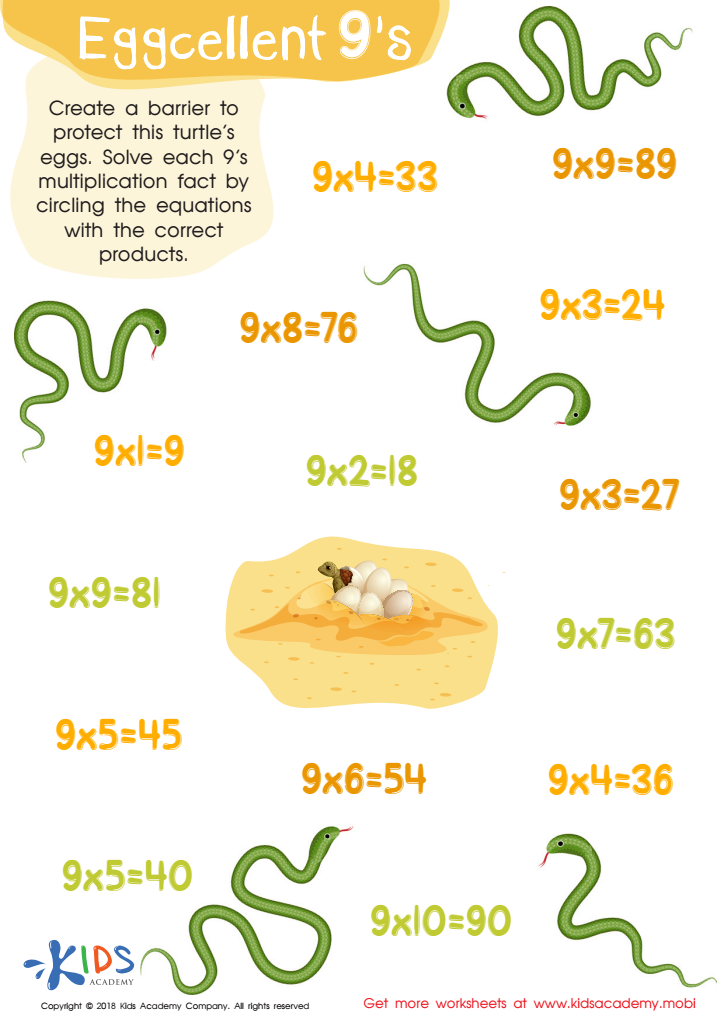
Eggcellent 9’s Worksheet
Help your kids save turtle eggs in this worksheet! Have them create a barrier by solving 9's multiplication facts, then circling the equations with the correct product. Finish up this exercise and show them how they can help protect turtle eggs from predators.
Eggcellent 9’s Worksheet
Worksheet
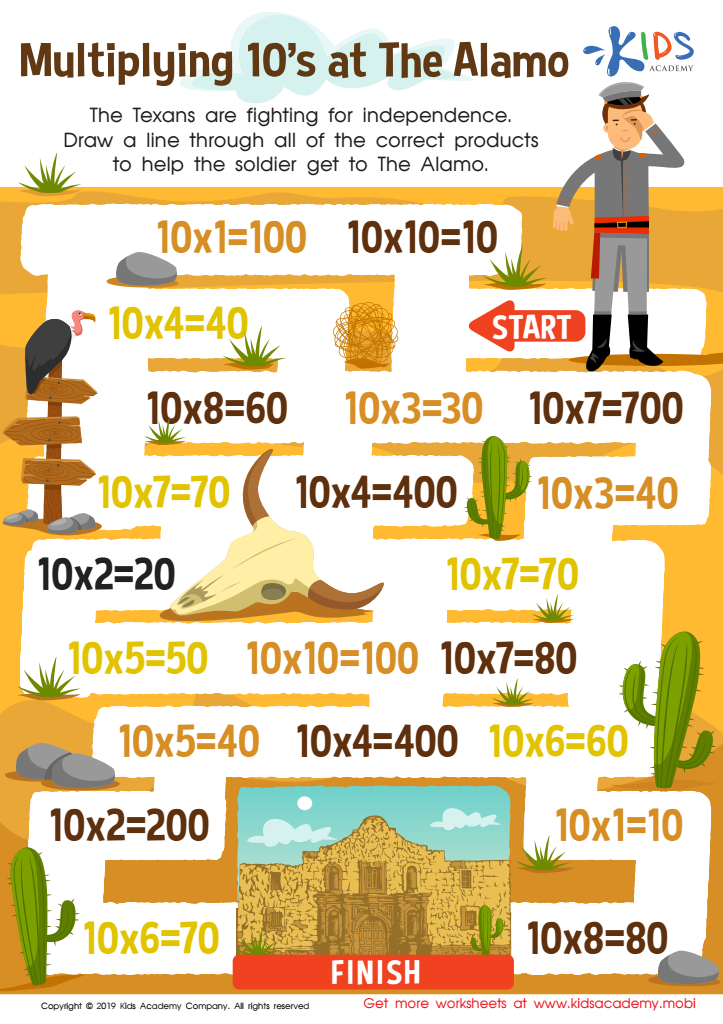
Multiplying 10’s at The Alamo Worksheet
Teach your kids easy tricks to simplify any multiplication problem. For example, when multiplying any number by 10, the result will always end in a zero. To help the Texans in this worksheet, draw a line through all of the correct products to get them to The Alamo.
Multiplying 10’s at The Alamo Worksheet
Worksheet
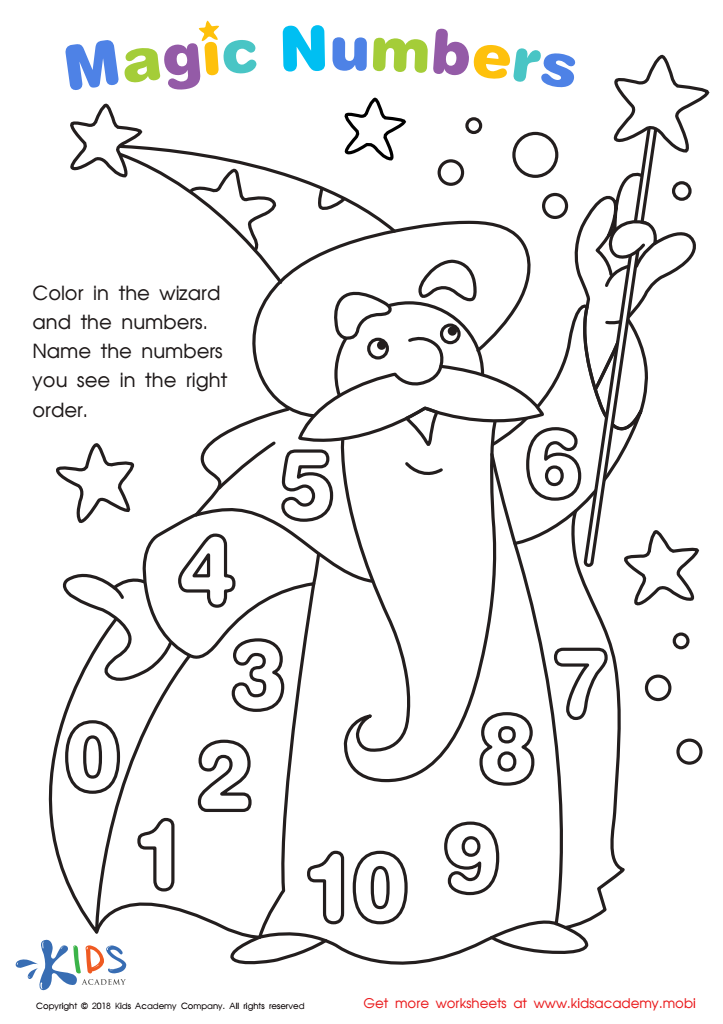
Magic Numbers Worksheet
Does your child have an interest in magic? Here's something they'll love - a coloring sheet featuring a wizard! Ask them to name the numbers from smallest to highest, then let them pick colors to color in the wizard and the numbers. It's sure to excite them!
Download (PDF)
 Assign to My Students
Assign to My Students
Magic Numbers Worksheet
Worksheet
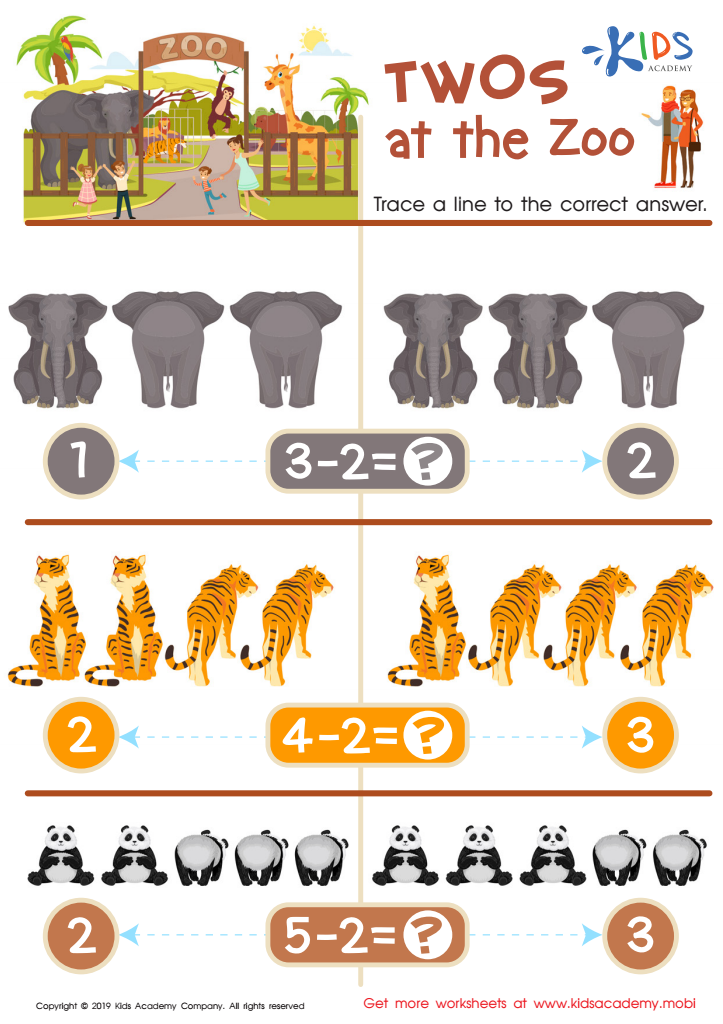
Twos at the Zoo Worksheet
At the zoo, your kids can have fun with animals. Ask them to name their favorite ones and identify them in the printout. Count animals in each group together, then help your kids solve the equations and trace a line to the answer. It's an enjoyable way to combine learning and exploration!
Twos at the Zoo Worksheet
Worksheet
Join Kids Academy for Free
Who is primarily going to use this learning content?



.jpg)




Understanding patterns is crucial for the cognitive development of children ages 6-9. At this stage, their brains are especially receptive to honing foundational mathematical and logical skills. When parents or teachers emphasize learning patterns, they essentially sharpen the child’s ability to recognize, predict, and make sense of the world around them.
Patterns are not just limited to repetitive visuals but extend into rhythmic patterns in music, sequences in storytelling, and numerical patterns in early math. Engaging in extra challenges to identify and create patterns boosts critical thinking and problem-solving skills. For example, being able to extrapolate number sequences lays the groundwork for algebraic thinking later on.
Moreover, comprehending patterns can significantly enhance reading proficiency. A child who recognizes word patterns will find it easier to decode new words, improving fluency and comprehension. Beyond academics, understanding patterns helps children develop a sense of order and predictability, which can be comforting and foster a sense of security.
Lastly, introducing extra challenges stimulates curiosity and a love for learning. It prevents boredom and keeps children engaged, ensuring they view education as an exciting journey rather than a mundane task. By caring about understanding patterns, parents and teachers set children up for broader academic success and more profound intellectual growth.








