Problem-Solving Skills Extra Challenge Area and Perimeter Worksheets for Ages 6-9
4 filtered results
-
From - To
Welcome to our Problem-Solving Skills Extra Challenge Area and Perimeter Worksheets for Ages 6-9! Designed to enhance critical thinking and mathematical understanding, these engaging worksheets encourage young learners to explore the concepts of area and perimeter through fun and challenging problems. Perfect for developing problem-solving skills, our resources include a variety of scenarios that promote reasoning and creativity. Children will practice calculating measurements while enjoying interactive tasks and stimulating puzzles. These worksheets are ideal for classroom enrichment or at-home practice, making math an exciting adventure. Dive into our abundant resources and help your child build confidence in their math abilities today!
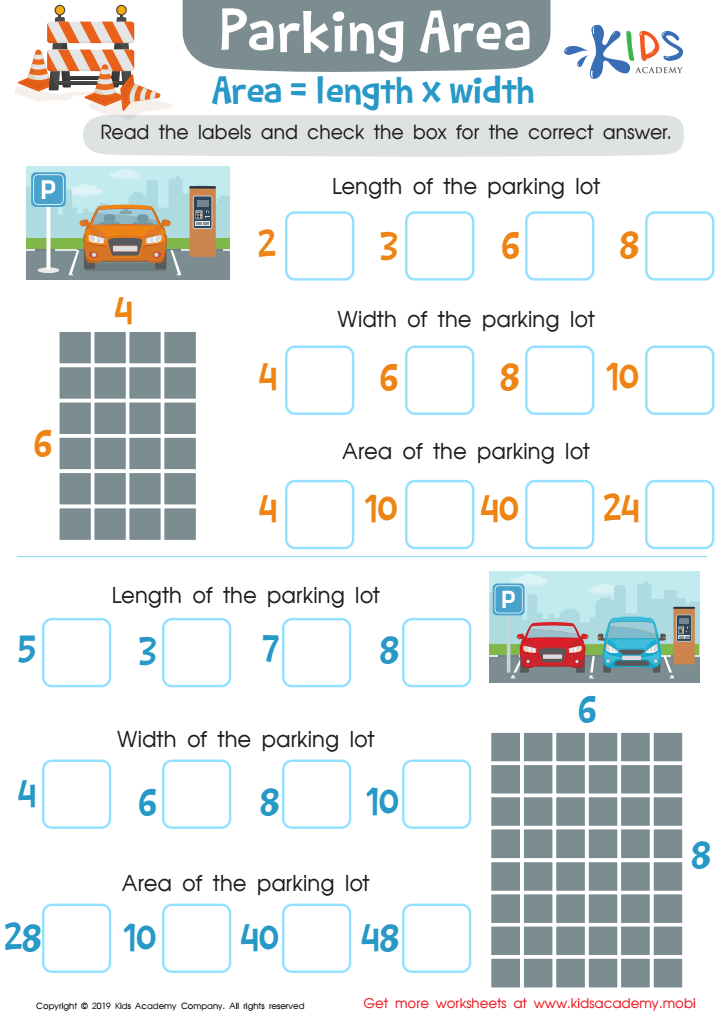
Parking Area Worksheet
 Assign to My Students
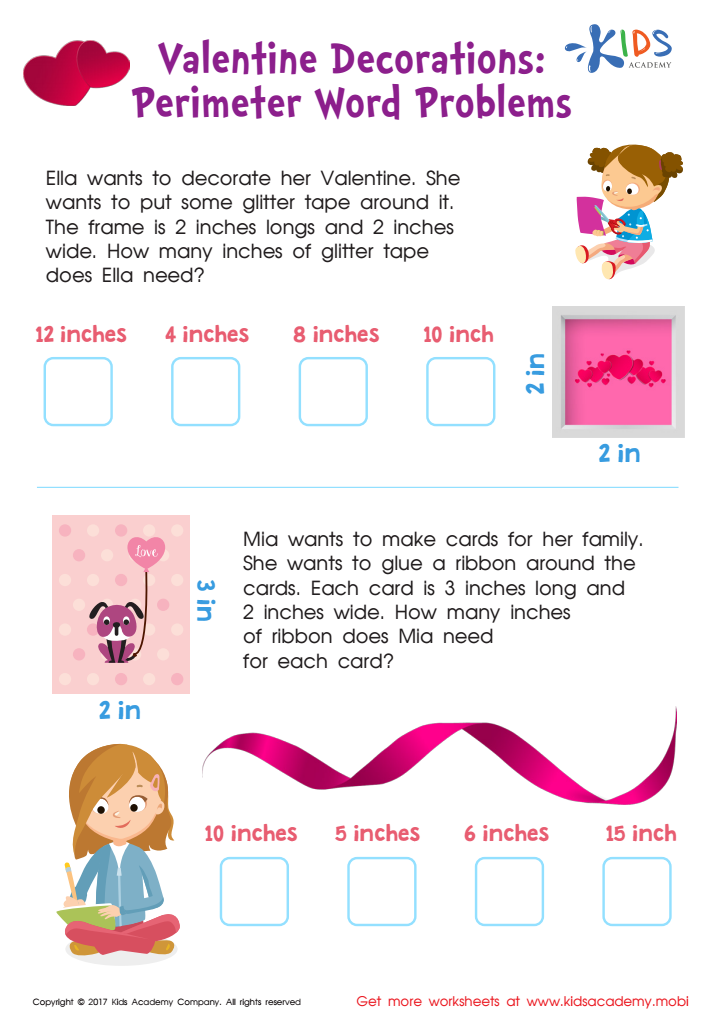
Perimeter Word Problems Worksheet
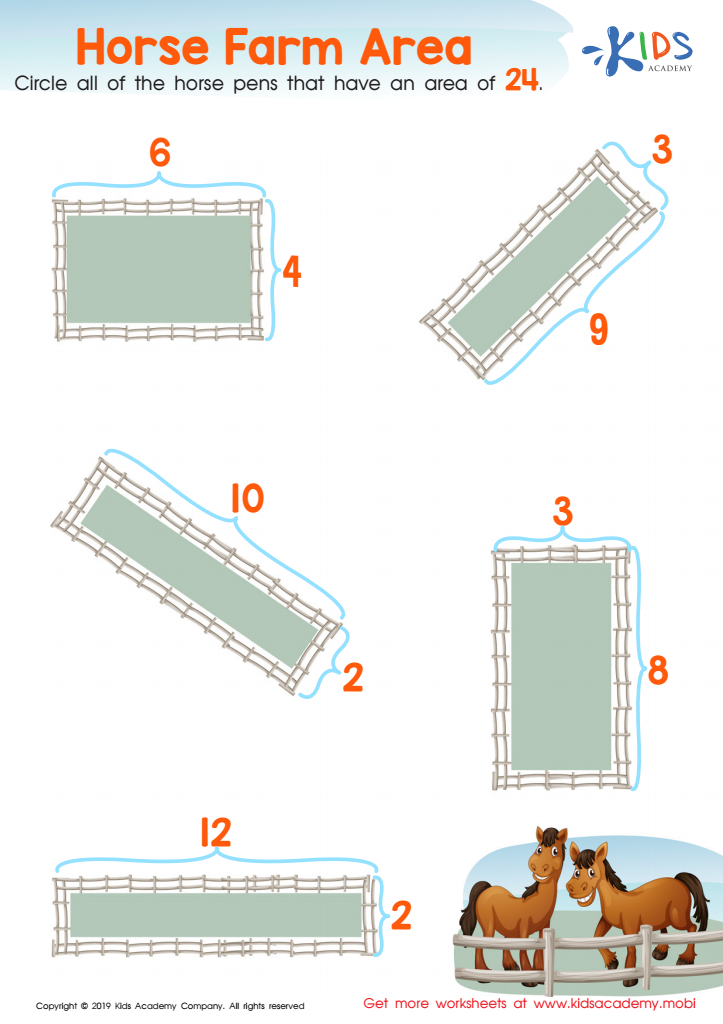
Horse Farm Area Worksheet
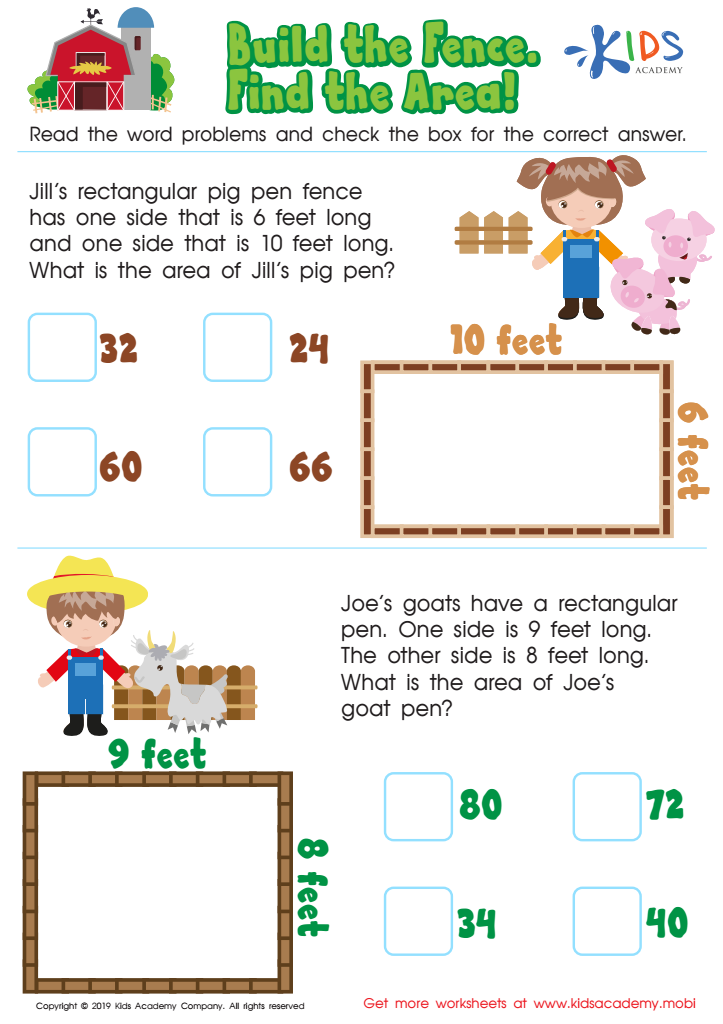
Build the Fence, Find the Area Worksheet








Developing problem-solving skills in children aged 6-9, particularly in understanding area and perimeter, is crucial for a variety of reasons. First, these concepts serve as foundational mathematical skills that develop critical thinking and analytical capabilities. When children engage in problem-solving related to area and perimeter, they learn to analyze a situation, visualize space, and apply mathematical operations, fostering cognitive growth.
Moreover, these skills transcend academia. Understanding area and perimeter teaches children about real-world applications, such as planning spaces, creating art, or even gardening. This practical knowledge helps them make informed decisions and solves everyday problems. Parents and teachers should recognize that mastering these skills encourages a growth mindset. When children confront challenges and find solutions, they build confidence and resilience.
Additionally, fostering problem-solving skills enhances collaboration and communication. Group activities related to area and perimeter, whether during independent practice or games, promote teamwork, as students articulate strategies and share outcomes. Ultimately, focusing on problem-solving within the realm of area and perimeter not only shapes well-rounded students but prepares them for future challenges in mathematics and beyond, making it imperative for educators and parents to prioritize this challenge area.