
Handwriting practice Extra Challenge Worksheets for 6-Year-Olds
6 filtered results
Difficulty Level
Grade
Age
-
From - To
Subject
Activity
Standards
Boost your child's handwriting skills with our Handwriting Practice Extra Challenge Worksheets designed specifically for 6-year-olds! These engaging worksheets provide a fun and interactive way for young learners to enhance their writing abilities. With a variety of exercises focused on letter formation, connecting letters, and sentence writing, kids will build confidence in their handwriting. Ideal for classroom reinforcement or at-home practice, these worksheets encourage fine motor skills development while making learning enjoyable. Help your child achieve a neat and legible handwriting style that sets the foundation for future success. Explore our collection and watch your child thrive in their writing journey!
Favorites
With answer key
Interactive
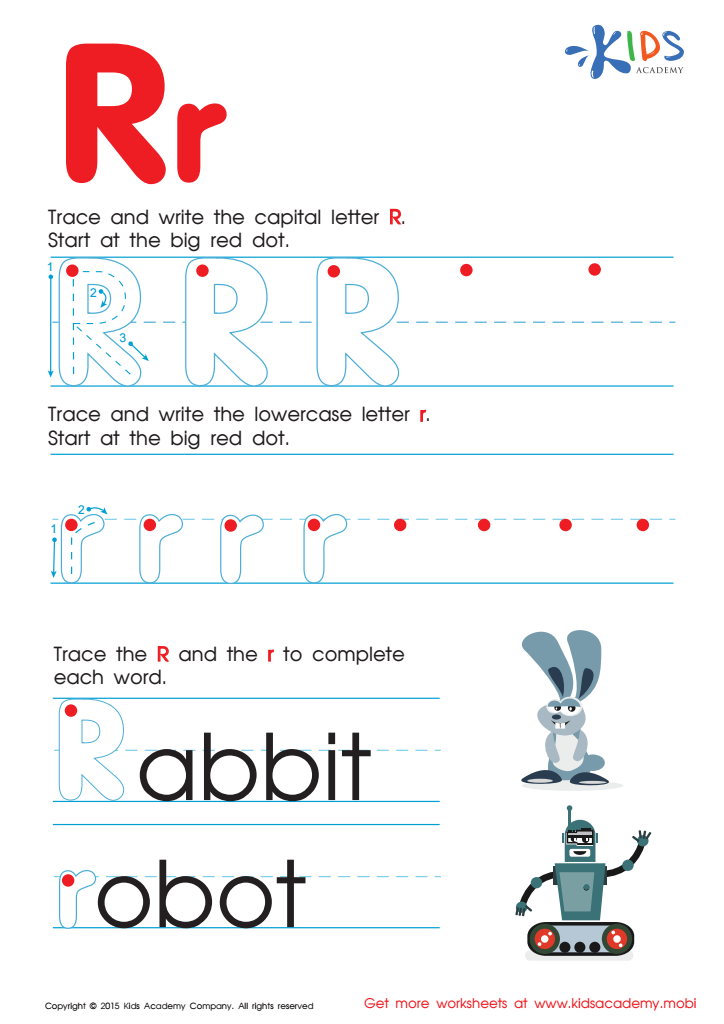
Letter R Tracing Page
Trace and write the letter "R" with this worksheet for kindergarten. Start with the uppercase, then move on to the lowercase. Write the letters several times for practice. Then help complete the words for the rabbit and robot, spelling carefully. More ABC worksheets can be found at Kids Academy.
 Assign to My Students
Letter R Tracing Page
Worksheet
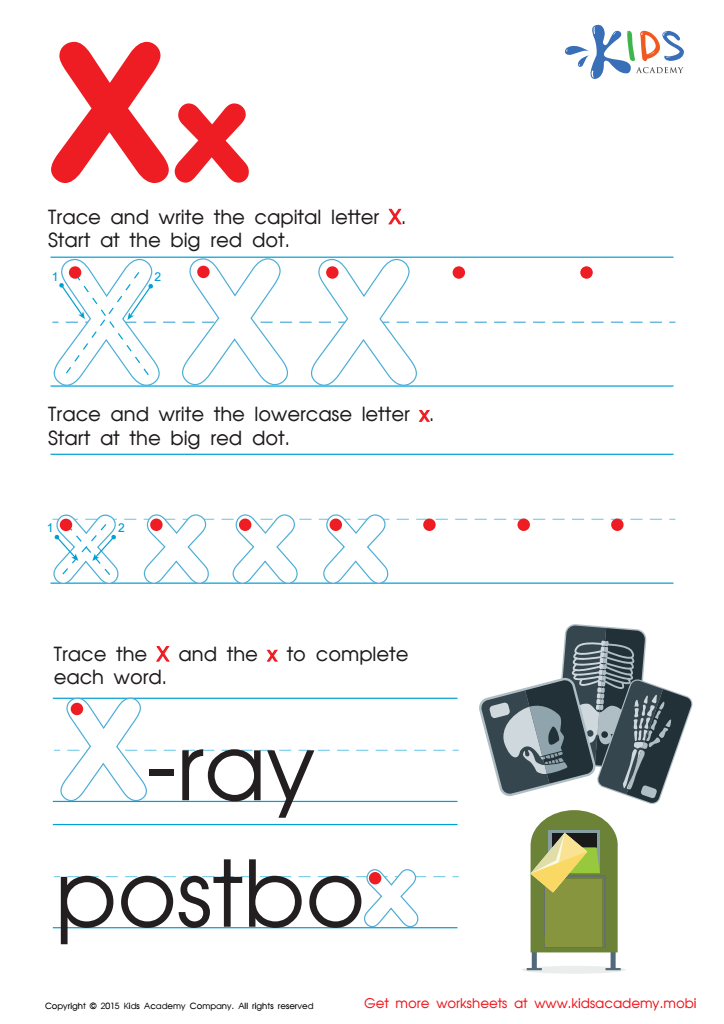
Letter X Tracing Page
Trace the uppercase letter "X" to learn, then write it yourself and practice. Then do the same with the lowercase "x" before completing the words "X-ray" and "postbox". Enjoy our alphabet printables!
Letter X Tracing Page
Worksheet
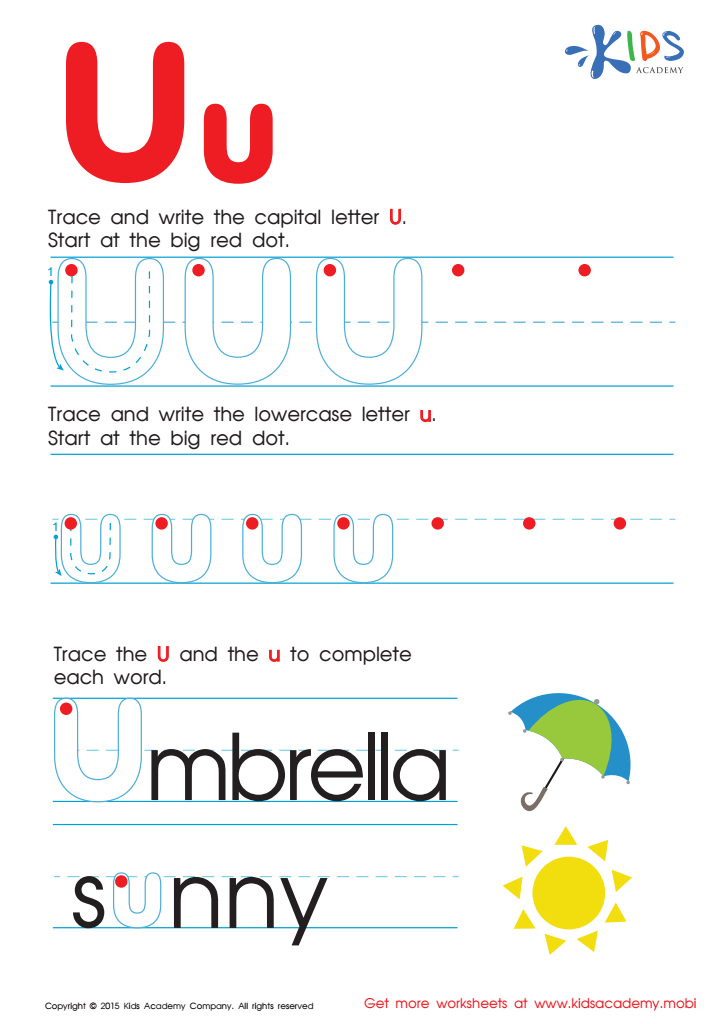
Letter U Tracing Page
Ready to trace and write the letter "U"? Use our worksheet and practice tracing both uppercase and lowercase letters. Complete the words "umbrella" and "sunny" with a capital "U". Check our full collection of alphabet printables for more activities.
Letter U Tracing Page
Worksheet
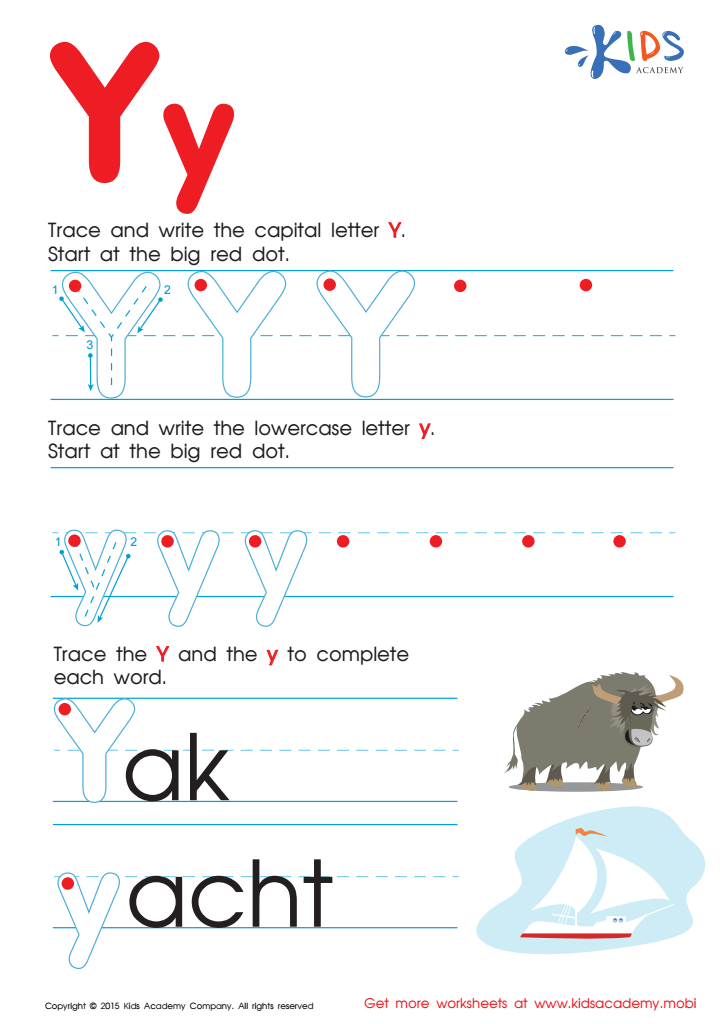
Letter Y Tracing Page
Trace the capital letter "Y" on the red dot, then trace and write the lowercase letter. Complete the words to help the Yak walk and the yacht swim. More worksheets at Kids Academy.
Letter Y Tracing Page
Worksheet
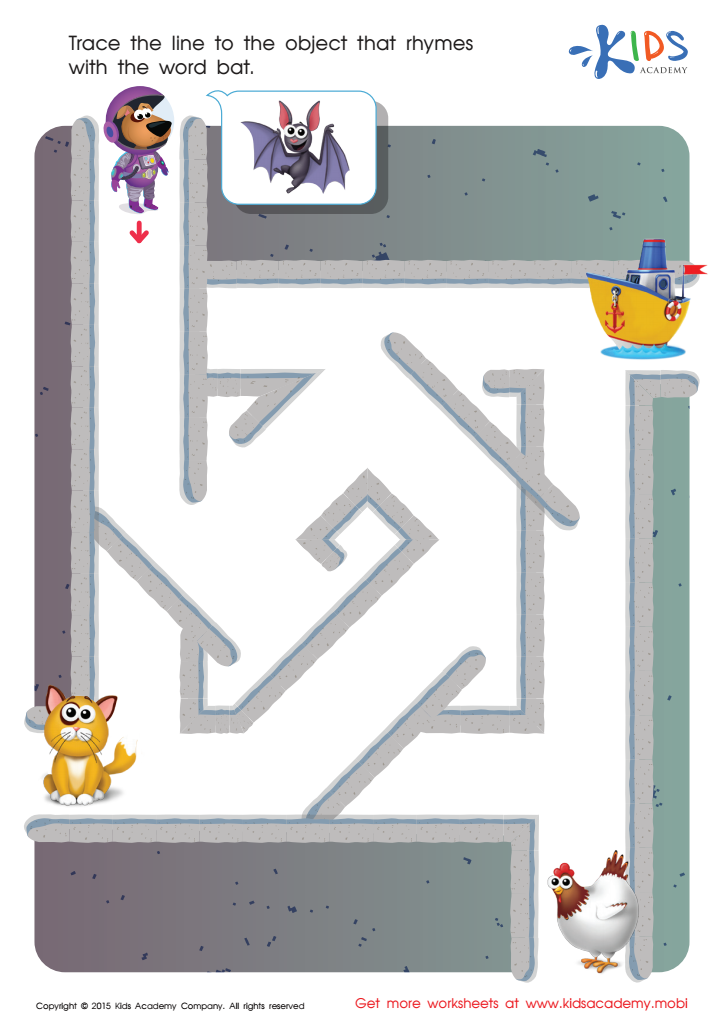
Bat Rhyming Words Worksheet
Get new reading and vocabulary worksheets to help make learning enjoyable for you and your kids. Join the dog and match the objects that rhyme. Have a blast!
Bat Rhyming Words Worksheet
Worksheet
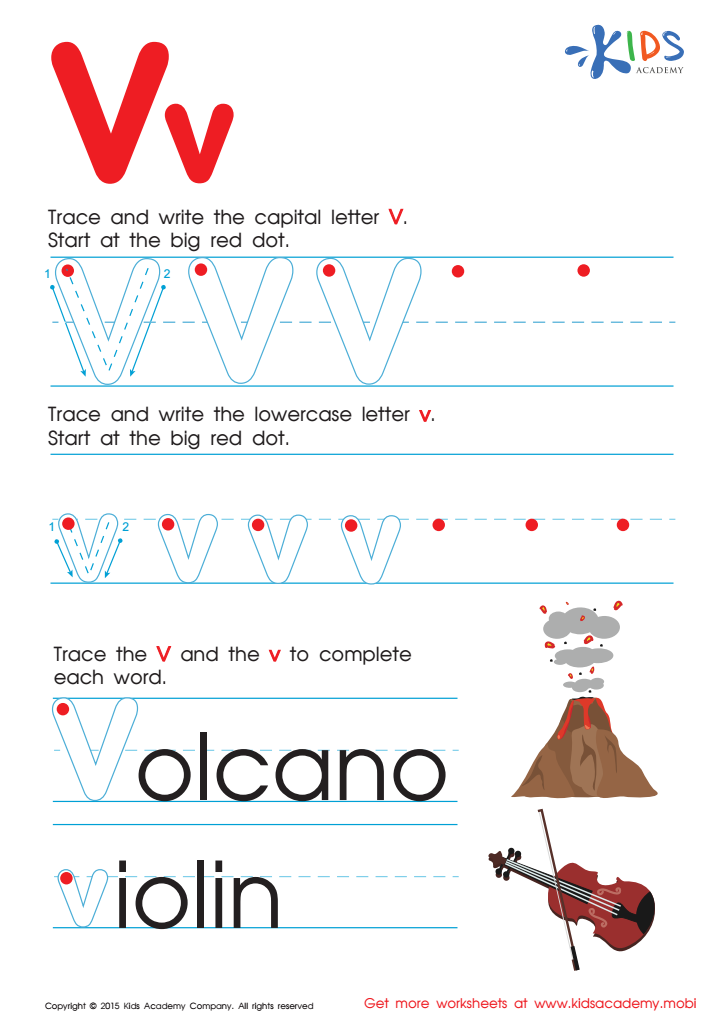
Letter V Tracing Page
Trace the uppercase and lowercase letter "V" with our kindergarten tracing worksheet. Begin at the red dot and follow the lines. Write it several times. Complete the words "Volcano" and "violin". Get more alphabet activities at Kids Academy.
Letter V Tracing Page
Worksheet
Join Kids Academy for Free
Who is primarily going to use this learning content?







Handwriting practice is crucial for 6-year-olds as it fosters important developmental skills. At this age, children are refining their fine motor skills, which lay the groundwork for many tasks beyond writing, such as drawing, cutting, and using tools. Handwriting helps improve coordination and dexterity, enhancing overall motor skills.
Moreover, handwriting is linked to cognitive development. Writing by hand engages different parts of the brain, aiding memory retention and comprehension. When children practice forming letters and words, they're not just recreating shapes; they're learning to organize their thoughts and express themselves. This is fundamental as they begin to develop critical thinking and communication skills.
Additionally, good handwriting contributes to a child's self-esteem. As they master these skills, they gain confidence in their writing ability, leading to a positive attitude toward learning. By valuing handwriting practice, parents and teachers send a message about the importance of effort and perseverance, encouraging a growth mindset.
Finally, in a digital age, cultivating strong handwriting skills prepares children for tasks that still require written communication. Integrating handwriting practice with engaging activities can make it enjoyable, ensuring children perceive it not as a chore, but as a vital part of their learning journey.








