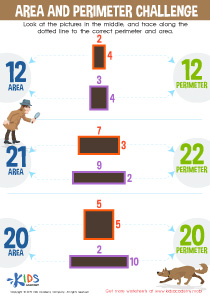
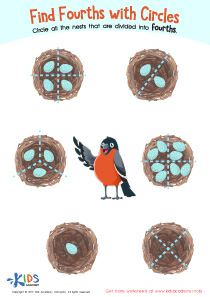
Shape Recognition Extra Challenge 2D Shapes Worksheets for 6-Year-Olds
6 filtered results
-
From - To
Looking to enhance shape recognition in 6-year-olds? Our "Shape Recognition Extra Challenge 2D Shapes Worksheets" are perfect! Designed to stimulate young minds, these worksheets offer engaging and interactive activities. Children will explore various 2D shapes, honing their skills in identifying, comparing, and differentiating shapes like circles, squares, triangles, and more. With colorful visuals and fun tasks, kids will stay motivated while developing crucial math skills. Ideal for parents, teachers, and homeschooling, these worksheets provide the extra challenge needed to advance early learners' understanding of 2D shapes in a comprehensive and enjoyable way. Download today!
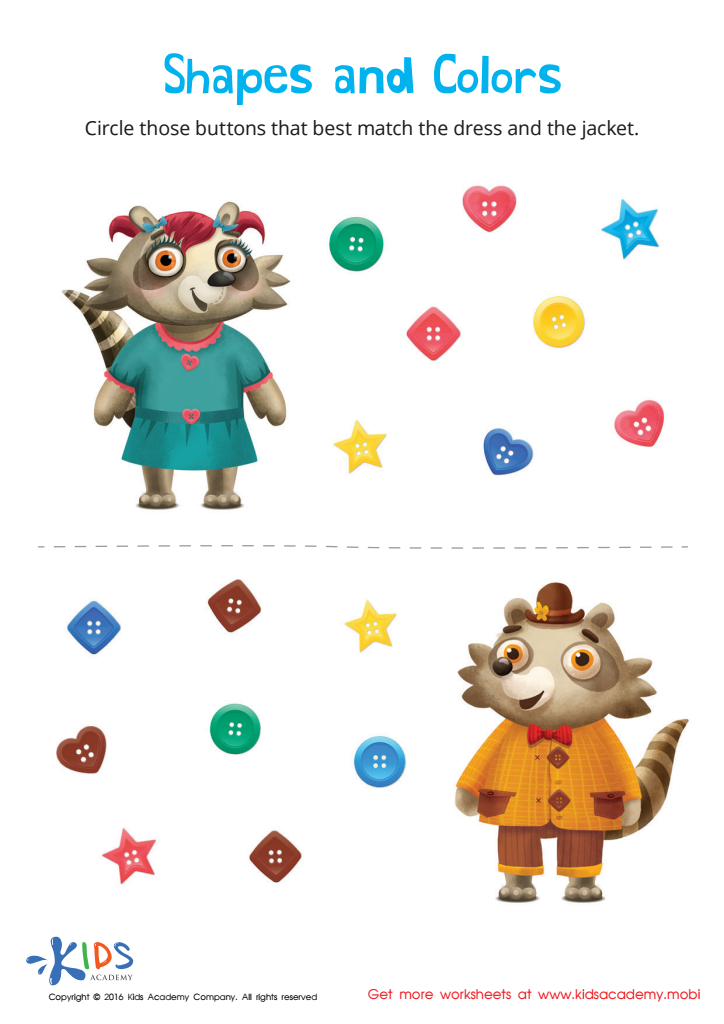
Matching: Shapes and Colors Worksheet
 Assign to My Students



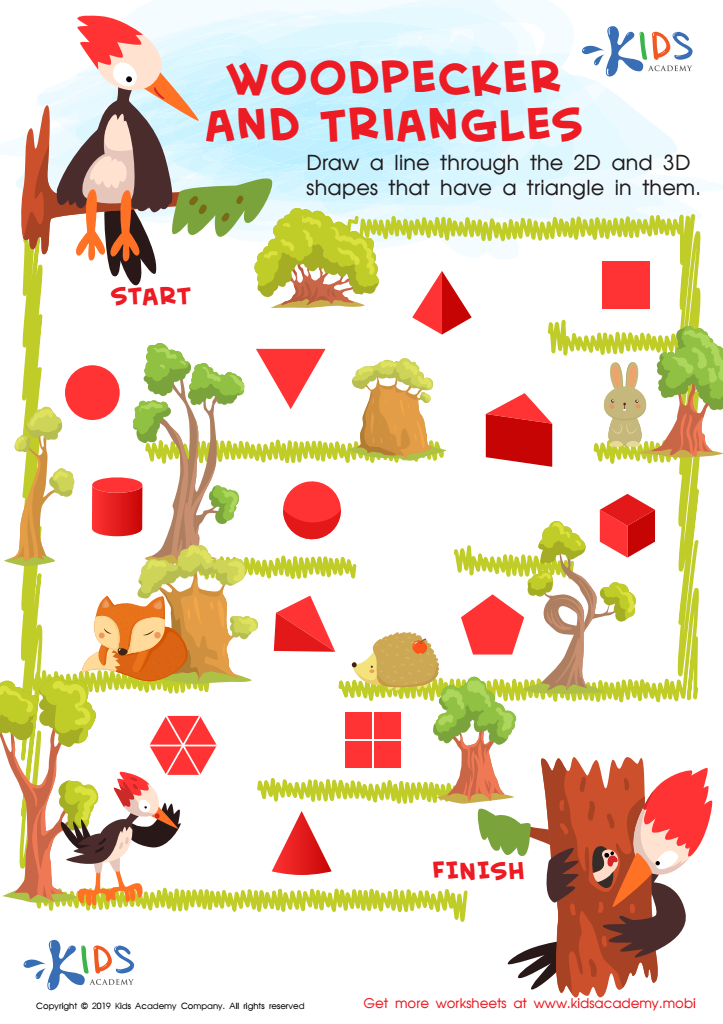
Woodpecker and Triangles Worksheet
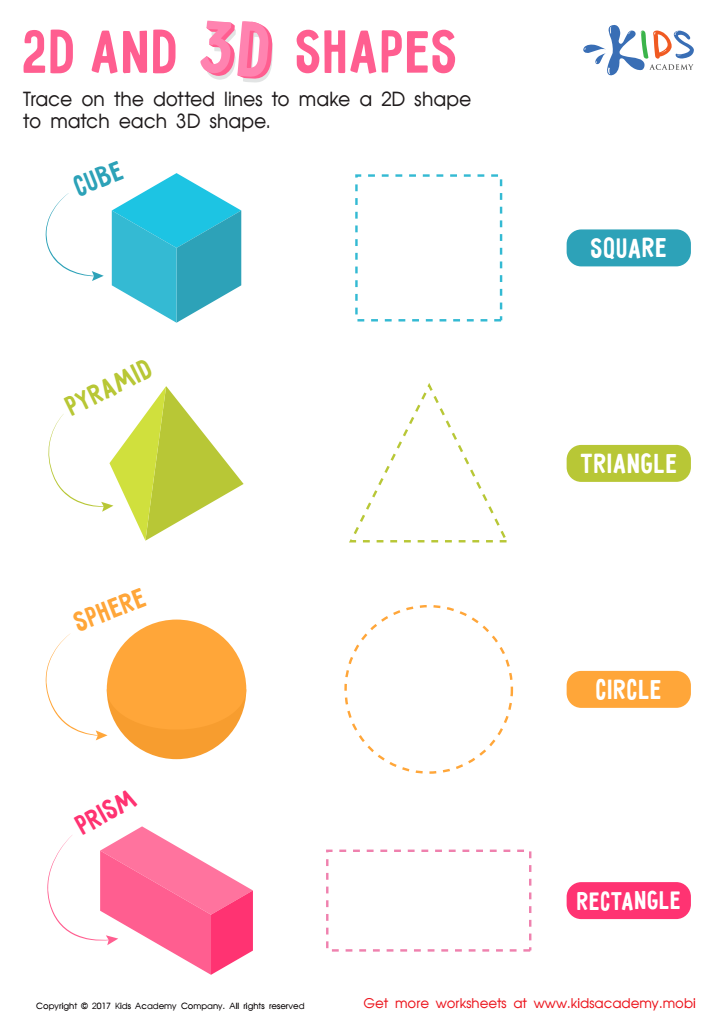
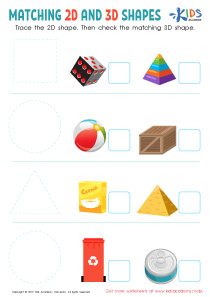
2D and 3D Shapes Worksheet
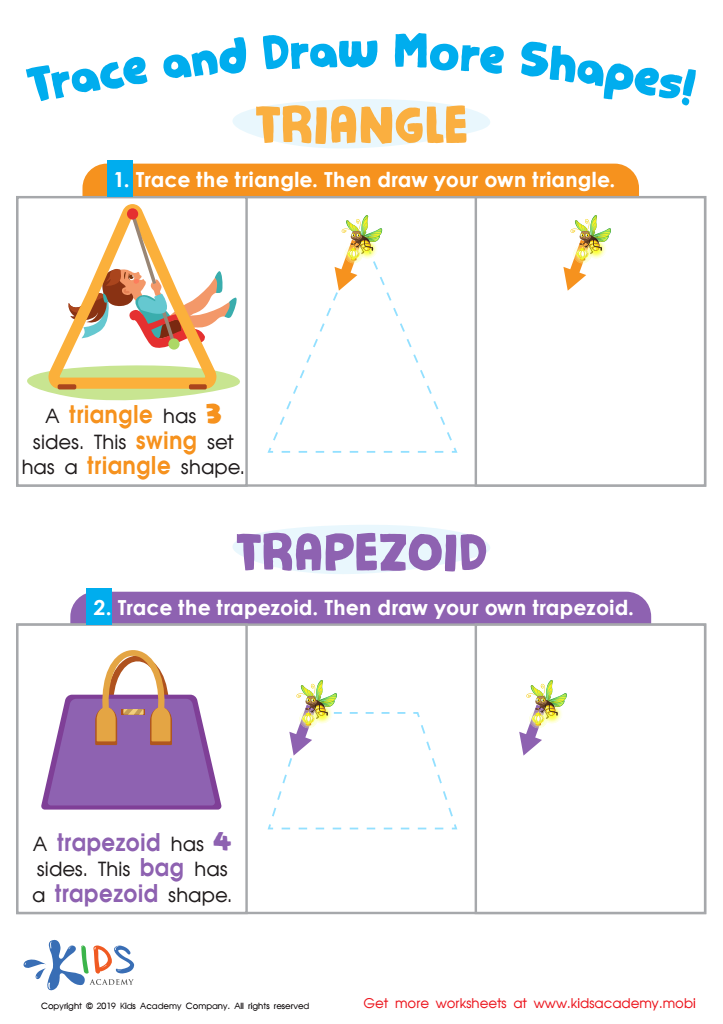
Trace and Draw More Shapes Worksheet
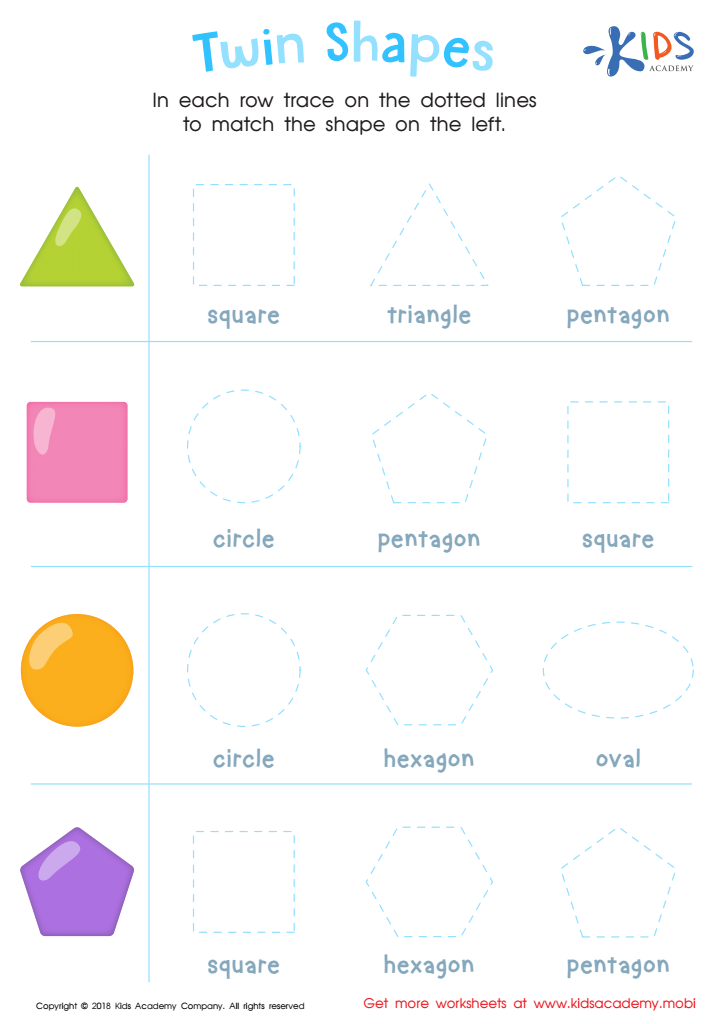
Twin Shapes Dot-to-Dot Worksheet
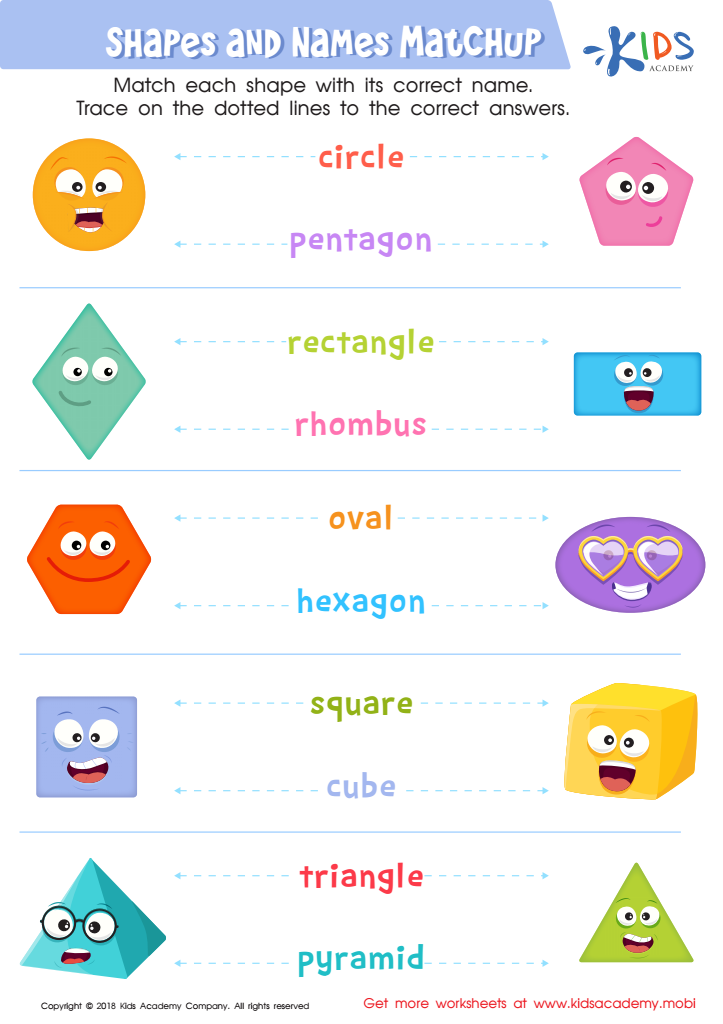
Shapes and Names Matchup Worksheet








Shape recognition is a fundamental skill in early childhood education that aids in cognitive development, and the Shape Recognition Extra Challenge for 6-year-olds targets this crucial area. First and foremost, understanding 2D shapes fosters mathematical thinking—skills like categorization, spatial awareness, and geometric problem-solving are foundational building blocks for more advanced mathematics. Secondly, shape recognition enhances visual discrimination. A six-year-old who can identify shapes helps to develop the observational skills critical to reading and writing by distinguishing between different letter forms.
Moreover, engaging with shapes through extra challenges provides an opportunity for experiential learning. This encourages hands-on interaction and playful exploration, making learning vivid and enjoyable. Such challenges also promote fine motor skills as children draw or manipulate shapes, essential for everyday tasks like writing and cutting.
The process of engaging with shapes boosts language and communicative skills too. As children learn the names and properties of various 2D shapes, their vocabulary expands. Teachers and parents who focus on shape recognition activities help kids better understand their environment. Real-world connections, such as recognizing traffic signs or play blocks, become easier.
Therefore, emphasizing shape recognition and offering related challenges can significantly impact a child's academic and personal growth, making it an indispensable part of early education.