Basic geometry understanding Extra Challenge Geometry Worksheets for 6-Year-Olds
3 filtered results
-
From - To
Enhance your child's geometric skills with our Extra Challenge Geometry Worksheets tailored for 6-year-olds! These engaging worksheets provide a fun and interactive way for young learners to develop a fundamental understanding of shapes, angles, and spatial relationships. Designed to challenge budding mathematicians, our materials promote critical thinking and problem-solving skills. Ideal for classroom or home use, each worksheet encourages creativity while reinforcing essential geometry concepts. Watch your child gain confidence as they tackle these enjoyable exercises. Explore our variety of extra challenge worksheets today and help your 6-year-old build a solid foundation in geometry!
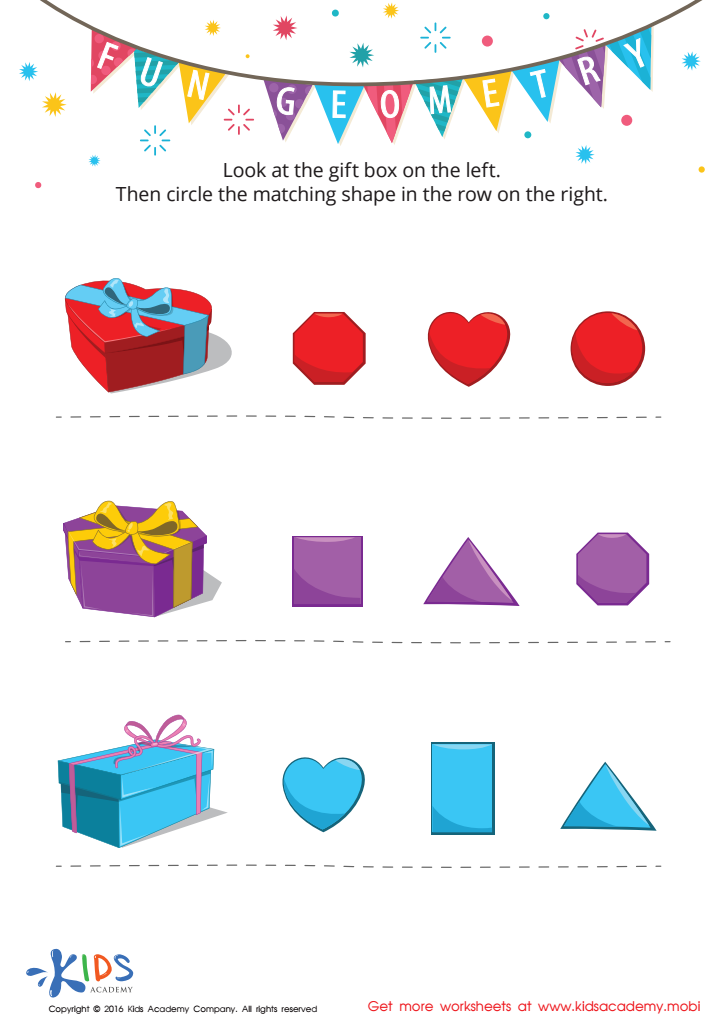
Fun Geometry Worksheet
 Assign to My Students











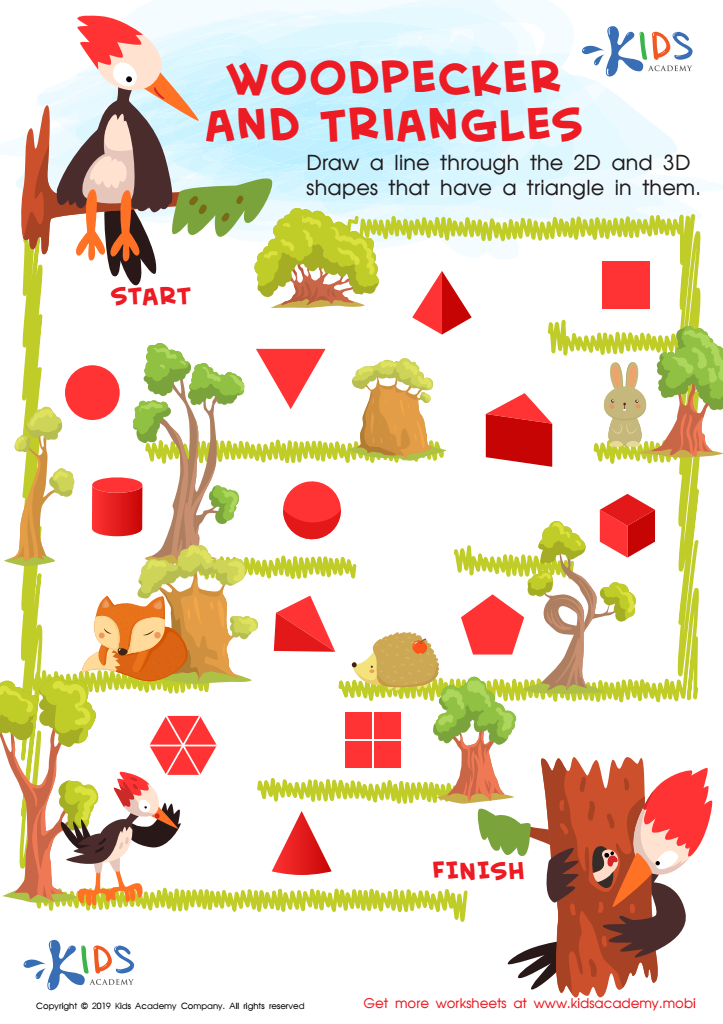
Woodpecker and Triangles Worksheet
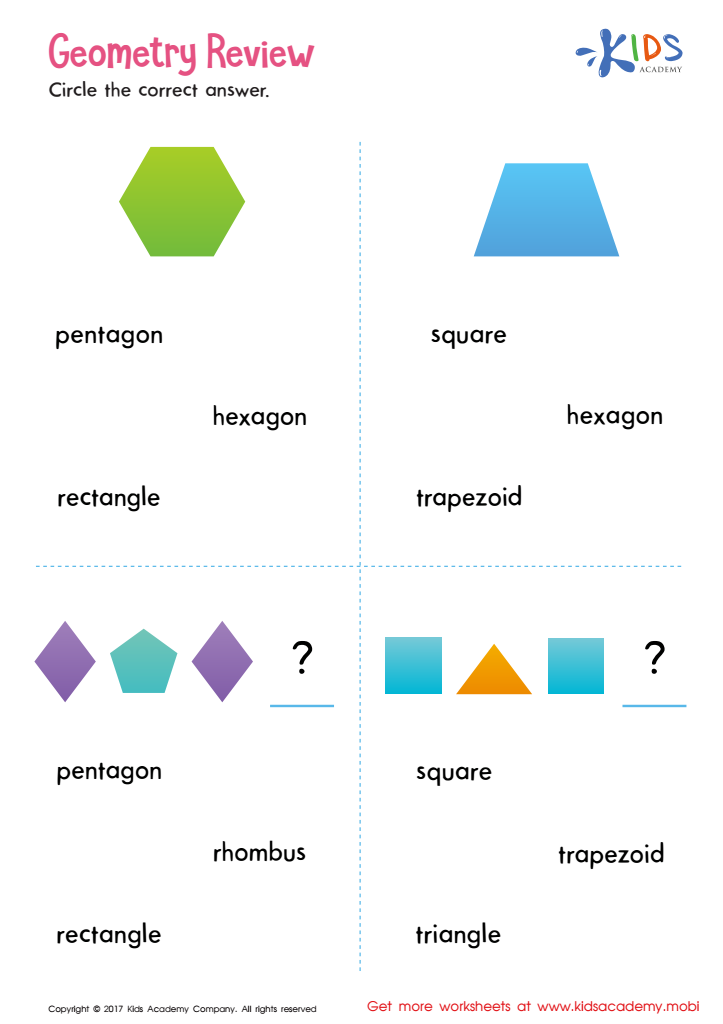
Geometry Review Printable








Basic geometry understanding is crucial for 6-year-olds as it lays the foundation for critical thinking and problem-solving skills. At this age, children are naturally curious and eager to explore shapes and spatial relationships. By introducing them to basic geometrical concepts, parents and teachers help foster an early interest in mathematics that can enrich their overall learning experience.
Engaging with geometry allows children to develop their observational skills and enhances their ability to classify and sort objects based on shapes, sizes, and attributes. Such skills are essential for subsequent academic success, as they are intertwined with concepts in mathematics, science, and even art.
Moreover, understanding geometry at a young age boosts cognitive development and expands children’s vocabulary. It aids in their ability to follow directions, understand maps, and visualize problems. These competencies will be beneficial as they progress through their educational journey, making math less intimidating and more enjoyable.
By incorporating extra challenge geometry activities, parents and teachers can stimulate children's minds, encouraging them to think creatively and critically. This heightened engagement not only reinforces their foundational knowledge but also promotes a lifelong love for learning and exploration in various fields.








