Fine Motor Skills Extra Challenge Geometry Worksheets for 6-Year-Olds
4 filtered results
-
From - To
Enhance your child's fine motor skills and geometric understanding with our Fine Motor Skills Extra Challenge Geometry Worksheets designed specifically for 6-year-olds. These engaging worksheets combine fun activities with educational challenges to help young learners develop precise hand control, improve pencil grip, and boost spatial awareness. By tackling intricate patterns and shapes, children not only refine their fine motor abilities but also gain a solid foundation in early geometry concepts. Ideal for parents and teachers, these printable resources make learning enjoyable and effective, ensuring your child stays ahead in their developmental journey. Discover the perfect blend of creativity and skill-building today!
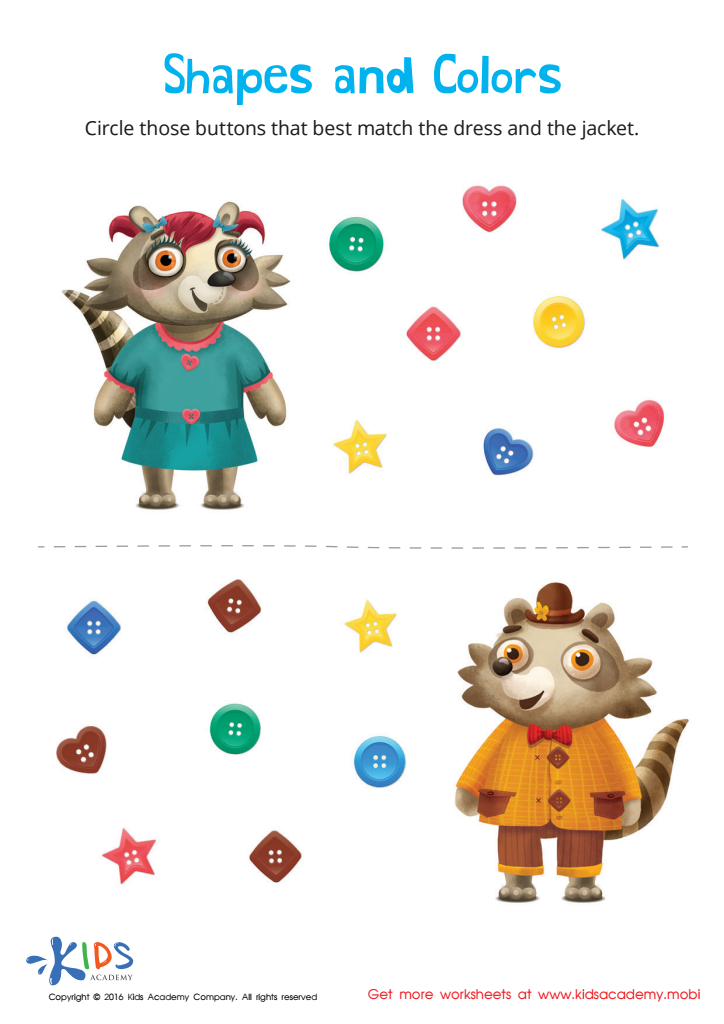
Matching: Shapes and Colors Worksheet
 Assign to My Students











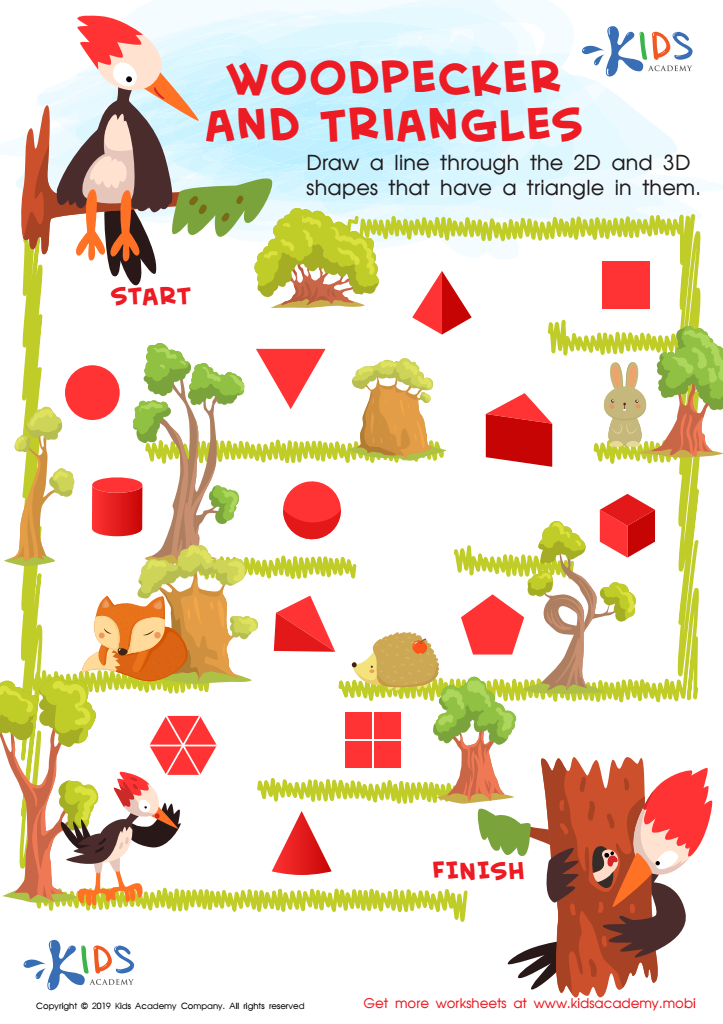
Woodpecker and Triangles Worksheet
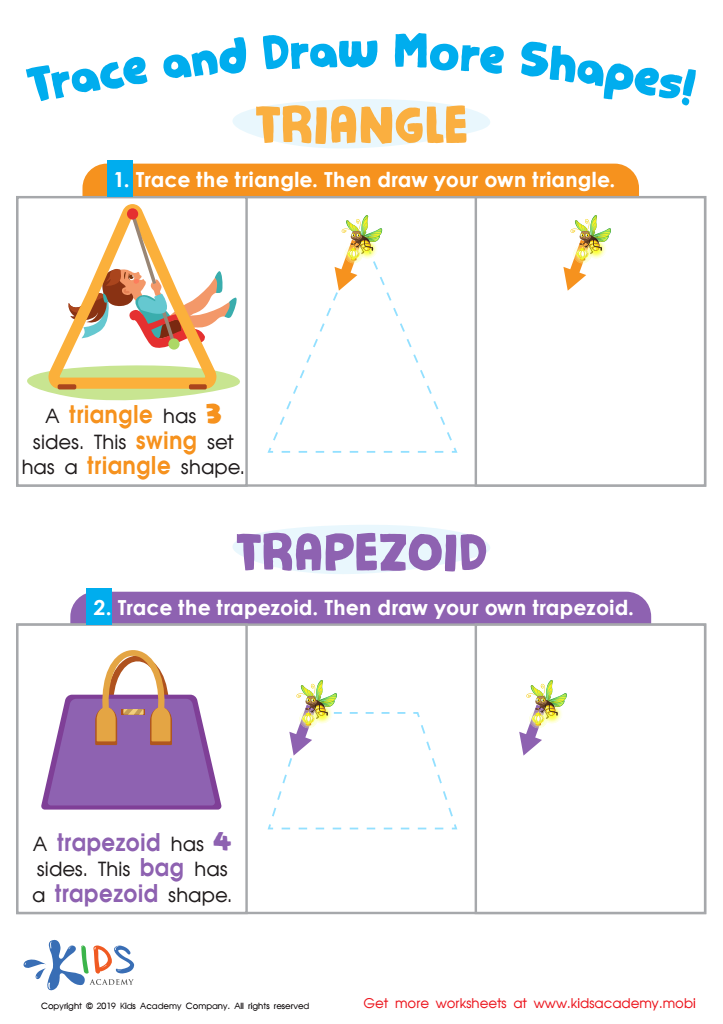
Trace and Draw More Shapes Worksheet
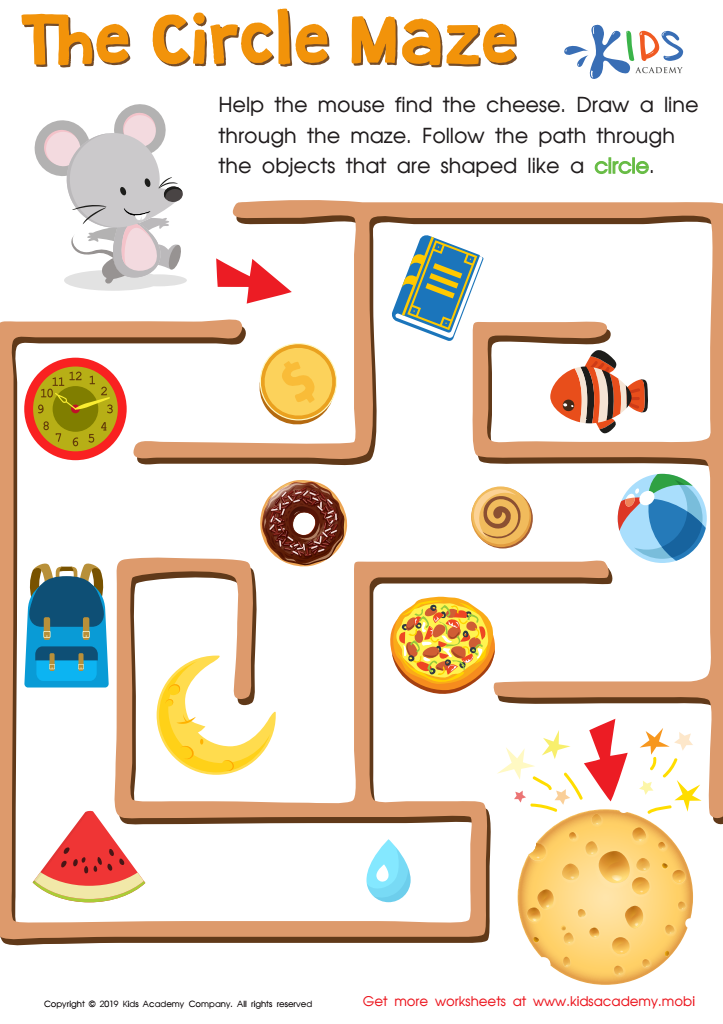
The Circle Maze Worksheet








Parents and teachers should care about fine motor skills and extra challenge geometry activities for 6-year-olds because these are crucial developmental stages that support both cognitive and physical growth. Fine motor skills involve the coordination of small muscles, particularly in the hands and fingers, which are essential for everyday tasks like writing, buttoning clothes, and tying shoelaces. When 6-year-olds engage in activities that challenge their fine motor skills through precise, controlled movements, they enhance their dexterity, hand-eye coordination, and hand strength, all of which are foundational for later academic success and independence.
Additionally, incorporating geometry—understanding shapes, spatial relationships, and problem-solving structures—into these activities adds an extra layer of cognitive development. It enhances their ability to understand and interpret the physical world. Children's brains are highly plastic at this age, making it the perfect time to introduce complex cognitive tasks that foster critical thinking, creativity, and spatial reasoning.
Engaging young minds in fine motor skills and geometric challenges simultaneously can lead to improved performance in subjects like mathematics and writing in later years. Therefore, activities that bridge these two areas are invaluable in fostering well-rounded, capable, and confident young learners, setting them on a path of successful academic and life skills development.