Number comprehension Extra Challenge Math Worksheets for 6-Year-Olds
5 filtered results
-
From - To
Enhance your 6-year-old's math skills with our "Number Comprehension Extra Challenge Math Worksheets." Designed to blend fun and learning, these worksheets delve deeper into number comprehension, offering an exciting challenge for young learners. Perfect for building a robust numerical foundation, each activity supports the development of critical thinking, problem-solving, and analytical skills. Engaging illustrations and creative tasks keep children motivated, making math an enjoyable adventure. Ideal for reinforcing classroom lessons or homeschooling enrichment, these worksheets ensure your child stays ahead in their understanding of numbers through a hands-on and motivating approach. Explore and give your child a head start with our dynamic math challenges!
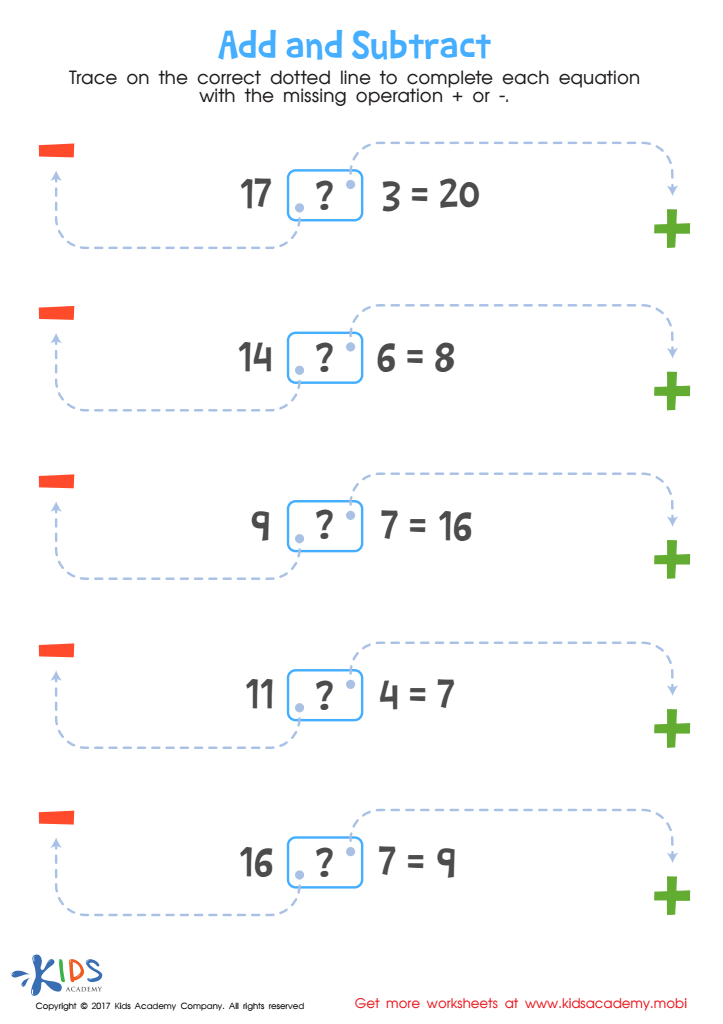
Add and Subtract Worksheet
 Assign to My Students
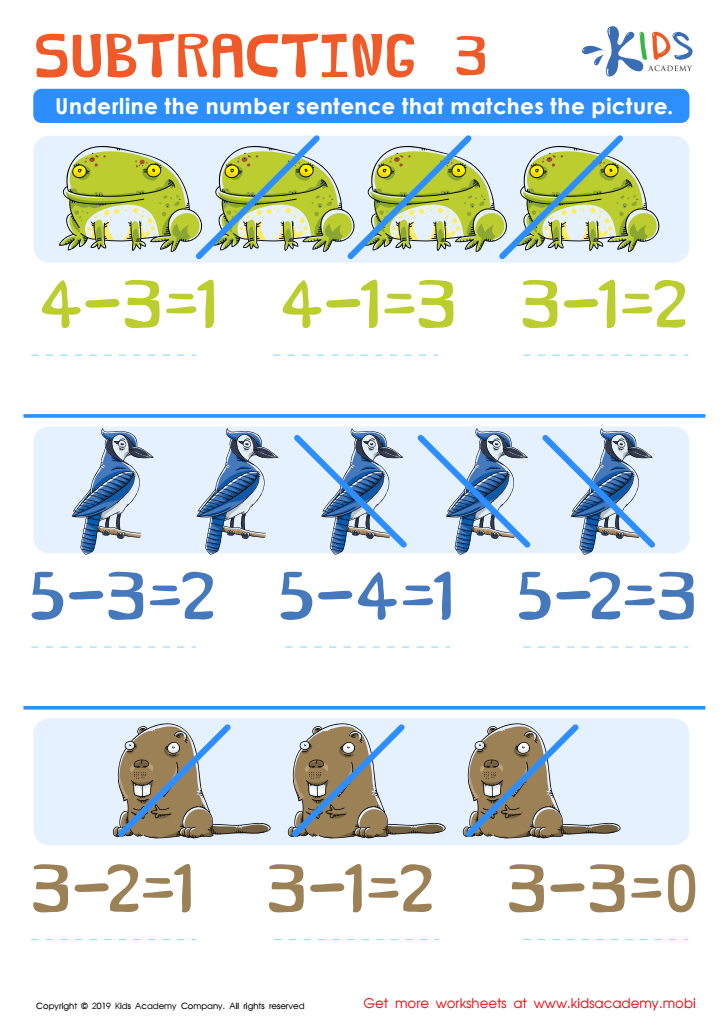
Subtracting 3 Worksheet
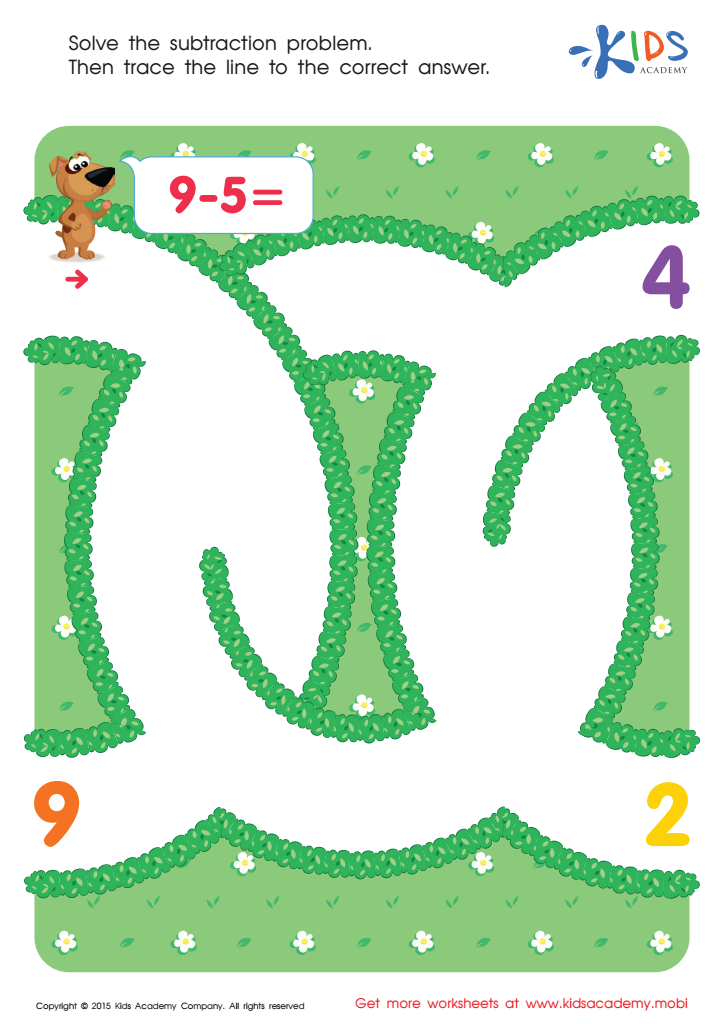
Subtraction Nine And Five Worksheet
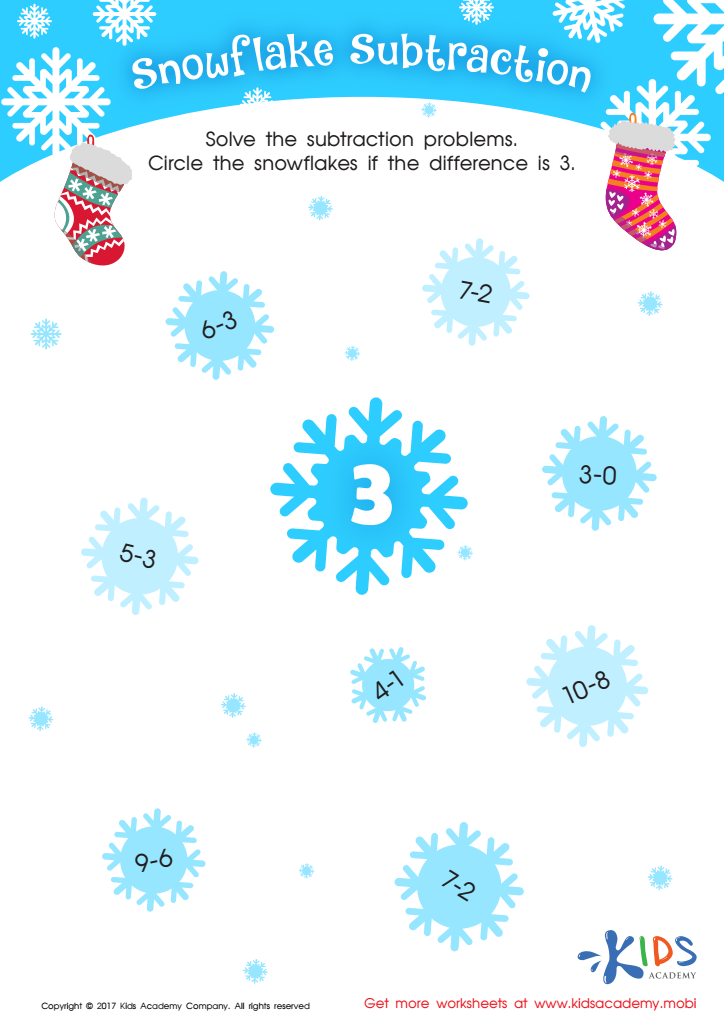
Snowflake Subtraction Worksheet
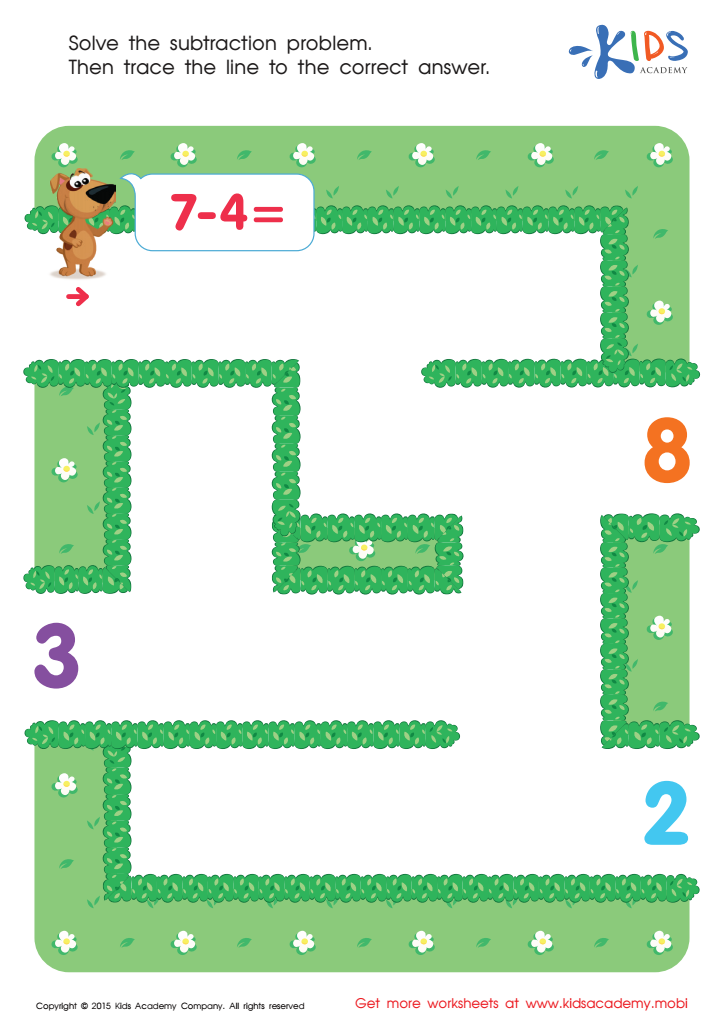
Subtraction Seven Minus Four Worksheet






Parents and teachers should care about the number comprehension Extra Challenge Math for 6-year-olds because this foundational stage sets the tone for their future success in mathematics and related critical thinking skills. At the age of six, children are at a crucial developmental phase where their brains are highly receptive to learning. By introducing challenging math concepts early, parents and teachers help children build strong numerical foundations that are essential for more complex problem-solving tasks later on.
Extra Challenge Math activities stimulate not just number comprehension but also cognitive abilities like memory, concentration, and logical reasoning. These exercises can boost children’s confidence in math, promoting a growth mindset where challenges are viewed as opportunities to learn. Early mastery of numbers supports other academic subjects, including science and technology, which are increasingly important in today's world.
Moreover, engaging in Extra Challenge Math nurtures a love for learning and curiosity, encouraging a child’s natural intuition and creativity. Offering these challenges within a supportive environment, whether at home or in school, helps personalize education, catering to each child’s pace and interests. Consequently, parents and teachers play a pivotal role in fostering a lifelong appreciation for math, ultimately leading to academic and professional success in an increasingly data-driven society.








