Number identification Extra Challenge Math Worksheets for 6-Year-Olds
3 filtered results
-
From - To
Introducing our "Number Identification Extra Challenge Math Worksheets for 6-Year-Olds" – designed to elevate your child's number recognition and counting skills. These engaging worksheets make learning fun with colorful activities that push kids to recognize, write, and sequence numbers confidently. Perfect for early learners, they combine basic math facts with challenging tasks to enhance problem-solving and analytical abilities. Our expertly crafted materials ensure that kids stay motivated while mastering number identification. Ideal for classroom or at-home practice, these worksheets are a fantastic resource for teachers and parents looking to give young learners an extra edge in math proficiency.
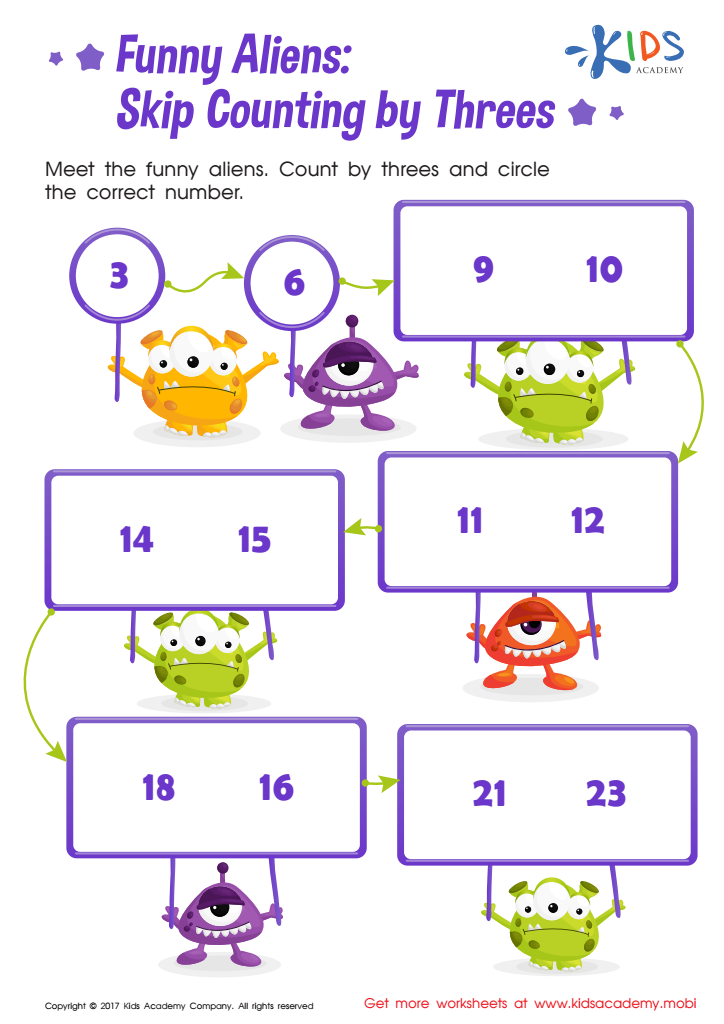
Skip Counting by 3s: Funny Aliens Printable
 Assign to My Students
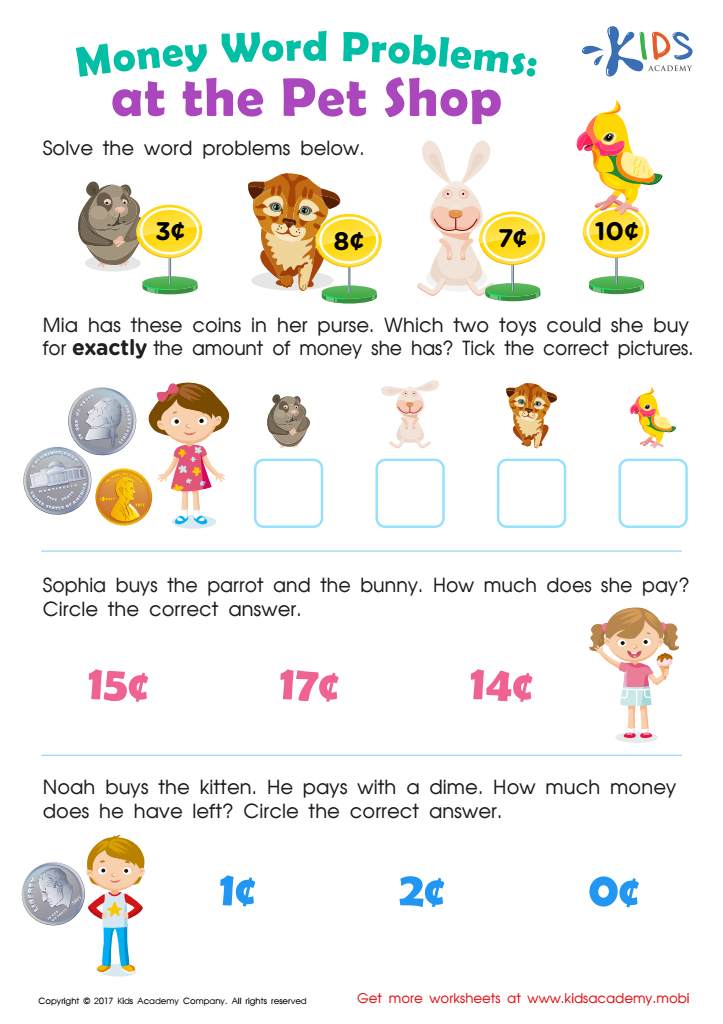
Pet Shop Worksheet
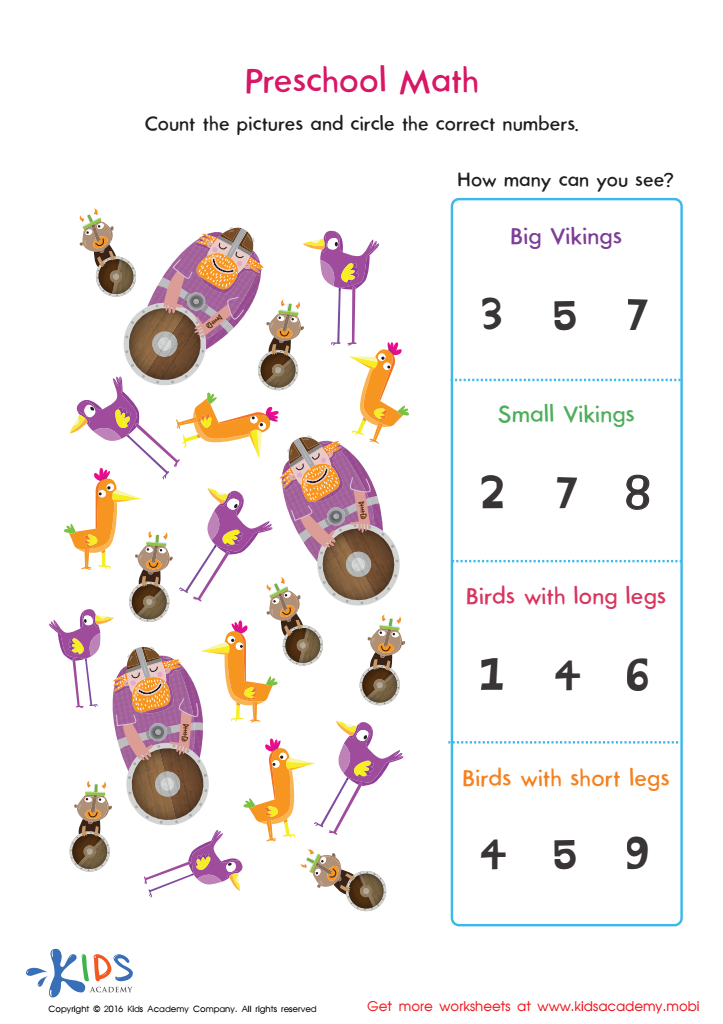








Fostering number identification skills in 6-year-olds is essential for building a strong mathematical foundation. At this age, children are transitioning from simple number recognition to understanding more complex numerical concepts. Extra challenges in math not only reinforce their comprehension of basic numbers but also enhance cognitive development, critical thinking, and problem-solving skills.
Parents and teachers should care about this because early proficiency in number identification paves the way for future academic success. By encouraging extra challenges, adults help children develop persistence, patience, and confidence in tackling difficult tasks. This 'can-do' attitude becomes beneficial not just in math but in all areas of learning and everyday life.
Moreover, early exposure to complex numerical concepts fosters a love for learning and can spark a lifelong interest in mathematics. Children who are given additional challenges are more likely to stay engaged and find joy in discovering new things. This engagement improves their academic performance and enhances their ability to apply mathematical reasoning in real-life situations.
Finally, foundational skills in number identification are critical for understanding more advanced concepts like addition, subtraction, and problem solving. By prioritizing these skills, parents and teachers equip children with the tools they need to succeed, ensuring they are prepared for the more complicated mathematical tasks ahead.