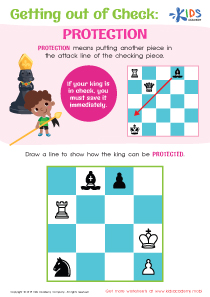
Strategic thinking development Extra Challenge Chess Worksheets for Ages 7-8
3 filtered results
-
From - To
Enhance your child's strategic thinking with our challenging chess worksheets designed specifically for ages 7-8. These engaging activities go beyond the basics, stimulating young minds to anticipate moves, evaluate outcomes, and make informed decisions on the chessboard. Each worksheet is expertly crafted to develop critical thinking, problem-solving, and planning skills in a fun and interactive way. Perfect for young learners making their first strategic strides, our Extra Challenge Chess Worksheets provide a rewarding mental workout that keeps kids motivated and excited about mastering chess. Give your child the advantage of sharpened strategic abilities with every completed puzzle.
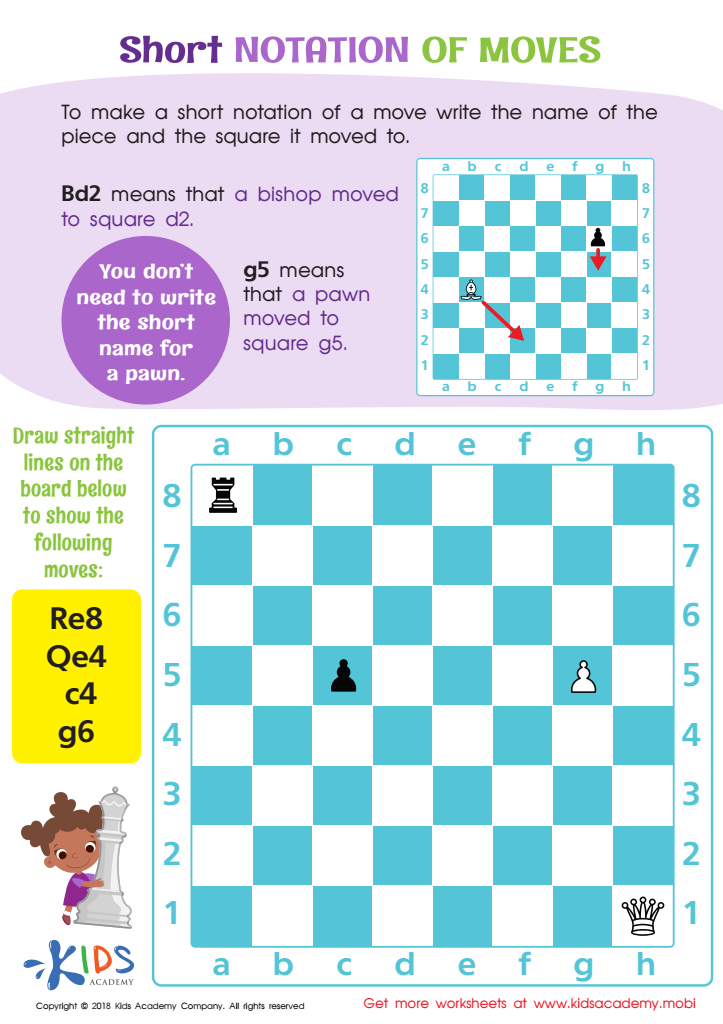
Short Notation of Moves Worksheet
 Assign to My Students
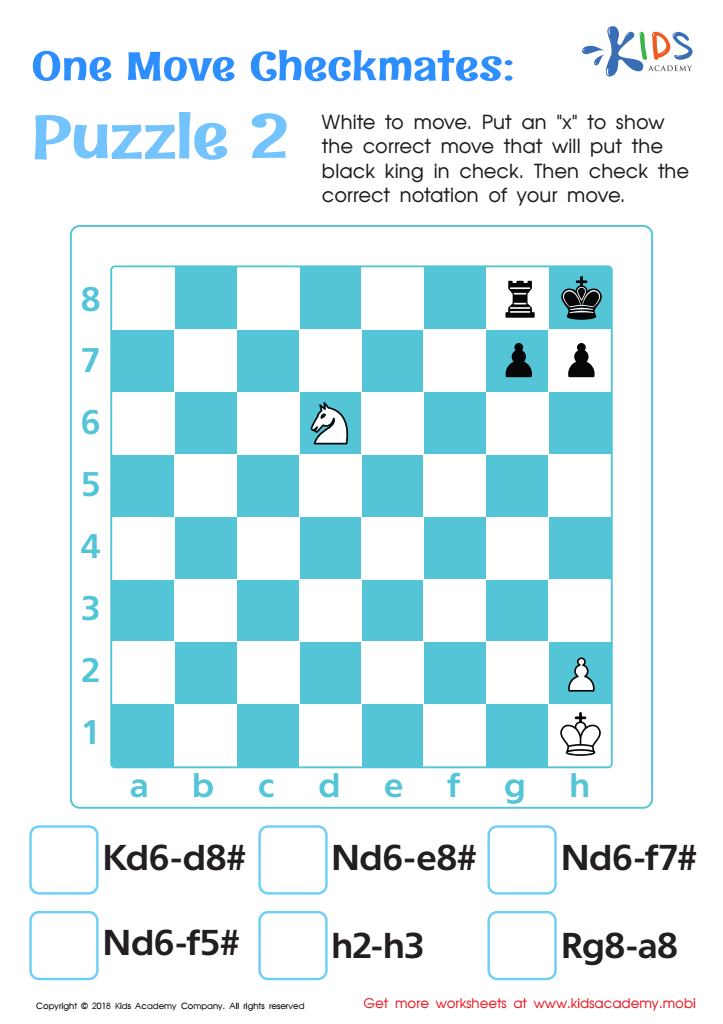
One Move Checkmates: Puzzle 2 Worksheet
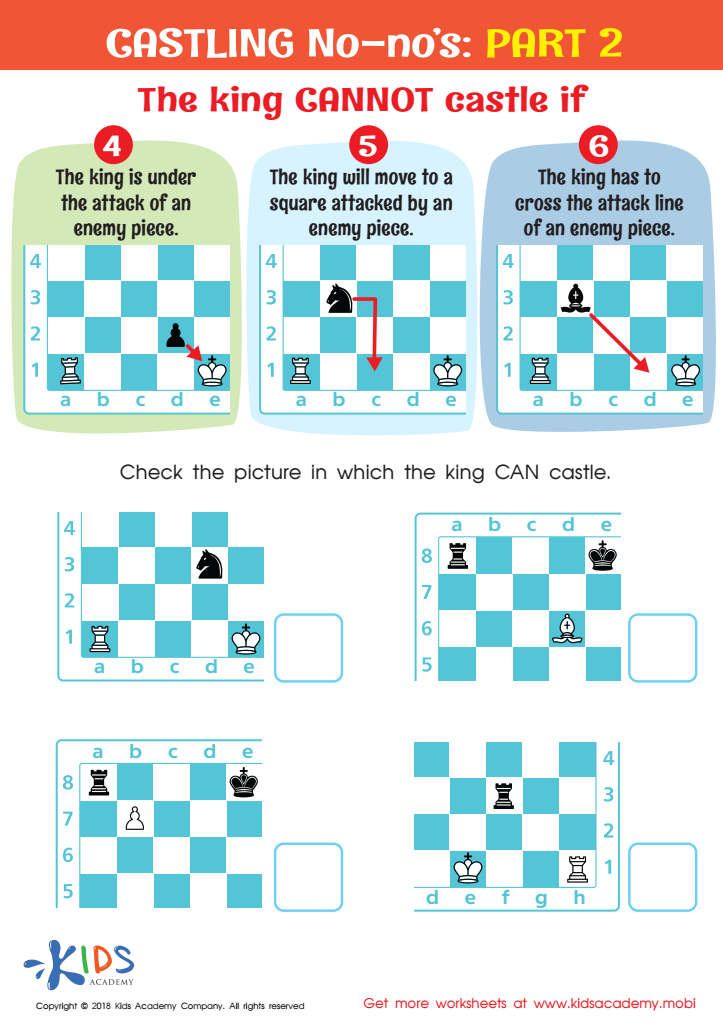
Castling No - no's: Part 2 Worksheet




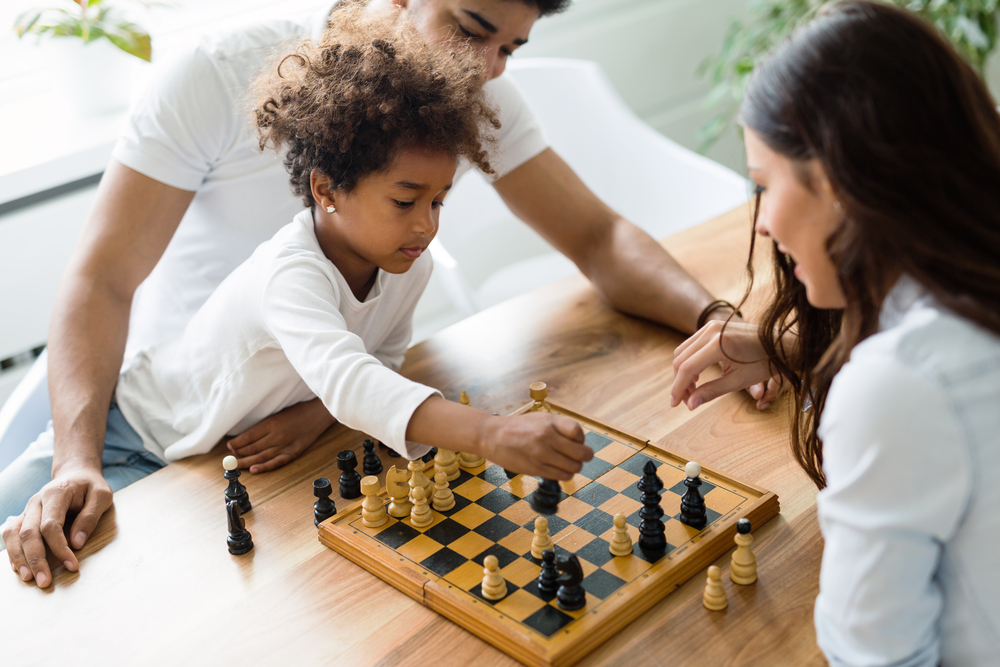
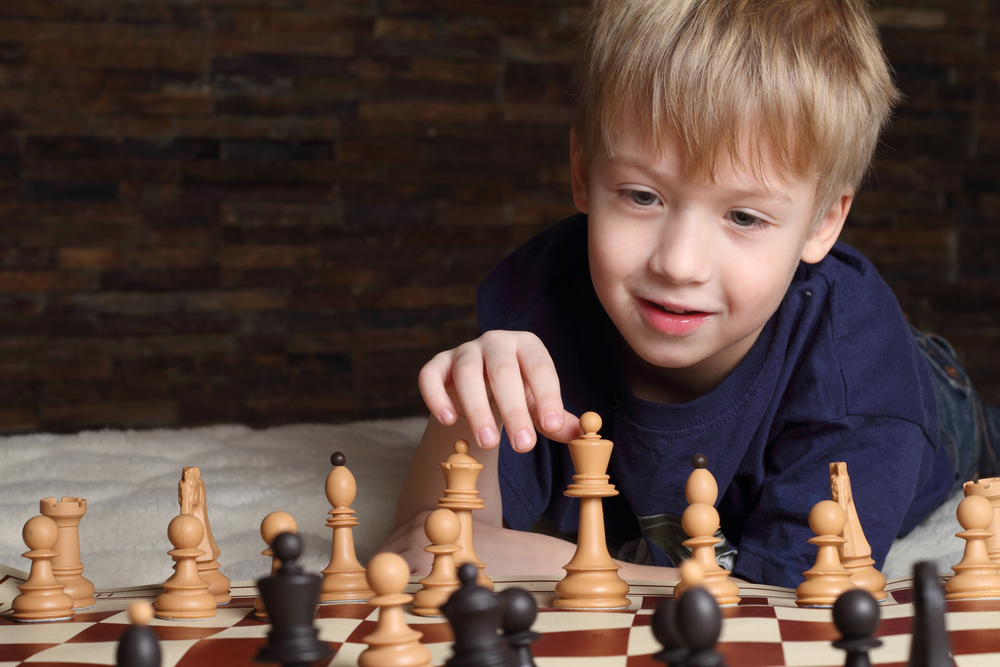
Strategic thinking development is integral for young children, and using tools like Extra Challenge Chess for ages 7-8 can profoundly aid this development. Chess is more than just a game; it’s a multifaceted educational tool that sharpens cognitive abilities crucial for academic and personal growth. For children aged 7-8, who are in the early stages of formulating thought processes, intermediate-level chess challenges require both complex planning and immediate problem-solving. Through chess, children learn to foresee potential moves, consider various outcomes, and adjust strategies accordingly, enhancing their critical and strategic thinking skills.
Moreover, Extra Challenge Chess keeps children engaged, combining learning with fun. As children grapple with progressively tougher challenges, they cultivate patience and resilience, understanding that success often comes through perseverance. This versatile play-learning approach complements traditional educational methods, offering a holistic learning experience.
Lastly, playing chess promotes social interaction and fosters a competitive yet respectful spirit. It teaches children to win graciously and also to accept defeats, benefiting their emotional development. With strategic thinking honed early, children are better prepared for future academic challenges and real-world situations, laying a sturdy foundation for lifelong learning and problem-solving prowess. Therefore, integrating Extra Challenge Chess into a child’s routine is a valuable investment in their cognitive and emotional growth.