Story sequencing Extra Challenge Worksheets for Ages 7-8
3 filtered results
-
From - To
Enhance your child's reading comprehension and critical thinking with our Story Sequencing Extra Challenge Worksheets designed for ages 7-8. These engaging exercises encourage kids to arrange events in the correct order, developing their narrative skills and fostering a deeper understanding of story structure. Perfect for advancing young readers, our worksheets offer varying difficulty levels to keep learners challenged and motivated. By working through these fun and educational activities, children refine their analytical abilities and gain confidence in sequencing stories. Unlock your child's potential and make learning an adventure with our expertly crafted resources today!
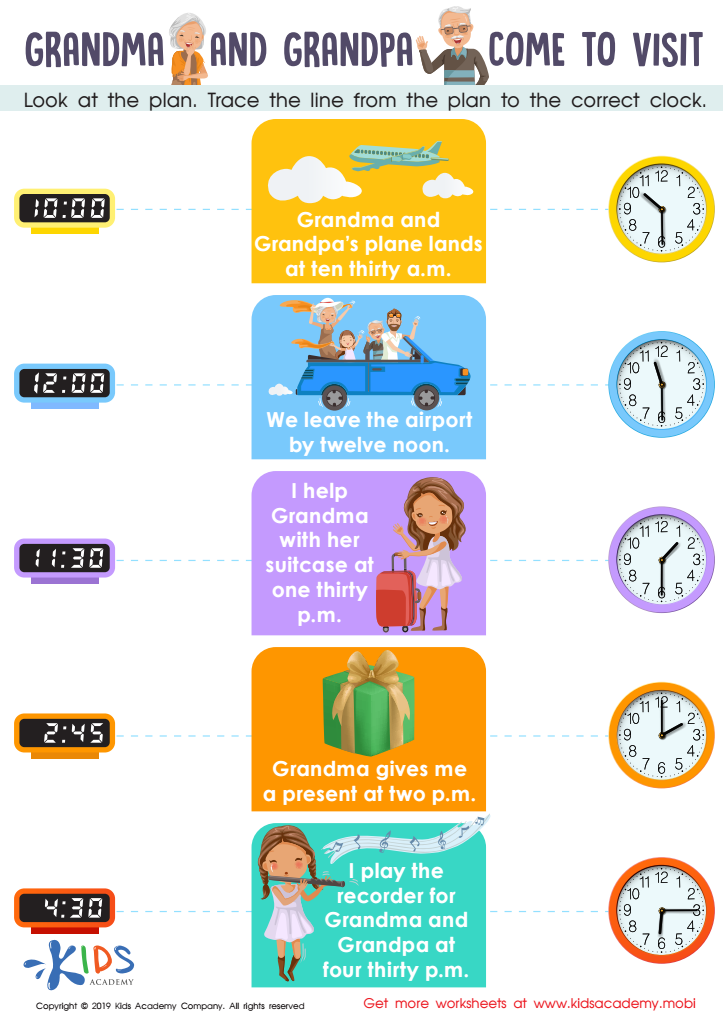
Grandpa and Grandma Come to Visit Worksheet
 Assign to My Students
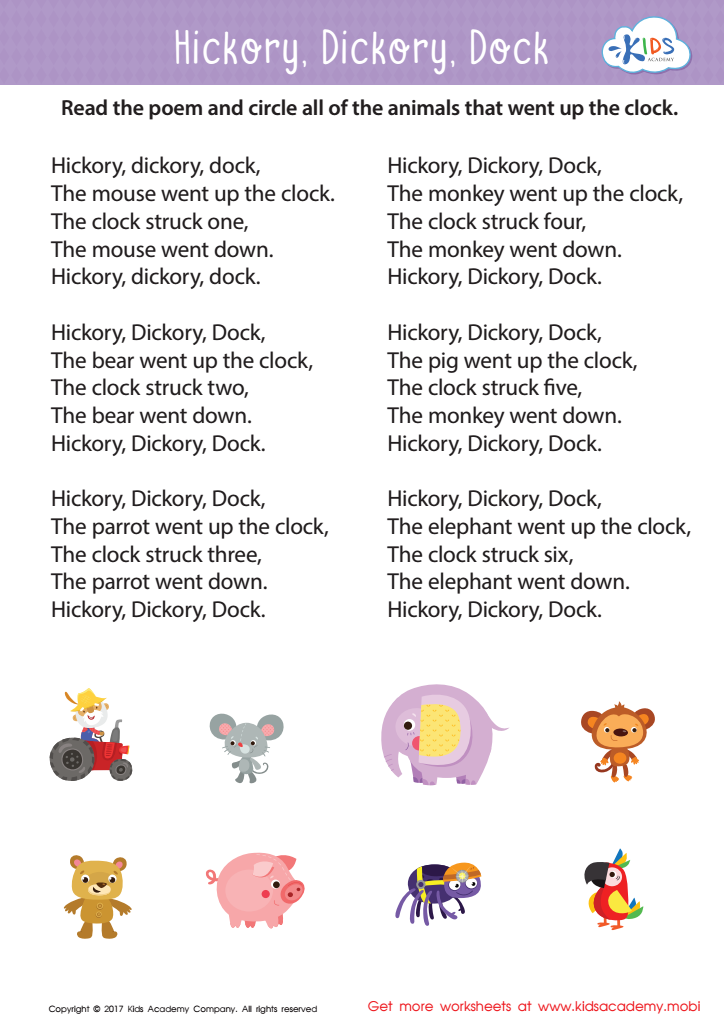
Hickory Dickory Dock Sequencing Worksheet
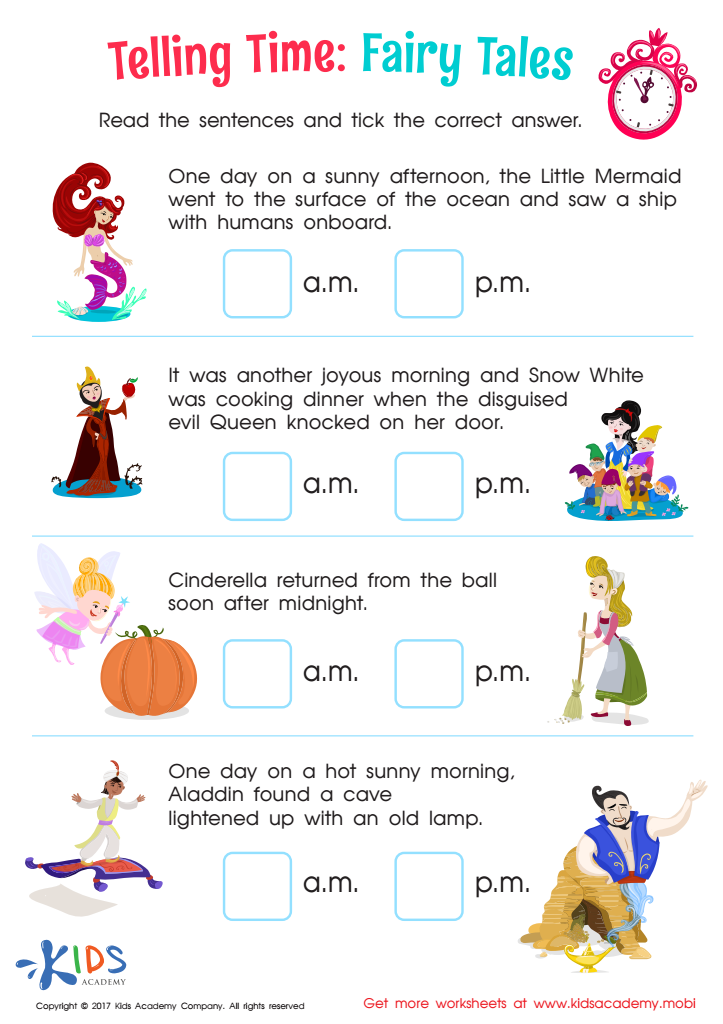
Telling Time: Fairy Tales Worksheet








Story sequencing is an essential activity for children aged 7-8 as it actively nurtures several vital skills during a pivotal stage of their development. By engaging in story sequencing, children learn to understand the structure of narratives, which is crucial for reading comprehension and writing. It teaches them how events follow a logical order and how different parts of a story connect to make sense together. This not only boosts their ability to remember stories but also enhances their ability to express ideas clearly.
Moreover, story sequencing activities foster critical thinking and problem-solving skills. Children must concentrate, infer, and deduce to arrange the story correctly. These exercises encourage attention to detail and enhance their ability to focus on tasks, which are transferable skills beneficial across all subjects.
Socially and emotionally, story sequencing helps children understand cause and effect and learn empathy. By analyzing characters’ actions and motives and seeing their consequences, they develop a better understanding of human behaviors and emotions. These insights can help them navigate their social relationships more effectively.
Overall, parents and teachers should value story sequencing because it supports language development, cognitive growth, and social skills, laying a strong foundation for future academic and personal success.








