
Understanding measurements Extra Challenge Worksheets for Ages 7-8
4 filtered results
Difficulty Level
Grade
Age
-
From - To
Subject
Activity
Standards
Enhance your child's understanding of measurements with our Extra Challenge Worksheets designed for ages 7-8. These engaging, printable worksheets go beyond basics, offering fun activities that help children grasp complex measurement concepts. Ideal for enhancing problem-solving skills, these challenges cover various units and tools for measuring length, weight, and volume. Through interactive exercises, kids can practice converting between units, comparing measurements, and solving real-world problems. Perfect for reinforcing school lessons or providing additional practice at home, our worksheets ensure young learners build a solid foundation in measurement concepts. Empower your child to master measurements with Kids Academy today!
Favorites
With answer key
Interactive
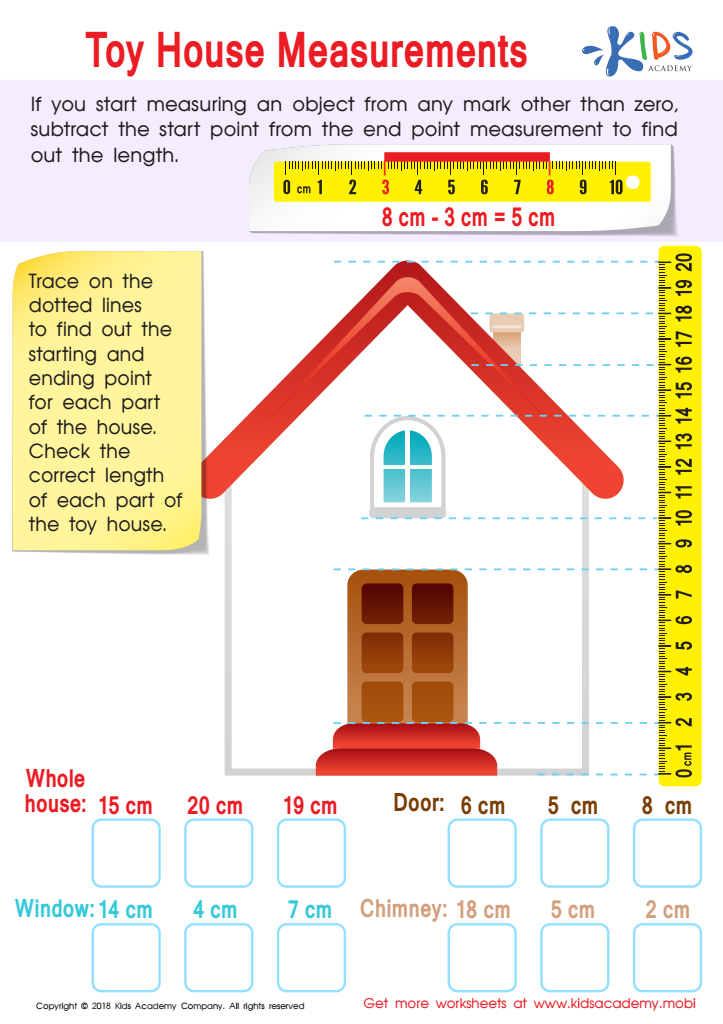
Toy House Measurements Worksheet
This worksheet requires math and measuring skills. When measuring an object from a non-zero starting point, subtract the start point from the end point to get the correct length. Kids must trace the dotted lines to get the right length for each part of the house.
 Assign to My Students
Toy House Measurements Worksheet
Worksheet
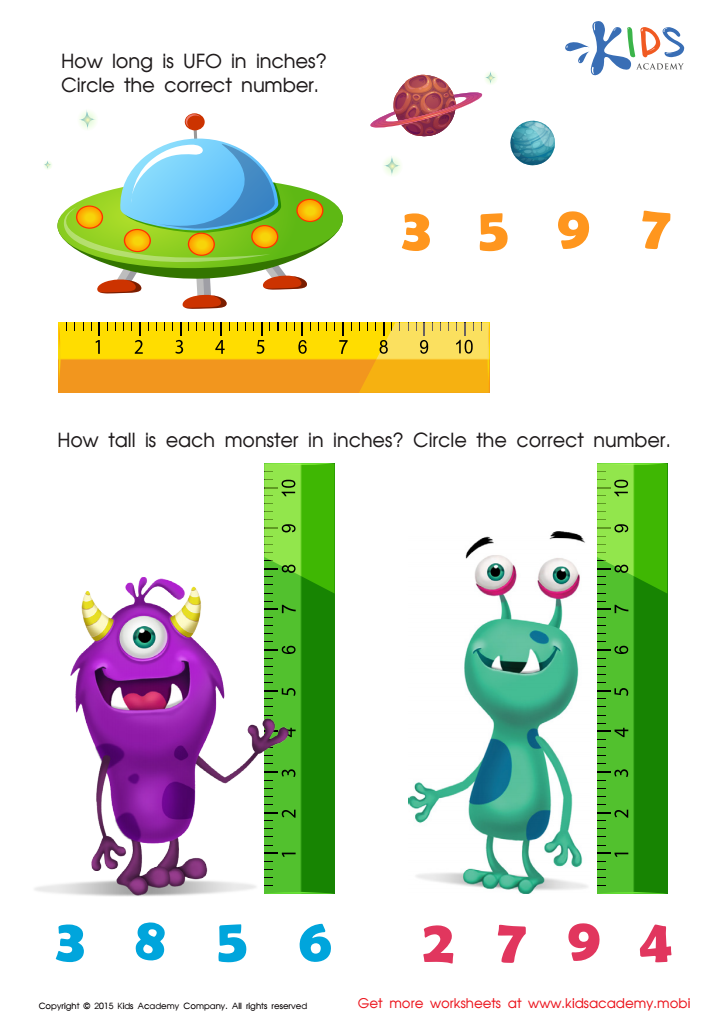
Measuring in Inches Worksheet
Look at the picture, can you measure the UFO & monsters? Write down how long each is. Which is tallest? Circle it. Get more free printable math worksheets for kindergarten at our website.
Measuring in Inches Worksheet
Worksheet
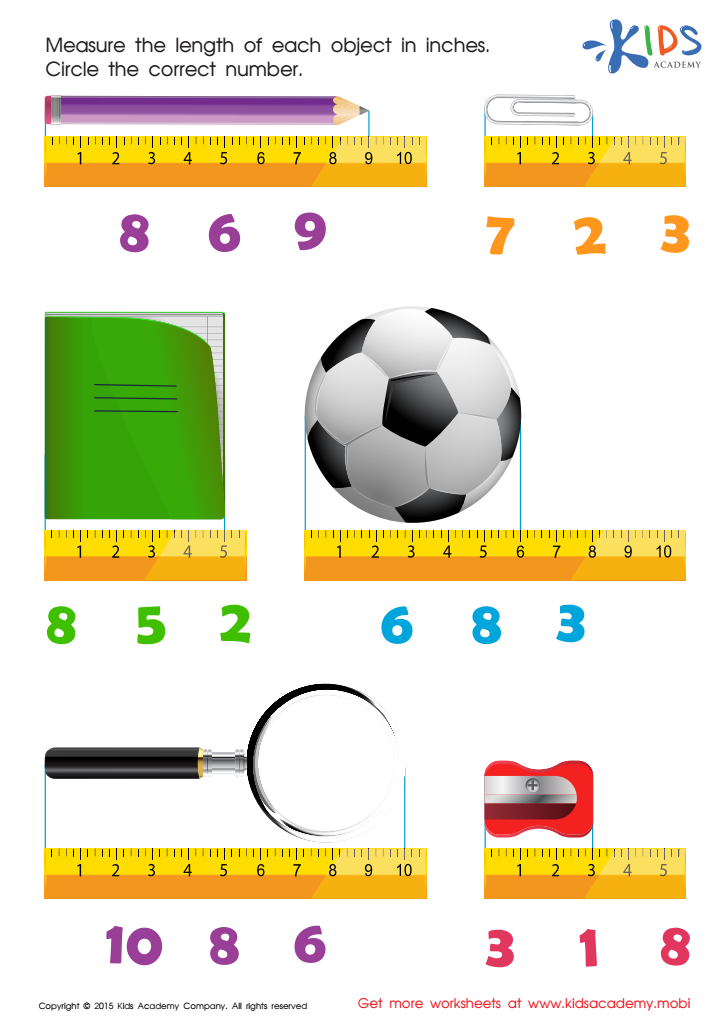
Learning measuring objects in inches Worksheet
Help your little learners gain confidence in using a ruler! Print out our free worksheet, cut out the inch ruler, and let them measure and record objects' width and length. Kids Academy has a variety of math worksheets to make learning math fun! Check out our website for more free printables!
Learning measuring objects in inches Worksheet
Worksheet
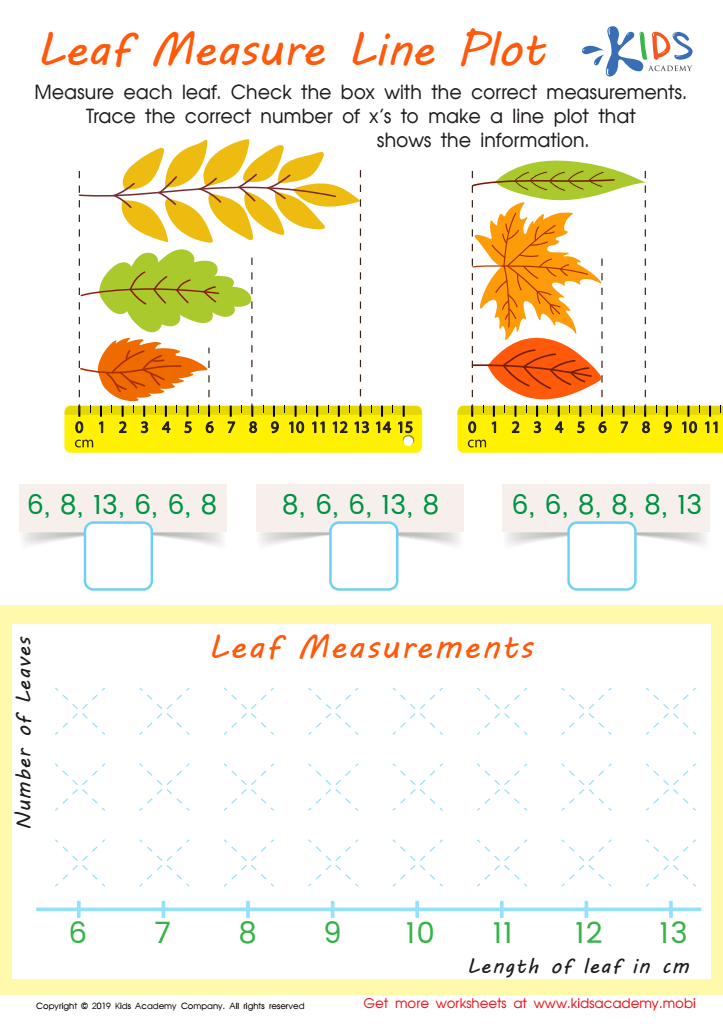
Leaf Measure Line Plot Worksheet
Help your third grader measure each of the four leaves, and check the box with the correct measurements. Then, trace the right number of x's to make a line plot showing the data. This exercise will engage your students and make it easier for them to grasp the concept of line plots.
Leaf Measure Line Plot Worksheet
Worksheet
Join Kids Academy for Free
Who is primarily going to use this learning content?






Understanding measurements at an early age sets a critical foundation for children's cognitive and practical development. For 7- to 8-year-olds, learning basic measurements—such as length, weight, volume, and time—helps to build essential math skills that are vital in everyday life and future schooling.
Firstly, measurements are everywhere in daily activities. Whether cooking, shopping, or planning an event, knowing how to measure accurately is fundamental. For instance, understanding measurements can assist children in dividing portions correctly or estimating the time needed for a task, thus fostering independence and critical thinking.
Secondly, mastering measurements enhances mathematical reasoning. Units of measurement introduce young minds to precision and comparisons, helping them develop problem-solving skills. Converting and comparing different units require analytical thinking, which is crucial in advanced math subjects they will encounter later.
Moreover, engaging in measurement activities boosts confidence in exploring scientific concepts and the natural world. Tasks involving measurements often involve hands-on experiments that captivate children's curiosity, making learning both fun and educational.
Parents and teachers should thus prioritize learning measurements to equip kids with practical skills and promote lifelong learning. By making measurements an integral part of the curriculum and daily interactions, they help children build a solid foundation for their educational journey and future competence in various domains.








