Fine Motor Skills Extra Challenge Science Worksheets for Ages 7-8
3 filtered results
-
From - To
Enhance your child's fine motor skills with our innovative "Fine Motor Skills Extra Challenge Science Worksheets for Ages 7-8". These expertly designed activities combine engaging scientific concepts with dynamic, hands-on challenges, aimed at boosting your child's dexterity and hand-eye coordination. Each worksheet invites young learners to explore topics like biology, physics, and earth science through cutting, tracing, and drawing tasks that refine their motor precision. Ideal for classroom supplement or home practice, these worksheets are the perfect blend of education and fun, ensuring your child develops critical foundational skills while enjoying the exciting world of science.
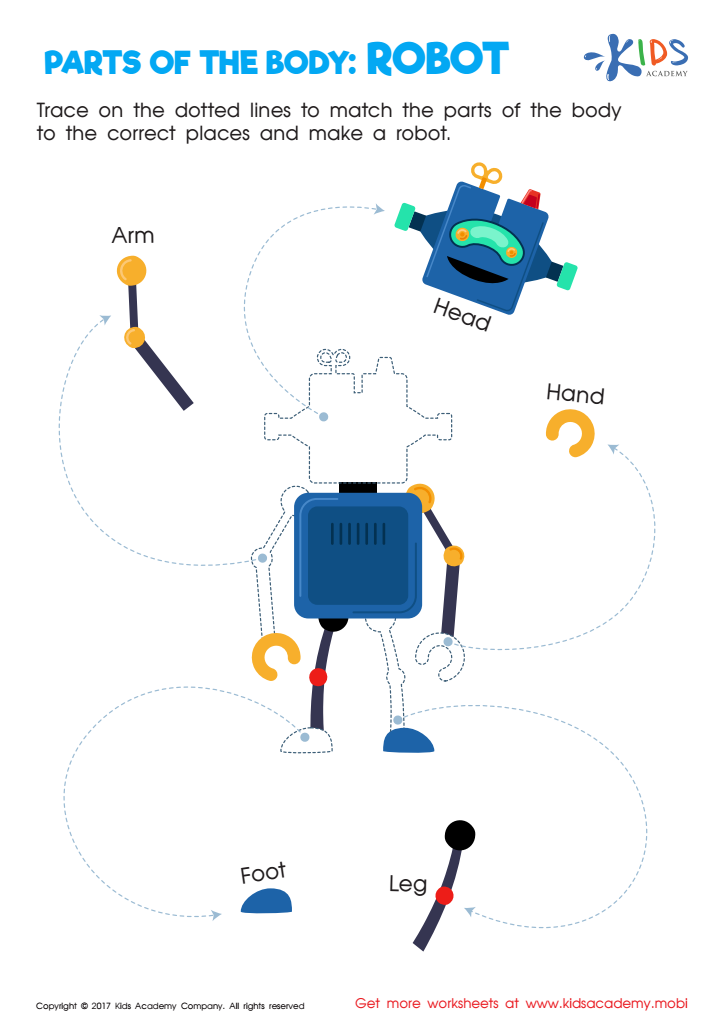
Robot Printable
 Assign to My Students
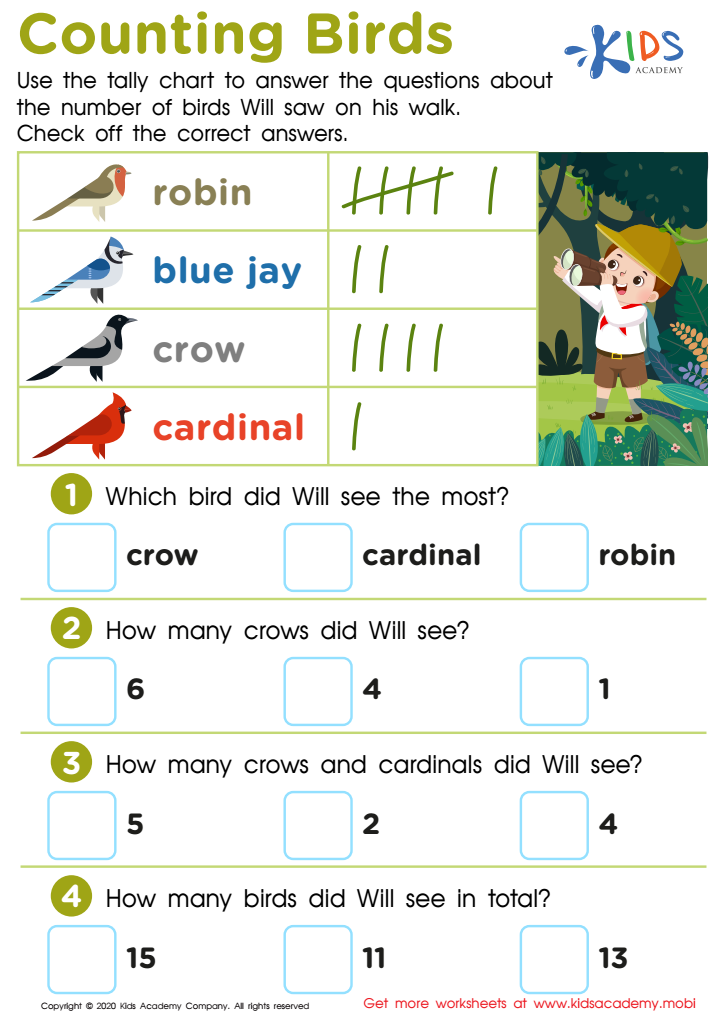
Counting Birds Worksheet
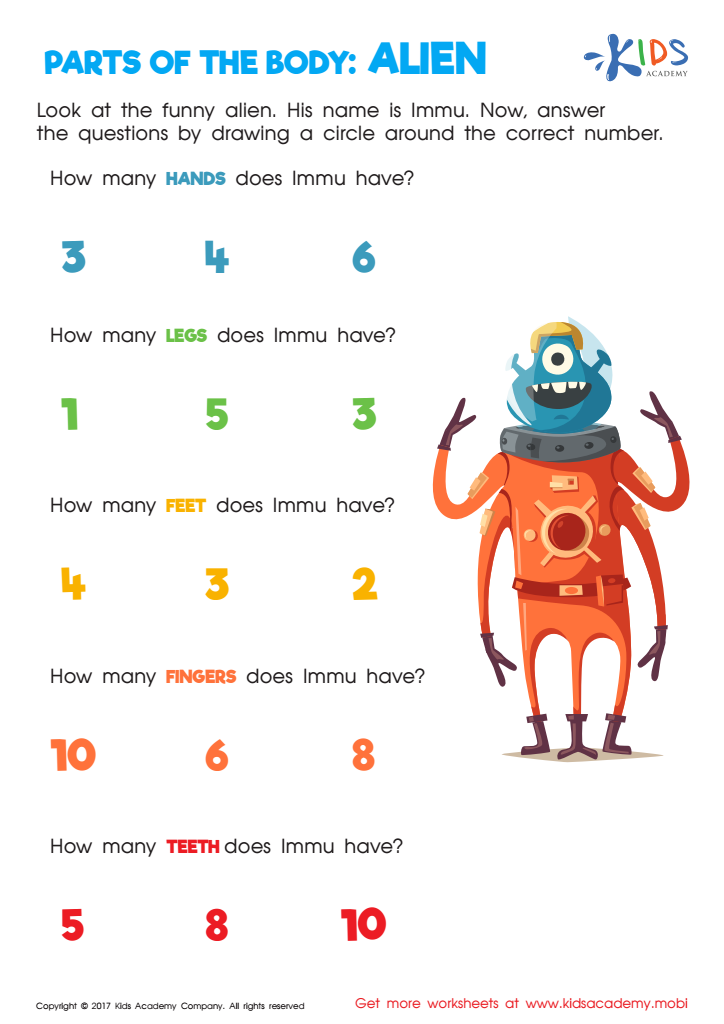
Alien Worksheet







Fine Motor Skills Extra Challenge Science for Ages 7-8 plays a crucial role in a child’s development, providing numerous benefits that parents and teachers should care about. Firstly, fine motor skills involve using the small muscles in the hands and fingers to perform precision tasks. Activities that challenge these skills help children enhance their hand-eye coordination and dexterity. This lays a foundational basis not just for handwriting but also for daily life tasks like tying shoelaces and buttoning clothes.
From an academic standpoint, focusing on fine motor skills at this age directly supports critical learning experiences in science. Handling tools like tweezers, pipettes, and magnifying glasses during science experiments requires refined motor skills. These activities encourage curiosity and engagement, fostering a love for science and boosting investigation skills. Moreover, the process of carrying out these detailed tasks aids in cognitive development, improving patience, attention to detail, and problem-solving abilities.
Emotionally, success in fine motor activities instills confidence and perseverance. Children who master these skills through complex yet enjoyable science challenges feel a sense of accomplishment, which enhances their self-esteem and motivation. Therefore, integrating dedicated fine motor challenges into science education sets children up for both academic success and everyday competency, making it a critical aspect that merits attention from parents and teachers alike.